News
A Masterclass in Glamour: Supermodel Lara Stone Takes Over Bondi Beach
A Masterclass in Glamour: Supermodel Lara Stone Takes Over Bondi Beach

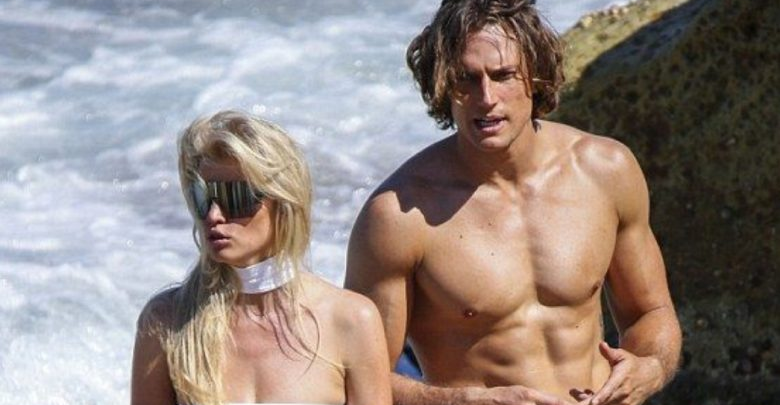
Lara Stone at Bondi Beach Revisiting Her 2016 Vogue Australia Fashion Shoot
Fashion photography often brings together two different kinds of design: carefully selected clothing and the less predictable shapes of a natural landscape. Lara Stone’s 2016 appearance at Bondi Beach offers an example of that relationship.
The Dutch model was photographed during a Mario Testino shoot at the Sydney location on January 20, 2016, as documented by contemporary photo captions. The images belong to an earlier fashion story rather than a recent assignment.
Looking back at the project provides an opportunity to discuss its styling, coastal setting, and visual approach. The interest lies in how a simple wardrobe can interact with rocks, moving water, and the changing conditions of an outdoor location.
The Vogue Australia Connection
Contemporary coverage linked the beach shoot to Vogue Australia. The magazine’s April 2016 issue featured Stone in a cover story photographed by Mario Testino, with styling by Sarajane Hoare, makeup by Val Garland, and hair by Marc Lopez.
David Genat also appeared in the story. On the cover, Stone and Genat were joined by Jordan, Zac, and Louis Stenmark.
These credits help place the photographs within a collaborative editorial project. A finished fashion story brings together several kinds of work, from selecting garments to developing a consistent appearance across the images.
Behind-the-scenes photographs show only portions of that process. They should therefore be distinguished from the final pictures selected and published by the magazine.
A Coastal Setting With Strong Visual Contrast
A beach location offers a different visual language from a studio.
Rocks introduce irregular edges and texture. Water adds movement, while the horizon can provide a clear line through an otherwise varied scene. Together, those elements give a photographer several ways to organize a frame.
For this kind of editorial, the surroundings can do more than establish a summer mood. They can create contrasts with the clothing: smooth fabric against rough stone, or a simple outline beside the changing surface of the ocean.
Those relationships are useful when looking at fashion photography. Instead of considering the wardrobe and location separately, notice how each changes the appearance of the other.
A restrained outfit may become more noticeable against a detailed background. Equally, a busy setting may feel more balanced when the styling remains simple.
Black and White Swimwear as a Styling Choice
Published coverage of the editorial described black-and-white swimwear paired with visor-style sunglasses. The wardrobe included different swimwear silhouettes, creating variety within a limited palette.
A monochrome approach gives an editor several ways to connect photographs without repeating the same outfit.
White can provide a clear contrast against darker areas of the setting. Black can create a defined shape against brighter water or sky. The exact effect depends on lighting, framing, and the final photograph.
The limited colors also encourage attention to garment structure. Necklines, straps, seams, and proportions become more visible when a strong print is not competing for attention.
This offers a useful way to discuss swimwear as fashion: focus on construction, silhouette, accessories, and the relationship between the clothing and its setting.
Accessories Give the Wardrobe Another Direction
The visor-style sunglasses add a more graphic element to the beach wardrobe.
Their shape can be considered alongside the broader composition. A strong accessory may introduce a sharp line or reflective surface into a scene dominated by natural textures.
However, an accessory does not need to become the subject of every image. Its role can change according to the framing. In a closer view, it may be a defining styling detail. In a wider photograph, it becomes one part of the complete look.
That flexibility helps explain why a relatively small wardrobe can support a varied editorial. Changes in framing and accessories can alter the result without requiring an entirely new visual theme.
What Outdoor Photography Asks of a Production
Outdoor fashion photography involves conditions that a studio can control more easily.
Light changes. Wind affects hair and fabric. Water and uneven ground influence where a team can work. These are general considerations of location photography, rather than proof of any particular event behind the scenes.
A published frame does not reveal every adjustment made to produce it. It may represent one selected moment from a longer sequence of attempts and changes.
When viewing behind-the-scenes material, that distinction is worth keeping in mind. A photograph of a break between setups cannot establish how someone felt throughout the working day. Likewise, a brief interaction does not provide a reliable account of a person’s character.
The most useful discussion stays close to what the images and confirmed credits can show.
A Collaborative Editorial Rather Than a Personal Narrative
Celebrity fashion coverage sometimes connects a professional assignment with events in a model’s private life.
However, the existence of a photoshoot does not establish that it represents recovery, a fresh start, or a response to a relationship change.
For this project, the documented professional context is sufficient. Stone participated in a Vogue Australia story with a credited photographer, stylist, hair artist, makeup artist, and fellow models.
Discussing those contributions keeps the focus on the work itself.
It also leaves room for a more thoughtful assessment of the imagery. Readers can consider the wardrobe, composition, and use of location without being asked to accept an unsupported explanation of the model’s emotions.
How to Look More Closely at a Fashion Photograph
A few questions can make an editorial more interesting to examine.
Start with the relationship between the subject and the background. Does the location frame the clothing clearly, or does it deliberately compete for attention?
Next, consider the palette. Notice whether colors repeat across the wardrobe and surroundings, or whether contrast is doing most of the visual work.
Then look at the framing. A wide view may emphasize the place, while a closer crop can shift attention toward an accessory or garment detail.
Finally, consider the sequence. A magazine story is usually experienced through several images, and a photograph may work differently beside its neighbors than it does alone.
These observations do not require specialist knowledge. They offer a way to move beyond general praise and identify what gives a particular fashion story its character.
Revisiting the Shoot With Its Date in Mind
The Bondi Beach photographs are best presented as a look back at a 2016 editorial project.
That historical context matters. It allows readers to understand when the work was made and avoids confusing an older image with a new campaign.
It also changes the questions worth asking. Rather than treating the pictures as breaking celebrity news, an archive feature can consider which styling choices still feel familiar and which belong more clearly to their period.
Stone’s beach assignment offers material for that kind of discussion: a limited wardrobe palette, prominent sunglasses, and a natural setting used as part of the composition.
The resulting story is about fashion photography and collaboration, with Bondi Beach providing a distinctive setting for the work.