News
If You See a Goat, a Turtle, or a Camel in This Cloud, Here’s What That Fun Test Actually Says
If You See a Goat, a Turtle, or a Camel in This Cloud, Here's What That Fun Test Actually Says

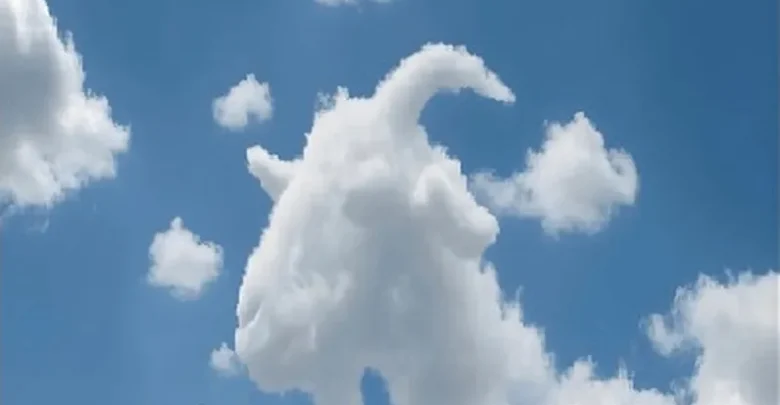
Goat, Turtle, or Camel? A Cloud Puzzle About How We See Familiar Shapes
Look at a cloud long enough, and an ordinary outline can become something recognizable. A rounded section suggests a shell. A pointed edge resembles a horn. A longer shape becomes a neck.
That is the appeal of this cloud puzzle. The accompanying question asks whether viewers see a turtle or a camel, yet another interpretation fits the conversation just as easily: a goat.
There is no need to force your answer into the two choices printed beside the picture. If you noticed a goat, another animal, or simply a cloud, you can keep that answer.
The more interesting question is how several people can look at the same outline and describe it differently.
Some versions of puzzles like this attach personality descriptions to the first thing a person notices. Those descriptions can be entertaining, but they should not be confused with a validated assessment. This particular picture does not establish whether someone is creative, practical, empathetic, or unusually observant.
It offers something simpler: an opportunity to look carefully, compare impressions, and enjoy an image that supports more than one reading.
Start With What You Actually See
Before reading anyone else’s interpretation, give yourself a moment to examine the image.
Do not search for the animal that sounds most impressive. Do not choose a turtle because you prefer the personality description attached to it. Name the shape that genuinely occurs to you.
You might notice an entire animal immediately. Alternatively, you might identify one feature first and build an interpretation around it.
A pointed section could become a horn. A rounded area might suggest a shell or hump. The rest of the outline can then seem to fall into place.
If you have already read the suggested answers, that is fine. There is no need to recreate a perfectly untouched first impression. Simply distinguish between the animal you noticed immediately and the ones you found after looking again.
Both observations are part of the experience.
Why a Goat Is a Reasonable Answer
The turtle-or-camel question can make a goat seem like an answer outside the rules. But the question does not determine everything the shape can resemble.
In the interpretation described with this image, a raised section can suggest a horn, while another projection may resemble a beard or muzzle. Once those details are read as parts of a goat, the larger shape can become its body.
That does not mean a goat was deliberately hidden in the picture. It means the outline allows that association.
Nor does seeing a goat establish that you are independent, stubborn, adventurous, or naturally suited to leadership. Those are character descriptions that would need their own evidence.
A simpler response is enough: you saw a goat because that was the resemblance you found.
The puzzle remains enjoyable without inventing a personality category for every possible animal.
Finding the Turtle Interpretation
To explore the turtle reading, try looking at the broadest part of the cloud rather than its most pointed edge.
Could that larger section suggest a shell? Could smaller projections become a head or limbs?
These are visual suggestions, not a checklist you must complete. If the turtle never becomes convincing to you, there is no reason to pretend otherwise.
A useful way to compare interpretations is to ask another person to describe the features they are using.
“Where do you see the head?”
“Which part looks like the shell?”
Their explanation may make the image click. It may also reveal that they are grouping the outline differently from you.
That exchange is more interesting than treating one response as proof of imagination and another as a mistake.
You are comparing readings of an ambiguous shape, not competing to identify an objectively hidden animal.
Finding the Camel Interpretation
The camel reading invites a different arrangement of the same visual material.
A raised area may become a hump, while another section is interpreted as a neck or head. Details that seemed important in the goat or turtle version may become less central.
Try tracing that interpretation with your eyes. Notice where it becomes convincing and where it requires a little imagination.
There is no need for every part of the cloud to correspond neatly to anatomy. A resemblance can be suggestive without being a precise silhouette.
Just as importantly, noticing a camel does not establish that you are organized, analytical, dependable, or good at making plans.
Those qualities are better understood through someone’s choices and behavior over time. An animal found in a cloud provides too little information to support such a conclusion.
It is a visual association, not a personal evaluation.
The Familiar Experience Called Pareidolia
Recognizing an animal in a cloud is an example of what is commonly called pareidolia: perceiving a recognizable form in something that does not literally depict it.
NASA explains the phenomenon through examples involving clouds, rock formations, and astronomical images. A shape can resemble a face, hand, or familiar object without actually being that thing. NASA Science
The term gives a name to an experience many people already recognize. A pattern in wood looks like an eye. A group of windows resembles a face. A cloud seems to contain an animal.
In this puzzle, the cloud remains a cloud regardless of the animal you identify.
The resemblance belongs to the interpretation. Understanding that does not make the experience less enjoyable. It helps explain why several different answers can be discussed without needing one person to be wrong.
A Small Experiment With the Caption
You can turn the picture into an informal observation exercise.
Show it to a friend without naming any animals. Ask, “What does this look like to you?”
Let them answer before offering the turtle, camel, or goat interpretations. Then ask whether they can find any of those alternatives.
Compare the two stages:
- What did they notice without suggestions?
- What could they identify after hearing the options?
- Which resemblance remained strongest?
- Did they find something you had not considered?
This is a conversation exercise, not a scientific experiment. It has no controlled conditions, scoring system, or basis for measuring personality.
Its value is immediate and modest: it helps you notice the difference between an initial impression and a shape you can find after someone points it out.
Sometimes the second look is more interesting than the first.
Why the Personality Descriptions Sound Appealing
The personality readings attached to this puzzle use attractive qualities.
The turtle is associated with imagination and creativity. The camel is associated with practicality and organization.
Many people can recognize parts of themselves in both descriptions. A person may enjoy writing stories while also keeping careful financial records. Someone may make detailed plans at work and approach a hobby intuitively.
That overlap is worth considering before treating the categories as opposites.
If a description prompts useful reflection, you can explore the question directly. Do you enjoy creating things? Do you prefer a plan when starting a project? In what situations do you rely on careful comparison?
Those questions invite examples from your life.
The animal you found in the cloud does not supply those examples for you.
The Left-Brain and Right-Brain Claim
Some visual quizzes go further and claim to reveal whether a person is “left-brained” or “right-brained.”
That popular division often assigns logic to one category and creativity to the other. It is too simplistic to serve as an explanation of personality.
A published study examining brain connectivity did not support the idea of people having an overall left- or right-brain dominance of the kind proposed by that personality distinction. The researchers distinguished localized differences in brain networks from a global classification of individuals. pmc.ncbi.nlm.nih.gov
That research does not test this particular cloud picture. It does, however, provide a reason to avoid presenting the puzzle through an unsupported brain-dominance claim.
You can enjoy finding several animals without concluding that the picture has identified which half of your brain defines you.
What If You See Something Else Entirely?
Perhaps you see a dog, a resting dragon, a mountain, or an object that has nothing to do with animals.
Perhaps the picture never resembles anything more specific than a cloud.
Those responses belong in the conversation too.
A two-option caption can create the impression that every viewer must fit one of two groups. But unless the task has a clearly defined correct answer, that restriction may be part of the presentation rather than a meaningful rule.
Instead of correcting someone immediately, ask them to explain their interpretation.
They may point out a feature you overlooked. You may still disagree after they explain it. Neither outcome is a problem.
The aim is to compare perspectives on the image, not to turn agreement into a condition for enjoying it.
A Better Way to Share the Puzzle
If you publish or share the image, use a title that accurately describes the activity.
“Goat, Turtle, or Camel? What Do You See in This Cloud?” invites participation without making a promise the picture cannot support.
A caption such as “This cloud reveals your hidden personality” makes a much stronger claim and would require evidence that is absent here.
The same principle applies to the results. Avoid telling readers that one answer proves intelligence, emotional strength, or superior creativity.
You can instead invite them to describe where they see the animal’s features. That creates a discussion about the picture itself and leaves room for unexpected answers.
Before publishing the photograph, also confirm that you have permission or an appropriate license to use it. Access to an image through a link does not, by itself, establish permission to republish it.
Frequently Asked Questions
Is a goat an incorrect answer?
No. The caption’s two choices do not prevent someone from finding another resemblance. A goat is a valid personal interpretation of the shape.
Does seeing a turtle mean I am creative?
This picture does not establish that. You may be creative, but that conclusion needs information beyond your response to a cloud.
Does seeing a camel mean I am practical?
No reliable link has been demonstrated here. Treat that description as entertainment rather than a measured result.
Can I change my answer?
Yes. You may prefer another interpretation after examining the image. There is no score to protect.
Is there a hidden animal that everyone should eventually find?
The supplied material does not establish an objectively correct animal. The activity is about resemblance rather than a confirmed hidden object.
What if I cannot see any animal?
That is an acceptable response. You do not need to force a resemblance to participate.
A Picture Worth Looking at Twice
The appeal of this cloud is that it leaves room for more than one interpretation.
A goat may appear first, followed by a turtle after someone points out a rounded section. A camel may remain the strongest resemblance throughout. Another viewer may find something completely different.
The useful discovery is not a hidden personality type. It is the experience of comparing what you noticed with what another person found.
Look once, give your honest answer, and then explore the alternatives. The image does not need to tell you who you are to offer a few enjoyable minutes of conversation.
This cloud puzzle is presented for entertainment. It is not a validated personality test, intelligence assessment, or measure of brain dominance.