News
The Six Eggs Riddle: How Many Eggs Are Left? (Correct Answer Explained)
The Six Eggs Riddle: How Many Eggs Are Left? (Correct Answer Explained)

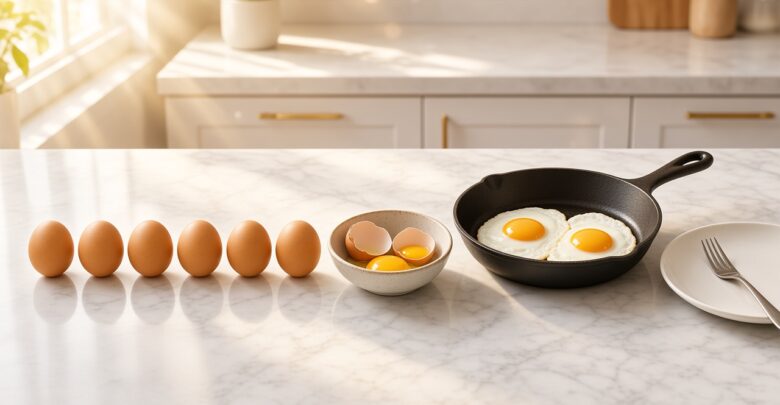
Some riddles need a pencil, a whiteboard, and a strong cup of coffee. Others are only four short lines long and still manage to trip up a whole kitchen full of smart people. The famous eggs riddle is one of the second kind.
It’s been making the rounds online for years, and it pops back up every few months with a fresh crowd of confident guessers in the comments. Most of them get it wrong on the first try. Want to see if you can do better? Here it is.
The Eggs Riddle

The puzzle goes like this:
I have six eggs. I break two. I fry two. I eat two. How many eggs are left?
Some versions say “I cooked two” instead of “I fried two,” but the idea is exactly the same. Take a moment. Picture the eggs on your counter. Count them in your head. Got your number?
Don’t scroll too fast. We’ll give you a few hints first.

Why So Many People Get It Wrong
The riddle looks like a basic math problem. Six eggs, and three actions that each mention the number two. Your brain sees that pattern and jumps straight into subtraction mode:
- 6 minus 2 (broken) = 4
- 4 minus 2 (fried) = 2
- 2 minus 2 (eaten) = 0
Zero eggs. Done. Easy, right?
That’s the answer most people give, and it feels tidy. But riddles like this are built to reward slow reading, not quick arithmetic. The trick hides in a question most people never ask: are those three actions happening to three different pairs of eggs, or to the same pair?
Hint #1: Think about how you actually make fried eggs
What’s the very first thing you do when you want fried eggs for breakfast? You don’t toss whole eggs, shells and all, into the pan. You crack them first.

Hint #2: What happens after they’re cooked?
Once your two eggs are sizzling and golden, what do you do with them? You put them on a plate and eat them. You don’t fry a fresh pair just to eat those instead.

Starting to see it? Give it one more look before the answer.

The Correct Answer: Four Eggs
The answer is four eggs.
Here’s why. Breaking, frying, and eating aren’t three separate losses. They’re three steps in one simple breakfast, and they all happen to the same two eggs:
- You break two eggs (to cook them).
- You fry those same two eggs.
- You eat those same two fried eggs.
Only two eggs ever left the carton. The other four were never touched. They’re still sitting there, whole and perfectly fine, waiting for tomorrow’s omelet.

“But Wait, Couldn’t It Be Zero?”
Every time this riddle goes viral, someone in the comments makes a fair point: what if the person broke two eggs by accident, dropped them on the floor, and then fried two different eggs and ate two more? Then there really would be zero.
That’s true if you read it that way, and it’s part of why the puzzle sparks such fun arguments. But riddles have an intended answer, and this one is built around the natural order of cooking. You break eggs to cook them, and you cook them to eat them. Read that way, the story describes one breakfast for two eggs, not three separate egg disasters. The answer given by the sites that share this puzzle, and the one most solvers settle on once they see the trick, is four.
So if you said zero, don’t feel bad. You fell for the exact trap the riddle was designed to set. If you said four, take a bow.
What This Riddle Teaches Us
It’s a small, silly puzzle, but it shows something real about how our brains work. When we see numbers, we like to grab the fastest formula we can find. Here, the repeated “two” practically begs us to subtract three times in a row.
The real skill the riddle tests is noticing what each word is actually describing. Good puzzle solvers ask questions like:
- Is this a new event, or more detail about the same event?
- Does the order of the steps tell a story?
- Would this make sense in real life?
That habit of slowing down is handy far beyond the kitchen. It helps with reading fine print, following recipes, filling out forms, and spotting tricky wording in anything from emails to ads.
Try It on Your Family
The best part of a riddle like this is watching someone else fall for it. Try reading it aloud at the breakfast table and see who answers first. Then watch the faces when you reveal it’s four. Kids especially love this one, because once they get it, they can stump grown-ups with it for weeks.

Here are two more short egg-themed riddles to keep the fun going:
- How many eggs can you put in an empty basket? Just one. After that, the basket isn’t empty anymore.
- What has to be broken before you can use it? An egg, of course.
More Riddles That Use the Same Sneaky Trick
The eggs riddle belongs to a whole family of puzzles that hide the answer in plain sight. They all count on you rushing into math, or into an assumption, before you read the words properly. If you enjoyed this one, try these classics. Answers are right below each question, so cover them with your thumb if you want to play fair.
1. The farmer’s sheep
A farmer has 17 sheep. All but 9 run away. How many sheep does he have left?
Answer: 9. “All but 9” means nine stayed. Many people subtract 9 from 17 and say 8.
2. The bowl of apples
There are six apples in a bowl. You take away four. How many apples do you have?
Answer: 4. You took four, so you have four. The bowl has two, but the question asked about you.
3. The calendar question
Some months have 31 days, and some have 30. How many months have 28 days?
Answer: All 12. Every month has at least 28 days. February just stops there most years.
4. The rooster on the roof
A rooster lays an egg on the very top of a sloped barn roof. Which side does the egg roll down?
Answer: Neither. Roosters don’t lay eggs. Hens do!
Notice the pattern? Each riddle gives you just enough information to feel sure of yourself, then hides the real answer in one small word or detail. The eggs riddle does it with the order of breakfast steps, the sheep riddle does it with “all but,” and the rooster riddle does it with a little bit of farm knowledge.
Quick Recap
- The riddle: six eggs, break two, fry two, eat two. How many are left?
- The trap: subtracting two eggs three times and landing on zero.
- The answer: four, because the same two eggs are broken, fried, and eaten.
- The lesson: read carefully before you start doing math.
Thanks so much for puzzling along with us today! This riddle is shared just for fun and entertainment, so go stump your friends and enjoy those four leftover eggs.