News
Mom Leaves a Surprising Note on Her 13-Year-Old Son’s Door After He Claims He Doesn’t Need Her Rules
Mom Leaves a Surprising Note on Her 13-Year-Old Son’s Door After He Claims He Doesn’t Need Her Rules

A Mother’s 2015 Letter to Her Teenage Son Sparked a Debate About Independence
When thirteen-year-old Aaron began earning money through YouTube, his mother said his attitude toward household rules changed.
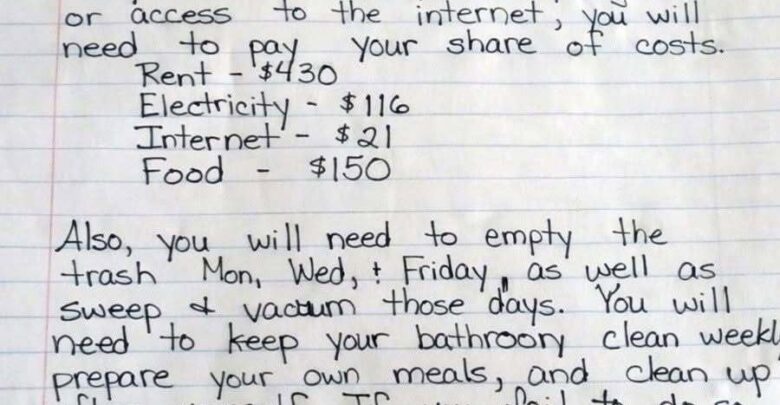
According to the account shared online by Heidi Johnson, disagreements about homework and responsibilities led to an unusual response: a handwritten letter outlining what independent living would cost.
The story attracted attention in September 2015. It concerns a teenager at that time, rather than a thirteen-year-old facing these demands today.
Years later, the letter still raises a question worth discussing: how can parents explain responsibility without letting a disagreement become a contest over power?
Why She Wrote the Letter
In Johnson’s account, Aaron had begun using his earnings as an argument for greater independence.
She responded by presenting the practical side of that claim. If he wanted to approach their living arrangement as an independent roommate, her letter suggested that he consider expenses and household work too.
The note listed rent, electricity, internet access, and food. It also described responsibilities such as cleaning, preparing meals, and tidying up afterward.
Its central message was that earning money and supporting an entire household were different things.
However, the letter was one parent’s response to a particular conflict. It was not evidence that the same approach would suit every family.
The Expenses Listed in the Note
The letter set out the following amounts:
| Expense | Amount listed |
|---|---|
| Rent | $430 |
| Electricity | $116 |
| Internet | $21 |
| Food | $150 |
| Total | $717 |
Those figures appeared in the reported letter. They should not be presented as current estimates of what a teenager or adult needs to live independently.
The itemized format made the message concrete. Instead of discussing independence only as freedom to make decisions, it introduced the bills associated with keeping a home running.
Whether that was an effective way to begin the conversation became part of the public debate.
Aaron’s Reported Reaction
Johnson said Aaron initially reacted angrily, crumpling the note and leaving the apartment.
In her explanation, she described taking a walk as something they used to allow time to calm down before speaking again.
That account is important to attribute correctly. It describes the situation from his mother’s perspective.
It does not give readers access to every conversation between them or establish exactly what Aaron thought throughout the disagreement.
A short social-media story can explain what someone reported without revealing the full experience of everyone involved.
The Discussion Moved Beyond Their Home
Johnson later said she had intended to share the post with friends rather than attract a large public audience.
Coverage at the time described both supportive responses and criticism. She acknowledged that her parenting style would not work for everyone.
Some readers focused on the value of explaining household expenses. Others questioned the demands and the tone of the message.
Those are different questions. A person can support teaching financial responsibility while disagreeing with a particular method.
Likewise, questioning the letter does not mean dismissing the challenges a parent described.
The Written Agreement That Followed
Later reporting described another written agreement Johnson used with her son.
She explained that Aaron responded better when expectations and consequences were clearly written down. She presented the agreement as a way to hold both of them accountable within their relationship.
That follow-up adds context beyond the original photograph.
The story did not consist only of a dramatic note. Her later explanation described an ongoing effort to communicate expectations.
Still, the available account does not establish a universal outcome or prove that a letter can resolve every similar conflict.
A Story About More Than a Bill
The lasting discussion centers on how families understand independence.
Earning money may provide a young person with new choices. Understanding expenses, keeping commitments, and discussing shared responsibilities involve additional questions.
Johnson’s letter brought those issues into public view through a deliberately forceful example.
Readers can consider its message without treating it as a ready-made parenting plan or a current rental demand.
What do you think: did the letter communicate responsibility clearly, or would a different approach have opened a better conversation?