News
Fence Etiquette and Different State Laws: Start With Understanding
Fence Etiquette and Different State Laws: Start With Understanding

Fence Etiquette: Which Neighbor Should Get the Finished Side?
A new fence can bring privacy, define outdoor space, and change the appearance of a garden. However, one small question can create tension before anyone installs the first post:
Which neighbor should get the finished side?
One person wants the smooth boards facing their own yard. The other believes the attractive side should face outward. Both may feel certain that their preference follows the correct rule.
The answer begins with separating three things: courtesy, legal requirements, and any agreement between the people involved.
There is no single nationwide rule that resolves every fence project. A useful conversation starts with the proposed design and the requirements for the actual property.
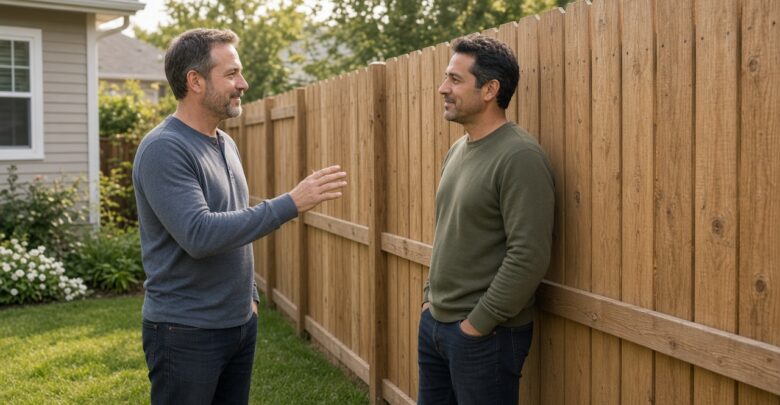
The images accompanying this article are illustrations. They do not document a particular neighbor dispute or demonstrate legal compliance.
What Does the Finished Side Mean?
On many traditional wooden fences, the two sides look different.
One side displays the boards as a relatively smooth surface. The other shows more of the posts and horizontal rails that support them.
People often call the smoother face the finished side or good side. Those terms describe its appearance, rather than establishing who owns it or who must receive that view.
Other designs complicate the question. Some fences alternate boards, while others provide a similar appearance on both sides.
Therefore, start by identifying the product under discussion. A sample panel, clear photograph, or contractor drawing can help everyone picture the same result.
Without that shared reference, two neighbors may argue about different designs without realizing it.
Why Appearance Can Become a Sensitive Issue
A fence may sit near the edge of a property, but its appearance can influence the space on either side.
Someone who spends time gardening may care about the background behind their plants. Another person may want their outdoor seating area to face smooth boards.
Those preferences do not automatically make either person unreasonable.
The difficulty often begins when a preference turns into an assumption. One neighbor believes paying gives them complete control. The other believes tradition guarantees them the better view.
A calmer discussion makes room for both concerns before reaching a conclusion.
Ask what matters most. Is it the visible framework, the overall height, the color, or the effect on the garden?
Understanding the concern makes it easier to compare possible solutions.
Courtesy and Legal Requirements Are Different
A neighborly practice is not automatically a legal requirement.
For example, a homeowner may remember that fences in a previous neighborhood faced a certain direction. That experience can explain their expectation, but it does not establish the rule at a new address.
Likewise, an online comment saying “the good side always faces the neighbor” leaves out the location and the type of project.
The practical approach is to check the proposal with the relevant local department before ordering materials.
Bring a clear description rather than asking only a general question about fence etiquette. Explain the planned location, design, and dimensions.
The response can then address the project you actually intend to build.
This keeps the conversation grounded in information instead of competing memories.
A Local Example From New Jersey
Point Pleasant Beach, New Jersey, provides a clear example of an orientation requirement.
The borough’s official fence page says the finished side must face outward from the property. It also requires posts to sit inward of the property line.
In addition, the page requires a zoning permit before work begins. Applicants must provide a property survey or scaled plot plan showing the proposed fence location.
These requirements apply to that borough. They should not be presented as a rule covering every property in New Jersey or the entire country. The borough also directs readers to its development ordinance for additional restrictions.
The useful lesson is that a question about appearance may form only one part of the review.
A California Example Addresses Shared Costs
California Civil Code section 841 answers a different set of questions.
It creates a presumption that adjoining landowners benefit equally from a dividing fence. Unless they agree otherwise in writing, it also presumes equal responsibility for reasonable construction, maintenance, or necessary replacement costs.
For covered expenses, the law requires 30 days’ prior written notice. The notice must explain matters including the problem, proposed solution, estimated costs, proposed cost sharing, and timeline.
However, equal responsibility is not unconditional. The statute allows the presumption to be overcome when equal sharing would be unjust. Relevant factors include financial hardship and unnecessary or excessive costs.
This does not create a nationwide right to send a neighbor half of any fence bill.
It illustrates why location, circumstances, and the exact question all matter.
These Examples Do Not Compete With Each Other
The New Jersey borough example concerns installation requirements, including orientation. The California provision concerns matters such as notice and shared expenses.
They address different parts of fence planning.
That distinction helps avoid a common mistake: finding one rule online and expecting it to resolve every issue.
Before relying on an example, ask what it actually covers. Does it address appearance, location, payment, maintenance, or something else?
Also check whether it applies to your address.
A clear question is more useful than a broad argument about which neighbor is right. It gives the people reviewing the project something specific to answer.
Understand the Proposed Location First
Before focusing on the view, make sure everyone understands where the fence would stand.
A rough sketch can support a conversation, but it should not be mistaken for a professional boundary determination.
Gather available property documents and identify any uncertainty early. If the location remains disputed, seek qualified help before asking a contractor to proceed.
It is also useful to distinguish the existing fence from the proposed replacement. Are you planning to follow the same route, move a section, or add a new enclosure?
Those differences can affect what information you need.
Resolving the location on paper gives the appearance discussion a clearer foundation. It also helps prevent people from agreeing to different versions of the same project.
Begin the Conversation Before Construction
A neighbor who first learns about a fence when materials arrive may feel excluded from the process.
An early conversation offers a better opening.
You might say:
“We’re considering a new fence and checking the requirements. Could I show you the design before we make a final choice?”
That wording explains your intentions without promising a particular result.
It also gives the neighbor a chance to raise practical concerns. Perhaps they want to protect a planting area or understand the construction schedule.
Listen before responding. Their first objection may not reveal their main concern.
A discussion about smooth boards might lead to a more useful conversation about access, maintenance, or the overall design.
Compare Designs Instead of Trading Assumptions
Once the project’s requirements are clear, compare the available options.
A traditional fence may leave more framework visible on one side. Another style may provide a more balanced appearance.
Ask the contractor to explain what each option would look like from both yards. Then compare price, materials, and expected upkeep.
A different style is not automatically the best answer. It may cost more than the people involved want to spend, or it may not suit the location.
Still, seeing alternatives can move the conversation forward.
Instead of arguing about who deserves the attractive side, the neighbors can discuss which available design best fits the project.
Keep the Budget Conversation Specific
Money can make a small disagreement feel much larger.
Separate the basic proposal from optional changes when discussing estimates. Ask the contractor to identify what each version includes.
For example, compare the quoted design with a more decorative alternative rather than treating both as the same project.
If a neighbor expresses concern about the price, ask which part causes difficulty. They may understand the need for work but disagree with a particular upgrade.
Do not assume a friendly conversation settles responsibility for payment. Where costs are disputed, the applicable rules and any existing agreements need proper review.
A clear estimate gives everyone a better starting point than a vague promise to “split it later.”
Write Down What Everyone Understands
After discussing the project, record the practical details.
A simple project summary can identify the proposed design, location, contractor, schedule, and any agreed contributions.
It can also note questions that remain unresolved.
For instance, the neighbors may agree on the style while still waiting for confirmation about placement. Recording both points helps avoid treating a partial agreement as final approval.
Share updated information when the proposal changes. A different material or higher quote may require another conversation.
Written notes help people remember what they discussed. For questions about legal rights or the effect of an agreement, consult an appropriate local professional.
Plan for Life After Installation
The conversation should include more than construction day.
Ask how the proposed fence will fit into normal routines. Will garden beds remain accessible? Is there enough room for the intended maintenance work? Who should be contacted if a concern arises?
Discuss these details while the design can still change.
A quick exchange now may prevent frustration later. It can also reveal that the two households want many of the same things: privacy, an attractive yard, and a straightforward project.
Keep the discussion practical. There is no need to predict every possible disagreement.
The aim is to understand the most likely needs and avoid leaving obvious questions unanswered.
What If the Neighbors Still Disagree?
Some conversations do not produce agreement immediately.
When that happens, identify the exact point of disagreement. Is it the location, appearance, cost, or an interpretation of a rule?
Different questions call for different help.
A contractor can explain a design. The local department can clarify its requirements. A qualified property professional or lawyer may be needed for a serious boundary or payment dispute.
Try to avoid turning one unresolved issue into a judgment about the other person’s character.
You may remain neighbors long after the project finishes. Keeping the discussion specific leaves more room for a workable outcome.
Which Neighbor Should Get the Finished Side?
The answer depends on the fence, the applicable requirements, and the circumstances of the property.
Start by checking what applies locally. Then discuss the design, location, budget, and practical concerns with the people affected.
Courtesy matters, but so does accurate information.
A successful fence project creates a clear boundary without making every conversation across it uncomfortable. Careful planning gives the project a better chance of achieving both.
This article provides general information, not legal advice. Confirm current requirements for your location and seek qualified guidance for a specific dispute.