News
Only Sharp Eyes Can Find the Hidden Man in This Vintage Drawing. Can You?
Only Sharp Eyes Can Find the Hidden Man in This Vintage Drawing. Can You?

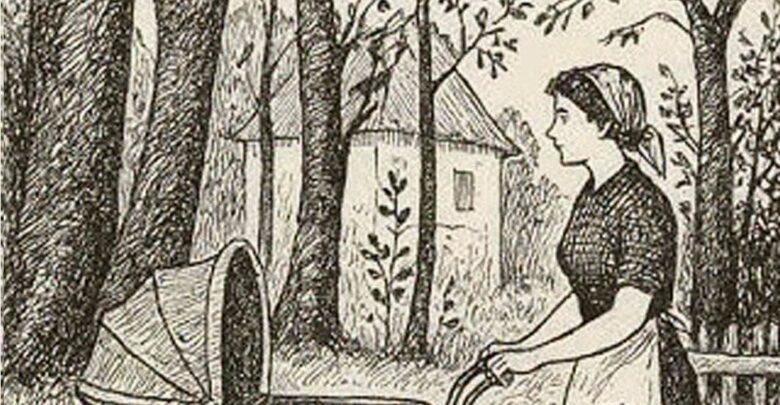
Find the Hidden Man in This Peaceful Park Picture
At first glance, this picture seems to tell a simple story. A woman walks through a park while pushing an old-fashioned pram. Trees frame the scene, and a cottage appears among the leaves. It looks like an ordinary outdoor moment captured in a detailed drawing.
But there is another way to look at the picture.
Somewhere within the scene, the artist has concealed the image of a man. Your challenge is to find him without immediately scrolling to the explanation.
Before you begin, set aside the idea that you must solve it quickly. This is a visual puzzle to enjoy, and there is no required finishing time. You might notice the hidden image during your first glance, or you might need a few hints before the shapes come together.
Look carefully, stay curious, and see whether you can discover the second image hiding inside the first.
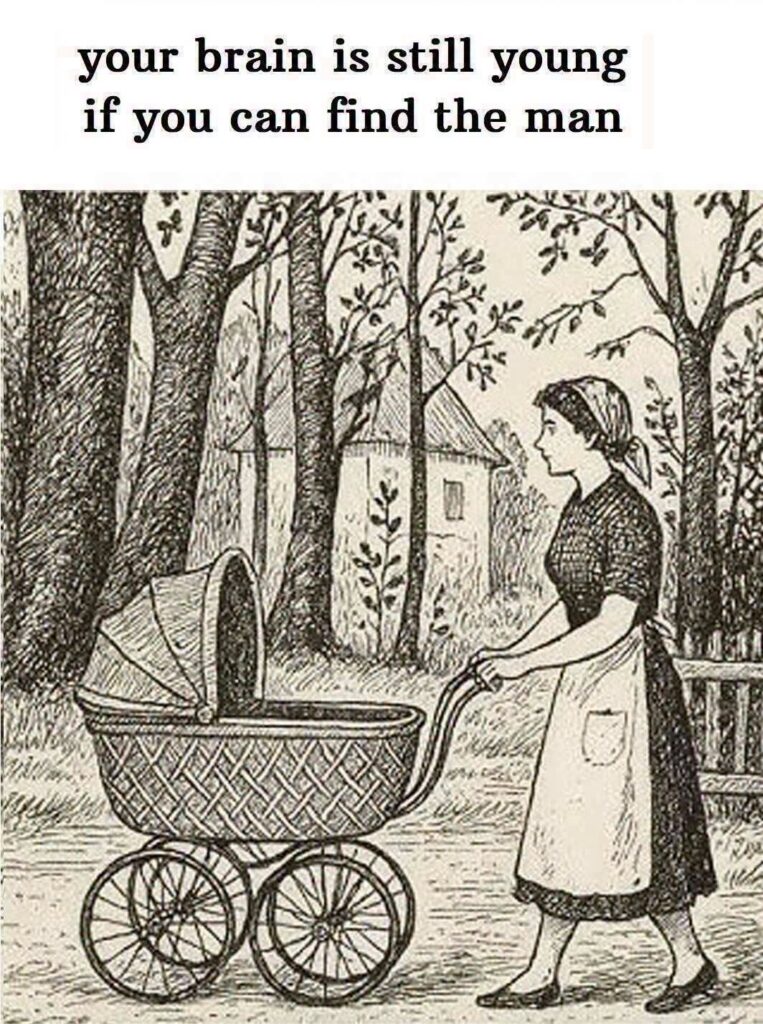
Take Your First Look at the Hidden Man Puzzle
Start by viewing the complete drawing. Notice the woman, the pram, the path, and the background. Then ask yourself where another person could be concealed.
Try to give yourself an uninterrupted first attempt. Avoid reading ahead while you are still exploring the picture.
Your first instinct may be to search behind a tree or beside the cottage. Perhaps you expect to find a small head peeking through the branches or a figure standing near the path.
Those are reasonable places to begin, but keep an open mind about what “hidden man” might mean. The solution may depend on recognizing a different kind of image rather than locating an ordinary person within the scene.
If nothing stands out immediately, continue with the clues below.
Why the Picture Looks So Ordinary at First
The drawing offers several recognizable subjects. A woman is walking, a pram is moving along a path, and trees provide the setting. Together, those elements create a scene that is easy to understand.
That first interpretation gives you a useful starting point, but it can also keep your attention focused on the most obvious objects.
Once you have identified the main subject, you may continue checking nearby details while leaving the larger arrangement unexplored. You might inspect the pram’s wheels or the woman’s clothing even though the hidden image depends on shapes elsewhere.
Try treating the illustration as something unfamiliar for a moment. Rather than naming each object, look at its outline, brightness, and position.
A tree can still be a tree while also contributing to another picture.
What Kind of Hidden Image Are You Looking For
There is an important distinction between a hidden-object puzzle and an illustration that contains a second image.
In a straightforward hidden-object challenge, you might search for a hat under a bench or a small figure behind a fence. The object keeps its usual appearance but becomes difficult to notice because of its location.
In this drawing, the challenge involves recognizing a face assembled from parts of the surrounding scene.
That changes the question you need to ask.
Instead of looking only for a complete person, consider whether several separate marks could combine into facial features. A curved branch, a dark patch, and an open space may look unrelated until you view them together.
You are searching for a pattern across the picture, so allow your attention to move beyond individual objects.
Begin by Changing the Scale of Your Search
One of the most useful hints is to reconsider the size of the hidden man.
The phrase “find the man” can suggest a small person somewhere in the background. You may find yourself inspecting tiny spaces, expecting the answer to occupy only a small part of the drawing.
Try the opposite approach.
Look for something larger than you originally expected. Let several branches or patches of shading belong to the same possible shape.
This does not require ignoring detail completely. It means checking the broad arrangement before returning to individual lines.
If you are viewing the image on a phone, make sure the entire drawing is visible at once. Seeing only a heavily enlarged section may make it difficult to recognize a face that depends on the relationship between several areas.
Explore the Background Without Following the Story
The woman and pram give the illustration a clear subject. For your next attempt, temporarily set that subject aside.
Move your attention toward the trees and the spaces around them. Follow the larger outlines and notice how dark and light areas sit next to each other.
Illustration accompanying the search for faces in natural shapes
You do not need to decide immediately that a particular mark is an eye or a nose. Begin with possibilities.
Could this curve belong to a forehead? Could that open area help define a cheek? Do any of the darker marks seem connected when viewed as part of one larger image?
Test an idea against the surrounding shapes. A convincing interpretation should involve several features working together rather than a single mark that happens to resemble something familiar.
Five Simple Ways to Try a Different View
If your first approach has not worked, change one viewing condition at a time. This gives each new attempt a purpose.
Illustration accompanying alternative ways to view the puzzle
Move Slightly Farther From the Picture
Lean back from the screen or hold your phone a little farther away. This may make the larger arrangement easier to consider without examining every small line.
Reduce the Image Size
If you have zoomed in, return to a view that shows the complete illustration. Compare the overall shapes before enlarging any particular section again.
Try a Gentle Tilt
A slight change in viewing angle may help you explore a shape you have been interpreting in only one direction. Treat this as an experiment rather than a guaranteed solution.
Temporarily Cover the Main Subject
Use your hand or a piece of paper to cover the woman and pram without touching or marking the screen. Then examine the remaining background.
Pause Before Looking Again
Take a brief break if you are repeating the same search. When you return, choose a new starting point rather than following exactly the same route.
Pay Attention to the Spaces Between Objects
The drawn lines are only part of the picture. The spaces between them can contribute just as much to a hidden image.
Look between branches, beside dark trunks, and around patches of foliage. An open area may help suggest the surface of a face, while a neighboring line provides its edge.
This is different from searching for a clearly outlined head. The illustration may leave some boundaries incomplete, asking you to connect the shapes visually.
Be patient with that process. You do not need every facial detail to appear equally clear at the same moment.
Sometimes one possible feature gives you a starting point. From there, you can check whether the surrounding marks support the same interpretation.
Use These Hints One at a Time
If you would like more guidance, read the following hints gradually. Pause after each one and return to the original picture.
First Hint Look Beyond the Woman and Pram
The main foreground subjects are not the best place to concentrate your search. Give the background more attention.
Second Hint Focus on the Trees
Examine how the branches, trunks, shading, and open areas relate to one another. Consider their combined outline rather than treating every part separately.
Third Hint Search for a Large Face
You are not trying to locate a small man standing in the park. Look for a face formed through the arrangement of the scenery.
If this final hint gives you a new idea, stop here and try again before reading the reveal.
The Reveal Is a Face Formed by the Background
The hidden man is represented by a large face within the background.
The trees, branches, shadows, and lighter spaces work together to suggest facial features. Parts of the scene that first appeared to be ordinary landscape details become elements of the second image.
Start with the broader head shape, then look for the features within it. Let the face emerge from the arrangement instead of expecting a separately drawn person.
The woman, pram, and cottage remain part of the original scene. Recognizing the face adds another interpretation without removing the first one.
If you still cannot see it clearly, use the background clue as your starting point and compare larger shapes. You can also ask someone who sees it to indicate the outline directly on the displayed image.
Why Knowing the Answer Changes Your Search
Before the reveal, you are deciding both what kind of object to find and where to find it. Afterward, you have a much narrower task: identifying the features of a large face within the scenery.
That difference can make the second attempt feel easier.
You are no longer checking every possible hiding place for a small person. Instead, you are evaluating the branches and shadows according to a specific interpretation.
The drawing itself has not changed. What changes is the question you bring to it.
This is part of the enjoyment of hidden-image illustrations. A scene that seemed straightforward can become more interesting once you discover how its parts contribute to another picture.
This Puzzle Does Not Measure Your Brain Age
The caption suggests that finding the man means your brain is “still young.” Treat that wording as a playful invitation to participate.
This drawing does not provide a basis for determining brain age, intelligence, or cognitive health.
Finding the face quickly gives you the satisfaction of solving a visual challenge. Taking longer simply means the hidden image was less obvious to you during that attempt.
There is no need to turn the experience into a judgment about yourself or someone else. The picture can be enjoyed without attaching a medical or psychological conclusion to the result.
If you share it, keep the same lighthearted spirit. Let people search, offer hints when requested, and enjoy the discovery together.
Make the Puzzle a Friendly Group Activity
A hidden-image drawing can become an easy shared activity because everyone begins with the same picture but may approach it differently.
Show the original image before sharing the explanation. Give each person time to explore it without someone immediately pointing out the answer.
You can choose a relaxed version, where everyone discusses possibilities, or a timed version for people who enjoy a little competition.
Another option is to use progressive hints. Begin by suggesting the background, then mention the trees, and finally reveal that the target is a large face.
Afterward, compare how people searched. One person may have inspected small details, while another may have noticed the overall shape. Those different approaches can be as interesting as the answer.
Try a Creative Follow Up After the Reveal
Once everyone has found the hidden face, there is still room to play with the illustration.
Ask each person to invent a short story about the scene. Who is the woman? Where is she going? What might the cottage be like inside?
Keep the storytelling separate from the actual solution. The face belongs to the visual puzzle; any character or story you invent is simply an imaginative addition.
You could also ask someone to sketch a simple hidden image of their own using trees, clouds, or building outlines. The aim is to explore how ordinary shapes can suggest something unexpected.
A Different Way to Look at a Familiar Scene
This hidden man puzzle begins with an ordinary park illustration and invites you to discover another image within it.
The useful approach is to vary your search. Look at the complete composition, reconsider the expected size of the target, and inspect the spaces between objects as carefully as the objects themselves.
For this picture, the key is recognizing a large face formed by the background scenery.
Whether you saw it immediately or needed every hint, the reward is the same moment of recognition. Return to the drawing once more, follow the shapes that create the face, and then share the original with someone who enjoys a visual surprise.