21.25 Acres of Waterfront Land for Sale in Templeton, Massachusetts – LOT 21 Exchange St
A unique piece of land is currently listed for sale at LOT 21 Exchange St, Templeton, Massachusetts 01468, offering approximately 21.25 acres of waterfront and pond property for a listed price of $10,000. The property, identified in the listing as Depot Pond, is an unusual real estate opportunity because it is primarily a pond with relatively little dry land.
According to the listing information, the property includes an earthen dam that requires attention and may need repair, replacement, or removal. Because of the property’s combination of water, wetlands, wooded areas, floodplain characteristics, and an existing dam structure, potential buyers should conduct appropriate engineering, environmental, zoning, title, and land-use due diligence before considering any development plans.
The property is located in Templeton, Massachusetts, in Worcester County, and is identified with the parcel number M:0605 B:00021 L:00000. The listing states that the zoning designation is RA-1 and that there is no homeowners association.
For buyers interested in inexpensive land in Massachusetts, waterfront parcels, recreational property, or unusual real estate opportunities, this listing stands out because of its large acreage relative to the asking price.
Property Overview
The basic details of LOT 21 Exchange St are notable.
- Address: LOT 21 Exchange St, Templeton, MA 01468
- Asking price: $10,000
- Property size: 21.25 acres
- Bedrooms: 0
- Bathrooms: 0
- Property type: Land / agricultural land
- Waterfront: Yes
- Pond: Yes
- Water view: Yes
- Zoning: RA-1
- HOA: None
- Parcel number: M:0605 B:00021 L:00000
- Region: Templeton
- MLS: 73522527
- Listing source: MLS PIN
- Listed by: Karissa Moore, K&G Realty Services, LLC
The listing was updated on September 3, 2026, and the property had been on the market for approximately 125 days at the time of the update.
The listing also shows a substantial price reduction, with the property currently offered at $10,000.
A Large 21.25-Acre Parcel at a Very Low Asking Price
One of the first things likely to attract attention to this listing is the relationship between the asking price and the total acreage.
At 21.25 acres, the parcel is considerably larger than many residential lots commonly found on the market. However, acreage alone does not determine the development value of land. In this case, the listing specifically explains that Depot Pond occupies much of the property and that there is comparatively little land surrounding the pond.
That distinction is important for potential buyers.
A 21-acre parcel with conventional dry, buildable land would have very different characteristics from a 21-acre parcel consisting largely of water, wetlands, floodplain, and wooded areas. Buyers should therefore avoid assuming that the entire 21.25 acres can be developed or used for construction.
The property may be more relevant to buyers interested in waterfront ownership, conservation, recreation, land management, or specialized land-use opportunities rather than someone simply searching for a conventional residential building lot.
Depot Pond and the Waterfront Setting
The centerpiece of the property is Depot Pond.
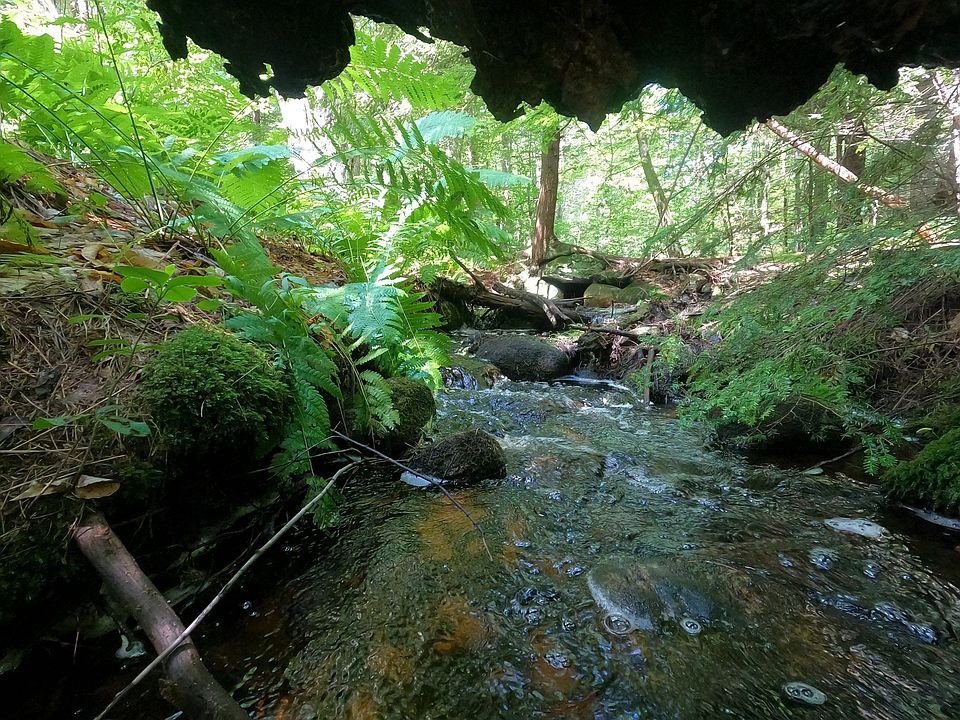
The listing describes the parcel as a waterfront property with direct access to the pond, stream frontage, and private water views. The property also has an inlet stream along its eastern border.
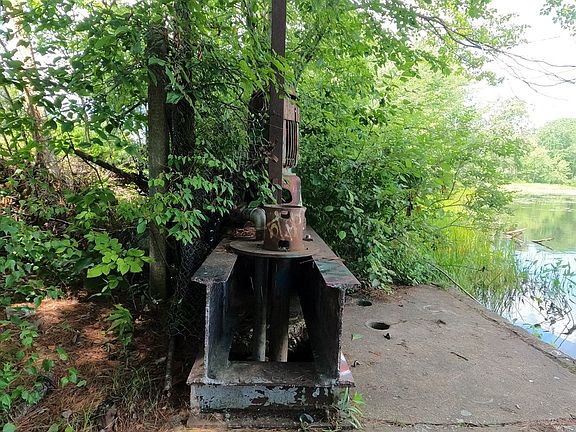
According to the listing, the inlet stream feeds the pond, while an outlet spillway is located near the southwest corner of the property. Water leaving the spillway eventually makes its way toward the Otter River.
These water features give the property a distinctive landscape compared with ordinary vacant land.
For people interested in natural environments, ponds, streams, wooded areas, and private water views, the property could be visually appealing. At the same time, the presence of substantial water resources introduces additional considerations involving drainage, wetlands, floodplain regulations, environmental restrictions, and engineering requirements.
Existing Earthen Dam Requires Attention
One of the most important details in the listing concerns an existing earthen dam.
The listing states that the dam is in need of repair, replacement, or removal. It also notes that removal of the dam could potentially result in additional land becoming available for use, but specifically advises buyers to seek the expertise of an engineer before relying on this possibility.
This is a major due-diligence issue.
A buyer should not assume that removing the dam automatically creates additional buildable land. Any decision involving a dam can involve engineering, environmental, permitting, water-management, and regulatory considerations.
Before purchasing the property, a prospective buyer may want to consult qualified professionals who can evaluate the dam, surrounding terrain, water flow, wetlands, floodplain conditions, and applicable Massachusetts and local requirements.
The condition of the dam could also have significant implications for the property’s future costs and potential uses.
Could the Property Be Developed?
The listing provides several details that may interest someone investigating future development possibilities, including nearby utilities and an existing road access arrangement. However, the available listing information does not establish that the property is currently approved for residential or commercial construction.
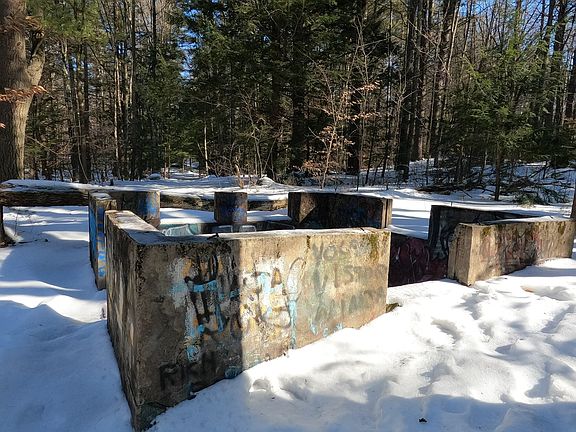
The property is described as having an irregular lot, with floodplain, wetlands, and wooded characteristics.
These conditions can substantially affect what can legally and practically be built on a parcel.
The listing also states that town water and sewer and three-phase power are nearby. “Nearby,” however, does not necessarily mean that these utilities are already connected to the property or that connection would be inexpensive.
Potential buyers should independently verify:
- Whether water service can be connected
- Whether sewer service can be connected
- The exact location of utility lines
- The cost of extending utilities
- Electrical service availability
- Road access and frontage requirements
- Building setbacks
- Wetland restrictions
- Floodplain requirements
- Conservation restrictions
- Zoning requirements
- Septic alternatives, if applicable
- Permits related to the pond and dam
- Any easements affecting the parcel
- Any title restrictions or encumbrances
Professional verification is especially important because vacant land can have very different development rules from an ordinary residential property.
Deed Access From Pond Street
Access is another important consideration.
According to the listing, deed access comes off Pond Street. This means prospective buyers should carefully examine the deed and title documents to understand the precise legal nature of the access.
An access right shown in a listing should not automatically be interpreted as the same thing as a conventional paved driveway or unrestricted road frontage.
A title company or real estate attorney can help determine the exact rights associated with the access, including its location, width, maintenance responsibilities, and any restrictions.
For a property with unusual terrain and a substantial pond, confirming legal and practical access before closing is particularly important.
Water, Wetlands and Floodplain Considerations
The listing identifies the parcel as having floodplain and wetlands characteristics.
These features are relevant to anyone considering construction, excavation, grading, landscaping, road improvements, or other changes to the property.
Wetland areas can be subject to environmental protections and permitting requirements. Floodplain areas can also have specific construction and land-use rules.
The presence of water should therefore be considered both an attraction and a potential limitation.
For recreational buyers, the pond and surrounding natural environment may be a central part of the property’s appeal. For a buyer hoping to construct buildings, however, the same features could make development significantly more complicated.
A professional wetlands delineation and site evaluation may be useful before making assumptions about where construction could occur.
What Does RA-1 Zoning Mean for This Property?
The listing identifies the zoning as RA-1.
Zoning classifications are important because they establish the types of uses that may be permitted, restricted, or subject to special approval. However, a zoning label by itself does not guarantee that a particular project can be developed.
Potential buyers should contact the appropriate municipal planning or zoning authorities to confirm the current rules applicable to this parcel.
Questions worth asking may include:
- What uses are permitted by right?
- What uses require a special permit?
- Are residential structures permitted?
- Are recreational uses permitted?
- Are there minimum lot-size requirements?
- How do wetlands affect the usable area?
- How does the floodplain affect construction?
- Are there restrictions associated with Depot Pond?
- What regulations apply to the existing dam?
- Would removing or modifying the dam require permits?
- Are there conservation restrictions on the property?
- What road and access standards apply?
These questions can help establish the difference between the property’s theoretical acreage and its practically usable area.
Nearby Utilities Could Be Relevant to Future Planning
Another noteworthy detail is the listing’s reference to town water and sewer and three-phase power nearby.
For land buyers, utility availability can be an important consideration because bringing utilities to undeveloped property can sometimes represent a substantial expense.
However, buyers should distinguish between utilities being “nearby” and utilities being available directly at the property boundary.
The cost of extending water, sewer, electricity, or other services depends on factors such as distance, terrain, easements, infrastructure capacity, municipal requirements, and connection fees.
Three-phase electrical power can also be relevant for certain commercial, agricultural, industrial, or specialized uses, although the listing does not establish that a particular commercial use is permitted.
An official utility availability inquiry would therefore be appropriate before assigning additional value to nearby infrastructure.
No HOA and No Existing Buildings
The property has no homeowners association, according to the listing.
It also does not contain a house, and the listing records zero bedrooms and zero bathrooms.
This means buyers are purchasing land rather than a finished residential property.
There is no existing home generating rental income, no established residential building, and no conventional house-related amenities described in the listing.
For that reason, this property should be evaluated differently from a typical Massachusetts home purchase.
The key questions revolve around land characteristics, access, zoning, water resources, engineering, environmental conditions, and potential future uses.
Potential Uses for the Property
Because of the property’s unusual characteristics, potential uses should be considered carefully and verified with local authorities.
Possible interests could include recreational land ownership, nature observation, water-related recreation where legally permitted, conservation purposes, or long-term land holding.
The property’s wooded areas, pond, stream, and private water views may also make it interesting to people who value natural landscapes.
However, the listing does not guarantee that any specific recreational, agricultural, residential, commercial, or conservation use is permitted.
A buyer should verify all proposed uses before purchasing.
Understanding the $10,000 Asking Price
At first glance, a $10,000 asking price for 21.25 acres may appear unusual.
The explanation is likely connected to the property’s unique characteristics rather than simply the amount of land.
The parcel is primarily associated with a pond, includes wetlands and floodplain areas, and contains an earthen dam requiring attention. There is also limited dry land according to the listing.
These factors can materially influence land value.
The property should therefore not be compared directly with conventional 20-acre parcels consisting mostly of dry, buildable land.
The low asking price may attract investors, land enthusiasts, engineers, conservation-minded buyers, and people specifically searching for unusual Massachusetts property. At the same time, the additional costs associated with investigation, permitting, engineering, environmental review, dam work, or future improvements could be significant.
Buyer Due Diligence Is Especially Important
Anyone considering LOT 21 Exchange St should conduct extensive due diligence before making an offer.
Important professionals may include a Massachusetts real estate attorney, land surveyor, civil engineer, wetlands specialist, environmental consultant, and other professionals depending on the intended use.
The buyer should also review the title, deed, survey, zoning information, tax records, utility information, flood maps, wetlands information, and any documentation related to the dam.
The property’s tax situation deserves particular attention as well.
According to the listing, the buyer is responsible for taxes due, estimated at approximately $61,335 as of May 21, 2026, with a stated per diem rate of $12.30.
Because tax balances can change, buyers should verify the current amount directly with the appropriate municipal authority before relying on the figure.
This is particularly important because the outstanding tax amount mentioned in the listing is substantially larger than the current asking price.
Property Taxes and the Total Cost of Ownership
The difference between the $10,000 asking price and the reported tax balance is one of the most important financial details associated with this listing.
A buyer should not evaluate the property based solely on the purchase price.
The total acquisition cost could include the purchase price, outstanding taxes, closing costs, legal fees, title work, surveying, engineering studies, environmental investigations, permitting, insurance, maintenance, and potential work associated with the dam or water-management infrastructure.
Potential buyers should obtain an up-to-date tax statement before proceeding.
They should also determine whether any other liens, assessments, municipal charges, or obligations are associated with the property.
Why This Templeton Property Is Getting Attention
The listing has generated significant online activity, with Zillow showing thousands of views and more than 200 saves.
That level of online attention is understandable given the unusual combination of factors: a very low asking price, more than 21 acres, a pond, waterfront access, wooded land, and a Massachusetts location.
Properties with unusual characteristics can attract attention from buyers who are searching for opportunities outside the conventional residential market.
Still, online interest should not be confused with development feasibility or investment performance. Views and saves indicate that people are looking at the listing, but they do not establish what the property can ultimately be used for.
Location in Templeton, Massachusetts
Templeton is a town in Worcester County in central Massachusetts.
The property’s location provides access to the rural landscape associated with the area, while the parcel itself offers a combination of wooded terrain and water features.
For buyers interested in Massachusetts land, Templeton may be worth researching separately to understand local zoning, infrastructure, property taxes, surrounding development, public services, and the broader real estate market.
Because the property is unusual, the local context is particularly important.
A buyer should examine neighboring parcels and determine how surrounding properties are being used. This can sometimes provide useful context, although neighboring development does not guarantee that the same uses will be permitted on this parcel.
Important Questions to Ask Before Buying
Before purchasing LOT 21 Exchange St, prospective buyers may want to obtain written answers to several questions.
Is the property buildable?
The listing does not establish that the entire parcel, or any specific portion of it, is currently buildable.
How much dry land exists?
The listing states that the property is primarily a pond with very little land. A survey should help establish the actual land area and boundaries.
What is required to repair, replace, or remove the dam?
A qualified engineer and appropriate regulatory authorities should be consulted.
Are the taxes current?
The listing identifies approximately $61,335 in taxes due as of May 21, 2026. The current balance should be independently verified.
Are utilities actually available to the parcel?
The listing says town water, sewer, and three-phase power are nearby. Buyers should confirm exact locations, connection requirements, and costs.
Is the deed access adequate?
The legal access from Pond Street should be reviewed by a qualified professional.
What portions are wetlands or floodplain?
A professional site evaluation and applicable government mapping can help answer this question.
Final Thoughts on LOT 21 Exchange St
LOT 21 Exchange St in Templeton, Massachusetts, is not a conventional vacant-land listing. The property combines 21.25 acres, Depot Pond, stream access, waterfront views, wooded areas, wetlands, floodplain characteristics, and an existing earthen dam.
The current asking price of $10,000 makes the listing particularly unusual, but the low price should be considered alongside the property’s reported tax obligations and the engineering and environmental questions associated with the site.
The property could attract buyers interested in unusual land, waterfront acreage, recreation, conservation, or long-term ownership. However, its suitability for construction or other specific uses cannot be determined from the listing alone.
Anyone considering the property should investigate zoning, title, taxes, access, wetlands, floodplain conditions, utilities, water rights, dam requirements, and potential permitting before committing to the purchase.
For buyers who understand the challenges of unusual waterfront land, LOT 21 Exchange St represents a distinctive property in Templeton. For buyers looking for a straightforward residential building lot, the property’s pond, wetlands, floodplain, and dam-related considerations mean that significantly more research may be necessary.
As with any land purchase, the listing information should be treated as a starting point rather than a substitute for professional due diligence. Current taxes, zoning regulations, utility availability, environmental restrictions, access rights, and development possibilities should all be independently confirmed before a purchase decision is made.
Property Snapshot
- Location: Templeton, Massachusetts 01468
- Street: LOT 21 Exchange St
- Property: Depot Pond
- Price: $10,000
- Acreage: 21.25 acres
- Waterfront: Yes
- Water features: Pond and stream
- Zoning: RA-1
- HOA: No
- Bedrooms: 0
- Bathrooms: 0
- Lot characteristics: Wetlands, floodplain, wooded, irregular
- Access: Deed access from Pond Street
- Utilities: Town water, sewer and three-phase power reported nearby
- Dam: Existing earthen dam requiring evaluation
- MLS: 73522527
- Parcel: M:0605 B:00021 L:00000
- Listing updated: September 3, 2026
Disclaimer: Property information, pricing, taxes, availability, zoning, utility details, and other listing information can change. Prospective buyers should independently verify all information with the listing agent, municipal authorities, appropriate professionals, and official records before making financial or real estate decisions.
 \
\


From Zillow