Uncategorized
What Animal Do You See First? This Optical Illusion May Reveal How Your Mind Processes the World

What Animal Do You See First? This Optical Illusion May Reveal How Your Mind Processes the World
Posted on October 3, 2026
Have you ever looked at a cloud and suddenly noticed a familiar face? Or stared at a piece of wood and realized the knots looked surprisingly like a pair of eyes?
Our brains are remarkably good at finding recognizable patterns in ordinary objects. Sometimes, all it takes is a few dark shapes, curved lines, or unusual shadows for an everyday object to suddenly resemble an animal.
That is exactly what makes this optical illusion so entertaining.
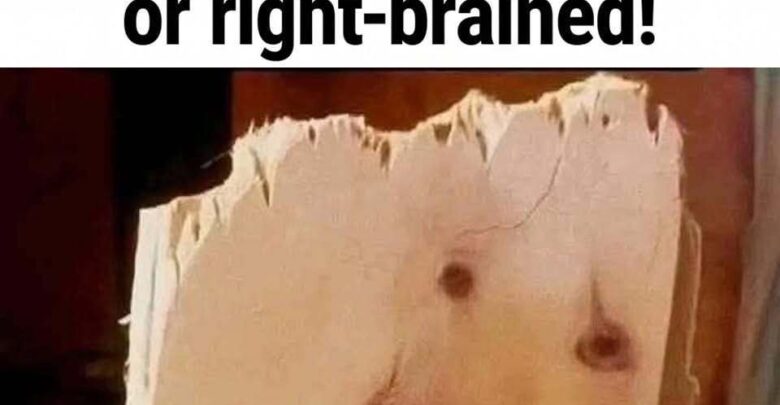
At first glance, the image appears to show nothing more than a rough piece of timber. Its surface contains natural cracks, dark knots, uneven grain, and circular patterns created by the wood itself. But when you look more closely, several animal shapes can seem to emerge from those completely natural features.
Some viewers notice a rabbit first.
Others see a fish.
And many people immediately recognize a dog.
So, what did you see first?
Before reading the interpretations below, take another look at the image and trust your first reaction. Don’t spend too much time searching for an answer. The interesting part of these visual puzzles is often what your eyes notice before your conscious mind starts analyzing the picture.
A Simple Piece of Wood Can Become Something Completely Different
The photograph appears to show a weathered section of timber with a rough upper edge, several dark knots, and swirling grain toward the lower portion.
Objectively, there is nothing mysterious about the material. Wood naturally develops knots, cracks, rings, shadows, and irregular textures as it grows and ages.
Yet the human visual system doesn’t simply record those details like a camera.
Your brain immediately attempts to organize what your eyes are seeing. It searches for familiar shapes and patterns and tries to determine whether the information resembles something you already know.
That is why two people can look at exactly the same image and describe completely different things.
One person may see two long ears and immediately think, “rabbit.”
Another may turn the image mentally and notice a long body and fins, leading them toward a fish.
Someone else may focus on two dark knots above a circular shape and suddenly see a friendly-looking dog.
None of these reactions is necessarily wrong.
The image is ambiguous enough to allow different interpretations.
And that is precisely what makes it fun.
If You Saw a Rabbit First
Did your eyes immediately travel toward the upper portion of the timber?
If the rough edges reminded you of long ears, you may have noticed the rabbit before anything else.
In popular optical-illusion interpretations, people who see the rabbit first are often described as intuitive and imaginative. They may naturally pay attention to the overall impression of something instead of immediately breaking it down into tiny individual pieces.
Think about the difference between looking at a forest and looking at one tree.
A person with a broad visual perspective might notice the shape of the entire forest first. Someone with a highly detailed perspective might immediately notice the unusual bark on one particular tree.
Seeing the rabbit can be interpreted as a preference for the broader picture.
You might enjoy situations where you have room to experiment rather than following a rigid set of instructions. When something doesn’t go according to plan, you may be comfortable improvising.
Perhaps you’re the person who looks at leftover ingredients in the refrigerator and thinks, “I can make dinner out of this.”
Or maybe you enjoy rearranging furniture without following a specific design plan.
You see possibilities.
That doesn’t necessarily mean you are careless or spontaneous all the time. It simply suggests that your attention may naturally move toward shapes, relationships, and possibilities rather than isolated details.
The Rabbit Interpretation
According to the playful interpretation of this visual test, rabbit viewers may be:
- Imaginative
- Intuitive
- Curious
- Comfortable with change
- Interested in the bigger picture
- Creative when solving everyday problems
Of course, this is a lighthearted interpretation rather than a scientific personality assessment.
The fun comes from seeing whether the description feels familiar.
If You Saw a Fish First
Perhaps you didn’t see a face at all.
Instead, your eyes traveled across the timber horizontally, and suddenly the shape looked like a fish.
The elongated grain may have created the impression of a body, while the fractured edges can resemble fins. A circular knot toward one end may even look like an eye or mouth.
This interpretation requires you to organize the image differently.
Rather than focusing on the two dark knots in the center, you may have noticed the direction of the entire piece of wood.
In popular personality-test interpretations, people who notice the fish first are sometimes described as observant, practical, and detail-oriented.
You may be someone who notices things other people overlook.
Maybe you spot when a picture is hanging slightly crooked.
Perhaps you can hear when an appliance is making a different sound than usual.
Or maybe you are the person in your household who remembers exactly where every tool belongs.
You may also prefer having a plan before beginning a complicated project.
If you’re organizing a trip, for example, you might already have the route, hotel confirmation, restaurant reservations, and backup plan ready before everyone else has decided where they want to go.
The Fish Interpretation
The playful interpretation suggests that people who see the fish may be:
- Observant
- Practical
- Organized
- Methodical
- Patient
- Comfortable with step-by-step tasks
Again, this is not a diagnostic test.
Your first visual impression can be influenced by many factors, including the angle from which you view the image, where your eyes happen to land first, and what shapes your brain recognizes most quickly.
Still, it can be surprisingly entertaining to compare your answer with friends and family.
If You Saw a Dog First
For many people, the dark knots in the timber immediately resemble a pair of eyes.
Then the circular pattern beneath them looks like a nose.
Suddenly, the wood appears to have transformed into the face of a dog.
If that was the first animal you noticed, popular interpretations associate your choice with flexibility and contextual awareness.
The dog interpretation depends heavily on seeing several individual details as part of one larger image.
Two knots become eyes.
A lower circular mark becomes a nose.
The surrounding grain becomes the outline of a face.
Your brain isn’t necessarily looking at each feature separately. It is combining them into a single recognizable object.
People who see the dog first are sometimes described in these playful tests as adaptable thinkers who can move between details and the bigger picture.
You may enjoy solving practical problems while still leaving room for creativity.
For example, you might be able to imagine how you want a garden to look while also thinking about how much soil, wood, or time the project will require.
You can dream about the finished result while still thinking about how to get there.
The Dog Interpretation
According to the lighthearted interpretation, dog viewers may be:
- Adaptable
- Observant
- Balanced
- Socially aware
- Practical
- Comfortable looking at situations from different angles
And there is another reason the dog may stand out.
Humans are particularly sensitive to faces.
Even when a face isn’t really there, our brains can become surprisingly eager to find one.
Why Do We See Animals in Wood?
The phenomenon behind this kind of visual illusion is called pareidolia.
Pareidolia describes our tendency to perceive recognizable forms in ambiguous or random patterns.
It’s why someone might see:
- A face in the clouds
- A rabbit in a shadow
- A smile in the front of a car
- A person in a rock formation
- An animal in tree bark
- Eyes in two knots of wood
The pattern itself doesn’t have to contain an actual face or animal.
Our brains supply the interpretation.
This happens because perception isn’t simply about receiving information. The brain also uses previous experience and expectations to interpret that information.
When two dark circles appear above a curved shape, the arrangement may resemble a face. The brain recognizes the familiar configuration incredibly quickly.
You don’t have to consciously tell yourself, “Two dark circles are positioned above another shape, so perhaps this represents a face.”
The recognition happens automatically.
That is one reason optical illusions can feel so immediate.
Why Your First Answer Can Be Different From Someone Else’s
Imagine showing this picture to five people sitting around a table.
One person might immediately shout, “Dog!”
Another might say, “That’s obviously a rabbit.”
A third person might rotate the image and insist, “It’s a fish.”
Then everyone starts wondering how the others could possibly see something different.
But that’s the fascinating part.
Our eyes may receive similar visual information, while our brains organize it differently.
Where you look first matters.
The amount of attention you give to a particular feature matters.
The orientation of the image matters.
And your previous experiences can also influence what a shape reminds you of.
If you see a dog immediately, someone else’s rabbit may be almost impossible to notice at first.
Once your brain commits to an interpretation, the other possibilities can seem to disappear.
Can You Find All Three Animals?
Try this simple experiment.
First, look at the image normally and identify the animal you noticed first.
Then deliberately try to forget that interpretation.
Step One: Look at the Top
Focus on the rough, broken edges near the top of the wood.
Can you see anything resembling long ears?
If so, you may be able to find the rabbit.
Step Two: Change the Orientation
Now mentally turn the image sideways.
Look at the longer horizontal lines created by the grain.
Do those lines form something resembling a fish?
Changing orientation can dramatically alter the way ambiguous shapes are interpreted.
Step Three: Focus on the Dark Knots
Now return the image to its original position.
Look closely at the darker circular areas.
Can you imagine them as a pair of eyes?
Then move your attention toward the circular shape below them.
Does the entire arrangement begin to look like a dog?
Once you discover another interpretation, it may suddenly become impossible to unsee.
That is one of the most entertaining qualities of optical illusions.
Your Brain Likes Efficient Explanations
Your visual system processes enormous amounts of information every moment.
It would be inefficient to consciously analyze every line, shadow, texture, and object around you from scratch.
Instead, the brain uses patterns and familiar categories to make sense of the environment quickly.
That is extremely useful in everyday life.
Imagine walking outside at night.
You see a dark shape near the sidewalk.
Your brain doesn’t calmly spend several minutes analyzing every pixel. It quickly asks: Is that a person? An animal? A bush? A shadow?
Rapid pattern recognition allows you to react before you’ve consciously identified every detail.
The same general ability is involved when you see a face in a piece of wood.
The difference is that, in the optical illusion, there is no actual animal.
Your brain is simply finding the most familiar explanation for an ambiguous arrangement of shapes.
The Popular “Left Brain vs. Right Brain” Explanation Isn’t Quite Accurate
Some viral personality tests claim that seeing one particular animal proves you are more “left-brained” or “right-brained.”
That explanation is catchy, but it oversimplifies how the brain works.
Human perception doesn’t divide neatly into one side responsible for logic and the other responsible for creativity.
Different brain regions communicate constantly.
Recognizing a shape can involve visual processing, memory, attention, spatial relationships, and pattern recognition.
So seeing a rabbit doesn’t prove that you’re more creative, and seeing a fish doesn’t prove that you’re more logical.
The animal you notice first is better treated as a fun observation than a scientific personality measurement.
That distinction is important because entertaining visual quizzes and validated psychological assessments are very different things.
Why These Puzzles Are So Popular
There is something satisfying about an image that seems ordinary at first and mysterious a second later.
You look at it.
You don’t see anything unusual.
Then someone points out a shape.
Suddenly, you see it.
And after that, you can’t stop seeing it.
These puzzles work particularly well on social media because they invite participation.
Instead of simply reading an article, you become part of it.
You have an answer.
Someone else has another answer.
Then the conversation begins.
“How did you see the fish?”
“There’s obviously a dog!”
“Wait, turn the picture sideways!”
That simple interaction is part of the appeal.
A Small Reminder About Online Personality Tests
It’s perfectly fine to enjoy these visual tests for entertainment.
Just remember that a single optical illusion cannot accurately determine your personality, intelligence, emotional traits, or psychological profile.
Human beings are far more complicated than a three-choice picture.
Your first impression can also change depending on your screen size, lighting, viewing distance, image quality, and even your mood.
That’s why the most interesting question isn’t necessarily, “What does my answer prove about me?”
A better question might be:
“Why did my brain notice that shape before the others?”
That question opens the door to something much more interesting—how perception actually works.
Look Again Before You Scroll Away
Now that you’ve read the different interpretations, go back to the image one more time.
Do you still see the same animal?
Perhaps the rabbit is obvious now.
Maybe the fish suddenly appears when you turn the image sideways.
Or perhaps you can’t stop seeing the dog.
There is no right or wrong answer.
The real trick is that the same piece of wood can become three different animals depending on how you organize its shapes.
And that is a useful reminder about perception in general.
Sometimes we become so accustomed to seeing something one way that we stop noticing other possibilities.
A small change in perspective can reveal something that was there all along.
So the next time you notice an unusual shape in a piece of furniture, a cloud, a wall, or a tree, pause for a moment.
Look again.
You might discover a face.
You might find an animal.
Or you might simply discover that your brain is doing something remarkably clever with an ordinary collection of lines and shadows.
So, What Did You See First?
🐇 Rabbit: You may have noticed the larger shape and overall silhouette first.
🐟 Fish: You may have focused on direction, structure, and the horizontal grain.
🐶 Dog: You may have quickly connected the dark knots and circular pattern into a familiar face.
Whatever you saw first, there’s no need to take the result too seriously.
The fun is in comparing answers, challenging your perception, and discovering how differently people can interpret exactly the same image.
Now look at the picture one more time—and see if you can find all three.