
Valerie Perrine: A Remarkable Screen Career Built on Strength, Versatility, and Authenticity
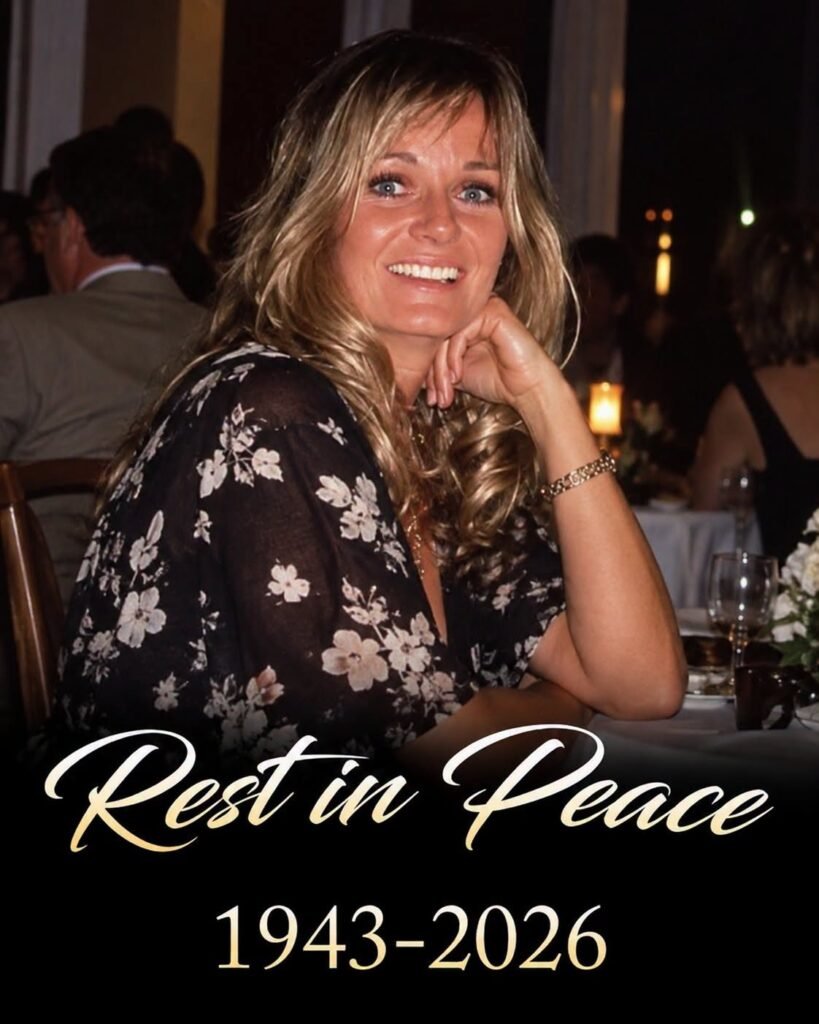
Valerie Perrine built a career in Hollywood by bringing something difficult to manufacture: authenticity. At a time when the film industry often placed actresses into narrowly defined categories, Perrine developed a screen presence that allowed her to move between glamour, comedy, drama, romance, and emotionally demanding roles without losing the individuality that made her memorable.
Her career reached a particularly important point during the 1970s, when American cinema was becoming more willing to explore complicated characters and stories that did not always follow traditional formulas. Perrine became part of that changing landscape, appearing in films that allowed audiences to see her not simply as a glamorous performer, but as an actress capable of portraying vulnerability, humor, determination, and emotional complexity.
Her journey from Las Vegas to Hollywood is part of what makes her story so interesting. Before becoming widely recognized on screen, Perrine had already developed the confidence and stage presence that would later become important elements of her acting career. Her early experiences helped prepare her for an industry where personality, timing, and the ability to connect with an audience could be just as important as conventional ideas of stardom.
Over the decades, Valerie Perrine became associated with a number of memorable performances, including her work in Lenny, Superman, and other productions that helped establish her as a recognizable figure in American entertainment.
Her career also reflects a broader story about Hollywood: the challenge of remaining visible and respected while navigating changing tastes, changing opportunities, and the realities of getting older in an industry often obsessed with youth.
From Las Vegas to the Entertainment World
Valerie Perrine was born in Galveston, Texas, but she was raised in an environment strongly connected to the entertainment world. Her father, Win Perrine, worked as a United States Army officer, while her mother, Winifred, was involved in the world of dance.
Perrine eventually became associated with Las Vegas, where she worked as a showgirl.
That experience was significant because performing in Las Vegas required more than simply looking the part. Live entertainment demanded confidence, timing, physical awareness, and an understanding of how to hold an audience’s attention.
The transition from live performance to acting was not necessarily an obvious path, but Perrine demonstrated that she possessed qualities that could translate effectively to film and television.
Hollywood in the late 1960s and early 1970s was undergoing major changes. Younger audiences were looking for different kinds of stories, filmmakers were experimenting with new approaches, and actors were increasingly being given opportunities to portray characters with greater psychological depth.
Perrine entered this environment at an interesting moment.
Establishing Herself as an Actress
One of Perrine’s most important career developments came when she began receiving opportunities to demonstrate that she could do more than play a conventional glamorous role.
Her appearance in Lenny, directed by Bob Fosse and released in 1974, became a particularly important moment in her career.
The film was based on the life and career of comedian Lenny Bruce, and Perrine played Honey Bruce, his wife.
The role gave her an opportunity to participate in a serious dramatic production alongside Dustin Hoffman, who portrayed Lenny Bruce.
Perrine’s performance received considerable recognition and helped establish her as an actress capable of handling complex material.
The film itself was not a conventional Hollywood comedy or romantic story. It explored the controversial career of Bruce and the pressures surrounding his personal and professional life.
For Perrine, participating in such a production demonstrated that she could operate successfully within a demanding dramatic environment.
The Importance of “Lenny”
Looking back at Perrine’s career, Lenny is frequently regarded as one of the defining projects of her early film work.
Her performance earned her an Academy Award nomination for Best Supporting Actress.
That recognition was particularly meaningful because it helped challenge the idea that her appearance and background as a Las Vegas performer defined the limits of her abilities.
Instead, she showed that she could portray a character with emotional dimension while working alongside highly respected dramatic actors.
The success of the performance also reflected something important about Perrine’s approach to acting.
She did not need to erase her natural charisma in order to appear serious. Instead, she could use that charisma while allowing a character’s emotional circumstances to remain central.
That balance would continue to be part of her career.
Becoming Part of the Superman Phenomenon
Another major chapter in Valerie Perrine’s career came with the 1978 superhero film Superman.
Directed by Richard Donner, the movie became one of the landmark superhero productions of its era.
Perrine played Eve Teschmacher, a character who brought humor, glamour, and personality to the story.
Working alongside Christopher Reeve, Gene Hackman, and Margot Kidder, Perrine became part of a cast that helped define the cinematic image of Superman for generations of moviegoers.
Eve Teschmacher was not simply a background character. She had a recognizable personality and served an important role in the story involving Lex Luthor.
Perrine’s performance combined comic timing with a glamorous screen presence, creating a character who could stand out within a large ensemble.
Why Eve Teschmacher Remains Memorable
One reason Perrine’s performance in Superman has endured is that Eve Teschmacher occupies an unusual place within the film.
She is surrounded by larger-than-life characters, including Superman and Lex Luthor, yet she remains distinctly human.
Her relationship with Luthor adds another dimension to the character, while her interactions with Superman provide some of the film’s lighter moments.
Perrine understood how to make those moments work without turning the character into a caricature.
That ability to balance humor and personality became one of her strengths.
For many viewers, Eve Teschmacher remains one of the recognizable supporting characters from the original Superman films.
A Career Beyond One Defining Role
Although Superman became an important part of Perrine’s legacy, her career cannot be reduced to a single character.
She continued working in film and television and appeared in a wide variety of productions.
That range is important because Hollywood careers are often remembered through one or two highly visible performances, while the broader body of work can be overlooked.
Perrine’s filmography includes dramatic roles, comedies, television appearances, and productions that allowed her to explore different sides of her abilities.
Her career demonstrated a willingness to move between genres rather than remain permanently associated with one type of role.
Comedy and Dramatic Timing
Perrine’s abilities as a performer included a strong sense of comic timing.
Comedy can be deceptively difficult because successful comedic acting often depends on restraint. A performer has to understand when to react, when to pause, and when to allow another actor or the situation itself to deliver the joke.
Perrine’s experience in live entertainment likely helped her develop that instinct.
At the same time, her dramatic work showed that she could move away from comedy when the material required greater emotional intensity.
This combination gave her career versatility.
She could appear glamorous without being limited to glamour, and she could be funny without being confined to comedy.
Hollywood’s Changing Expectations of Women
Perrine’s career also provides an opportunity to examine the changing expectations placed on women in Hollywood.
For decades, actresses have often had to navigate a difficult contradiction. They may be celebrated for their appearance while simultaneously being expected to prove that they are serious performers.
Perrine experienced both sides of this equation.
Her early career was connected to the visual culture of Las Vegas and Hollywood, but her work in projects such as Lenny demonstrated that she was capable of much more than conventional glamour.
Her career therefore reflects a broader transition in American cinema, particularly during the 1970s, when actresses increasingly received opportunities to portray women with more complicated personalities and circumstances.
The Value of Authentic Screen Presence
One of the qualities associated with Perrine’s performances is a sense of individuality.
Some actors disappear almost completely into a role. Others retain certain qualities of their own personality while transforming them to serve the character.
Perrine belonged to the second category.
Her voice, expressions, timing, and physical presence gave her performances a recognizable identity.
That can be an advantage in an industry where actors compete for limited opportunities.
A distinctive performer can leave a stronger impression even when appearing in a supporting role.
Working During a Golden Period of American Cinema
Perrine’s rise coincided with a particularly influential period in American film.
The 1970s produced a generation of filmmakers and performances that changed the relationship between Hollywood studios and audiences.
Films became more willing to explore controversial subjects, flawed protagonists, social issues, and unconventional storytelling.
Perrine’s work in Lenny placed her directly within this period of cinematic experimentation.
Then, only a few years later, Superman demonstrated how Hollywood could combine sophisticated filmmaking with the enormous entertainment appeal of a major commercial production.
Being part of both kinds of cinema helped give Perrine a particularly interesting career profile.
The Enduring Appeal of Superman
The continued popularity of Superman has ensured that Perrine’s performance as Eve Teschmacher remains accessible to new generations.
The movie has become an important part of superhero cinema history, particularly because it helped demonstrate that comic-book characters could be presented as major cinematic entertainment.
Perrine’s contribution to that film is part of its lasting ensemble appeal.
Even viewers who discover the movie decades after its original release can appreciate the contrast between the serious heroism of Superman, the eccentric villainy of Lex Luthor, and the more playful personality of Eve Teschmacher.
That tonal variety helped make the film memorable.
Maintaining a Career Through Changing Times
One of the less-discussed challenges of an acting career is longevity.
The entertainment industry changes rapidly. Genres become popular and disappear. Studios change their priorities. Television evolves. Audiences develop different tastes.
Actors therefore have to adapt.
Perrine worked across multiple periods of American entertainment, giving her career a longevity that extends beyond the era in which she first became famous.
Rather than being remembered only as a performer from one particular decade, she became part of the larger history of American film and television.
Valerie Perrine and the Reality of Aging in Hollywood
The subject of aging in Hollywood is complicated, particularly for women.
The entertainment industry has historically placed enormous emphasis on youth and physical appearance.
For actresses who became known for beauty as well as acting ability, aging can create additional challenges.
Perrine’s career provides a reminder that an actor’s contribution cannot be measured solely by appearance or the number of major roles received during a particular decade.
A lasting career is also about the cultural memory created by performances.
Once an actor has contributed to influential films, those performances can continue to reach audiences long after their original release.
Health Challenges and Public Respect
In later years, Perrine’s life also became associated with health challenges.
It is important to discuss this part of her story respectfully and without turning personal difficulties into sensational entertainment.
Public figures are often subjected to intense speculation about their private lives and health. A more responsible approach is to recognize the human dimension while focusing on verified information and the person’s professional legacy.
Perrine’s work remains the central reason she continues to be remembered.
Her career demonstrates that an actor’s influence can survive periods when they are less visible in mainstream entertainment.
Why Her Performances Still Matter
Perrine’s strongest legacy comes from the combination of memorable characters and a distinctive personality.
She was able to make supporting roles meaningful.
That is an important artistic achievement.
Cinema depends not only on its leading characters but also on the performers who create believable worlds around them.
A memorable supporting character can sometimes become one of the elements audiences remember most.
Perrine demonstrated this with Eve Teschmacher, while her dramatic work in Lenny showed that she could handle more serious material.
Together, these performances form a career that is broader than any single genre.
A Different Kind of Hollywood Legacy
Hollywood legacies are often built around awards, box-office records, or iconic leading roles.
But there is another kind of legacy: the ability to remain recognizable and appreciated by audiences across generations.
Valerie Perrine represents that kind of legacy.
She appeared during an important period of cinematic change and contributed to productions that remain culturally relevant.
Her work also demonstrates that performers can challenge expectations without necessarily rejecting the qualities that first made them attractive to audiences.
She could be glamorous and serious, humorous and dramatic, recognizable and versatile.
The Importance of Lenny and Superman in Her Career
If two productions help illustrate the range of Valerie Perrine’s career, they are undoubtedly Lenny and Superman.
Lenny revealed her ability to participate in serious dramatic filmmaking and earned her an Academy Award nomination.
Superman showcased her comic timing and charisma within one of the most recognizable superhero stories in cinema.
The contrast between these productions is precisely what makes her career interesting.
They demonstrate that Perrine was not limited to a single screen identity.
She could adapt to different directors, genres, tones, and audiences.
Remembering Valerie Perrine as a Complete Performer
It is easy to remember actors through isolated images.
For Valerie Perrine, that might mean remembering Eve Teschmacher, a particular appearance, or the glamorous image associated with her early career.
But a more complete understanding of her work reveals a performer with a much wider range.
Her journey included live entertainment, dramatic cinema, major commercial filmmaking, television, comedy, and character-driven performances.
Each stage contributed to the larger story.
That is why her career deserves to be considered as a whole rather than through one iconic role.
Final Thoughts
Valerie Perrine’s career is a story of talent, adaptability, and individuality.
From her early connection to Las Vegas entertainment to her breakthrough in serious cinema and her memorable role in Superman, she developed a career that crossed boundaries between glamour, comedy, drama, and popular entertainment.
Her performance in Lenny demonstrated her dramatic capabilities and earned major industry recognition. Her appearance as Eve Teschmacher in Superman introduced her to a much broader international audience and helped establish a character that remains recognizable decades later.
But perhaps the most meaningful aspect of Perrine’s legacy is the fact that she refused to fit neatly into one category.
She could bring humor to a scene without losing emotional credibility. She could embody glamour without allowing appearance to become the entirety of her identity. She could participate in major commercial productions while also taking on serious dramatic material.
Her career also reflects the complicated realities of Hollywood, particularly for women navigating an industry that often places enormous emphasis on appearance and youth.
Yet performances that genuinely connect with audiences have a way of outliving those temporary standards.
That is the lasting value of Valerie Perrine’s work.
Her films remain available to new generations, her characters continue to be discussed, and her contribution to American cinema remains part of the broader history of an era when Hollywood was undergoing enormous creative change.
Rather than defining her legacy through a single moment, it is more appropriate to recognize the complete journey: the performer who developed confidence in live entertainment, the actress who earned critical recognition for dramatic work, the charismatic presence who became part of superhero movie history, and the artist whose performances continue to give audiences a reason to remember her.
Valerie Perrine’s place in cinema is ultimately built on that combination of talent, personality, versatility, and enduring screen presence.
And that is a legacy that can remain meaningful long after the spotlight of any particular era has faded.