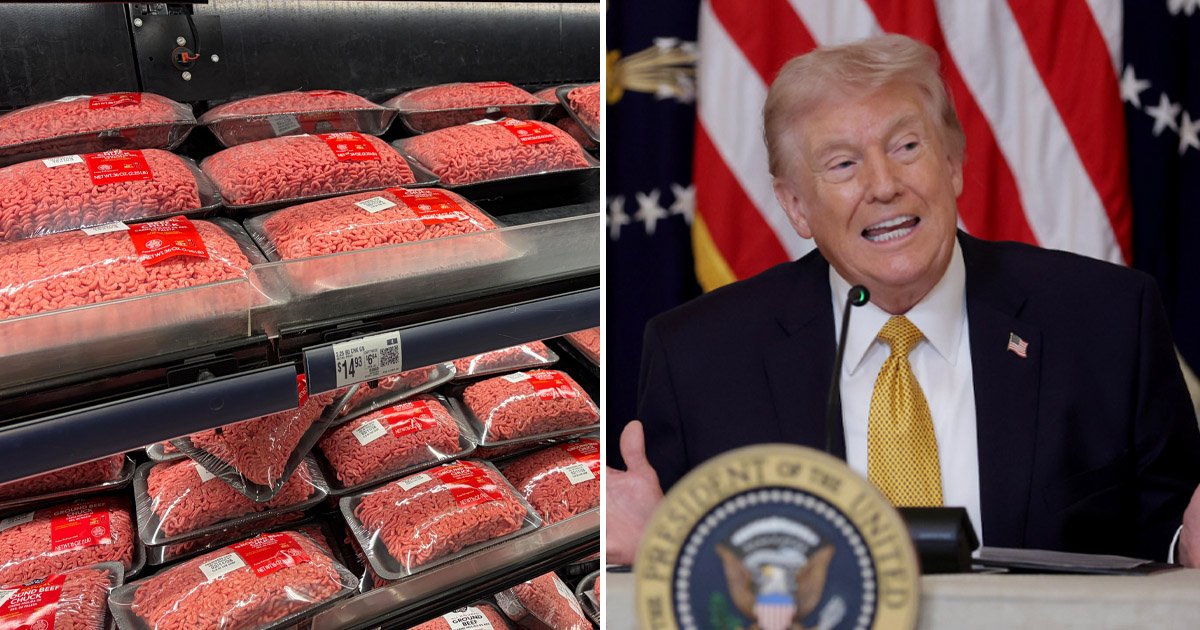
The next time you pick up a package of ground beef at the grocery store, you may want to spend a few extra seconds reading the label.
A USDA sticker doesn’t necessarily mean the beef you’re buying came from an American cow. And with more imported beef now entering the U.S. market, knowing what those labels actually mean could become increasingly important for shoppers.
The Trump administration has temporarily expanded the amount of lean beef trimmings that can enter the U.S. at the lower, in-quota tariff rate. The change allows up to 300,000 metric tons of additional lean beef trimmings into the country over a 90-day period, according to the New York Post.
The imports are intended for use in ground beef. Lean trimmings can be combined with fattier beef to create products with different lean-to-fat ratios, including familiar varieties such as 80/20 and 90/10.
The move is intended to increase the supply of beef available to consumers and help ease high prices. It comes as the U.S. cattle herd has fallen to its lowest level in 75 years.
The administration is also monitoring whether the imported beef is being sold at a price 25% below the market price for lean beef trimmings. The White House says the measure is intended to give American ranchers more time to rebuild their herds while helping address supply problems.
Here’s what those labels actually tell you
But for anyone standing in the meat aisle wondering whether the package in front of them contains American beef, the important information is hiding in the fine print.
If you want beef that came entirely from animals raised in the United States, look for wording such as “Product of USA” or “Made in the USA.”
Those labels indicate that the beef is exclusively from animals born, raised, slaughtered and processed in the United States.
Shoppers may also encounter labels reading “Born, Raised, and Harvested in the USA” or “American Grassfed Association (AGA) Certified.”
Country-of-origin information can also appear in small print near the nutrition facts panel or ingredient list. That is where shoppers can find information about imported or mixed-origin beef.
The USDA inspection mark can provide another useful piece of information. It appears as an oval stamp with an establishment number inside. That number can be searched to identify the facility where the beef was processed.
But there is a catch: where beef was processed is not necessarily where the cattle came from.
A package can say the meat was “packed” or “processed” in the United States even when the cattle were raised and slaughtered somewhere else. The meat may simply have been cut or re-wrapped at an American facility.
USDA rules also allow ground meat from different countries to be “commingled.” When that happens, the applicable countries should be identified on the package.
So a U.S. processing location alone shouldn’t be taken as proof that the beef itself is American.
How to know where the meat is from
There is another common source of confusion.
“USDA Prime,” “USDA Choice” and “USDA Select” are not country-of-origin designations. They are quality grades based on factors such as tenderness and the amount of fat marbling in the meat.
The USDA inspection label is different again.
Inspection is mandatory and concerns whether meat is safe and wholesome. Grading is voluntary and evaluates the quality of the product. That means beef can be imported and still carry a USDA inspection marking or a USDA quality grade.