Hidden within a quiet lakeside grove, where mature birch trees rise through weathered porch floorboards and wildflowers spill toward the calm shoreline, stands a remarkable Queen Anne Victorian family house whose vibrant colors still resist the passage of time. Painted in faded turquoise with rich coral-red trim and cheerful mustard-yellow spindlework, the three-story residence retains a welcoming warmth despite decades of abandonment. Its broad wraparound porch sweeps gracefully around rounded corners, softening the building’s silhouette and creating a continuous connection between architecture and landscape.
The home’s most recognizable feature is its tall octagonal turret, now leaning ever so slightly after generations of slow settling. Rather than diminishing the house, the gentle tilt gives it an unmistakable personality, while the weathered plum-purple slate roof climbs into steep, uneven peaks punctuated by irregular dormers. Decorative brackets curl elegantly beneath the eaves, and stained-glass bay windows—each subtly different in size—scatter muted jewel-like colors across the weathered façade whenever daylight filters through the clouds.
Although nature has steadily reclaimed the estate, the craftsmanship remains unmistakable. Birch trunks now pass directly through sections of the expansive porch, their branches reaching toward the roof while vines weave around carved columns without fully concealing their intricate detailing. Nearby, a dry cracked stone fountain anchors the center of the neglected garden, surrounded by dense grasses and colorful lakeside wildflowers. Resting quietly beneath the shade of the trees is a faded wooden rocking horse, its chipped paint and worn surfaces offering a silent reminder of the family life that once animated every room.
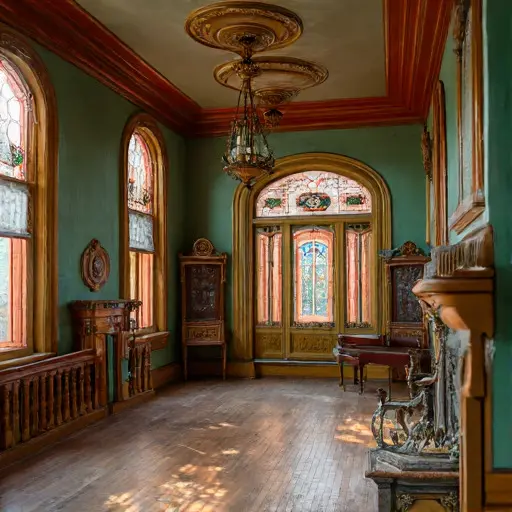
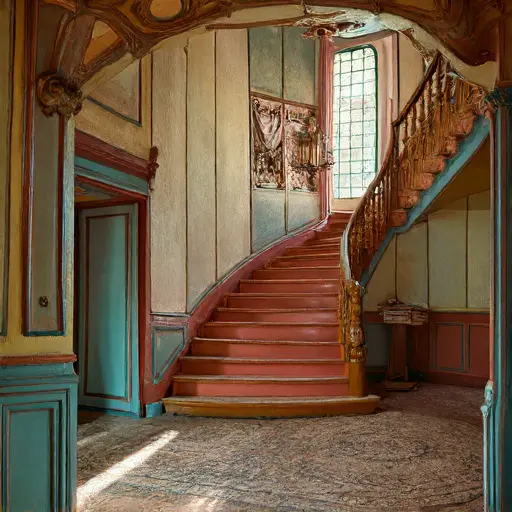
Inside, the house still reflects the optimism of Victorian domestic design. Spacious parlors flow into richly decorated sitting rooms, connected by graceful hallways and illuminated by generous stained-glass windows. The varying proportions of each bay window create shifting patterns of colored light throughout the day, while elaborate spindlework and carved moldings continue to display the remarkable craftsmanship of the period despite years of neglect.
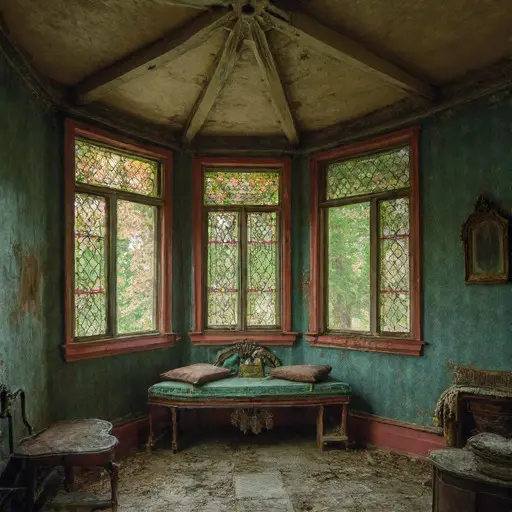
Today, the manor rests peacefully beside the lake, embraced by trees that have slowly become part of its structure. Peeling paint, weathered slate, worn stone, and aged timber combine with flowering vegetation to create an atmosphere of quiet endurance rather than decay. The house remains less a forgotten ruin than a living landmark—its colorful architecture continuing to brighten the shoreline long after its original residents have disappeared.