News
The 710 Oil Cap Mystery: A Joke With an Upside-Down Answer
The 710 Oil Cap Mystery: A Joke With an Upside-Down Answer

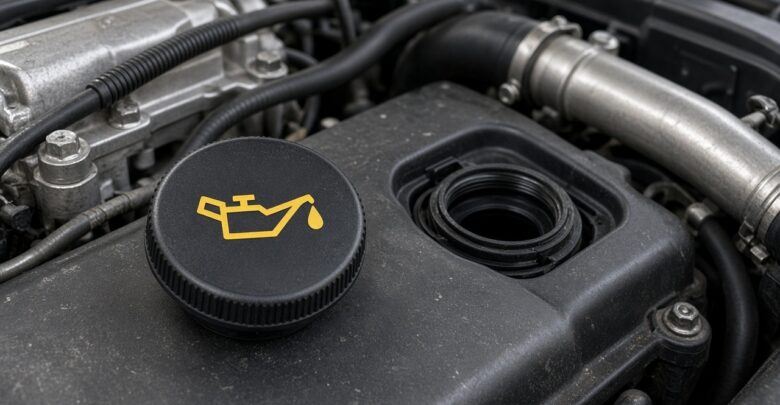
The 710 Oil Cap Joke: A Simple Mystery With an Upside-Down Answer
Sometimes a confusing problem needs a surprisingly simple solution. No special tools, long explanation, or expert knowledge—just a different way of looking at what is already there.
That is the idea behind the 710 oil cap joke, a short automotive story built around a mistaken reading. A customer needs a replacement car part. She cannot remember its name, but she remembers seeing something that looks like “710.”
The answer? She is looking for an oil filler cap. Turn the right style of lettering upside down, and what appeared to be 710 becomes OIL.
Although the punchline takes only a moment to explain, the misunderstanding makes a fun little puzzle. It also gives us a friendly reminder that an unfamiliar object can seem much more mysterious when we view it from the wrong direction.
The accompanying images are illustrations, not photographs documenting a verified customer or repair-shop incident.
A Customer Searches for a Mysterious Car Part
In the story, a woman visits an auto parts store because she needs a replacement cap for her car. However, she does not know the proper name of the part.
Instead, she shares the detail she remembers: the marking on top appears to say 710.
From her point of view, that seems like useful information. After all, unfamiliar products often carry numbers, and a number might help someone identify the correct item. She has noticed a clear marking and brought it to a person who might understand it.
Unfortunately, the apparent number sends the conversation in the wrong direction. Without the missing context, 710 sounds like a code rather than a familiar word.
To explain her request more clearly, she draws the cap. That drawing finally provides the clue needed to solve the mystery.
Someone turns the picture upside down.
Suddenly, the strange number makes sense.
The Answer Was OIL All Along
Once the drawing turns, the marking reads OIL.
The customer has been looking at the letters from the opposite direction. What seemed like a technical number was simply a label viewed upside down.
That is the entire punchline. There is no hidden equation, unusual engine part, or complicated repair involved. The joke depends on recognizing the same shapes in a new orientation.
Before the turn, the request sounds puzzling. Afterward, it becomes obvious.
This quick change gives the story its humor. The customer has not forgotten every useful detail about the part. In fact, she remembers the most helpful marking. She has simply read it from the wrong side.
Meanwhile, the listener may make the same mistake by accepting “710” as a number without questioning its direction.
The solution feels satisfying because the answer has been sitting in plain sight throughout the story.
How Can OIL Look Like 710?
The visual trick works best with simple capital letters.
Start with the word OIL. When you rotate the entire word by half a turn, the letters change direction and reverse their positions on the page.
As a result, the L appears first. In suitable lettering, that turned shape can resemble a 7. Next comes the I, which can look like a 1. Finally, the O resembles a 0.
Together, those shapes suggest 710.
However, the effect depends on the style of the letters. A decorative font may not create the same resemblance. Likewise, some handwritten versions work better than others.
For that reason, the joke is a visual pun rather than a rule about every printed version of OIL. It uses a familiar set of simplified shapes to create a brief misunderstanding.
Once you know what to look for, switching between the two readings becomes the enjoyable part.
Try the Trick With a Piece of Paper
You can explore the idea without going anywhere near a car.
First, take a small piece of paper and write OIL in plain capital letters. Leave enough space around the word so you can turn the paper easily.
Next, rotate the whole sheet by 180 degrees. In other words, move its top edge to the bottom.
Now look at the shapes from left to right.
Depending on your handwriting, you may immediately see something resembling 710. If the effect is weak, try a simpler I and a more angular L.
The important detail is to turn the whole word together. Rotating individual letters while keeping them in their original positions creates a different result.
You can also begin with 710 and turn the paper in the opposite direction. Again, the resemblance will depend on how you form the digits.
There is no need to make the lettering perfect. The small experiment simply shows how one set of marks can support two different readings.
Why the Misunderstanding Makes Sense Within the Joke
When someone says they need a part marked with a number, it is easy to follow that description without questioning it.
Perhaps the number identifies a product. Maybe it refers to a model. Either way, the conversation begins with an assumption: 710 must be the correct reading.
The drawing breaks that assumption.
Instead of continuing to search for a meaning behind the number, someone changes the direction of the clue. That small action resolves the whole problem.
Many familiar jokes use a similar structure. We hear a description, picture one situation, and then discover that a key detail has another meaning.
Here, the twist does not require specialist knowledge. You only need to recognize a few letters and numbers.
That makes the story easy to tell at a family gathering, share with a friend, or turn into a quick paper puzzle.
Keep the Humor Friendly
The strongest version of this joke focuses on the mistaken reading.
There is no need to use it as a claim about women, older drivers, new car owners, or anyone else. The story does not establish that a particular group understands vehicles less well.
Instead, the amusing detail is something much more ordinary: a person sees an unfamiliar marking and reads it incorrectly.
We can enjoy that moment without making the customer the target of a harsh judgment. The listener may have accepted the same reading before hearing the answer.
A friendly retelling invites everyone to recognize the confusion. It says, in effect, “Look how obvious that becomes after one small turn.”
That approach also makes the puzzle more welcoming. People can enjoy discovering the trick without worrying that a wrong guess will lead to ridicule.
Turn It Into a Small Tabletop Challenge
If you want to share the joke without revealing the answer immediately, prepare a card with 710 written in clear, simple lettering.
Then ask:
“Can you turn this into a familiar three-letter word?”
Let the other person hold the card and move it around. Giving them that freedom makes the physical twist part of the fun.
If they need a hint, suggest changing the direction rather than changing the marks.
Once they see OIL, compare the two views together. Point out how the positions reverse when the whole card turns.
You do not need a timer, score, or dramatic claim about intelligence. The activity already has a clear beginning and a satisfying answer.
For a group, you can show the card to one person at a time. Ask those who solve it to keep the answer quiet until everyone has had a chance.
What This Story Actually Tells Us
The supplied version presents the incident as a joke. It does not identify a customer, name a shop, or provide evidence that a particular exchange happened.
Therefore, it works best as a humorous anecdote rather than a verified news report.
Its complete story is short: a customer remembers an apparent number, draws the part, and discovers that the marking was upside down.
Adding a detailed repair bill, a named mechanic, or a long conversation would introduce information that the supplied account does not provide.
Fortunately, the joke does not need those additions. Its appeal comes from the simple reveal.
Keeping the story short also leaves room for readers to enjoy the visual idea themselves. Once they understand the turn, they can recreate it with a scrap of paper.
Enjoy the Punchline, Then Separate It From Real Repairs
The story identifies an oil filler cap within the joke. However, that answer does not identify the correct replacement part for a real vehicle.
For an actual purchase, use the vehicle’s information and ask a parts supplier to confirm compatibility. The make, model, and year provide a more useful starting point than the number from a punchline.
You can also consult the owner’s manual for the vehicle.
If you do not know the name of a part, say so plainly. A question such as “Can you help me identify this cap?” gives the other person room to investigate.
There is no need to pretend you understand a marking when you are uncertain. Describing what you see, while acknowledging that you may have read it incorrectly, can make the conversation clearer.
The joke ends with one turn of a drawing. A real parts question deserves an answer matched to the actual vehicle.
A Small Change in Viewpoint Makes the Difference
Perhaps the most enjoyable part of the 710 oil cap mystery is how little changes.
Nobody replaces the clue. No new number appears. The drawing remains the same drawing.
Only its direction changes.
Yet that is enough to move the story from confusion to understanding.
You can appreciate the same idea in everyday situations without turning it into a grand life lesson. Sometimes an unclear label becomes readable when you turn a package. A photograph makes more sense after you notice its orientation. An unfamiliar shape becomes recognizable from another side.
In this joke, the change happens quickly enough to create a neat punchline.
The mystery seems technical at first, but its solution is wonderfully ordinary: the word was facing the wrong way.
The Simple Answer to the 710 Oil Cap Mystery
So, what is the mysterious 710 car part?
In the joke, it is an oil filler cap, with the word OIL read upside down.
The humor comes from treating familiar letters as unfamiliar digits. Once the drawing turns, the apparent code disappears and the ordinary label returns.
Share it as a quick riddle, try the lettering on paper, or tell the short story to someone who enjoys gentle wordplay.
Most of all, give the other person a moment to discover the twist. The best part is often that brief pause before recognition—the moment they turn the card, smile, and wonder how they missed it.
Did you recognize OIL straight away, or did you need to turn the picture before the answer became clear?