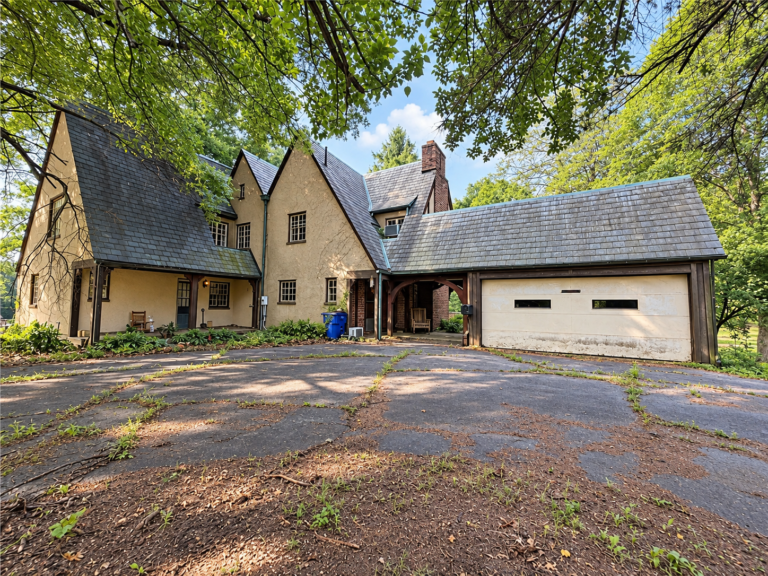
Grand Tudor Home in East Liverpool: A Historic Property Full of Character and Restoration Potential
Historic homes have a special quality that is difficult to reproduce in modern construction. Their architecture, craftsmanship, materials, and original details can give them a sense of personality and permanence that immediately sets them apart.
This grand Tudor home in East Liverpool is a striking example of that kind of property.
With its classic brick and stucco exterior, beautiful interior craftsmanship, hardwood floors, original architectural details, and generously sized rooms, the residence offers an opportunity to restore a distinctive piece of architectural character while introducing modern improvements.
The home is currently in need of renovation, but that condition also creates an opportunity for someone with vision. Rather than starting with a completely finished property, a future owner can approach the residence as a restoration project and determine how to preserve its historic qualities while updating the spaces for contemporary living.
Inside, the home features a spacious living room with a cozy fireplace and built-in cabinets, a formal dining room, a grand staircase, generously sized bedrooms, and additional rooms that could potentially serve several different purposes.
Its location near Thompson Park adds another appealing dimension to the property, providing a peaceful setting for a home with such a substantial architectural presence.
For restoration enthusiasts, investors, designers, or buyers who appreciate historic architecture, this East Liverpool residence presents an opportunity to imagine what the property could become after thoughtful renovation.
A Classic Tudor Exterior
The first impression of a historic home often begins with its exterior, and this residence immediately communicates a sense of traditional architectural character.
The combination of brick and stucco creates the classic Tudor-inspired appearance that gives the home its distinctive identity.
Tudor architecture is often associated with visual details that emphasize craftsmanship, texture, and a strong connection to traditional European architectural influences.
Brick provides a substantial and durable appearance, while stucco adds visual variation and texture.
Together, these materials create an exterior that feels established and timeless.
For a future owner, maintaining the architectural character of the exterior could be an important part of the restoration process.
Instead of replacing distinctive features with generic modern finishes, thoughtful restoration can focus on repairing and preserving the elements that give the property its personality.
The Appeal of Tudor Architecture
Tudor-inspired homes remain popular among people who appreciate traditional architecture.
The style is often associated with a strong visual identity, carefully crafted details, warm materials, and an emphasis on individual character.
Unlike some modern architectural approaches that prioritize minimalism and uniformity, Tudor homes frequently feature more visual texture.
Brick, stucco, wood details, fireplaces, built-ins, staircases, and distinctive room proportions can all contribute to the feeling of a traditional Tudor residence.
This East Liverpool property reflects many of those qualities.
The architectural details throughout the home provide a strong foundation for restoration.
Hardwood Floors Throughout the Interior
Inside the residence, hardwood floors add warmth and traditional character.
Wood flooring has long been valued for its durability and visual appeal.
In historic homes, original hardwood floors can be particularly meaningful because they contribute to the authenticity of the interior.
Rather than treating the floors as simply a functional surface, a restoration project can view them as part of the property’s architectural history.
Depending on their condition, hardwood floors may be candidates for cleaning, repair, refinishing, or other restoration work.
Preserving original flooring where practical can help maintain the atmosphere of an older home while allowing the rest of the interior to receive modern updates.
Original Details and Craftsmanship
One of the most compelling characteristics of the property is the presence of original details.
Historic craftsmanship can be difficult and expensive to reproduce today.
Trim, doors, built-in cabinetry, staircases, woodwork, and other architectural elements can provide a level of individuality that is rarely found in mass-produced modern construction.
The original details throughout this home contribute to its identity.
A restoration project can focus on identifying which features are most significant and making them part of the future design.
Modern conveniences can then be incorporated around those historic elements.
This creates the possibility of a home that feels contemporary in functionality while retaining its traditional character.
A Spacious Living Room
The living room provides one of the home’s central gathering spaces.
Its generous proportions create room for comfortable furniture arrangements and allow the space to accommodate both everyday relaxation and larger gatherings.
A spacious living room can also provide considerable flexibility in interior design.
A homeowner could create a traditional arrangement centered around the fireplace or choose a more contemporary layout that combines classic architectural features with modern furniture.
Because the room already contains historic details, the décor can be selected to complement rather than compete with those elements.
A Cozy Fireplace
The fireplace is another feature that contributes to the living room’s atmosphere.
Fireplaces have historically served as both practical and social focal points in homes.
They can create a natural gathering place, particularly during colder seasons, while also providing a strong architectural centerpiece.
In a historic residence, a fireplace can be more than a decorative element.
It can represent part of the home’s original design philosophy.
A thoughtful restoration could highlight the fireplace through lighting, furniture placement, artwork, or complementary materials.
The exact condition and functionality of the fireplace should be professionally evaluated before use or renovation.
Built-In Cabinets Add Character
The living room also includes built-in cabinets.
Built-in storage is a particularly attractive feature in older homes because it combines practical function with architectural design.
Unlike freestanding furniture, built-ins are integrated directly into the room.
They can be used for books, artwork, collectibles, photographs, media equipment, or everyday storage.
For someone restoring the home, preserving these cabinets could help maintain the room’s original character.
They can also be updated carefully with refinishing, new hardware, or interior organization while retaining their historic appearance.
Formal Dining Room
A formal dining room provides another important gathering space.
Traditional dining rooms can bring a sense of occasion to everyday meals while also providing a dedicated area for entertaining.
The room could accommodate a large dining table, comfortable chairs, lighting fixtures, artwork, and other decorative elements.
For family meals, holidays, celebrations, or dinner parties, a formal dining area offers a setting that feels separate from the home’s more casual living spaces.
The architectural character of the surrounding home can also make the dining room especially appealing.
A Grand Staircase
Perhaps one of the home’s most striking original features is the grand staircase.
A substantial staircase can become an architectural centerpiece, especially in a historic residence.
The staircase is not simply a way to move between floors.
It can define the entrance experience and establish the tone of the interior.
Traditional staircases often feature detailed woodwork, substantial railings, decorative elements, or other craftsmanship that contributes to the personality of the home.
For a restoration project, the staircase should be considered one of the features worth examining carefully.
Preserving its original appearance, where feasible, could help maintain the home’s historic identity.
Generously Sized Bedrooms
The bedrooms are described as generously sized, providing plenty of room for comfortable living.
Larger bedrooms can accommodate more than just a bed.
Depending on the layout, they can include seating areas, desks, wardrobes, dressers, reading corners, or other furnishings.
The additional space can also provide flexibility for different household needs.
A primary bedroom could become a peaceful private retreat, while other bedrooms could accommodate family members, guests, or other uses.
Flexible Additional Rooms
One of the advantages of a larger historic home is the number of spaces available for different purposes.
The additional rooms in this residence could potentially be used as a home office, guest room, library, hobby area, studio, or creative workspace.
Modern lifestyles often require homes to serve multiple functions.
A room that was once used for one traditional purpose may now become a remote-work office, exercise room, craft area, reading space, or guest accommodation.
This flexibility can make the home’s floor plan particularly attractive to buyers who do not want every room to have a predetermined function.
A Potential Home Office
A dedicated home office can be increasingly useful for homeowners who work remotely or manage businesses from home.
An additional room in a historic property could be converted into a private workspace while retaining original architectural details.
A traditional desk, bookshelves, comfortable chair, and modern technology could coexist with hardwood floors, original trim, and historic doors.
The contrast between traditional architecture and contemporary work equipment could create an attractive environment.
A Potential Guest Room
Another option for one of the additional rooms is a guest bedroom.
A dedicated guest room allows visitors to have their own private space while keeping the primary living areas available to the household.
The home’s generous floor plan provides opportunities to create a welcoming guest environment with comfortable furniture, storage, and personal touches.
Historic details can also give a guest room a distinctive atmosphere.
A Creative Studio
For artists, designers, writers, photographers, musicians, or other creative professionals, an additional room could become a private studio.
Older homes often contain rooms with architectural proportions that can inspire creative work.
A studio could include a large worktable, shelving, storage, artwork, or specialized equipment depending on the owner’s interests.
The goal would be to make use of the available space without compromising the property’s historic character.
The Renovation Opportunity
The fact that the property needs renovation is an important part of its story.
For some buyers, a home requiring work may be a disadvantage.
For restoration enthusiasts, however, it can represent an opportunity.
A renovation allows the future owner to make decisions about finishes, fixtures, colors, lighting, room functions, and modern systems.
Instead of inheriting a completed design, the buyer can participate in shaping the next chapter of the home.
The scope of work will depend on the property’s actual condition and should be determined through professional inspections and assessments.
Preserving Historic Character
Restoring an older home requires a balance between preservation and modernization.
Not every feature needs to remain untouched.
At the same time, removing all historic elements can eliminate the qualities that made the property attractive in the first place.
The best approach for many restoration projects is to identify the features that contribute most strongly to the building’s character.
In this residence, those may include the brick and stucco exterior, hardwood floors, built-in cabinets, fireplace, grand staircase, and other original craftsmanship.
These features can become anchors around which modern improvements are designed.
Bringing Modern Functionality Into a Historic Home
A restored historic residence can combine traditional visual character with modern comfort.
Depending on the property’s condition and renovation requirements, improvements could include updated electrical systems, plumbing, heating and cooling, insulation, lighting, kitchen features, bathrooms, windows, and other modern amenities.
These upgrades can make the home more comfortable and practical without necessarily compromising its historic appearance.
The challenge is choosing improvements that work with the architecture.
For example, contemporary lighting can be selected to complement traditional rooms rather than overwhelm them.
Modern appliances can be integrated into a kitchen while preserving architectural details.
This type of balance can produce a home that feels both historic and livable.
Designing Around the Fireplace
The fireplace provides an excellent starting point for interior design.
Furniture can be positioned to make the fireplace the visual focal point.
A large rug, comfortable seating, artwork, and carefully selected lighting can help establish a warm atmosphere.
The design can remain traditional or introduce contemporary pieces for contrast.
Historic homes often look particularly interesting when old and new elements are allowed to coexist.
Making the Most of the Dining Room
The formal dining room can also become an important part of the home’s identity.
A traditional wooden dining table could emphasize the home’s historic character.
Alternatively, contemporary furniture could provide contrast against the original architectural details.
Lighting is especially important in dining spaces.
A carefully selected fixture can define the room and create a welcoming atmosphere for evening meals.
The goal is to make the room functional for modern life while respecting its traditional proportions and character.
The Potential of a Full Restoration
A comprehensive restoration could transform the property significantly.
The process might involve repairing architectural details, refinishing hardwood floors, restoring built-ins, updating mechanical systems, improving bathrooms and kitchen areas, and refreshing the interior finishes.
Exterior work could focus on preserving the brick and stucco surfaces while addressing any necessary maintenance.
A restoration project should be approached systematically.
Structural and safety issues should take priority over purely cosmetic improvements.
Professional contractors, inspectors, architects, and other specialists may be appropriate depending on the scale of the project.
A Property for Restoration Enthusiasts
Not every buyer wants a finished home.
Some people enjoy the process of discovering architectural details, researching a property’s history, selecting materials, and bringing an older structure back to life.
For those buyers, this East Liverpool home could provide a particularly interesting project.
The property already possesses the qualities that cannot easily be added later: scale, character, traditional architecture, and original craftsmanship.
The renovation work becomes a way of revealing those qualities rather than creating them from scratch.
Potential Appeal to Investors
The property may also attract investors interested in renovation opportunities.
However, any investment strategy should be based on detailed financial analysis, professional inspections, renovation estimates, local market research, financing costs, taxes, insurance, and other relevant expenses.
The fact that a property has restoration potential does not by itself guarantee profitability.
For an investor, understanding the total cost of acquisition and renovation is essential.
The Peaceful Setting Near Thompson Park
The home’s setting near Thompson Park adds another attractive feature.
Parks can contribute to the character of a residential neighborhood by providing green space and opportunities for recreation.
For homeowners, proximity to a park can create additional options for walking, outdoor activities, relaxation, and spending time outside.
The setting can also complement the traditional character of a historic home.
A grand residence surrounded by a quieter environment and nearby green space can have a distinctly appealing atmosphere.
A Home With Multiple Possibilities
One of the strongest characteristics of this property is its flexibility.
It can potentially become a restored family residence.
Additional rooms could support home-based work or creative hobbies.
The formal spaces could be used for entertaining.
The larger bedrooms provide comfortable private areas.
The living room can serve as the central gathering space.
The architecture itself can become part of the property’s identity.
The final result depends largely on the vision and resources of the future owner.
Restoring Instead of Replacing
There is something particularly rewarding about restoring an existing historic home.
New construction can offer modern efficiency and customization, but it generally cannot recreate the history embedded in an older structure.
Original floors have a story.
A grand staircase has a story.
Built-in cabinets have a story.
A fireplace has a story.
The brick and stucco exterior has a story.
Restoration gives those elements an opportunity to continue being part of the property’s future.
Questions to Consider Before Purchasing
Anyone considering this home should conduct careful due diligence.
A professional inspection should evaluate the structure and major systems.
Potential buyers may want to investigate the condition of the foundation, roof, masonry, electrical system, plumbing, heating and cooling equipment, windows, floors, and other components.
The renovation budget should include both visible improvements and potential unexpected costs.
Buyers should also research any applicable historic-preservation requirements, zoning considerations, permits, and local regulations before beginning major work.
A detailed understanding of the property’s condition can help turn an ambitious restoration concept into a realistic plan.
Creating a Modern Historic Home
The ultimate goal of a restoration does not have to be recreating the past exactly.
A historic home can be updated to support modern life while preserving the features that make it special.
A renovated kitchen can sit comfortably within a traditional residence.
Modern bathrooms can provide contemporary convenience.
A home office can occupy a room that once served another purpose.
Smart-home technology can be introduced discreetly.
Modern lighting can enhance original architectural details.
This combination can allow the home to function like a contemporary residence while still feeling unmistakably historic.
Final Thoughts
This grand Tudor home in East Liverpool offers a rare combination of architectural character, spacious interiors, original details, and restoration potential.
The classic brick and stucco exterior creates a memorable first impression, while the interior continues that traditional character through hardwood floors, craftsmanship, built-in cabinets, and other original elements.
The spacious living room provides a comfortable gathering area centered around a cozy fireplace, while the built-in cabinets add both practical storage and visual interest.
The formal dining room creates an elegant setting for family meals, holidays, celebrations, and entertaining.
One of the home’s most distinctive original features is the grand staircase, which has the potential to become a centerpiece of a future restoration.
The generously sized bedrooms provide comfortable private spaces, while additional rooms offer flexibility for modern lifestyles.
Depending on the owner’s needs, these rooms could become a home office, guest bedroom, library, studio, hobby room, or another personalized space.
The property’s need for renovation is both its biggest challenge and one of its most interesting opportunities.
For someone searching for a completely finished residence, the required work may be an important consideration.
For a restoration enthusiast or buyer with a clear renovation vision, however, the existing architecture provides a valuable foundation.
Rather than building character from scratch, the future owner has the opportunity to uncover and preserve character that is already present.
The proximity to Thompson Park adds another appealing dimension to the setting, offering nearby green space and contributing to the peaceful residential atmosphere.
With careful planning, professional assessments, and thoughtful restoration, this home could potentially be transformed into an impressive residence that combines historic beauty with modern functionality.
The most important consideration is preserving the elements that make the property unique.
The brick and stucco exterior, hardwood floors, fireplace, built-in cabinets, grand staircase, and original craftsmanship all contribute to the home’s identity.
A successful renovation could use those features as the foundation for a new design rather than treating them as obstacles.
For buyers who appreciate historic architecture and are willing to take on a restoration project, this East Liverpool Tudor home offers an opportunity to create something truly distinctive.
It is more than simply a house in need of updates.
It is a property with architectural personality, substantial spaces, and a history that can continue into the future.
With the right vision and careful restoration, this grand Tudor residence could once again become an elegant and welcoming home while retaining the distinctive details that make it unlike a typical modern property.


Watch Via Zillow