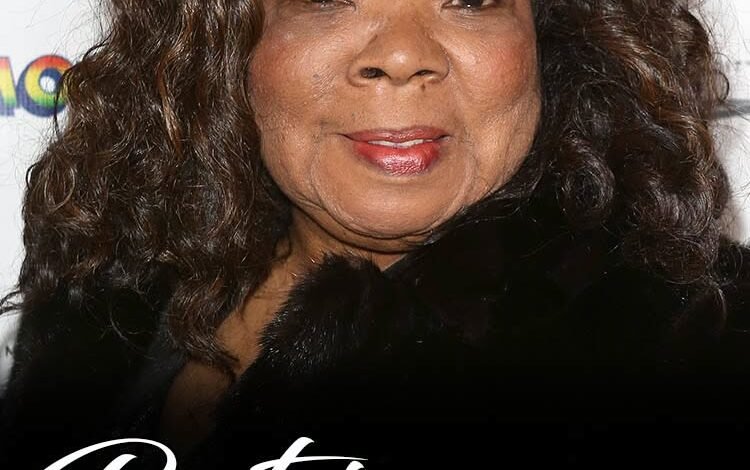
A Motown Era Voice Remembered
The Motown family has lost another important member of its musical history.
Rosalind Ashford, one of the original singers of Martha and the Vandellas, has died at the age of 83. According to the information provided, Ashford died on Tuesday, September 15, 2026, of natural causes in Redford Township, a suburb of Detroit.
Her passing marks the loss of a performer whose voice was connected to some of the most recognizable recordings of the classic Motown era.
Ashford was part of the original lineup of the group that became known around the world for songs including “Dancing in the Street,” “(Love Is Like a) Heat Wave,” “Come and Get These Memories,” “Nowhere to Run,” and “Jimmy Mack.”
Although her career with the group ended decades ago, her contribution remained part of the musical history associated with Motown Records and Detroit.
Martha Reeves, the group’s lead singer, remembered Ashford following the news of her death, describing her as an important part of the group’s early years.
“Our Motown family has just gotten a little smaller,” Reeves said, according to the information provided.
For fans of classic soul and Motown, Ashford’s death is another reminder of how quickly the generation that helped create one of America’s most influential musical movements is disappearing.
Growing Up in Detroit
Rosalind Ashford was born on September 2, 1943, in Detroit, Michigan.
She was still a student at Wilbur Wright High School when her musical journey began.
Alongside Annette Beard and Gloria Williams, Ashford became part of a young girl group known as the Del-Phis.
The group represented a generation of young Detroit performers who were developing their talents at a time when the city was becoming an important center for American popular music.
The Del-Phis would eventually become connected with a much larger story.
Martha Reeves later joined the group, helping shape the lineup that would ultimately become Martha and the Vandellas.
Before achieving national recognition, however, the singers spent time developing their voices and gaining experience through studio work.
Their early path was not an overnight success story.
It involved backup singing, recording sessions, name changes, and years of work before the group established itself as one of Motown’s best-known female vocal groups.
The Beginning of the Vandellas
The group originally performed under the name the Del-Phis.
They also recorded as the Vels.
Their early experiences eventually brought them into contact with Motown, the Detroit-based record company founded by Berry Gordy.
In 1962, the singers performed backing vocals for established artists including Marvin Gaye and Mary Wells.
Those sessions helped bring attention to the group.
Their connection with Motown eventually led to a record deal.
After Gloria Williams left the group, the remaining singers continued under a new name.
They became Martha and the Vandellas.
That change marked the beginning of a recording career that would produce a remarkable series of soul and pop hits.
For Ashford, it was the start of the period that would define her legacy.
“Come and Get These Memories” Opens a New Chapter
Martha and the Vandellas began making a major impact in 1963.
Their song “Come and Get These Memories” became their breakthrough hit.
The recording reached No. 29 on the Billboard Hot 100 and No. 6 on the R&B chart, according to the information provided.
The song introduced the group to a much larger audience and demonstrated the combination of strong vocals, rhythmic energy, and songwriting that would become central to their sound.
But the group was only getting started.
Later in the same year, they released another song that would become one of the defining recordings of the Motown era.
The Success of “Heat Wave”
“(Love Is Like a) Heat Wave” became an even larger hit.
The song reached No. 4 on the Billboard Hot 100 and earned a Grammy nomination.
Its energetic rhythm and memorable vocal performance helped establish Martha and the Vandellas as major figures within the growing Motown sound.
The song also demonstrated how Motown recordings could cross musical boundaries.
The group was not limited to an R&B audience.
Their records were reaching mainstream listeners, helping soul music become increasingly prominent in American popular culture.
Ashford’s participation in this period placed her voice within a catalog that continues to be heard by new generations.
“Quicksand” and the Rise of a Major Group
Following the success of their early hits, Martha and the Vandellas continued recording.
“Quicksand” became another important early release.
The group was developing a recognizable identity based on energetic arrangements and powerful vocals.
During the 1960s, Motown was becoming one of the most important record labels in American music.
Its artists included some of the biggest performers of the era, and the label’s recordings helped shape the sound of popular music.
Martha and the Vandellas became an important part of that story.
Ashford was there during the group’s formative years and contributed to the recordings that helped establish its reputation.
“Dancing in the Street” Becomes a Landmark
Then came the song that would become perhaps the group’s most widely recognized recording.
In the summer of 1964, “Dancing in the Street” became a major hit.
The recording reached No. 2 on the Billboard Hot 100.
Its energetic sound and memorable vocal arrangement helped turn it into a lasting Motown classic.
Over the years, the song was recorded by other artists, including the Mamas & the Papas and Van Halen.
Those later interpretations introduced the composition to additional audiences and demonstrated its lasting place in popular music.
For Martha and the Vandellas, however, the original recording remained central to their identity.
For Ashford, it became one of the most recognizable pieces of music associated with her career.
Even listeners who may not have known her name were familiar with the music she helped create.
More Hits Followed
The success of “Dancing in the Street” did not represent the end of the group’s productive period.
Martha and the Vandellas continued recording successful songs.
Their catalog included “Nowhere to Run,” “I’m Ready for Love,” and “Jimmy Mack.”
Each recording helped strengthen the group’s position within Motown’s impressive collection of artists.
The group was particularly successful on the R&B charts, while many of its recordings also reached mainstream pop audiences.
According to the information provided, Ashford appeared on nearly two dozen Top 40 hits on Billboard’s R&B chart.
That statistic illustrates the breadth of her involvement during one of the most productive periods in the group’s career.
A Career Beyond the Stage
Ashford eventually left Martha and the Vandellas in 1969.
Her departure marked the end of her regular period with the group, but it did not mean the end of her connection to music.
Over the years, she continued performing with former Vandellas singers.
At the same time, she also worked for Michigan Bell Telephone Co.
Her life therefore extended beyond the spotlight.
Like many performers from the classic Motown era, Ashford’s career included both public musical achievements and work outside entertainment.
That combination was part of the reality for many artists whose recordings became famous while their everyday lives continued away from the stage.
The Motown Legacy
To understand Ashford’s significance, it is helpful to consider the broader impact of Motown.
The label emerged from Detroit and became a major force in American music.
Its recordings helped bring soul and R&B music to increasingly broad audiences.
Martha and the Vandellas were an important part of that movement.
Their songs combined rhythm, melody, memorable performances, and the polished production associated with the Motown sound.
Ashford was one of the original members who helped create that identity.
Her contribution was therefore not limited to one recording.
She was part of the group’s development from its early days through some of its most successful years.
Recognition From the Rock & Roll Hall of Fame
In 1995, Ashford and the other members of Martha and the Vandellas received one of the highest honors available to performers in popular music.
The group was inducted into the Rock & Roll Hall of Fame.
According to the information provided, Martha and the Vandellas were only the second all-female group to receive that honor.
The induction formally recognized the group’s lasting influence and place in music history.
For Ashford, the recognition came more than two decades after she had left the group.
It demonstrated that the work produced during the 1960s had continued to matter long after the original recordings were released.
Remembering Rosalind Ashford
News of Ashford’s death prompted memories from those connected to her musical history.
Martha Reeves expressed sadness over the loss and emphasized Ashford’s role during the early days of Martha and the Vandellas.
Reeves also pointed to the recordings they made together as part of the reason Ashford’s voice would continue to be remembered.
That is one of the unique qualities of recorded music.
Artists may leave the stage, but their performances remain available to listeners decades later.
A song recorded in Detroit in the 1960s can still reach someone hearing it for the first time today.
Ashford’s work exists within that continuing musical history.
A Voice Preserved Through Recordings
The passing of a recording artist can create a distinction between the person and the work they leave behind.
Rosalind Ashford is no longer here to perform those songs, but the recordings made during her career remain.
For listeners, those recordings offer an opportunity to hear the sound of a particular period in American music.
For historians, they provide part of the story of Motown.
For younger generations discovering classic soul, they provide a connection to performers whose careers began long before today’s music industry existed.
Ashford’s contribution can therefore be remembered through the recordings themselves as well as through the stories of those who worked alongside her.
Detroit and the Motown Story
Ashford’s life was closely connected to Detroit.
She was born there, attended high school there, and began her musical career there.
The city played a central role in the development of Motown, and her story is intertwined with that history.
The early Del-Phis were not simply a group formed in a distant music market.
They emerged from Detroit’s local musical community and eventually became part of Berry Gordy’s Motown organization.
That journey—from young local performers to internationally recognized recording artists—was characteristic of the musical transformation taking place in Detroit during the era.
Ashford’s story is therefore also part of the city’s cultural history.
A Legacy Shared With Future Generations
The music of Martha and the Vandellas has continued to be revisited by artists, musicians, historians, and fans.
“Dancing in the Street” has been covered by performers from different musical backgrounds.
Other songs from the group’s catalog have remained familiar to audiences interested in classic soul and Motown.
Ashford’s participation in those recordings means that her work is already preserved in a form that can outlive any single generation.
That may be one of the most lasting aspects of her career.
She helped create recordings that did not disappear when their original era ended.
Instead, they became part of the larger American musical canon.
Family and Final Arrangements
Ashford is survived by her son, Damon, and four grandchildren.
According to the information provided, funeral arrangements were still pending, with services expected to take place at James H. Cole Funeral Home on Schaefer Highway in Detroit.
Additional details regarding services can be confirmed by the family or funeral home as arrangements are finalized.
Her death closes another chapter in the story of the original Motown generation.
But the recordings created during those years continue to provide a way for audiences to remember the performers behind the music.
Why Rosalind Ashford’s Story Matters
Rosalind Ashford’s career is a reminder that music history is built not only by the most visible stars but also by the singers, musicians, writers, producers, and performers who helped create the recordings that defined an era.
She was part of Martha and the Vandellas from their early formation.
She contributed to a catalog that included some of Motown’s most recognizable songs.
She experienced the group’s rise from local Detroit performers to nationally successful recording artists.
And she remained connected to that musical legacy long after leaving the group.
Her induction into the Rock & Roll Hall of Fame with Martha and the Vandellas provided formal recognition of that contribution.
The Music Lives On
Rosalind Ashford’s death at 83 represents a significant loss for those who admire the history of Motown and classic soul.
Her life included music, work outside the entertainment industry, family, and decades of memories connected to recordings that became widely known.
She was part of the original group behind songs that continue to be played and rediscovered.
The words of Martha Reeves capture the feeling of many people who remember that era: the Motown family has become a little smaller.
But the recordings remain.
Every time “Dancing in the Street” plays, every time “Heat Wave” returns to a playlist, or every time a new listener discovers the classic sound of Martha and the Vandellas, Rosalind Ashford’s contribution remains part of the story.
She helped create music that traveled far beyond the streets of Detroit.
And although her life has come to an end, the recordings she helped make continue to connect generations of listeners with one of the most influential chapters in American popular music.