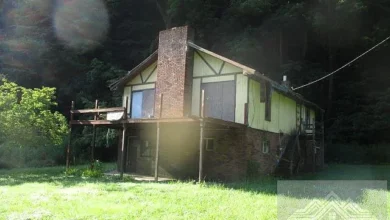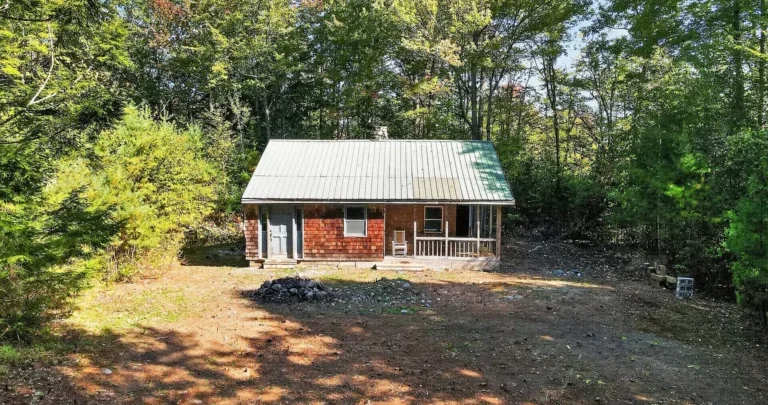
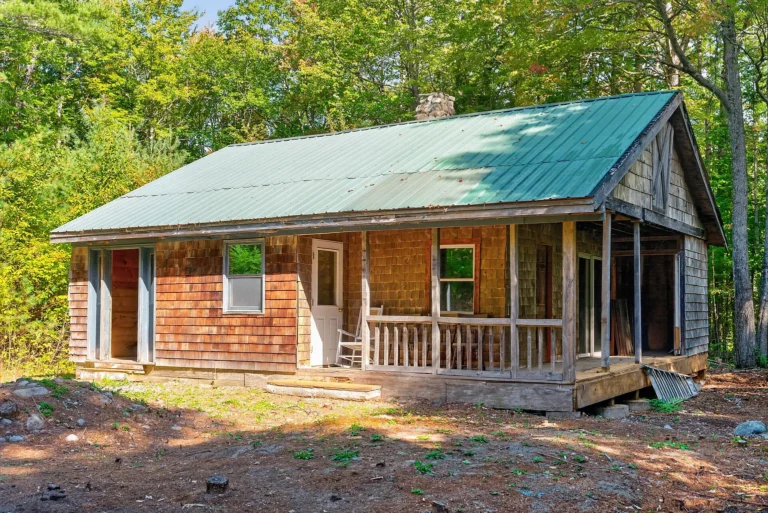
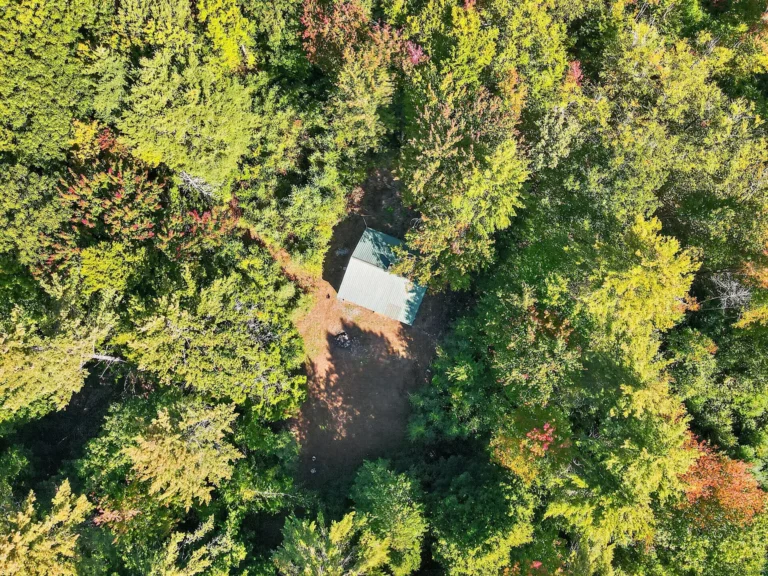
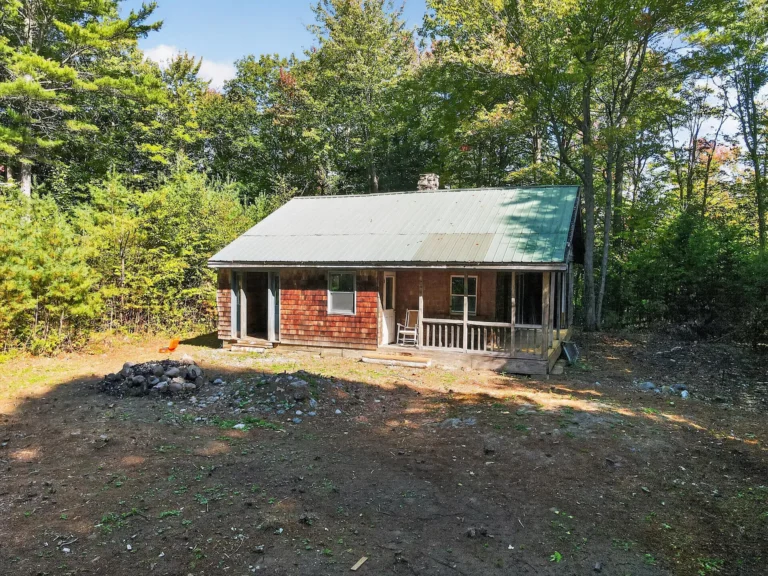
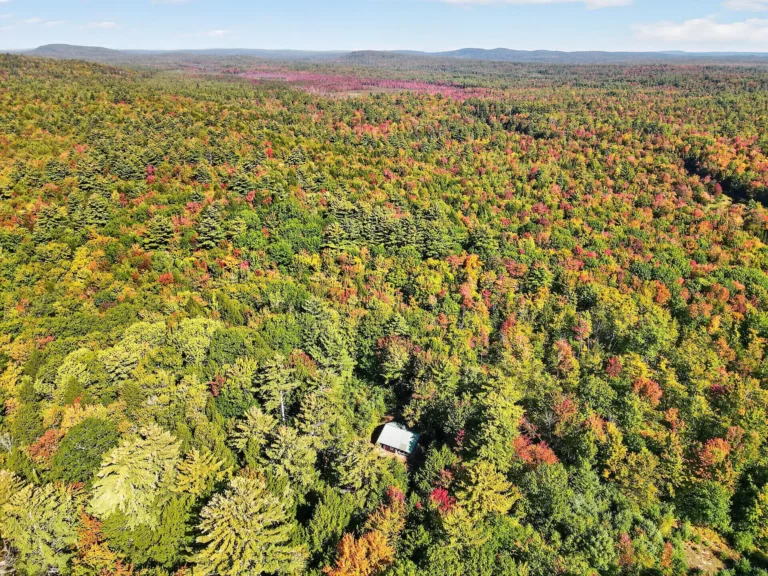
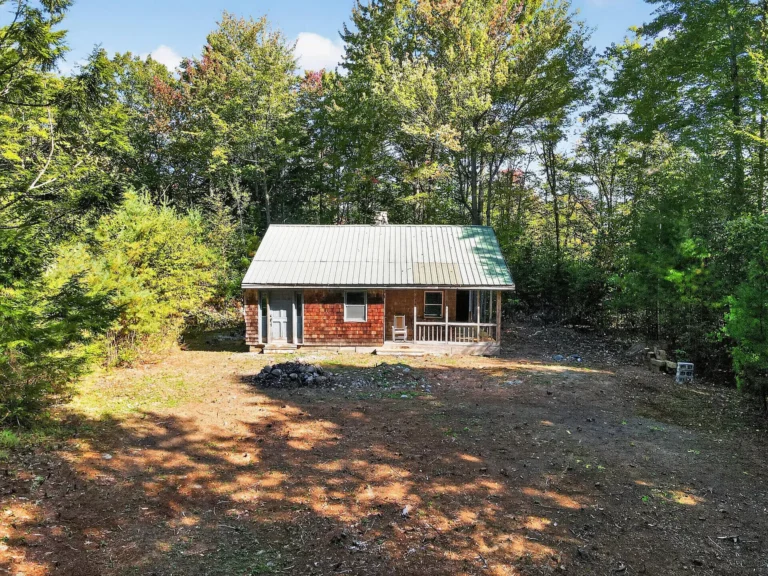
The approach to this off-grid cabin in Fairfield, Maine, follows a discontinued town road through a wooded setting. At the cabin, the trees frame the view, and no neighboring homes are visible, according to the property description. A private deck gives you a place to sit outside and take in the surroundings. Indoors, a substantial stone fireplace gives the main gathering space a focal point and much of its rustic character.
Those features make it easy to picture arriving for a weekend away, setting a bag down inside, and stepping onto the deck before getting settled. The setting could appeal to someone looking for a quiet place to read or walk in the woods, a base for outdoor recreation, or a cabin to use during hunting season where access and permissions allow. For any of those plans, the experience will depend as much on getting to the cabin and operating it as on what you see when you arrive.
The property description supplies the features that give the cabin its appeal. It leaves the acreage, interior dimensions, utility equipment, and access arrangements unspecified. For anyone comparing woodland properties in Maine, those details are worth exploring alongside the fireplace and deck. This cabin’s most distinctive qualities are tied to the way it sits in the woods, so a useful visit begins well before you reach the front door.
Fairfield, Maine, Cabin Features at a Glance
| Feature | What the property description says |
|---|---|
| Location | Fairfield, Maine |
| Property style | Rustic off-grid cabin |
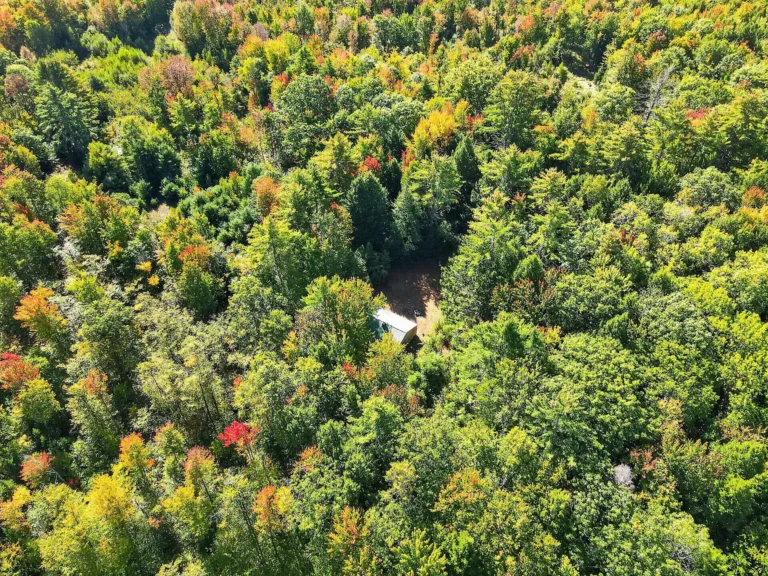
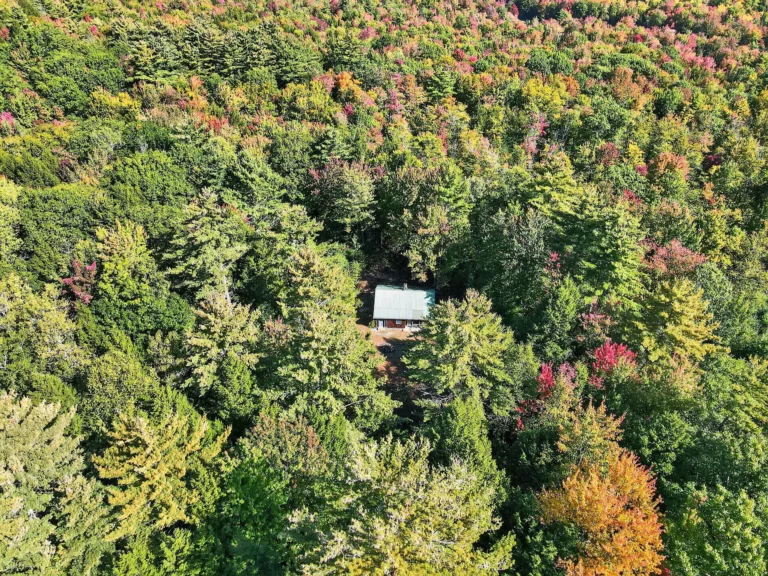
| Setting | Wooded, with no neighboring homes visible from the cabin |
| Interior highlight | Stone fireplace |
| Outdoor space | Private deck overlooking the wooded surroundings |
| Road approach | Along a discontinued town road |
| Possible uses described | Weekend getaway, personal retreat, or hunting base |
| Parcel size and cabin dimensions | Unspecified |
| Power, water, and wastewater systems | Unspecified |
A Woodland Setting That Shapes the Stay
The woodland is part of the experience at this property. It frames what you see from the deck, shapes the approach, and gives the cabin the sense of separation described in the listing. The absence of visible neighboring homes is one of the clearest details about the setting. If privacy is a priority, stand at different points around the cabin and look out from the deck, the entry, and any windows you are able to see through. Each will give you a slightly different sense of how the property sits in the landscape.
A walk around the cabin can also show how much time you might spend outdoors. Are there comfortable places to sit close to the building? Does the ground fall away from the deck or level out into an area you could easily reach? Where would you go for a short walk before breakfast? These small observations give a better picture of the place than the general description of a secluded forest retreat.
The woods visible from a cabin can extend well beyond its parcel. The description mentions large stretches of woodland around the property and gives no acreage or boundary measurements. Buyers who want room to walk on their own land should ask for a parcel map and any available survey. Matching the map to features visible on the ground can help you understand where the property ends and whether the places you would most like to explore are part of it.
The Stone Fireplace Anchors the Rustic Interior
A substantial stone fireplace is the cabin’s most distinctive interior feature. The stone brings texture to the room and creates a natural place to arrange seating. It is easy to imagine slowing down there after a walk, setting up a lamp and a chair for an evening of reading, or simply spending time together on a rainy afternoon. How easily those ideas fit depends on the room’s actual dimensions and layout.
The property description leaves the floor plan open, which makes a tour particularly useful. Notice where daylight reaches the room and where the door, windows, and hearth leave space for furniture. A cabin may have enough square footage on paper and still feel tight once you account for the main walkway, bags brought in for a weekend, and storage for outdoor gear. See whether there is a natural spot to take off wet boots and jackets without carrying them through the sitting area.
Anyone who intends to use the fireplace should ask about its service history and condition. A chimney professional can assess the visible masonry, hearth, firebox, and chimney before use. It is also worth asking whether the fireplace was used regularly and whether any separate heating equipment serves the cabin. The description highlights the fireplace for its appearance and atmosphere. Its role in keeping the building warm during a stay needs to be confirmed before planning around it.
A Private Deck Among the Trees
The private deck gives this cabin a dedicated place to enjoy the woods without heading down a path. You could take a cup of coffee outside, sit with binoculars, or spend an afternoon reading within easy reach of the cabin. It is one of the few outdoor features specifically mentioned in the description, and its usefulness may come down to simple details. The width of the deck, the position of the steps, and the angle of the sun all shape how long you will want to sit there.
During a viewing, look at the deck from both sides. From the cabin, see how easily you can carry a chair, a tray, or other items through the doorway. From outside, look at how the stairs meet the ground and whether the route between the deck and the approach is straightforward. If the deck becomes your main place to sit or eat in warm weather, space to move around a table could matter more than the overall measurements suggest.
The boards, railings, steps, and supports are worth including in a property inspection. Ask about past repairs and look at how the deck connects to the cabin. The trees that make the setting appealing can also leave parts of an outdoor surface shaded or covered with debris. Seeing where shade and moisture collect can help you understand how much upkeep the deck may require between visits.
What to Confirm About Off-Grid Power, Water, and Wastewater
The property is described as off-grid, with no equipment inventory in the supplied details. A buyer who wants to spend several nights here should ask the seller or listing representative to walk through the systems that are present and explain how they were used. Start with a typical evening. How are the rooms lit? Where can a phone be charged? Is there a way to keep food cold? Even a short trip is easier to plan once you know which things the cabin provides and which you need to bring.
If there is a solar setup, battery bank, generator, or another source of power, ask which components are included in the sale and whether they can be demonstrated. Check whether the equipment can support the kinds of devices you actually expect to use. A weekend spent mostly outdoors may call for very little electricity. A longer stay with refrigeration or remote work would put different demands on the property. The cabin description does not specify a power source or whether the building has working electrical equipment.
Water is a separate question. Ask whether there is a well, a stored-water setup, or another arrangement, and establish how water reaches any fixtures that are present. Then confirm what is available for toilets and wastewater. The description gives no plumbing or septic details. If the cabin is open for a tour, ask how previous occupants handled cooking, dishes, and overnight stays. Those everyday tasks can reveal whether the existing setup suits you or whether improvements would be part of the purchase budget.
What the Discontinued Town Road Means for a Property Visit
The discontinued town road helps explain the cabin’s secluded setting. It is also the first part of the property to investigate if you plan to visit regularly. The road description leaves important questions open, including who maintains the route, whether the cabin can be driven to in different seasons, and what records document access. Ask for directions to the property before heading out, including where to turn and where to park for a showing.
Physical access and documented access are both worth checking. For the route itself, find out what kind of vehicle has reached the cabin and whether there are stretches that become difficult after rain or during winter. If you can follow the approach during a showing, note surface changes, steep sections, places where vehicles can pass, and the turnaround near the cabin. A road that is manageable on the day of a visit may require a different approach later in the year.
For the paperwork, ask for any deed references, recorded access documents, surveys, or town records connected to the discontinued road and the route to the cabin. A local title professional can help determine which documents apply to the parcel. If your plans rely on year-round visits, deliveries, or contractor access, get answers about those specific needs. The ability to reach the cabin on an occasional dry weekend may be enough for some buyers. Others will want to know how equipment, building supplies, or service vehicles would get there throughout the year.
What a Weekend at the Cabin Could Look Like
A short stay is one of the easiest ways to picture using this property. You could spend the morning walking in an area where you have permission, come back to the cabin for lunch, and move out to the deck when the weather is good. The fireplace gives the interior a gathering spot for the hours spent inside. The woods are close enough to be part of the day even if you never venture far from the cabin.
To see whether the property fits the way you travel, imagine arriving after dark with a weekend’s worth of food, bedding, and gear. Find out where you would leave the vehicle, how far you would carry things, and what lighting is available. Look for a suitable spot to put muddy boots and a dry place to keep supplies. It may take only a few minutes during a tour to work through that routine, but it can tell you how much preparation each trip would require.
Season matters, too. A summer visit might revolve around the deck and the shade of the surrounding forest. A cooler stay may depend heavily on the available heat, the condition of the cabin, and whether the road remains passable. Anyone hoping to use the cabin beyond the warmer months should ask how it has been used in cold weather, how water is handled between stays, and whether the property has been closed up for part of the year.
Walking, Wildlife Watching, and a Possible Hunting Retreat
The wooded setting is well suited to the kind of time outside that requires little planning once you know where you can go. You might take a short walk, look for birds from the deck, or return to the same spot through the seasons and see how the woods change. A buyer interested in having several walking routes should ask whether there are established paths, where they lead, and which portions are inside the parcel. The supplied description mentions opportunities for walks and outdoor recreation and provides no trail map.
The cabin is also presented as a possible hunting retreat. Its value for that use depends on details that need to be checked for the intended activity, including parcel boundaries, landowner permissions where relevant, and applicable rules. The practical side matters as well. Think about where gear would be stored, how early you can reach the cabin, and whether the road and cabin setup meet your needs during the season you have in mind.
For someone who mainly wants the quiet of the woods, the deck and the space immediately around the cabin may be the parts of the property they use most. Spend a few minutes there during a showing without moving from one feature to the next. Listen to what you can hear and look at how close the trees are. Privacy is easy to describe in a listing, but the feeling of being there is something a buyer can judge directly.
Where to Look for Maintenance Needs
An occasional-use cabin can sit empty between visits, so start by asking when it was last occupied and how it was cared for while vacant. Inside, pay attention to windows, doors, flooring, and ceilings. Ask about any previous leaks or repairs, and find out what parts of the building are accessible for inspection. Include the fireplace and chimney in the conversation, particularly if using them would be a major reason for buying the cabin.
Outside, see how the ground sits around the structure and whether leaves or branches collect close to it. Look at the deck, entry steps, exterior finishes, and the roof from places where you can see them clearly. A professional inspection can give you a firmer idea of which issues are ordinary upkeep and which could require more immediate work. It may also identify areas where a specialist needs to look more closely before you can estimate costs.
Once you know what work is needed, ask how contractors and materials would reach the site. The same road that creates the sense of seclusion can influence the size of vehicles that can get through and the time it takes to bring supplies in. If the cabin needs significant repairs, the route belongs in the conversation when you request estimates. A buyer comparing similar properties should consider how the building and the approach would be maintained together.
Questions to Ask Before Making an Offer
The property description gives enough detail to identify what sets the cabin apart. Before making an offer, buyers can use that description to focus their questions on the items most likely to affect how they would use it.
- Parcel size and boundaries. What acreage is recorded, and is there a survey showing the cabin, deck, and road in relation to the property lines?
- Access. What documents cover the approach along the discontinued town road, and who has maintained the route?
- Seasonal conditions. When was the cabin last reached in winter or after heavy rain, and where do visitors park and turn around?
- Utilities. What is installed for power, water, and wastewater, what equipment is included, and what can be demonstrated during a visit?
- Fireplace and building condition. Are service records, repair invoices, or inspection reports available for the fireplace, chimney, roof, or deck?
- Cabin layout. What are the interior dimensions, and what sleeping, cooking, and bathroom facilities are currently available?
The answers can help you decide how closely the cabin matches the way you would use it. Someone looking for a few quiet weekends a year may have different needs from someone planning regular winter stays. Both can start with the features that drew them to the property, then find out how the cabin and its access work in practice.
Frequently Asked Questions
Where is the off-grid cabin located?
The property description places the cabin in Fairfield, Maine, in a wooded setting along a discontinued town road. It does not supply a street address or parcel number. Confirm the location and directions before arranging a visit.
How much land comes with the cabin?
The supplied information describes extensive surrounding woodland and gives no parcel acreage. A recorded parcel map or survey can help establish how much land comes with the cabin and where the boundaries lie.
Does the cabin have electricity or running water?
The cabin is described as off-grid. The supplied details do not identify a power source, water supply, plumbing, or wastewater system. Ask what equipment and fixtures are present, whether they operate, and what is included in the sale.
Can the property be used in winter?
The description does not establish winter access or year-round use. If cold-weather visits are part of your plans, confirm how the road is maintained, how the cabin is heated, and how any water system is managed in freezing conditions.
What makes this Fairfield cabin distinctive?
The combination of a stone fireplace, a private deck, and a wooded setting with no neighboring homes visible gives the cabin its character. For someone looking for a place to spend time in the woods, those details are the reason to visit. The road, parcel boundaries, and off-grid setup will help determine how often you can return and how you can use the property once you get there.
Watch Zillow