Uncategorized
My Parents Abandoned Me at Five—Then Returned With a Moving Truck to Claim Grandpa’s House

The Morning My Past Came Knocking
The morning after my grandfather’s funeral, I thought the hardest part of losing him was already behind me.
I was wrong.
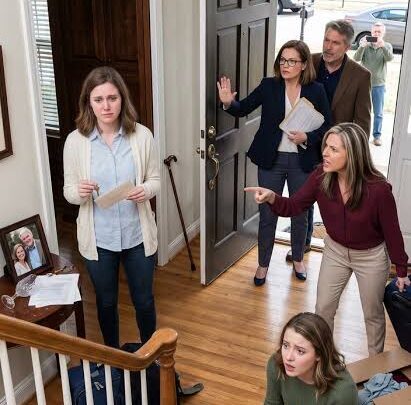
I stood in the doorway of the house where I had grown up, still wearing black from the funeral, when a moving truck pulled into the driveway. My father stepped out first, followed by my mother and my younger sister, Brianna. Two movers climbed down from the truck and waited for instructions.
My father looked at the house as if he had been away for a weekend rather than seventeen years.
“We’ll start with the furniture upstairs,” he announced. “Brianna can have the master bedroom.”
I stared at him, struggling to understand what I was hearing.
“This is Grandpa’s house,” I said.
Dad barely glanced at me.
“And now we need to sort out the family property. Don’t make this more difficult than it has to be.”
My mother placed two black garbage bags beside the staircase.
“You can pack your things in these,” she said. “We’ll arrange somewhere else for you to stay.”
For a moment, I couldn’t speak.
I was twenty-two years old, but standing there, I felt like the five-year-old girl who had watched her parents drive away and wondered what she had done wrong.
They had left me with my grandfather, Arthur Bennett, promising they would return after resolving some personal problems. Days became weeks. Weeks became months. Eventually, the promises stopped, and I learned to grow up without them.
Grandpa never stopped showing up.
He attended school events, helped me with homework, waited outside classrooms when it rained, and sat beside my bed when I was sick. He made ordinary days feel safe and special occasions feel complete.
Now he was gone.
And the people who had abandoned me had returned with a moving truck.
My sister looked around the foyer and wrinkled her nose.
“I can’t believe Grandpa kept everything looking like this,” she said. “The place needs a serious renovation.”
I looked at the wooden staircase, the old photographs, and the little table where Grandpa used to leave my lunch before school.
This house was not merely an address. It was the place where someone had chosen to love me when the people who should have loved me first had walked away.
“You can’t just move in,” I told them.
Dad sighed impatiently.
“Emily, you’re making this emotional. We’re family.”
I almost laughed.
Family.
For seventeen years, I had celebrated birthdays without them. I had performed in school concerts without them. I had graduated without them sitting in the audience. Every milestone carried the same quiet question: Why weren’t my parents there?
Now they wanted to use the word family as if it erased everything that had happened.
Before I could respond, a car stopped outside.
A man in a dark suit stepped onto the porch, carrying a briefcase. Beside him was Mrs. Collins, a longtime family acquaintance who had attended Grandpa’s funeral.
The man introduced himself as Mr. Harrison, Grandpa’s attorney.
He looked at the moving truck, the garbage bags, and my father.
Then he asked a simple question.
“Mr. Bennett, what exactly do you believe you are doing?”
Dad straightened.
“This is our family home.”
Mr. Harrison adjusted his glasses and opened his briefcase.
“Interesting,” he replied. “Because the legal records indicate that this property has not belonged to Arthur Bennett personally for several years.”
Dad’s confident expression disappeared.
“What are you talking about?”
The attorney removed a document and placed it on Grandpa’s desk.
“This property belongs to the Arthur Bennett Living Trust. According to the trust’s terms, the designated beneficiary is Emily Bennett.”
For several seconds, nobody spoke.
Then Brianna laughed.
“Emily? You’re joking.”
Mrs. Collins opened her folder.
“No, Miss Bennett. Your grandfather made his wishes quite clear.”
My hands began to tremble.
I had known Grandpa was careful with money, but he had never discussed his estate in detail. He taught me how to balance a checkbook, repair a leaking faucet, and avoid making financial decisions out of fear. He never made me feel that his love depended on what he might leave me.
I had never imagined that he had made plans to protect my future long after he was gone.
Mr. Harrison explained that Grandpa had anticipated questions about his estate and had left specific instructions for the family.
One of those instructions involved a video recording.
And another involved a letter addressed to me.
The Letter Grandpa Left Behind
Mr. Harrison handed me a small black envelope.
My name was written across the front in Grandpa’s familiar handwriting.
Emily.
I had seen those letters on birthday cards, grocery lists, and notes left beside my breakfast. Suddenly, something as ordinary as his handwriting felt almost unbearable.
Inside was a single sheet of paper.
My dearest Emily,
If you are reading this, then the people who left you when you were a child have finally returned.
Do not let their anger frighten you. Do not let their blood relationship to you convince you that you owe them your future.
You have spent your life believing that you were the child nobody wanted. I need you to know that you were never unwanted by me.
You were my greatest gift.
Now let the truth speak for itself.
With all my love,
Grandpa.
I pressed the letter against my chest.
For seventeen years, Grandpa had been my safe place. He had never promised that life would be easy, but he had always made sure I knew I would not have to face it alone.
When I was twelve and became seriously ill with pneumonia, he stayed awake through the night, checking my temperature and sitting beside my bed. When I had nightmares, he sat with me until I felt calm again. When I worried that my parents had forgotten me, he held my hand and reminded me that their choices did not define my worth.
He had never tried to replace the truth with false promises.
He had simply loved me consistently.
Mr. Harrison pointed toward the television in the study.
“Your grandfather asked that we show the recording before anyone makes further decisions about the property.”
Dad protested, insisting that the movers were waiting. But the attorney remained firm, and eventually the room fell silent.
The television flickered to life.
Grandpa appeared in his favorite leather chair, wearing the blue sweater I had bought him for his seventy-fifth birthday.
He looked thinner than I remembered, but his eyes were bright.
“Hello, Emily,” he said. “I hope you’re doing all right, sweetheart. If you’re watching this, I imagine you’ve had a difficult morning.”
My knees nearly gave way.
Then he turned toward the camera.
“To my son, Richard, and his wife, Linda: if you are watching this, then you have finally returned to the house where you left your daughter.”
My father stiffened.
Grandpa continued calmly.
“When Emily was five, you told me you needed a few days to resolve problems in your marriage. You said you would return the following weekend.”
He paused.
“You never came back.”
The room felt unbearably small.
“For seventeen years, I waited for an explanation. I waited for a phone call. I waited for you to ask how your daughter was doing. You did none of those things.”
My mother folded her arms.
“We had our reasons,” she muttered.
Grandpa seemed to anticipate the excuse.
“Perhaps you convinced yourselves that leaving Emily with me was temporary. Perhaps you told yourselves she was better off without you. But a child does not understand the complicated explanations adults create to make themselves feel better.”
He leaned forward.
“A child understands an empty chair at a school performance. A birthday with no phone call. Christmas morning when every other child is opening presents from their parents.”
Tears streamed down my face.
I remembered those Christmas mornings. Grandpa would make pancakes shaped like stars and leave a small present beside my plate, even when money was tight.
Sometimes it was a secondhand book. Sometimes it was a badly knitted scarf that I treasured even though I could never wear it outside.
Grandpa had understood that children remember who makes an effort.
“I did not raise Emily so she could spend the rest of her life waiting for people who abandoned her to decide she was worth their time,” he said.
Then he turned to the property documents.
He explained that the house had been transferred into his living trust several years earlier, following independent legal and financial advice. Under the estate plan, I was the designated beneficiary, subject to the trust’s terms and the required legal procedures.
The house was not automatically my parents’ property because my father was Grandpa’s son.
Then Grandpa revealed something else.
Three months before his death, my father had contacted the attorney to ask whether he would inherit the house and other assets. When he learned that Grandpa had already established his estate plan, he had threatened to challenge the decision.
According to Grandpa’s recording, my father had argued that anything he owned should eventually belong to his biological son rather than the granddaughter he had raised.
Dad shook his head.
“This is ridiculous.”
But Grandpa remained composed.
“Emily, sweetheart, you do not have to hate your parents. You do not have to forgive them today. You do not have to prove you are a good daughter by surrendering everything you have worked to protect.”
He smiled sadly.
“You have spent enough of your childhood wondering why they didn’t want you. Please don’t spend the rest of your life believing their choices determine your worth.”
Then the screen went black.
Nobody spoke.
For the first time that morning, my parents had nothing to say.
The House Was Never Theirs to Claim
Dad was the first to break the silence.
“You can’t expect us to accept this!”
Mr. Harrison closed the folder.
“If you believe you have a valid legal claim, you may pursue it through the appropriate channels. But you cannot move into this property or remove its contents without authorization.”
My mother turned toward me.
“You did this! You manipulated him!”
I stared at her.
“I was five years old. What could I possibly have told him that would make him hate you?”
She opened her mouth but offered no answer.
“I didn’t tell him you missed my first day of school. I didn’t tell him you forgot my birthdays. I didn’t tell him I used to cry in my room because I thought you would come back if I was good enough.”
My voice broke.
“Grandpa watched all of that happen. He didn’t need me to tell him anything.”
Dad looked down.
“We made mistakes,” he muttered.
I waited for an apology.
None came.
Those three words were all he offered for seventeen years of absence, missed milestones, and unanswered questions.
Mr. Harrison then explained that the house was only one part of Grandpa’s estate. There were investment accounts, savings, and a small rental property he had purchased decades earlier.
I stared at the figures in disbelief.
Grandpa had lived modestly. He repaired things instead of replacing them, grew vegetables in his garden, and believed that financial security mattered more than appearances.
He had saved carefully, but he had never made wealth the center of our relationship.
A sentence in the attorney’s letter caught my attention:
The primary purpose of this estate plan is to provide Emily Bennett with long-term financial security and the freedom to make her own choices.
I looked at Mr. Harrison.
“Why didn’t he tell me?”
“Because he didn’t want money to change your relationship with him,” the attorney explained. “He wanted you to know you were loved without worrying about what you might inherit.”
That sounded exactly like Grandpa.
Outside, one of the movers approached the doorway.
“Excuse me,” he said awkwardly. “Are we still moving the furniture?”
I looked around the foyer.
Grandpa’s coat still hung beside the door. His old umbrella leaned against the wall. The little table where he used to leave my lunch remained beneath the staircase.
Every object held a memory.
“Please don’t move anything,” I said. “Nothing in this house belongs in that truck.”
The mover nodded.
Mom stared at me in disbelief.
“Emily, we are your parents.”
I met her eyes.
“And I was your daughter.”
She flinched.
I picked up the garbage bags she had left beside the staircase and placed them gently near the front door.
“You can take these back with you,” I said.
Brianna looked furious.
“Are you actually kicking us out?”
“No. I’m telling you that you cannot move into a house that isn’t yours.”
Dad threatened that I would regret my decision. My mother insisted that I was making a terrible mistake. Brianna complained about the master bedroom she had already imagined decorating.
But none of their objections changed the documents.
Eventually, they left.
I watched their car disappear down the road before closing the front door.
Then I slid down against it and cried.
I wasn’t crying because I had won a house or inherited money. I was crying because the man who had loved me most in the world was gone, and the people who should have protected me had returned only to claim what he had left behind.
I held Grandpa’s letter against my heart.
You were my greatest gift.
For the first time that morning, I believed I might survive losing him.
But the following afternoon, Mr. Harrison called with another discovery.
There was a second envelope hidden inside Grandpa’s desk.
And it contained a truth I had never known.
The Second Letter Changed Everything
The next afternoon, I sat in Mr. Harrison’s office with the new envelope resting on the table.
My name was written on the front, followed by four words:
Read this when ready.
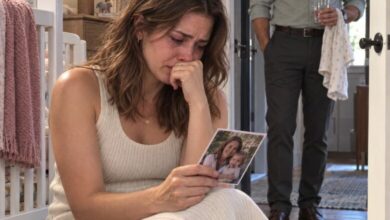
Inside was a faded photograph showing Grandpa holding me as a baby. My parents stood beside him, smiling at the camera.
On the back, Grandpa had written the date I came home from the hospital.
I turned to the letter.
He explained that when my parents first brought me to his house, they had said they needed a few days to resolve their problems. He believed them. He prepared my bedroom, bought my favorite foods, and waited for them to return.
Weeks passed.
Then months.
Eventually, he contacted my father.
According to Grandpa’s letter, my father told him that they were starting a new life and that raising a child was no longer part of their plans.
I stopped reading.
For years, I had invented explanations for my parents’ absence. I told myself they had been struggling financially or dealing with problems too complicated for a child to understand.
It had been easier to believe that circumstances had separated us than to consider that they might have chosen a life without me.
Grandpa’s letter continued.
He had offered to help my parents financially if they would remain involved in my life. He believed I needed my mother and father, even if they could not raise me themselves.
My father refused.
He told Grandpa that I was his responsibility now.
Tears blurred the page.
Grandpa had carried that knowledge for years without using it to poison my childhood. He had protected me from the burden of adult decisions for as long as he could.
The letter revealed another painful detail.
When I was thirteen, my mother had contacted Grandpa because she was experiencing financial difficulties. He agreed to meet her, hoping she might finally want to see me.
But she came alone.
She did not ask how I was doing.
She asked whether he had saved any money for her.
I remembered that period of my childhood. Grandpa had returned from a meeting looking unusually sad. Later, he had asked whether I would want to meet my mother if she ever came back.
I had answered yes immediately.
I was thirteen, and I still believed a mother’s return could make everything right.
Grandpa had hugged me and said he hoped she would return when she was ready to be the mother I deserved.
She never came.
Not until the morning after his funeral.
The letter ended with the words I needed most.
You were never abandoned because you were difficult to love. You were abandoned because the adults responsible for you failed to understand what love required.
I folded the letter carefully.
For years, I had carried a question I was ashamed to ask: What was wrong with me?
Sitting in that office, I finally understood that the question had never belonged to me.
Mr. Harrison waited until I was ready to speak.
Then he explained another part of Grandpa’s legacy: a charitable foundation created to assist children who had lost parental support and young adults who needed help continuing their education.
I had never heard of it.
Grandpa had believed that children without dependable support should not have to beg for opportunities other young people received naturally.
The foundation had already helped several students complete their education.
One recipient, Sarah, was finishing her nursing degree after growing up in foster care.
“Someone believed I deserved a chance before I could believe it myself,” she told me when we met.
Her words stayed with me.
I thought about the little girl who had tried to become perfect because she believed her parents might return if she were good enough.
I wondered how many other children were carrying the same burden.
For the first time since Grandpa’s funeral, I began to see my inheritance as more than financial security.
It was an opportunity to continue something he had started.
My Parents Returned With Another Request
Two days later, my father called.
“Emily, we need to talk about the family,” he said.
“What family?” I asked.
He sighed.
“Your mother is upset. Brianna is upset. This situation has become unnecessarily hostile.”
“You brought a moving truck to Grandpa’s house the morning after his funeral.”
“We thought the property would eventually come to us.”
“You never asked whether I was okay.”
He paused before repeating the words I had heard before.
“We made mistakes.”
He wanted to visit and discuss the future.
I agreed on one condition: we would not discuss the house as if it belonged to them.
That evening, my parents arrived without the truck. My mother brought pastries, while my father carried a bottle of wine.
They sat at the kitchen table where Grandpa had helped me with homework.
For several minutes, nobody spoke.
Then Mom reached toward me.
“Emily, sweetheart, we know things have been difficult.”
I pulled my hand away.
“We should have visited more often,” she continued.
“More often? You never visited me once.”
“We were dealing with our own problems.”
“I was five years old.”
Her eyes filled with tears.
“I was young.”
“So was I.”
I told her about the school performances, birthdays, and holidays I had spent wondering when they would return. I explained how I had eventually stopped expecting them because hoping had become more painful than accepting their absence.
For a moment, my mother seemed ashamed.
Then Dad interrupted.
“We can’t change the past. We need to focus on the future.”
I asked him what he meant.
He explained that Grandpa had left me a substantial estate and suggested that my parents help manage it. They had experience, he said, and I was young.
The real reason for their visit was finally clear.
They wanted influence over the inheritance.
“You left me with Grandpa and disappeared for seventeen years,” I replied. “What experience do you have managing my life?”
Dad’s expression hardened.
“You’re being disrespectful.”
“No. I’m finally being honest.”
Mom began crying.
“We are still your family.”
I looked at her.
“Then why did you come back with a moving truck instead of a hug?”
Neither of them answered.
They left soon afterward.
As I cleared the table, I noticed that Mom had left the pastry box behind. Underneath the pastries was a photograph of Brianna and me as toddlers, sitting together on a blanket in a garden.
On the back, Mom had written:
I know I don’t deserve forgiveness. But I hope one day you’ll let me explain why I left.
I placed the photograph in a drawer beside Grandpa’s letters.
An explanation might help me understand the past, I realized. But it would not automatically excuse it.
The Sister Who Wanted Everything
A week later, Brianna asked to meet me at a café near my university.
She looked exhausted when I arrived. Her usual confidence had disappeared, replaced by a nervousness I had rarely seen in her.
“Mom told me what happened when you were little,” she said.
According to our mother, my parents had been struggling financially and planned to bring me home eventually. Brianna admitted that she had believed part of that explanation, although she had wondered why they never visited.
When she was fourteen, she had asked our parents about me.
They told her I was happy with Grandpa and that visiting would confuse me.
I stared at her.
“You believed that?”
“I was young, too, Emily. I didn’t understand everything.”
I remembered that Brianna had been a child when I was abandoned. She was not responsible for the decisions our parents had made.
But she was responsible for how she had treated me as an adult.
“You walked into Grandpa’s house and announced that you were taking his bedroom,” I said. “You didn’t even ask whether I was okay.”
Her eyes filled with tears.
“I know.”
She admitted that she and her husband had been experiencing financial difficulties. After he lost his job, debts began accumulating, and she became afraid they might lose their apartment.
She had seen Grandpa’s house as a solution.
“I thought if I acted like I belonged there, everything would be fine,” she confessed. “I didn’t think about what I was doing to you.”
For the first time, I heard something that sounded like genuine accountability.
I understood desperation, but desperation did not give anyone the right to take another person’s home.
“You could have asked me for help,” I told her. “You could have called before the funeral. You could have told me the truth.”
“I was ashamed.”
“So you decided to take the house?”
She lowered her head.
“I didn’t think about what I was doing to you.”
That was the first honest thing she had said.
I told her I did not know whether I could forgive her, and I made my boundaries clear. I would not give her the house or surrender Grandpa’s estate. If she needed help finding financial counseling or employment resources, I could help her look.
But any relationship between us would have to develop slowly.
Brianna nodded.
Before we left, she gave me a copy of an old letter Grandpa had written to our parents when I was seven.
In it, he described how I had asked whether I had done something wrong to make my parents leave.
I had believed that becoming quieter, studying harder, and never causing trouble might make them want me back.
Grandpa wrote that he could not describe the pain of watching a child blame herself for decisions made by adults.
He promised to raise me without ever allowing me to believe I was a burden.
I could barely breathe as I read the letter.
I remembered being that little girl, helping with chores without being asked and trying desperately to become the kind of child no one could reject.
Grandpa had seen my pain even when I tried to hide it.
Brianna apologized again.
I thanked her for bringing the letter, but we did not hug. We were not ready for that.
Still, for the first time in our lives, we had spoken honestly.
And that was a beginning.
Protecting Grandpa’s Legacy
Over the following month, Mr. Harrison helped me review the estate records.
Grandpa’s wealth had not appeared overnight. It came from decades of saving, cautious investments, and a small rental property he had purchased long before I was born.
He had lived simply because he believed money should provide security rather than define a person’s value.
But the estate review also revealed correspondence between Grandpa and my father concerning a business loan. Grandpa had once offered to help my father establish a small business, but only part of the loan had been repaid.
Later, Grandpa had offered to restructure the remaining balance after the business struggled. The arrangement eventually ended when my father declined to provide the requested financial information.
Mr. Harrison was careful not to draw conclusions beyond the records.
“These documents need to be reviewed in context,” he explained. “They do not automatically establish wrongdoing.”
Then he showed me a letter my father had sent shortly before Grandpa’s death. It questioned my ability to manage money and urged Grandpa to reconsider his estate plan.
I was stunned.
My father barely knew me. He had missed nearly every stage of my life, yet he had tried to portray me as incapable of managing my own future.
A few weeks later, I received formal correspondence from a law firm representing my parents. They were seeking information about the estate and questioning Grandpa’s decisions.
For one terrible moment, I felt like the five-year-old girl again, afraid that the only home she had ever known might disappear.
Then I remembered Grandpa’s words.
Do not let their anger frighten you.
I contacted Mr. Harrison, followed his guidance, and avoided signing anything under pressure. The estate was reviewed through the appropriate legal process.
Eventually, the challenge was withdrawn after the documentation supported the validity of Grandpa’s estate arrangements.
I felt relief, but I did not celebrate.
I had not wanted to defeat my parents. I had wanted to protect the life Grandpa had worked so hard to give me.
And now I understood that protecting that life did not make me selfish.
It made me responsible for my own future.
Turning the Master Bedroom Into a Library
When spring arrived, I began cleaning the house.
I washed the curtains, polished the old furniture, and opened the windows to let fresh air move through the rooms.
When I reached Grandpa’s bedroom, I stopped in the doorway.
His reading lamp stood beside the chair near the window. His books lined the shelves, and the bed was still neatly made.
I could almost picture him sitting there in the evening, reading with his glasses low on his nose.
At first, I considered leaving everything exactly as it was.
Then I remembered that Grandpa had never wanted me to stop living because he was gone.
He had loved life too much for that.
So I decided to turn the master bedroom into a quiet library and reading room. I kept his chair, his books, and his lamp, then added a comfortable sofa and a small desk.
Beside the window, I placed a framed photograph of Grandpa.
Underneath it, I added a brass plaque engraved with a sentence that captured everything he had taught me:
“A home is built by the people who show up.”
The room became my favorite place in the house.
On rainy evenings, I sat there with tea and a book. On difficult days, I worked at the desk. Sometimes I simply watched the garden and remembered the man who had given me a home when I had nowhere else to go.
One afternoon, Brianna visited.
She stood in the doorway and looked around.
“You changed the room,” she said.
“I did.”
“I thought you would keep it exactly as it was.”
“I considered that. But Grandpa wouldn’t have wanted me to stop living because he was gone.”
She walked toward his old chair and read the plaque.
“A home is built by the people who show up,” she whispered.
“Yes,” I replied.
For a moment, we stood quietly together.
There was no sudden reconciliation, no promise that everything between us would be repaired. Trust would take time, and forgiveness could not be demanded.
But we were finally learning that being related was not the same as being entitled to one another.
If Brianna wanted a relationship with me, she would have to build it through honesty, patience, and respect.
The same was true of our parents.
I did not know whether my mother would ever explain why she had left, or whether my father would ever take full responsibility for his choices. I could not control what they did next.
I could only decide what I would allow into my life.
The Inheritance That Mattered Most
As I became more involved with Grandpa’s foundation, I began learning about the young people it supported.
Some had grown up in foster care. Others had lost parental support or faced financial barriers that threatened their education.
I wanted the foundation to provide more than tuition assistance. I wanted it to connect students with mentors, practical guidance, and people who would answer when they needed help.
It would take careful planning, professional advice, and time to develop those programs responsibly.
But I knew why I wanted to do it.
I wanted other children to understand something I had learned far too late: being abandoned does not mean you are unworthy of love.
Grandpa had given me financial security, but the greatest thing he left me was a different understanding of family.
Family was the person who waited outside the school gates when it rained.
The person who made pancakes shaped like stars on Christmas morning.
The person who stayed awake when you were sick and listened when you were afraid.
Family was the person who showed up, even when showing up required sacrifice.
My parents had given me a painful beginning, but they did not get to write the ending.
I could not recover the birthdays they missed or the years we never shared. I could not make my childhood different.
But I could choose what came next.
I could keep Grandpa’s house, preserve his memory, and help other young people find the opportunities he believed they deserved.
I could choose forgiveness someday without surrendering my boundaries.
And I could stop measuring my worth by the people who had failed to recognize it.
Sometimes, when the house is quiet, I still walk into the library and sit in Grandpa’s chair. I look at the photograph beside the window and remember his final message.
You were my greatest gift.
For years, I believed my parents’ absence was proof that something was wrong with me.
Now I understand that their choices were never a measure of my value.
They abandoned me when I was five.
They returned seventeen years later with a moving truck, expecting to claim a home they believed belonged to them.
Instead, they discovered that the man who had raised me had already protected my future.
But the greatest inheritance was never the house, the investments, or the money.
It was the knowledge that I had been loved completely by someone who never asked me to earn it.
And no one could take that away.