Uncategorized
My Mother Returned From a Seven-Day Trip With a Stranger’s Suitcase—and a Secret That Changed Our Family Forever

The Black Suitcase That Changed Everything
My mother had always been a cheerful woman with a warm smile, a generous heart, and a kitchen that smelled of cinnamon, vanilla, and freshly baked bread. At eighty years old, she still believed in the little traditions that held a family together. Every Saturday, she baked cinnamon rolls. Every Sunday, she prepared a homemade dinner. And every week, without exception, she made enough food for everyone she loved.
That was who June Abernathy had always been.
So when my mother returned from a seven-day trip looking like a completely different person, I knew something was terribly wrong.
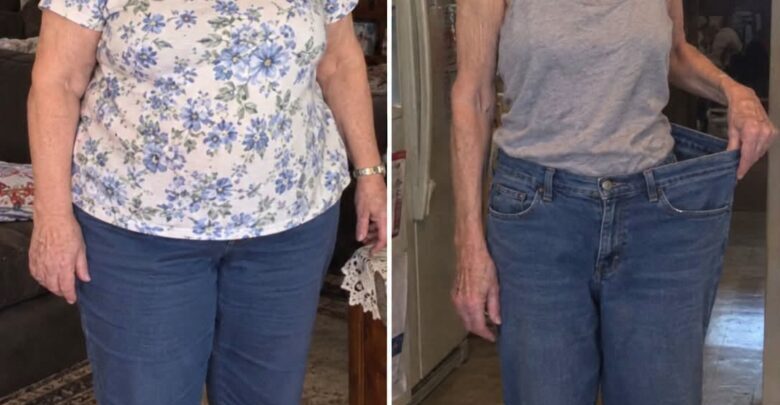
Her cheeks had become hollow. Her clothes hung loosely from her shoulders. Her hands trembled when she reached for the railing beside the train. Even her familiar navy coat seemed too large for her.
But the most disturbing thing wasn’t how much weight she’d lost.
It was the enormous black suitcase she dragged behind her.
My mother had left home with a small blue travel bag decorated with a pink ribbon. She returned with a luxurious black suitcase that she claimed belonged to a woman she had supposedly been visiting.
When I asked what had happened, she gave me an explanation that sounded rehearsed.
“Margaret gave me this one, sweetheart. Mine broke.”
I wanted to believe her.
Unfortunately, the truth was waiting inside that suitcase.
And when I finally discovered it, I learned that my mother had been carrying a secret for sixty-three years—a secret involving a son she had given up as a teenager, a heartbreaking separation, and a brother I had never known existed.
A Mother Who Never Missed Sunday Dinner
My name is Annie Cole, and I’m fifty-four years old. I work as a dental hygienist in Lakewood, Ohio, just outside Cleveland. I’ve been married to my husband, Dave, for twenty-nine years, and we have two children: Tyler, who is twenty-six, and Grace, who is twenty-two.
My mother lives alone in the little white Cape Cod house on Hilliard Road in Rocky River, where I grew up.
My father, Bill, died in 2009 after forty-four years of marriage to her. His death changed our family, but Mom eventually found her rhythm again. She continued volunteering at the local library, attending church, playing bridge with longtime friends, and preparing the Sunday meals that everyone looked forward to.
She was independent, stubborn, and proud of the life she had built.
She drove herself to the grocery store. She remembered everyone’s birthday. She kept tissues and butterscotch candies in the pockets of her cardigans.
Most importantly, she never missed Sunday dinner.
Not when Dad suffered a heart attack. Not when she broke her wrist. Not even during the pandemic, when we had to share our meals through a video call.
Our tradition was simple. We gathered at four o’clock, ate a home-cooked meal, talked about our week, and finished with pie.
That was why I felt happy when Mom announced that she would spend a week visiting an old friend named Margaret Feeney in Erie, Pennsylvania.
“Margaret from Erie?” I asked.
We were sitting at her kitchen table after Sunday dinner. Mom was cutting an apple pie into eight perfectly even slices.
“That’s the one,” she replied.
She explained that they had known each other since childhood and had recently reconnected. According to Mom, they had decades of memories to discuss.
I remembered hearing Margaret’s name before, although I couldn’t remember many details about their friendship.
“When was the last time you saw her?” I asked.
Mom paused.
“Twenty years ago, perhaps a little longer.”
I found that surprising, but I didn’t question her further. At eighty, my mother deserved time with people who mattered to her.
She planned to take the train from Cleveland to Erie on Monday morning and return the following Monday.
I offered to drive her.
“Annie, I’m eighty, not helpless,” she said with a laugh. “I can manage a train journey.”
I smiled and agreed.
I had no idea that this ordinary conversation would become the beginning of the most emotional chapter of our family’s history.
Seven Days of Short Phone Calls
On Monday morning, I drove Mom to the Amtrak station in downtown Cleveland.
She carried a small blue suitcase with wheels and a pink ribbon tied around its handle. I had bought it for her several years earlier, and she had used it on every trip since.
She wore her favorite navy coat and a gray cardigan that looked unusually large on her.
“Is that a new sweater?” I asked.
“No, sweetheart. I found it in the back of the closet.”
I didn’t think much about it.
Before boarding, she kissed my cheek and promised to call every evening.
The first call came that night. She sounded tired but said everything was fine. Margaret’s house was comfortable, and they had spent hours talking.
The second call was shorter. Mom mentioned taking a walk beside Lake Erie and said she planned to go to bed early.
On the third night, she spoke for barely two minutes.
“I’m fine, Annie. Don’t worry about me. I love you.”
Then the calls stopped.
I tried reaching her on the fourth evening, but my calls went directly to voicemail. I worried that something had happened, although I tried to convince myself that she had simply forgotten to charge her phone.
At eleven that night, I received a text message.
Sorry, sweetheart. Phone died. All fine. Love you.
The message was unusual. My mother disliked texting and often complained that the buttons on her phone were too small.
She sent similarly brief messages on the fifth and sixth nights.
Each one said she was fine.
Each one made me more concerned.
I considered driving to Erie, but I didn’t want to embarrass her by treating her like a child. I told myself that she would be home soon, and then I could see for myself that everything was all right.
On Monday afternoon, I arrived at the station with a cup of hot chocolate topped with extra whipped cream.
It was her favorite.
When the train pulled in, passengers began stepping onto the platform.
Then I saw my mother.
For several seconds, I couldn’t recognize her.
She looked painfully thin. Her face was gaunt, her eyes swollen, and her skin had a grayish appearance that frightened me. Her coat hung from her body as if it belonged to someone else.
I dropped the hot chocolate.
“Mom? What happened?”
She forced a weak smile.
“Just a little stomach trouble, sweetheart.”
I reached for her arms and felt how fragile she had become.
“You’ve lost so much weight! We need to get you checked by a doctor.”
“No hospital,” she insisted. “Please take me home.”
Her voice was sharper than I had ever heard it.
Then I noticed the suitcase.
It was large, black, expensive-looking, and completely unlike anything my mother owned.
“Where’s your blue bag?”
She tightened her grip on the handle.
“Margaret gave me this one. Mine broke.”
I wanted to ask a hundred more questions, but she looked so exhausted that I decided to take her home first.
The journey back to Rocky River was almost silent.
Mom stared through the passenger window while I repeatedly glanced at her, wondering what could possibly explain such a dramatic change in only one week.
The Bedroom Door She Locked
When we arrived at her house, Mom insisted on carrying the suitcase inside herself.
She dragged it through the living room and down the hallway before entering her bedroom.
Then she locked the door.
My mother had lived in that house for more than fifty years. She had never locked her bedroom door in front of me.
I stood in the hallway, confused and frightened.
“Mom, can I come in?”
“Not right now, sweetheart.”
“You are scaring me.”
“I’m fine. I just need some time.”
I heard the suitcase zipper open.
Then I heard something even more unsettling.
My mother was crying.
I wanted to comfort her, but she begged me to give her one night alone.
I refused to leave the house entirely. Instead, I settled onto her floral couch beneath the framed wedding photograph of my parents from 1965.
I called Dave and explained what had happened. He offered to bring dinner, but I told him I would stay with Mom until I understood what was wrong.
For hours, I replayed our conversations in my mind.
Why had she chosen to visit a woman she supposedly hadn’t seen in twenty years?
Why had she been so secretive?
Why had she returned looking seriously ill?
And why had she brought home a suitcase that clearly wasn’t hers?
Around eight o’clock, I remembered the telephone number Mom had written on a sticky note before leaving.
Margaret Feeney’s number.
I took the note from my purse and dialed.
A man answered after several rings.
“I’m looking for Margaret Feeney,” I explained. “I’m June Abernathy’s daughter. My mother has been visiting her this week.”
There was a long silence.
Then the man spoke.
“Ma’am, Margaret hasn’t lived here for eight years.”
My stomach dropped.
He explained that Margaret had been his mother-in-law and had died in March 2018. His wife and he had purchased the house from her estate and kept the telephone number.
Nobody had stayed there that week.
Nobody named June Abernathy had visited.
I thanked him mechanically and ended the call.
Margaret had been dead for eight years.
My mother had known her since childhood—or so I had believed.
Now I understood that the story she had told me was not simply incomplete.
It was a lie.
A Train Ticket and an Unfamiliar Name
I barely slept that night.
The next morning, I found Mom asleep in my father’s old blue recliner. She had wrapped herself in a quilt and looked even thinner in the morning light.
Beside her chair sat a small table.
On it lay a folded train ticket.
I picked it up carefully.
The ticket showed a journey from Pittsburgh to Erie, dated Friday.
My mother had told me she was visiting Erie for an entire week. Yet this ticket suggested she had traveled somewhere else before returning home.
Underneath the ticket was a brown leather luggage tag.
A typed card inside the plastic window displayed a name and address:
Samuel J. Reiner.
The address was in Pittsburgh, Pennsylvania.
I had never heard that name before.
My mind began racing.
Had Mom met someone in Pittsburgh? Was she hiding a family problem? Had she become involved in a situation she didn’t know how to explain?
I returned the ticket and tag to the table and walked down the hallway.
Her bedroom door was slightly open.
Inside, the black suitcase sat on the floor at the foot of her bed.
I knew I shouldn’t search through her belongings without permission. My mother had taught me to respect other people’s privacy, and I had always respected hers.
But I was frightened.
She had lost an alarming amount of weight, refused medical attention, and returned from a mysterious journey carrying someone else’s luggage.
I carefully opened the suitcase.
Inside were Mom’s folded clothes, toiletries, nightgowns, and slacks. Everything had been arranged in the precise manner she always used when packing.
But beneath the clothing lay three unfamiliar objects.
A navy wool sweater that belonged to a man.
A sealed brown envelope.
And an old silver digital camera.
The sweater smelled faintly of aftershave and something sterile, like a hospital room.
My hands trembled as I picked up the camera.
The battery was almost empty, but there were four photographs saved on it.
I opened the first image.
My entire understanding of my family changed in that moment.
Four Photographs That Revealed a Lifetime of Secrets
The photograph showed a hospital room.
A thin, bald man lay in the bed, connected to medical equipment. An IV entered his arm, and a small tube rested beneath his nose.
Beside him sat my mother.
She was wearing the same gray cardigan she had worn on the train.
She held the man’s hand and cried.
He was crying too.
Their expressions suggested a depth of emotion that I couldn’t explain.
I moved to the second photograph.
The same man sat upright in bed, holding a small yellow baby blanket.
The blanket had a white border and a pattern of little ducks around the edges.
I recognized it immediately.
My mother had knitted blankets with that pattern for as long as I could remember. She had learned it from her grandmother as a teenager, and she used it for every grandchild in our family.
But this particular blanket looked much older than the others.
It had been carefully preserved for decades.
Why would a sick man in Pittsburgh have one of my mother’s earliest creations?
I opened the third photograph.
Several people stood around the hospital bed. There was an older woman, a younger woman, two children, and my mother.
A little girl hugged Mom around the waist.
My mother rested one hand on the child’s head.
Everyone looked emotional, but the photograph felt strangely intimate, as if I had stumbled upon a family gathering from which I had somehow been excluded.
Then I opened the fourth image.
The man sat alone against his pillows, holding a sheet of paper in front of his chest.
The words were written in large, shaky letters.
“HI ANNIE.
I’M SAM.
I’M YOUR BROTHER.
I’D REALLY LIKE TO MEET YOU.
ROOM 612.
UPMC SHADYSIDE.
PITTSBURGH.
(PLEASE HURRY)”
The camera screen went dark.
Its battery had died.
I sat on the bedroom floor, holding the useless device and staring at the words I had just read.
I had a brother.
A brother I had never met.
A brother who was seriously ill.
And my mother had known about him long enough to visit him in a hospital.
I returned to the living room.
Mom was awake, sitting in the recliner and watching me approach.
When she saw the camera in my hand, her face crumpled.
“You found it,” she whispered.
“Who is Samuel Reiner?”
She closed her eyes.
“Please sit down, Annie.”
I wanted to demand answers, but something in her expression stopped me.
I sat opposite her, and she began telling me a story that had been hidden for sixty-three years.
The Son She Had Been Forced to Give Up
“My son’s name was Michael when he was born,” she began. “I named him after my father.”
She explained that she had been seventeen when she became pregnant in 1962.
The father was Danny Reilly, a young man she had known since childhood. They had planned to marry, but Danny enlisted in the United States Navy before either of them fully understood what their future would hold.
In April 1963, the USS Thresher sank during a test dive, killing all 129 men aboard.
Danny never learned that he had fathered a son.
By then, my mother’s pregnancy had already become a source of shame in her family and community. Her parents sent her to a home for unmarried mothers in Erie, Pennsylvania, where she could give birth away from the people who knew her.
She was told to say she had been staying with an aunt in Buffalo.
At the home, she met a sixteen-year-old girl named Margaret Feeney, who was also preparing to give up her newborn child.
They met while folding laundry.
They became friends through shared fear, grief, and the painful uncertainty of what would happen after their babies were born.
“She was my best friend, Annie,” Mom said. “We wrote letters for fifty-five years.”
Margaret had never been an ordinary childhood friend from Plum Street. She was the person who understood the experience my mother had spent most of her life trying to forget.
My mother had been allowed to keep Michael for three days.
She fed him, changed him, sang to him, and wrapped him in the yellow blanket she had knitted while pregnant.
Margaret helped her finish the border.
On the third day, a nun came to take the baby away.
My mother was told that the kindest thing she could do was let him go and never look back.
She believed those words for decades.
Michael was adopted by a Catholic family in Pittsburgh, a doctor and his wife who had struggled to have children. They named him Samuel.
My mother returned home and tried to rebuild her life.
The following year, she met my father.
Before accepting his marriage proposal, she told him everything about Danny, the pregnancy, and the baby she had surrendered.
Dad didn’t judge her.
He listened, held her hand, and asked her to marry him.
Years later, after two miscarriages, I was born.
Mom devoted herself to raising me, building a family, and creating the traditions I had always associated with her.
She never told me about Samuel.
Not when I was a teenager.
Not when I married Dave.
Not when Tyler and Grace were born.
Not even after Dad died.
For sixty-three years, she carried the memory of her first child alone.
The Letter That Arrived in April
Everything changed when a letter arrived at Mom’s house in April.
It came from Carol Reiner, Samuel’s wife.
Samuel had been adopted as a baby, but his adoptive parents had eventually told him the truth. They loved him deeply and had preserved the yellow blanket that had accompanied him into their family.
He had grown up knowing that somewhere in the world, a woman had given birth to him and loved him before they ever met.
He never wanted to hurt his adoptive parents by searching for his biological family while they were alive.
After they passed away, however, the possibility of learning more about his origins became easier to consider.
His daughter, Jenna, had taken a commercial DNA test. The results connected her to relatives she hadn’t previously known about.
My own DNA results, which I had obtained as a birthday gift from Tyler three years earlier, helped establish the connection.
Eventually, the family traced the connection back to my mother.
Carol’s letter explained that Samuel had developed acute myeloid leukemia, a serious blood cancer.
He had undergone chemotherapy, but the treatment had not produced the response his doctors hoped for. His medical team was considering a stem cell transplant, and they needed to identify a suitable donor.
Family members can sometimes be compatible donors, although compatibility varies and cannot be assumed simply because two people are related.
Samuel wanted to know whether my mother had other children.
He wanted to ask if I might consider testing.
But he also wanted something more personal.
He wanted to meet the woman who had given birth to him.
Mom read the letter repeatedly.
She wrote back to Carol. She exchanged letters with Samuel. She learned about his life as a teacher, his marriage, his daughter, and his grandchildren.
She learned that he enjoyed science fiction movies, followed Pittsburgh sports, and had spent thirty-five years teaching high school chemistry.
He had built a good life.
His adoptive parents had loved him.
And he had never blamed the young woman who had given him up.
Still, my mother couldn’t tell me the truth.
Every Sunday, she sat across from me at the dinner table and struggled to find the courage to say the words.
Every week, she failed.
Her fear became so overwhelming that she began losing her appetite.
She lost forty-one pounds between May and October.
She wore my father’s old sweaters to hide the change in her body, hoping I wouldn’t notice.
I had seen her every week.
I had eaten meals with her.
And I had missed what was happening right in front of me.
Why My Mother Stopped Eating
“Every time I sat down to eat, I thought about him,” Mom explained through tears. “I imagined him in that hospital bed while I was sitting at home, too frightened to tell my daughter the truth.”
She wasn’t deliberately trying to harm herself. She was overwhelmed by years of guilt, fear, and the terrible possibility of losing a child for a second time.
When Samuel’s condition worsened in September, Carol called and told Mom that the family might not have much time left.
Samuel asked to meet his birth mother before it was too late.
He also asked whether he could meet me.
Not because I might be a donor.
Not because I owed him anything.
He simply wanted to see his sister.
Mom finally traveled to Erie and then Pittsburgh.
She visited the cemetery where Margaret was buried and sat beside her grave, speaking aloud about the decision she was about to make.
She then traveled to Pittsburgh, where Carol met her at the station.
On Tuesday morning, she entered Room 612 at UPMC Shadyside.
Samuel looked at her and said two words.
“Hi, Mom.”
My mother had imagined that moment for sixty-three years.
She had prepared herself to see a stranger, but the man in the bed was also the baby she had once held against her chest.
She sat beside him, took his hand, and cried.
They spent hours talking.
Samuel told her about the parents who had raised him, his career, his wife, and the family he had built.
He showed her the yellow blanket.
The little ducks were still there.
His adoptive mother had preserved it for six decades and told him that someone had loved him before he ever came into their home.
My mother had never known that her love had remained part of his life.
She had spent decades believing she had disappeared from his story.
In reality, her memory had been carried forward with tenderness.
When Samuel asked about me, Mom told him everything.
He asked her to bring me to Pittsburgh.
He wanted to meet his sister even if I couldn’t help him medically.
My mother stayed with Carol for six days, spending nearly every possible hour beside Samuel’s bed.
But she still couldn’t tell me.
She left Pittsburgh on Friday and traveled to Erie, intending to return home and finally explain everything.
Instead, fear stopped her again.
She spent three nights in a motel, writing possible explanations on a notepad and crossing them out.
When her blue suitcase broke, Carol gave her a black suitcase that belonged to Samuel.
Before Mom left, Samuel placed the camera and the sealed envelope inside.
“If you can’t find the words,” he told her, “maybe these will help.”
The Letter From My Brother
The envelope contained a medical test kit and a handwritten letter.
The kit was intended to begin the process of determining whether I might be a suitable stem cell donor for Samuel.
The letter began with an apology.
Samuel knew that learning about a brother at fifty-four could be overwhelming. He understood that I hadn’t known he existed and that I had no obligation to become involved in his medical care.
He introduced himself as a sixty-three-year-old high school chemistry teacher who had been married to Carol for thirty-eight years.
They had a daughter, Jenna, and two grandchildren, Lucy and Max.
He liked football, baseball, and science fiction movies.
He was bald because of chemotherapy, but he had once had dark, curly hair like mine.
Then he explained his diagnosis.
His doctors were evaluating stem cell transplantation as a treatment option. A sibling might be a compatible donor, but testing was necessary to determine whether that was possible.
He was honest about the uncertainty.
He didn’t demand help.
He didn’t accuse anyone.
He simply asked me to consider the test.
Then he wrote the words that broke my heart.
Even if I wasn’t a match, he still wanted to meet me.
He had wanted a sister since childhood. Every Christmas, he had asked his adoptive mother whether he might someday have one.
She had always answered with a laugh.
“Maybe someday, Sammy.”
Now, after sixty-three years, that wish had finally become possible.
He signed the letter:
“Your brother, Sam.”
I put the letter down and looked at my mother.
She was crying silently in the recliner.
“I’m sorry, Annie,” she whispered. “I’m so sorry I didn’t tell you.”
I knelt beside her and wrapped my arms around her fragile shoulders.
“You were seventeen,” I said. “You were scared, and people told you that you were a disgrace. You did what you thought you had to do.”
She sobbed against me.
“You loved him,” I continued. “You knitted him a blanket. You held him. And somehow, that love stayed with him for his entire life.”
For the first time in months, my mother stopped trying to hide her tears.
I held her until she was ready to speak again.
Then I picked up the test kit.
The Decision That Led Us to Pittsburgh
The instructions explained how to collect cheek-cell samples for preliminary compatibility testing.
I followed the directions carefully, sealed the samples, and prepared the package for shipment.
My mother watched me with anxious eyes.
“Annie, you don’t have to do this.”
“I know,” I replied. “But I want to.”
I wasn’t making a promise about the result. I wasn’t assuming that being related would guarantee compatibility or that a transplant would automatically succeed.
I was making a decision to meet someone who was already my brother, regardless of the medical outcome.
I grabbed my car keys.
“Get your coat, Mom. We’re going to Pittsburgh.”
Before leaving town, I arranged overnight delivery for the samples and called Dave.
“I’m taking Mom to Pittsburgh,” I told him.
He asked what was there.
I looked at my mother, who was holding the yellow baby blanket in her lap.
“My brother,” I said.
Dave was silent for a moment.
Then he told me he would pack a bag and join us the next day.
The drive from Rocky River to Pittsburgh took a little over two hours.
For much of the journey, Mom watched the trees and hills through the passenger window.
Then, about an hour into the trip, she spoke.
“Annie, I’m hungry.”
I turned toward her.
She had barely eaten for months.
“I haven’t felt hungry since May,” she said. “But I am now.”
I took the next exit.
We stopped at a Cracker Barrel, where I ordered chicken and dumplings, mashed potatoes, biscuits, and apple pie.
Mom ate everything.
She cried as she ate, but she finished every bite.
For the first time in months, she seemed able to imagine a future beyond her fear.
We arrived at the hospital that afternoon.
Room 612.
My mother entered first, carrying the yellow blanket.
I followed her through the doorway.
Samuel was sitting up in bed. He looked pale and exhausted, with an IV in his arm and a tube beneath his nose.
Carol stood beside the bed.
Then Samuel looked past our mother and saw me.
I cannot adequately describe what it felt like to look at a stranger and recognize my own face.
His eyes resembled mine. So did his nose, chin, and the slight crookedness of his smile.
I walked toward him.
For a moment, I couldn’t think of anything meaningful to say.
Then I spoke the truth.
“I always wanted a brother.”
Samuel laughed, then began to cry.
“I asked for a sister every Christmas,” he replied. “Every single year.”
He held out his hand.
I took it.
His fingers were cold and thin, but the gesture felt strangely familiar.
Carol took a photograph of us sitting beside the hospital bed, holding hands and smiling through our tears.
Behind us, our mother sat with the yellow baby blanket in her lap.
For the first time in our lives, both her children were in the same room.
The Test Results Nobody Expected
Nine days later, I received a call from the medical team.
I stepped away from my work and listened as the doctor explained the results.
I had prepared myself for disappointment. I knew that sibling compatibility was not guaranteed, particularly when the relationship was through one biological parent.
I expected to hear that I wasn’t a match.
Instead, the doctor told me that the testing showed a ten-out-of-ten HLA match.
I slid down the hallway wall and sat on the floor.
The possibility that had brought us together was suddenly real.
I understood that the transplant would still involve risks, preparation, and uncertainty. Compatibility was an important step, not a guarantee of recovery.
But the medical team believed that I could be a suitable donor.
The transplant was scheduled for December.
I spent time at the cancer center receiving injections intended to increase the number of stem cells circulating in my bloodstream. Then I underwent a collection procedure in which a machine separated the stem cells from my blood and returned the remaining components.
The process left me tired and achy, but I was grateful to be able to help.
Mom sat beside me throughout the procedure, knitting another yellow baby blanket with little ducks around the edges.
When I asked whom it was for, she smiled.
“Lucy is expecting a baby,” she said. “Sam’s granddaughter. I want the baby to have one too.”
She kept knitting.
“Margaret would have liked that.”
The following morning, my collected stem cells were infused into Samuel through his central line.
The procedure was quiet and surprisingly ordinary in appearance. The cells arrived in a bag and flowed through the medical tubing.
I sat on one side of the bed.
Mom sat on the other.
Carol stood near the window.
Samuel watched the infusion and then turned toward me.
“That’s you,” he said.
“That’s me.”
He took my hand.
“Sixty-three years without knowing you existed,” he said. “And now you’re helping give me another chance.”
I squeezed his fingers.
We didn’t know what the future would bring.
But for the first time, we were facing it together.
A Family Reunited After Sixty-Three Years
In the months that followed, Samuel’s recovery progressed, and his medical team eventually reported that he was in remission.
His journey remained one of medical follow-up, monitoring, and adjustment, but the transplant had given him an opportunity to move forward.
His hair began growing back.
My mother regained much of the weight she had lost and gradually returned to her old routines.
She baked cinnamon rolls on Saturdays and apple pie on Sundays. She started wearing her own cardigans again instead of hiding beneath my father’s oversized sweaters.
And she stopped missing Sunday dinner.
Our family gatherings became larger.
Samuel and Carol began driving from Pittsburgh to join us every other Sunday. Jenna sometimes came with her children, Lucy and Max.
My husband, Dave, and Samuel discovered that they could argue enthusiastically about football for hours. Tyler and Jenna bonded over their shared interest in a true-crime podcast.
Grace, who was studying nursing, asked Samuel whether he would be willing to discuss his experience as a transplant recipient for a school assignment.
He happily agreed.
Our family had been expanded by a person who had existed outside our knowledge for more than half a century.
There were stories to exchange, photographs to examine, and birthdays to remember.
There were also moments of sadness.
We wondered what our family might have looked like if Mom had been able to stay connected with Samuel from the beginning. We thought about Danny, who had died without knowing his son existed. We remembered Margaret, who had carried her own painful history and remained my mother’s confidante for decades.
But the sadness no longer belonged to one person alone.
We could speak about it.
We could ask questions.
We could remember the people who had shaped our lives without pretending that their stories had never happened.
At Sunday dinner, Mom began setting out ten slices of pie instead of eight.
She always gave Samuel the biggest piece.
“You were the first,” she told him. “The first one gets the biggest slice.”
He never argued.
And I never minded.
For fifty-four years, I had enjoyed the privilege of being my mother’s only known child.
Now I had a brother, and our family had room for both of us.
The Conversation at the Kitchen Sink
One Sunday evening, after everyone had finished eating, Mom and I washed dishes together at her kitchen sink.
It was a familiar routine.
She washed. I dried. We talked about ordinary things.
Then she asked whether I knew what she had thought about during those three nights in the Erie motel.
I shook my head.
“I thought about Sister Agnes,” she said. “The woman who took Michael from me on the third day.”
She explained that the nun had told her the kindest thing she could do for the baby was let him go and never look back.
My mother had accepted that advice as an absolute truth.
She had believed that forgetting was necessary for everyone to move forward.
For sixty-three years, she tried to live according to that belief.
But it hadn’t erased her grief.
It had only isolated her from the people who might have helped her carry it.
“Secrets don’t protect anybody, Annie,” she said. “They just make everybody lonely.”
I thought about the black suitcase, the photographs, the letter, and the months when Mom had been losing weight while sitting across from me at Sunday dinner.
I thought about Samuel waiting in Room 612, hoping that the sister he had never met might come through the door.
I understood why my mother had been afraid.
I also understood how much that fear had cost her.
“Why did you tell me you were visiting Margaret?” I asked.
Mom paused before answering.
“Because she was the only person who knew both of my children existed.”
She explained that Margaret had been with her during the hardest days of her youth. They had folded sheets together, knitted the yellow blanket, and cried over the children they were about to lose.
Although Margaret had died years earlier, my mother wanted to feel that her friend was accompanying her when she finally met Samuel again.
She had used Margaret’s name as a shield because she couldn’t bear to explain the truth.
But the name also represented something real: the only person who had understood her first loss.
I finally understood why the lie had been chosen, even though I wished Mom had found the courage to tell me the truth earlier.
What the Black Suitcase Means to Us Now
I still keep the black suitcase in my closet.
Samuel insisted that I keep it because it had become part of our family’s story.
The leather luggage tag still bears his name.
But Mom tied a small pink ribbon to the handle—the same kind of ribbon that had decorated her original blue bag.
She wanted the suitcase that brought her home to carry a reminder of where her journey had begun.
Inside, I keep the silver camera.
I charged its battery and saved the original four photographs. Since then, we’ve added many more.
There are pictures of Samuel at his first Sunday dinner, laughing with Dave, holding his grandson, and sitting beside Mom as she knits.
There is a photograph of Samuel and me at the cancer center.
There is another of Mom laughing so hard that she has to sit down.
But I still return to the first four pictures.
The first shows a mother and son holding hands in a hospital room.
The second shows a yellow baby blanket that survived more than sixty years.
The third shows a family gathered around a hospital bed, with a little girl embracing the grandmother she had only just met.
The fourth shows a man asking to meet his sister.
Those photographs remind me that a person’s history is often more complicated than it appears from the outside.
They remind me that love can survive separation, shame, uncertainty, and decades of silence.
And they remind me that the opportunity to reconnect with someone can arrive when it is least expected.
The Lesson My Mother Finally Learned
People sometimes ask whether I resent my mother for hiding Samuel from me.
The answer is complicated.
I wish she had trusted me enough to tell me the truth. I wish she hadn’t spent months suffering in silence. I wish I had recognized sooner that her oversized sweaters and disappearing appetite were signs that she needed help.
But I also understand the circumstances in which she became a mother for the first time.
She was seventeen.
Her boyfriend had died in a submarine disaster. The people around her treated her pregnancy as a source of shame. She was separated from her baby and told that the best way to protect him was to disappear from his life.
She was young, frightened, and without the support she deserved.
For decades, she believed that her past had to remain hidden if she wanted to build a respectable life.
She became a loving wife, a devoted mother, and a grandmother who filled her kitchen with homemade food.
She did not stop loving her first child.
She simply learned to keep that love silent.
When Samuel became ill, the silence grew unbearable. She wanted to see him, but she was terrified of what would happen when the truth reached me.
Her fear did not excuse every decision she made, but understanding it helped me see the woman behind the secret.
She was not only the mother who had lied to me.
She was also the seventeen-year-old girl who had held a newborn for three days, the young woman who lost the father of her child, and the eighty-year-old mother who feared that she might lose her son again.
Eventually, she found the courage to face the truth.
Samuel helped her do that by giving her something she could carry home: four photographs, a letter, a medical test kit, and the possibility of a new beginning.
She could not find the words herself.
So her son found them for her.
“Hi, Annie. I’m Sam. I’m your brother.”
Those words changed my life.
They gave my mother the chance to know her son again.
They gave Samuel a sister who wanted to meet him.
And they gave our family a future that none of us had expected.
The black suitcase no longer represents the week my mother disappeared behind a story that wasn’t true.
It represents the journey that brought us together.
It reminds me that the past cannot always be changed, but the way we face it can make a difference.
And every Sunday, when Mom places another homemade pie on the table, I am grateful for the extra chair, the larger family, and the simple privilege of having everyone we love gathered in the same room.
Sometimes, a family secret remains hidden for decades.
Sometimes, the truth arrives in a letter or a photograph.
And sometimes, the most important journey begins when someone finally finds the courage to say hello.