Uncategorized
My Husband Left Our Children Millions and Me a One-Way Ticket to Costa Rica—His Final Secret Changed Everything

PART 3 — The Secret He Had Kept for Eleven Years
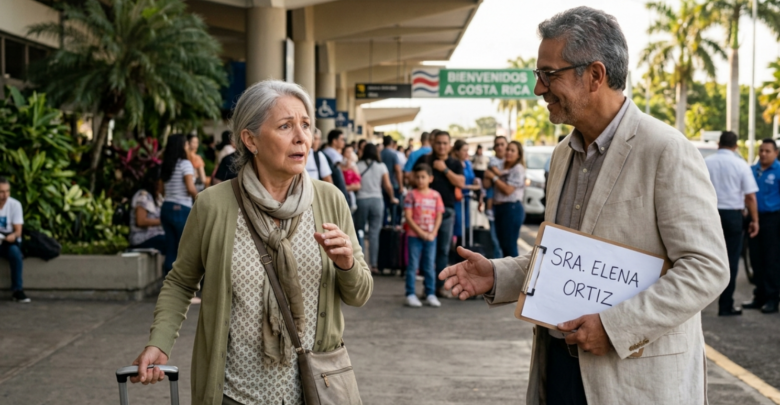
When Daniel Ruiz introduced himself at the San José airport, I had no idea that the next few hours would change the way I understood my entire marriage.
“My name is Daniel Ruiz,” he said, extending his hand. “I’m an attorney here in Costa Rica. Your husband asked me to meet you personally and explain some things he couldn’t tell you himself.”
I stared at him, clutching the photograph I had discovered among Arthur’s belongings.
“My husband is dead,” I whispered. “How could he have arranged anything?”
Daniel glanced toward the airport entrance. Travelers hurried past us, greeting loved ones and collecting their luggage. Somewhere nearby, a child laughed as his father lifted him into his arms.
I looked away.
Only days earlier, I had been a wife of forty-six years. Now I was a seventy-two-year-old widow standing in a foreign country with a one-way ticket, a suitcase, and the terrible feeling that my own family had decided I was no longer worth keeping close.
“Mrs. Henderson,” Daniel said gently, “your husband anticipated that you would have questions. He asked me to take you somewhere private before explaining the arrangements he made.”
“Why Costa Rica?”
He looked at the photograph in my hand.
“Because this is where Arthur’s life changed forever.”
I wanted to turn around and return to Miami. I wanted to demand an explanation from the attorney who had read Arthur’s will, from my children who had laughed when I received my ticket, and from the man I had loved for nearly half a century.
But Daniel mentioned something that stopped me.
“Your husband left you a handwritten letter. It has been waiting here for eleven years.”
Eleven years.
While I was helping Arthur through medical appointments, preparing his meals, and learning how to recognize the smallest changes in his breathing, he had been planning something I knew nothing about.
I followed Daniel outside.
A black sedan waited at the curb. As we drove away from the airport, the city unfolded around us. Colorful buildings stood beside modern offices, motorcycles moved through busy intersections, and green mountains rose beyond the rooftops.
I had imagined Costa Rica as a place where my children could send me to disappear.
Instead, the farther we traveled from the airport, the more I wondered whether I had misunderstood the meaning of that ticket.
“Mr. Ruiz,” I said quietly, “I need to ask you something.”
“Of course.”
“Did Arthur love me?”
The question sounded ridiculous as soon as I spoke it. I had worn his wedding ring for forty-six years. I had raised our children with him, celebrated birthdays beside him, and held his hand through the frightening final years of his life.
Yet the will had left me feeling as though I had been erased.
Daniel looked at me briefly.
“Your husband loved you deeply. He spent years trying to make sure you would be safe after he was gone.”
“Then why did he leave almost everything to our children?”
“Because the will you heard read in Miami wasn’t the entire story.”
My heart began pounding.
“What does that mean?”
“It means your husband made separate arrangements for you. Arrangements that weren’t part of the estate documents discussed that day.”
I turned toward the window.
“What did he leave me?”
Daniel paused before answering.
“Something he believed you needed more than another inheritance.”
I didn’t understand what he meant. I only knew that, for the first time since Arthur’s death, my grief was beginning to mix with something unfamiliar.
Hope.
And fear.
Because whatever my husband had hidden in Costa Rica, he had hidden it from me, too.
The House on the Hillside
The house stood about forty minutes outside San José, on a quiet hillside overlooking a valley filled with coffee plantations and distant mountains.
It wasn’t a mansion. It was a modest wooden home with a red-tiled roof, broad windows, and a covered veranda. Hibiscus and bougainvillea grew beside the path, while fruit trees shaded the garden.
The place looked peaceful.
Almost painfully peaceful.
Daniel helped me out of the car.
“You can stay here as long as you need,” he explained.
I looked at the house.
“Who owns it?”
He hesitated.
“You do, Mrs. Henderson. Your husband arranged for the property to be held for your benefit.”
I stared at him.
“Arthur bought me a house?”
“He purchased the land years ago and arranged for the house to be renovated. The property has been placed under a legal structure designed to protect your right to live here.”
“Why didn’t he tell me?”
“He explains that in his letter.”
Inside, sunlight spilled across polished wooden floors. White curtains moved gently in the breeze, and a vase of fresh flowers stood on the dining table beside a bowl of oranges.
There were three bedrooms, a spacious kitchen, and a comfortable living room overlooking the garden.
Then I noticed the photograph.
It stood on a shelf near the window, framed in dark wood.
Arthur was young again. His hair was thick, his shoulders broad, and his smile completely different from the tired expression I had grown accustomed to during his final years.
Beside him stood the mysterious man from the photograph I had found among his belongings.
Both men were smiling.
I lifted the frame carefully and read the inscription on the back.
For the life we dreamed of, and the people we promised to protect.
I turned toward Daniel.
“Who was this man?”
He took a slow breath.
“His name was Mateo. He was Arthur’s older brother.”
I nearly dropped the frame.
“Brother?”
“Yes.”
“My husband had a brother?”
Daniel nodded.
I couldn’t understand it. I had been married to Arthur for forty-six years. I knew the stories about his childhood, the names of his school friends, the first car he had purchased, and the summer he worked in a factory to pay for college.
He had told me that his parents died when he was young.
But he had never mentioned a brother.
“Why would he hide something like that from me?”
“Their relationship was damaged by a tragedy that neither of them knew how to repair for many years.”
“What tragedy?”
Daniel reached into his briefcase and removed a thick cream-colored envelope.
“Your husband asked me to let you read this first.”
My name was written across the front in Arthur’s unmistakable handwriting.
The moment I saw it, the years seemed to collapse around me. I remembered his birthday cards, his handwritten grocery lists, and the little notes he used to leave beside my coffee cup.
Toward the end, his handwriting had become shaky. Sometimes he could barely sign his name.
But this letter was different.
The writing was steady and deliberate.
I sat at the dining table while Daniel stepped into another room. For several minutes, I simply held the envelope.
Then I opened it.
The Letter Arthur Never Gave Me
My dearest Clara,
If you are reading this, I have finally run out of time to explain the things I should have told you while I was still able to sit across from you and look into your eyes.
First, I need you to know that I am sorry.
Not because I left you a ticket to Costa Rica. I am sorry that I allowed you to believe, even for one moment, that your place in my life could be measured by a piece of paper.
You were never the smallest part of my life, Clara.
You were the reason I wanted a life at all.
I stopped reading.
Tears landed on the page.
I could almost hear Arthur’s voice, with its familiar rasp and the gentle way he used to say my name whenever he wanted reassurance that I was still beside him.
I wiped my face and continued.
Before I met you, I came to Costa Rica with my brother Mateo. We were young men with very little money and enormous dreams.
Our parents had left us a small piece of land. Mateo believed we could build a coffee business there, while I wanted to sell the property and return to Florida.
We argued constantly. I thought he was being unrealistic. He believed I was too afraid to take a chance.
Then, one terrible night, everything changed.
My hands trembled as I turned the page.
Mateo discovered that our land was worth far more than we had believed. A neighboring property owner wanted to purchase it, and a development company had begun negotiating with several landowners in the valley.
I wanted to sell.
Mateo refused.
We fought bitterly. The following morning, he disappeared. His belongings were gone, his bank account had been emptied, and a letter was waiting on the table accusing me of stealing money that belonged to him.
I never saw him again.
I lowered the letter.
Forty-six years of marriage, and I was discovering an entire chapter of my husband’s life that I had never known existed.
I continued reading.
I searched for him for years. I wrote letters and hired people to look for him. Eventually, I learned that he had traveled farther into the country and begun working with local farmers.
I also learned that the accusation against me had been based on a misunderstanding. Someone had used our business accounts without either of us knowing.
By the time the truth emerged, Mateo had already disappeared, convinced that I had betrayed him.
I returned to Florida, built a career, and started the family I had always wanted. Then I met you.
I convinced myself that the past was dead and buried. I told myself that keeping the secret would protect the happiness we were building.
I was wrong.
Secrets do not disappear simply because we stop speaking about them.
I pressed the letter against the table.
Arthur had spent years teaching our children to be honest and responsible. He had lectured Owen about keeping promises and told Victoria that family meant standing beside people when life became difficult.
Yet he had carried this secret for decades.
I couldn’t decide whether I was angry with him or heartbroken for him.
Then I reached the next page.
Clara, I found Mateo again eleven years ago.
My breath caught.
He was alive. He had built a modest life in the valley. He had never married and had no children of his own. He had spent years helping local farmers improve their crops and protect the land they depended upon.
We met at a small café in San José.
We sat across from each other for three hours.
We did not erase the years we had lost, and we did not resolve every hurt. But we finally understood what had happened.
Mateo forgave me for a betrayal I had never committed.
And I forgave him for believing the worst of me.
I covered my mouth.
Two brothers had lost decades because of a misunderstanding neither had known how to resolve.
Then I read the paragraph that changed everything.
During those years, the land we inherited became part of a much larger agricultural development. I believed we had lost our original claim forever. Instead, Mateo had preserved the claim, and together we eventually reached an agreement with the current owners.
The proceeds created a trust.
Clara, the trust is yours.
I read the sentence again.
Then again.
The trust was mine.
Arthur explained that it had been established separately from the estate being divided in Miami. Its terms were designed to provide for me during my lifetime, and he had arranged for the house to be protected separately so my right to live there would not depend entirely on the trust’s investment performance.
He had made the arrangements years before his death.
He had simply never told me.
I continued reading, my tears blurring the words.
I placed the trust under your name because you understand what it means to care for something without expecting a reward.
I know our children may be angry. I know they may believe I treated them unfairly.
But I need you to understand something I could never make myself say while I was alive.
I did not leave you less because I loved you less.
I left you something different because I wanted you to have a life that belonged to you.
For eight years, you gave me your strength, your sleep, your patience, and your freedom. You did not complain when your world became smaller because mine was shrinking.
You held my hand when I was afraid.
You sat beside me when I could no longer offer you conversation.
And when I could no longer remember what day it was, you still remembered every little thing that made me happy.
I watched you give pieces of yourself away, Clara. And I became frightened that when I died, you would continue giving until there was nothing left.
Please do not spend the rest of your life serving people who have forgotten how to see you.
Go outside.
Learn the names of the birds.
Plant something.
Make friends who know you as Clara, not as Arthur’s wife or Victoria and Owen’s mother.
And if you can find it in your heart, forgive me for the things I was too afraid to tell you.
I loved you yesterday.
I love you today.
And if there is any part of this world where love survives the body, I will love you there, too.
Forever yours,
Arthur.
I folded the letter carefully and held it against my chest.
For several minutes, I cried without making a sound.
Not because of the house.
Not because of the money.
I cried because my husband had understood something I had struggled to admit even to myself.
During the final eight years of his life, I had gradually disappeared into the responsibilities of caregiving. My days revolved around medication schedules, medical appointments, meals, and sleepless nights.
I had no regrets about loving him or caring for him.
But I had forgotten that I was allowed to need something, too.
Now, at seventy-two, I had been given the frightening possibility of becoming a person again.
Twelve Million Dollars and a Question I Couldn’t Answer
When Daniel returned, I asked him to explain the trust.
He placed a thick folder on the table and began describing the arrangements Arthur had made.
The trust had been established after the settlement involving the original family land. The proceeds had been invested over time, and its assets were managed under documented legal terms.
I listened carefully, asking questions whenever I didn’t understand something.
Finally, I asked the question I had been avoiding.
“How much is it worth?”
Daniel paused.
“Based on the most recent valuation, approximately twelve million dollars.”
I stared at him.
Twelve million dollars.
Only days earlier, I had been calculating whether I could afford to remain in my home in Miami. I had wondered whether I would need to sell my wedding ring to cover unexpected expenses.
I had spent the previous evening believing I had been left with almost nothing.
Now an attorney was telling me that Arthur had arranged a substantial financial trust for my benefit.
I sat back in my chair.
“Does anyone else know?”
“Your husband’s brother knew about the arrangements, along with the trustees and a limited number of legal professionals. Your children were not beneficiaries of this trust.”
“Why not?”
“Because it was created for your benefit. Its terms and distribution rules are separate from the inheritance described in the will.”
I looked toward the garden.
I had never dreamed of becoming wealthy. I wanted security, the ability to pay my own bills, and enough freedom to travel without worrying about every expense.
Twelve million dollars felt like an ocean between the life I had known and the life now being offered to me.
“What am I supposed to do with it?” I asked.
Daniel smiled faintly.
“That may be the first question your husband hoped you would ask.”
He slid another document toward me.
It contained information about the trust, the independent trustees, and the distributions available under its terms.
“You should review everything with independent legal and financial advisers before making major decisions,” he said. “You don’t have to decide anything today.”
I appreciated that advice more than he could have known.
For the first time in years, nobody was telling me what I had to do immediately.
I could read.
I could ask questions.
I could think.
Then I remembered the ticket.
“Why did Arthur leave me a one-way ticket instead of simply telling me about the trust?”
Daniel considered his answer.
“Your husband believed you would never leave Miami if you thought your children still needed you. He also worried that you might immediately begin giving away your financial security to make everyone else comfortable.”
I looked down.
He was right.
Even after the will reading, I had been thinking about Victoria’s children, Owen’s household, and whether my departure would inconvenience anyone.
I had spent so many years being available that the idea of being unavailable felt almost immoral.
“Did Arthur intend for them to believe I had received nothing?” I asked.
“I can explain the instructions he documented, but I can’t claim to know every thought he had. He wanted you to have time away from family pressure before making decisions about your future.”
I nodded slowly.
Arthur had not been perfect. He had kept an enormous secret from me, and I was still struggling with that.
But his arrangements had given me something I had not realized I needed.
A choice.
Outside the window, a hummingbird hovered beside a red flower. Its wings moved so quickly that I could barely follow them.
I found myself wondering what kind of bird it was.
The thought was small, almost silly.
But it was the first time in months that I had been curious about something unrelated to medical appointments, bills, or family obligations.
Perhaps that was how beginning again worked.
Not with a grand announcement.
With a small question.
Learning How to Be Clara Again
The following morning, I woke before sunrise.
For eight years, my body had learned to wake automatically. I checked Arthur’s breathing, prepared his medication, and organized the day around whatever he needed.
I would have done it all again if I had been given the choice.
But I could finally admit that caregiving had cost me things I had never realized I was allowed to miss.
I missed reading novels in the afternoon.
I missed taking long walks without checking my watch.
I missed laughing with friends without worrying that someone might call.
I missed being asked what I wanted for dinner.
I missed being Clara.
That afternoon, I asked Rafael, who helped maintain the property, to show me how to plant tomatoes.
My hands trembled slightly as I pressed the seedlings into the soil.
They were no longer elegant hands. Age had marked them, and my knuckles ached when the weather turned cold.
But they were still capable of making something grow.
When I finished, Rafael gave me an encouraging thumbs-up.
“Muy bien.”
I smiled.
It was the first genuine smile I had felt on my face in months.
For a little while, I forgot about the will, the money, and my children.
Then my phone rang.
Victoria.
I stared at her name before answering.
“Hello, sweetheart.”
“Mom, where are you?”
Her voice was sharp.
“I’m in Costa Rica.”
“I know that. I mean, where are you staying? Owen said you might have gone to a hotel.”
“I have a place to stay.”
There was a pause.
“What does that mean?”
“It means I’m safe.”
“Mom, please don’t be difficult. We have a lot to sort out. The attorney needs some signatures, and you can’t just disappear.”
I looked at the garden.
“I haven’t disappeared, Victoria. I told you I was leaving.”
“You said you were going on a trip. We didn’t think you were actually going to move there.”
“I didn’t say I was moving permanently.”
“Well, you can’t stay away forever.”
The familiar pressure returned to my chest.
For decades, I had responded to that tone by explaining myself, apologizing, or changing my plans.
I almost did it again.
Then I remembered Arthur’s letter.
Please do not spend the rest of your life serving people who have forgotten how to see you.
“I’ll contact the attorney when I’m ready,” I said.
Victoria fell silent.
Then her voice softened.
“Mom, are you sure you’re all right? You sound strange.”
“I’m tired, sweetheart.”
“Then come home. We can talk about everything properly.”
Everything.
I wondered whether she meant my grief, the will, or the inconvenience of having a mother who was no longer available on demand.
“I need some time,” I told her.
“Time for what?”
“To decide what I want.”
She laughed softly, the way people sometimes laugh when they believe someone has made an unreasonable request.
“Mom, you’re seventy-two. What exactly do you think you’re going to do now?”
The question hurt more than I expected.
I looked at my hands, still smudged with soil.
“I don’t know yet,” I answered. “But I’m going to find out.”
I ended the call before she could respond.
My heart raced, and I sat on the garden bench until the feeling passed.
Then I returned to the tomatoes and watered them.
For the first time in my life, I had ended a conversation with my daughter without apologizing for existing.
It was a small victory.
But it belonged entirely to me.
The Family I Had Left Behind
Over the following two weeks, I began meeting with independent advisers who explained the trust in plain language.
I learned about its assets, its distribution rules, and the decisions that required professional guidance.
I signed nothing I didn’t understand.
I rushed into no major purchases.
Instead, I paid attention to ordinary things I had forgotten to notice.
I learned how to order coffee in Spanish.
I walked through a local market where vendors sold mangoes, pineapples, handmade baskets, and flowers wrapped in brown paper.
I bought a yellow dress simply because I liked the color.
I sat in a café and read an entire chapter of a novel without checking my phone.
I called an old friend in Miami and talked for an hour about nothing important.
One morning, I woke laughing because I had dreamed Arthur was standing in our kitchen, complaining that I had made his coffee too strong.
For the first time, the memory made me smile before it made me cry.
I also learned more about Mateo.
He had died six years earlier, peacefully, at the age of eighty-one. Before his death, he had worked with a local agricultural cooperative, helping small farmers improve their crops and negotiate better prices.
He had never become wealthy in the way Arthur had.
He had chosen a quieter life.
But he had left behind something meaningful: a network of farmers who had learned to protect their land and support one another.
Arthur had visited him regularly after their reconciliation. Sometimes they discussed the trust. Sometimes they argued about football. Sometimes they sat together without speaking.
They had lost decades, but they had found each other again.
I envied them.
Not because of the money.
Because they had been given the chance to tell the truth before it was too late.
One afternoon, Daniel brought me a small box containing additional documents Arthur had left in his care.
Among them was a sealed letter addressed to Victoria and Owen.
“Your husband instructed us to deliver this letter if you wished us to,” Daniel explained. “You are not required to disclose your trust documents or financial details to your children.”
I studied the envelope.
“Why would he leave them a letter?”
“I believe he wanted to explain himself. But the decision is yours.”
I carried it to the veranda and sat for several minutes, debating whether to open it.
Then I realized that the letter was not mine to read.
It was addressed to my children.
I placed it back in the box.
I had spent enough of my life trying to manage other people’s reactions. I wanted to learn how to live without doing that.
Still, one question remained.
I wanted to know whether my children could love me without needing something from me.
Three weeks after I arrived in Costa Rica, Daniel called to tell me that Victoria and Owen had contacted his office.
“They want to know whether you intend to return to Miami,” he explained.
“What did you tell them?”
“That you are safe and will contact them when you’re ready.”
I thanked him.
Then I asked the question that had been troubling me.
“Have they asked whether I’m happy?”
Daniel was quiet.
“No, Mrs. Henderson. They haven’t.”
I closed my eyes.
It wasn’t the answer I wanted.
But it was the answer I needed.
That evening, I sat in the garden and watched the sun sink behind the mountains.
I thought about the two children I had carried, fed, comforted, and protected.
I remembered Victoria’s first day of school, when she clung to my dress because she was afraid of her teacher.
I remembered Owen at six, asleep against my shoulder after a thunderstorm.
I remembered their father teaching them to ride bicycles, helping with homework, and cheering at school events.
We had not been a perfect family.
We had argued, made mistakes, and hurt one another.
But I had believed that, when the time came, love would be enough to bring us together.
Now I understood that love could be real and still be taken for granted.
I could love my children without allowing them to decide the value of my life.
I could forgive them without pretending their behavior had not hurt me.
And I could leave the door open without standing in the doorway forever.
The Letter From Miami
The following morning, I called Daniel.
“I want to speak with my children.”
“Would you like me to arrange a video call?”
“No. I want them to come here.”
He paused.
“Both of them?”
“Yes.”
“May I ask why?”
I looked at the little vegetable garden, where the tomato plants had begun to straighten.
“Because I want them to see where their father sent me. And I want them to meet the woman they thought they had sent away.”
Daniel agreed to contact them.
Over the next few days, I prepared for their visit.
Not for revenge.
Not for a confrontation.
I wanted a conversation in which I could finally speak without being interrupted, dismissed, or persuaded to make everyone else comfortable.
I wrote down the things I wanted them to understand.
I wrote about the eight years I had cared for Arthur.
I wrote about the promises they had made and broken.
I wrote about the will reading, the laughter, and the way I had walked out of the attorney’s office feeling that my marriage had been reduced to an inconvenience.
At the bottom of the page, I wrote one sentence.
I am still your mother, but I am also a woman who deserves respect.
Victoria replied first. She said she could arrange a trip in two weeks.
Owen did not respond.
For several days, I thought he might refuse to come.
Then, one evening, I received a message.
Mom, I need to talk to you. There’s something about Dad’s will that I don’t understand.
I stared at the screen.
My first instinct was to ask what he needed.
Instead, I wrote:
You are welcome to come. We will talk when you arrive.
I put the phone down.
My hands were shaking.
I knew my children. I knew their habits, their fears, and the ways they avoided difficult conversations.
But I no longer knew whether they were coming because they missed me or because they suspected their father had left something they had not received.
Perhaps it was both.
Perhaps they did not understand the difference.
I would have to wait and see.
For the first time, I realized I didn’t have to solve that uncertainty before going to sleep.
I could let tomorrow arrive without planning every minute of it.
I could sit beneath the trees, listen to the birds, and allow my life to unfold.
At seventy-two, I was learning how to wait for something without sacrificing myself to make it happen.
I was learning that peace did not mean everyone was happy with me.
Sometimes, peace meant being able to disappoint someone without believing I had done something wrong.
Then, five days before their planned visit, an unexpected letter arrived from Miami.
It was from the attorney who had read Arthur’s will.
The envelope contained only one page.
At the top was a sentence that made my stomach tighten.
Mrs. Henderson, following your husband’s instructions, I am writing to inform you that your children have formally requested a review of certain estate documents.
I read the letter twice.
Victoria and Owen had questioned whether their father had been mentally competent when he made some of his final arrangements.
They had not directly challenged the Costa Rica trust because they did not know its terms. Instead, they were asking whether additional estate assets existed and whether Arthur had concealed information from them.
I folded the letter and placed it on my desk.
The request had been filed only two days after Owen sent his message.
He had said he wanted to talk about Dad’s will.
Now I understood why.
I could have called Daniel immediately. I could have demanded that he protect my interests. I could have allowed fear to consume the quiet life I had begun building.
But I looked out at the garden instead.
The tomato plants were growing.
The flowers were blooming.
And somewhere in Miami, my children were searching for something their father had not given them.
I didn’t know what they expected to find.
I only knew that I had spent eight years caring for a dying man, and I would not spend the rest of my life fighting to prove that I deserved to exist.
When my children arrived, I would listen.
I would answer their questions honestly.
And if they wanted to know what Arthur had left me, I would tell them one thing first.
He had left me a chance to live.
Whether they could respect that would be up to them.
PART 4 — The Visit That Changed Our Family Forever
Victoria and Owen arrived in Costa Rica on a rainy Thursday afternoon.
When I opened the door, Victoria barely looked at me. Her eyes moved past my shoulder, taking in the wooden floors, the spacious living room, and the beautiful garden beyond the windows.
“Mom,” she said slowly, “how long have you been living here?”
“Long enough to feel at home.”
Owen stepped inside and looked around.
“Dad bought this place?”
“Yes.”
“And you never told us?”
I looked at him calmly.
“Your father never told me about it until after he died.”
They exchanged a glance.
There it was again—that familiar look of calculation.
We sat at the dining table, where I had once read Arthur’s letter with tears streaming down my face.
Victoria spoke first.
“We contacted Dad’s attorney because we think there may be more to the estate than we were told.”
“Why do you think that?”
“Because this house is obviously valuable, and nobody mentioned it in the will.”
“Perhaps you should ask the attorney.”
Owen leaned forward.
“Mom, we’re family. We shouldn’t have to go through lawyers to understand what’s happening.”
I looked at my son, remembering the way he had laughed when I received my one-way ticket.
“You’re right, Owen. Family should be able to talk honestly. So let me ask you something. When you laughed at my ticket, did you wonder whether I would have somewhere to sleep? Did you ask whether I had enough money to live? Did either of you call to make sure I arrived safely?”
Neither answered.
“I didn’t come here to punish you,” I continued. “But I will no longer pretend that your actions didn’t hurt me.”
Victoria lowered her eyes.
For the first time, she looked less like a confident businesswoman and more like the frightened little girl who used to come to me after a nightmare.
“Mom, we didn’t think you would actually leave.”
“That was the problem, sweetheart. You thought I would always be there, no matter how you treated me.”
Owen rubbed his forehead.
“We were shocked by the will. We thought Dad had left everything to us because he wanted us to take care of you.”
I felt a deep sadness settle over me.
“Your father left you houses, investments, and enough money to build comfortable lives. But he did not leave you the responsibility of deciding whether your mother deserved kindness.”
The room became silent.
Then I reached into my desk and brought out Arthur’s final letter to them.
“He left this for both of you.”
They read it together.
In the letter, Arthur explained his reconciliation with Mateo, the family land, and the years he had spent trying to make peace with his past.
He also wrote about the final eight years of his life.
Your mother gave me more than either of you will ever understand. She gave me her time when time was all I had left. She gave me dignity when my body could no longer give it to me.
Never mistake her quietness for weakness, or her love for an obligation.
I have provided for you because I love you. But I have made separate arrangements for your mother because she deserves security that does not depend on your generosity.
If you ever find yourselves wondering why she received something different, ask yourselves whether you have given her the same care she gave me.
Victoria began to cry.
Owen stared at the letter, his face pale.
Finally, he whispered, “I didn’t know.”
“No,” I said gently. “You didn’t ask.”
He looked at me, and tears filled his eyes.
“I’m sorry, Mom.”
Victoria reached across the table and took my hand.
“So am I.”
I wanted to believe them.
Part of me still wanted to gather them into my arms and tell them everything was all right.
But forgiveness could not mean returning to the same life that had broken my heart.
“I love you both,” I said. “You are always my children. But I will not give up my life here simply because you are uncomfortable with my choices.”
They nodded.
Then I explained the trust.
I told them that it had been established for my benefit and was separate from the inheritance they had received. I would not disclose every financial detail, and I would not allow my money to become a reason for new arguments.
Owen looked embarrassed.
“We weren’t trying to take anything from you.”
“Then you won’t mind respecting my decision.”
He lowered his head.
“No, Mom.”
That evening, we ate dinner together on the veranda.
We talked about Arthur, our old family holidays, and the ridiculous things Owen used to do as a child.
For a few hours, we were simply a family again.
Before they left, Victoria hugged me tightly.
“I don’t know how to fix what I did,” she whispered.
“You don’t have to fix everything today,” I replied. “Just don’t forget what you learned.”
They returned to Miami two days later.
I stayed in Costa Rica.
Over the following months, we began speaking regularly. Their apologies became more meaningful when they were followed by actions. They asked about my garden, my friends, and the books I was reading.
Sometimes they called simply to talk.
Our relationship did not become perfect overnight.
But it became more honest.
The Legacy Arthur Left Behind
Working with Daniel and independent advisers, I eventually established a charitable fund to support caregivers who had sacrificed their jobs, savings, and personal lives to care for loved ones.
Part of the fund helped families obtain respite care. Another part supported older adults rebuilding their lives after years of caregiving.
I named it the Arthur and Mateo Foundation.
I could not restore the years the brothers had lost, but perhaps their story could help other families find their way back to one another before it was too late.
A year after my arrival, I planted roses beside the veranda.
They were the roses Arthur and I had once promised to grow together.
As I pressed the final plant into the soil, I imagined him standing beside me, smiling that quiet smile I had loved for forty-six years.
“I finally planted them, Arthur,” I whispered.
The breeze moved gently through the garden.
For the first time, remembering him did not feel like losing him all over again.
It felt like carrying his love into a life that was still mine to live.
My children had inherited houses, cars, and millions of dollars.
I had received a one-way ticket that I once mistook for rejection.
But that ticket had led me to a home, a purpose, and the freedom to discover who I was beyond being someone’s wife and someone’s mother.
At seventy-three, I learned that it was never too late to begin again.
The greatest gift my husband left me was not the money, the property, or even the beautiful garden.
It was the reminder that my life still belonged to me.
And that, in the end, was worth more than anything written in a will.