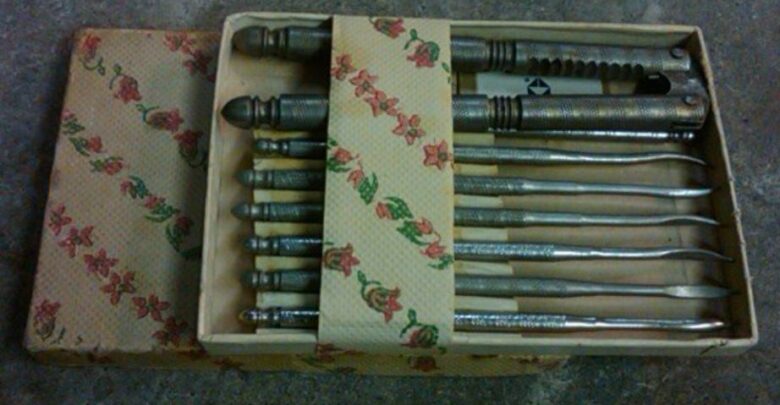
You know that moment when a friend shows you a box of weird metal tools their grandparents left behind and asks, “What even are these?” That exact thing happened last week. My buddy inherited a small collection of shiny little picks and a sturdy cracker from his grandparents’ kitchen, and he had zero clue. Turns out those “mystery tools” are pure mid-century gold: vintage nut picks and nutcrackers from the 1940s and 1950s.
These little guys were everyday heroes in American kitchens long before electric everything took over. They weren’t fancy. They weren’t battery-powered. They just worked. And once you understand what they were designed for, you suddenly see them differently—half kitchen tool, half time capsule.
What Exactly Are Mid-Century Nut Picks?
At first glance they look like tiny dental instruments or maybe leftover seafood tools. In reality, they’re purpose-built nut picks (sometimes called nut diggers or chestnut picks). After you crack a hard shell, you use the sharp, curved tip to dig out every last bit of the edible meat without turning it into crumbs. Chestnuts especially needed these. The shells are stubborn, the meat sits deep, and a regular knife just destroys the good part.
Most sets came with one solid metal cracker and two or three matching picks. The cracker handled the heavy work—walnuts, pecans, Brazil nuts—while the picks finished the job in the tight spots. Brands like HMQ put out clean, simple sets that still look sharp seventy years later. One common version includes a single cracker plus two slender picks, all in that classic mid-century metal finish that somehow never goes out of style.
The Wooden Nut Bowl That Held Everything

Here’s the part that always makes people smile. A lot of grandparents didn’t just keep the tools loose in a drawer. They had a special wooden bowl that looked like a hollowed-out tree trunk. The sides had small holes or slots that perfectly held the picks upright, and a deeper center spot cradled the nutcracker itself. It sat right on the kitchen table or counter, ready for snack time.
That little setup turned cracking nuts into a shared activity instead of a chore. Kids would fight over who got to use the picks. Adults would sit around the bowl after dinner and talk while they worked. The wood itself usually showed decades of use—darkened from hands, lightly scarred from shells—but that only made it better. Finding one of those original wooden bowls today feels like discovering a complete time machine.
Why They Look Exactly Like Seafood Tools
If you’ve ever used a lobster or crab pick, the resemblance is no accident. The same companies often made both. You crack the tough outer shell (whether it’s a nut or a crustacean), then use the slender pick to reach into the narrow channels and pull out the good stuff. The metal, the length, the slight curve—all designed for precision in tight spaces.
So when someone digs out an old HMQ set and says, “These look like lobster picks,” they’re not wrong. In many mid-century homes the same tools pulled double duty. Sunday dinner might involve cracking crabs; the following weekend the same picks cleaned out roasted chestnuts for the holidays. Practical people didn’t buy two sets of nearly identical tools.
How People Actually Used Them
The process was simple and satisfying. First you placed the nut in the cracker’s jaws and gave a firm squeeze—never too hard or you’d smash the meat. Then you took a pick and carefully worked the tip under the shell edges, lifting and digging until the whole kernel came free. With practice you could extract a perfect half-walnut or a whole chestnut piece without breaking it.
Chestnuts were the real test. Their shells cling tightly and the thin brown skin underneath is bitter if you leave it on. A good mid-century pick let you remove both layers cleanly. Walnuts and pecans were easier, but the picks still earned their keep by getting into the little chambers that fingers couldn’t reach.
Many people also discovered the tools worked for other jobs: digging seeds out of peppers, cleaning sticky residue from jars, even helping with model-building or jewelry repairs. Once a tool is that well-designed, it tends to escape the kitchen.
Why These Vintage Sets Still Matter

In a world of plastic gadgets and one-button appliances, there’s something quietly rebellious about a simple metal pick that still does its job better than most modern alternatives. Collectors hunt for complete HMQ sets because the quality of the steel and the balance of the handles feel right in the hand. Home cooks who care about technique keep a pair in the utensil drawer for the same reason.
They also carry stories. Almost everyone who recognizes these tools has a memory attached—grandparents’ kitchen, holiday nut bowls, the sound of shells cracking while the radio played in the background. That emotional weight is hard to buy new.
If you inherit a set or spot one at a flea market, don’t toss it. Clean the metal gently, check that the cracker still opens and closes smoothly, and try it on a handful of fresh nuts. You’ll understand immediately why these tools stuck around for generations.
A Small Piece of Everyday History
Those sharp little picks and the matching cracker weren’t glamorous. They never got advertised on television with flashy slogans. They simply lived in kitchens from the 1940s through the early 1960s, quietly helping families turn hard shells into something worth sharing.
Next time someone hands you a mystery metal tool from a grandparent’s estate and shrugs, take a closer look. It might be one of these mid-century nut picks—small, practical, and still ready for work after all these years. And if you’re lucky, the wooden tree-trunk bowl will be sitting nearby, waiting for the next generation to fill it with nuts and conversation.
Sometimes the best kitchen tools are the ones that never needed an upgrade.