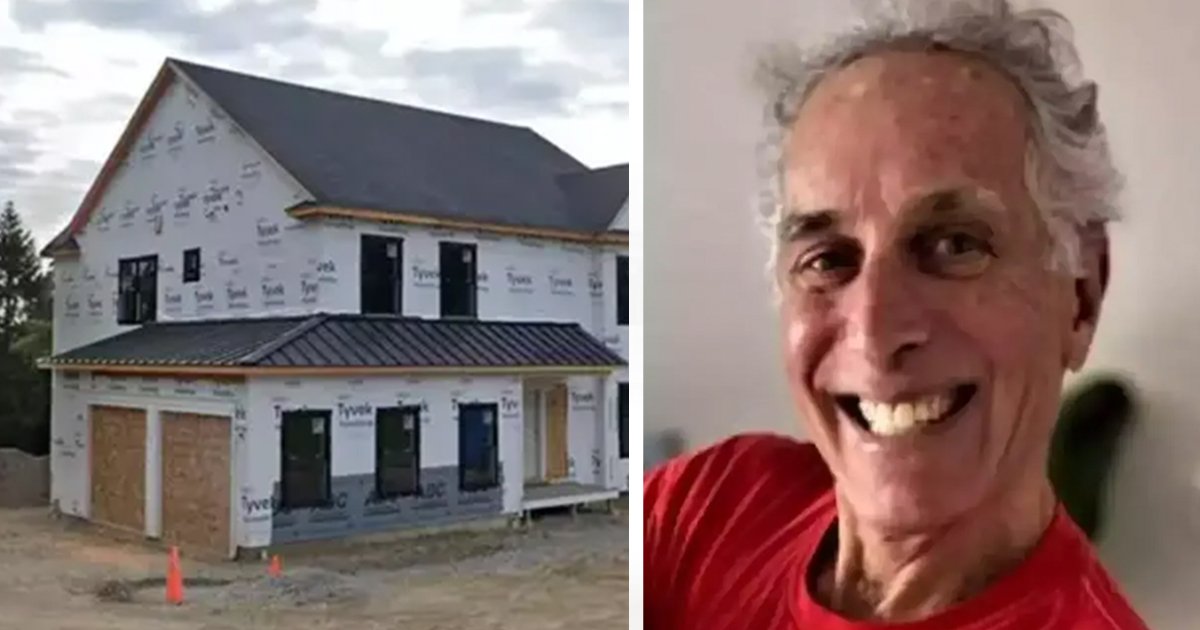
A man was “shocked” after discovering a nearly $1.5 million house had popped up on a piece of Connecticut land his family had owned since the 1950s, allegedly by developers who bought the property from a scammer posing as the owner.
For decades, Dr. Daniel Kenigsberg believed the wooded Fairfield lot in Connecticut would remain in his family.
His parents, Nathaniel and Esther Kenigsberg, purchased roughly an acre of land there in 1953 for just over $5,000. They built a home on one side of the property while leaving the rest of the land untouched, according to The Washington Post.
Kenigsberg said he spent his childhood exploring the lot, where he built a treehouse in an apple tree and played baseball with neighborhood friends before eventually leaving Connecticut to attend medical school.
After training in New York and Maryland, he settled with his wife in Setauket, New York, where they raised two children.
Turned down offers to sell
After his mother died in 2007, Kenigsberg told The Washington Post that he inherited the land. He later sold the family home but kept ownership of the adjacent 0.45-acre wooded lot, paying taxes on it year after year while planning to eventually pass it down to his children or grandchildren.
“It’s a very deep part of my life,” Kenigsberg told the outlet. “This was kind of my anchor to Connecticut.”
According to the outlet, he even turned down several offers to sell. Then one phone call changed everything.
The Long Island doctor said he was speaking with a childhood friend who still lived in Fairfield when the conversation took an unexpected turn.
Childhood friend delivered shocking news
The friend casually mentioned that construction was taking place on the property.
“They’re doing what? I said, ‘I own that and I never sold it,’” Kenigsberg told CT Insider. “I was shocked.”
The comment was so alarming that Kenigsberg drove to the property that same day, his first visit in about five years.
The scene waiting for him was almost impossible to believe. Instead of the familiar wooded lot he remembered, a 4,000-square-foot home – listed for $1,475,000 – was rising from the land.
“I was living my life normally until May 31st,” Kenigsberg told The Washington Post, “and all of a sudden, this happened.”
As Kenigsberg searched for answers, he uncovered what court documents described as an elaborate fraud scheme.
Scammers and forged documents
According to a federal lawsuit obtained by The Washington Post, the property was transferred to Sky Top Partners LLC for $350,000 in October 2022. The lawsuit alleges Kenigsberg never authorized the sale.
Instead, “scammers” allegedly impersonated him, forged his signature, and created paperwork claiming he approved the transaction while living in Johannesburg, South Africa.
“Dr. Kenigsberg has never lived in Johannesburg, South Africa and was not traveling there in 2022,” the lawsuit states. “Dr. Kenigsburg never authorized the sale of his property to anyone.”
According to the filing, the person behind the alleged scheme provided a forged power of attorney and used identification containing multiple red flags, including an incorrect birthdate, an incorrect address, and a photograph that allegedly did not match Kenigsberg.
Despite those discrepancies, the documents were accepted, and the sale moved forward.
Developers allegedly also scammed
Kenigsberg later filed legal action against Sky Top Partners LLC and attorney Anthony Monelli, who helped complete the transaction, seeking up to $2 million in damages.
But the developers say they were deceived as well. In a statement, they claimed they had no idea the person selling the property was an imposter.
“We learned to our shock and dismay that Dr. Kenigsberg had not, in fact, sold the property to us,” the developers said.
“Rather, a third-party had impersonated Dr. Kenigsberg and, through the carelessness and neglect of the various real estate professionals involved in the transaction, managed to list, market, and sell the property without anyone ever catching on.”
‘More than obnoxious’
The lawsuit seeks to void the property transfer entirely and have the house removed from the land. While the legal battle plays out, construction on the nearly $1.5 million home has been halted, according to The Washington Post.
“I’m angry that so many people were so negligent that this could have happened. It wasn’t for sale,” the doctor told CT Insider of the land that represented more than 70 years of family history.
“It’s more than obnoxious, it’s offensive and wrong,” Kenigsberg added.
What would you have done if you discovered a home had been built on a piece of property you owned? Please let us know your thoughts and then share this story so we can hear from others!