Uncategorized
Kathy Bates Opens Up About Her Cancer Journey — And the Strength That Carried Her Through

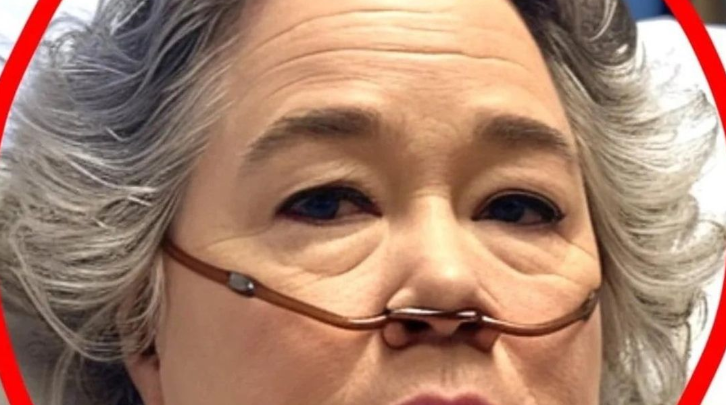
Kathy Bates has spent decades portraying some of the most unforgettable characters in film and television. From her Oscar-winning performance in Misery to memorable roles in Titanic, American Horror Story, and more recently Matlock, she has built a career defined by remarkable talent, determination, and an unmistakable presence.
But behind the characters audiences have watched on screen is a woman who has faced deeply personal challenges away from Hollywood.
Among the most significant have been her battles with cancer.
Bates was diagnosed with ovarian cancer in 2003 and later faced breast cancer in 2012, ultimately undergoing a double mastectomy. She has since spoken candidly about those experiences, as well as the lymphedema she developed following her breast-cancer treatment.
Her story is not one of a sudden health crisis. It is a much longer story of surviving, recovering, adapting, and continuing to live a remarkably full life.
And that is precisely why so many people continue to admire her.
A Cancer Journey That Began More Than Two Decades Ago
Bates’ first major cancer diagnosis came in 2003, when she was diagnosed with ovarian cancer.
At the time, she chose to keep much of the experience private. Years later, she explained that she had been advised to remain quiet about her diagnosis and was also focused on returning to work. She eventually spoke publicly about the experience and described the physical and emotional difficulty of undergoing treatment.
Her treatment included chemotherapy, and she has recalled how difficult those months were.
In later conversations, Bates has spoken about the exhaustion and emotional strain associated with chemotherapy and the complicated feelings that accompany a serious diagnosis.
She eventually reached remission.
For someone who had survived cancer, that might have seemed like the end of the story.
It wasn’t.
Then Came Another Diagnosis
In 2012, Bates faced another major health challenge.
She was diagnosed with breast cancer.
The diagnosis came years after her ovarian cancer experience and was especially difficult because of her family history.
Bates ultimately underwent a double mastectomy. At the time, she publicly expressed determination to recover and return to the work she loved. Her doctors told her they expected her to be around for a long time, and Bates looked ahead rather than allowing the diagnosis to define her future.
Years later, she explained that she chose not to undergo breast reconstruction.
In a candid discussion, Bates said that reconstruction wasn’t something she felt she needed at that stage of her life. She also discussed the physical burden she had experienced previously and her desire to make the decision that felt right for her.
Her openness about that decision was another example of something that has characterized her approach to health: honesty.
She has never presented herself as someone untouched by difficult experiences.
Instead, she has talked about what happened and allowed others to see the complicated reality behind recovery.
The Complication She Didn’t Expect
Unfortunately, surviving breast cancer did not mean Bates’ health journey was finished.
Following her breast-cancer surgery, she developed lymphedema, a condition involving swelling caused by problems with the lymphatic system.
For Bates, the condition became another major challenge.
She has described how angry and frustrated she initially felt after developing it. Her arms became significantly swollen, and she had difficulty finding the right treatment and understanding the condition.
Rather than allowing that experience to remain private, Bates eventually turned it into advocacy.
She became a prominent spokesperson for the Lymphatic Education & Research Network, using her visibility to raise awareness about a condition that many people know very little about.
The National Institutes of Health’s MedlinePlus magazine has also highlighted Bates’ experience with lymphedema and her efforts to help others understand the condition. Bates has discussed managing the condition and using compression sleeves when traveling or performing strenuous activities.
That transition—from patient to advocate—is one of the most meaningful parts of her story.
Why Kathy Bates’ Story Continues to Resonate
Bates’ health journey is powerful not because she is famous, but because the emotions surrounding it are universal.
A cancer diagnosis can change the way someone sees time.
It can change priorities.
It can change relationships.
It can make ordinary days feel extraordinarily valuable.
Bates has spoken about those experiences with a level of honesty that has resonated with many people who have faced cancer themselves or watched someone they love go through it.
She has never suggested that recovery is simple.
There can be fear before treatment.
Exhaustion during treatment.
Uncertainty afterward.
And sometimes, unexpected complications can become a new chapter of their own.
That is one reason her story continues to matter.
She Refused to Let Cancer Become Her Entire Identity
Perhaps one of the most inspiring elements of Bates’ journey is that she continued working.
Her career did not end with cancer.
She continued acting.
She continued taking on challenging roles.
She continued developing as an artist.
And she continued speaking publicly about health issues that mattered to her.
In recent years, audiences have watched Bates take on the lead role of Madeline “Matty” Matlock in the television series Matlock, demonstrating once again that her career still has plenty of energy and purpose.
In interviews surrounding the series, Bates has reflected on aging, Hollywood, usefulness, and the importance of continuing to have meaningful work. Her health experiences are part of that larger story, but they are not the whole story.
That distinction matters.
A diagnosis may become part of someone’s biography.
It doesn’t have to become the definition of their identity.
Her Experience With Cancer Changed Her Perspective
Bates has described her cancer experiences as difficult and, at times, deeply emotional.
In an interview with the Saturday Evening Post, she reflected on facing ovarian cancer followed by breast cancer and explained that she initially feared her career might be over. She also discussed the anger and frustration that followed her diagnosis of lymphedema.
Those emotions are understandable.
Cancer can make a person confront questions they never expected to ask.
Will I recover?
Will I be able to work?
Will my body feel the same?
Will my life return to normal?
And perhaps the most difficult question of all:
What happens next?
For Bates, the answer was to keep moving forward.
Not because everything suddenly became easy, but because life continued to offer reasons to keep going.
From Survivor to Advocate
Bates’ advocacy surrounding lymphedema has become an important part of her public work.
After experiencing the condition herself, she began speaking about it publicly and helping raise awareness.
Her experience demonstrates an important reality: surviving a serious illness doesn’t necessarily mean every consequence disappears when treatment ends.
Sometimes recovery means learning how to live with changes.
Sometimes it means finding new ways to manage the body.
Sometimes it means educating others so that the next person doesn’t feel as alone or confused.
Bates has chosen to use her public platform in precisely that way.
Her willingness to talk about lymphedema has helped bring attention to a condition that can otherwise remain invisible.
A Different Kind of Strength
Hollywood often celebrates physical transformation and dramatic comeback stories.
But Bates’ experience represents a quieter form of strength.
It is the strength to admit that something hurt.
The strength to say that a diagnosis was frightening.
The strength to acknowledge anger.
The strength to ask for help.
And eventually, the strength to use personal hardship to help someone else.
That kind of resilience doesn’t always make headlines.
But it can have a lasting impact.
Kathy Bates Today
It is important to distinguish Bates’ historical cancer diagnoses from claims that she has recently been diagnosed again.
Her ovarian cancer dates to 2003, while her breast-cancer diagnosis was announced in 2012. She underwent a double mastectomy that year.
Recent interviews have continued to revisit those experiences, including conversations about her decision regarding reconstruction and the lasting effects of lymphedema.
There is therefore no need to turn her story into an unverified “new cancer diagnosis” headline.
The truth is already powerful enough.
Bates survived ovarian cancer.
She later faced breast cancer.
She underwent major treatment.
She experienced a lasting complication.
She became an advocate.
And she continued building her career.
That is an extraordinary story without exaggeration.
A Message of Hope for Cancer Survivors
Perhaps the most meaningful lesson from Bates’ journey is that life after cancer can take many forms.
Recovery doesn’t necessarily mean forgetting what happened.
It can mean learning from it.
It can mean discovering a new purpose.
It can mean helping other people.
It can mean returning to work.
It can mean laughing again.
It can mean taking on a role that challenges you.
It can simply mean waking up one morning and realizing that, despite everything, you are still here.
Bates has continued to demonstrate that resilience.
Her journey also reminds us that cancer is not one single experience. Every diagnosis is different, every treatment plan is different, and every person’s recovery is unique.
That is why medical decisions should always be discussed with qualified healthcare professionals rather than based on celebrity experiences.
Why Fans Continue to Stand Behind Her
Fans have followed Kathy Bates for generations because of her extraordinary performances.
But her health journey has given many people another reason to admire her.
She has shown vulnerability without allowing vulnerability to become weakness.
She has discussed difficult experiences without turning them into a performance.
And she has used personal adversity to encourage greater awareness.
For someone whose career has been built on portraying complicated, powerful, unforgettable characters, Bates’ real-life story may be one of her most meaningful.
She doesn’t need to pretend that she was never afraid.
She doesn’t need to pretend that treatment was easy.
She doesn’t need to pretend that recovery erased every consequence.
Instead, she has shown something more realistic.
Strength can exist alongside fear.
Hope can exist alongside uncertainty.
And a person can continue moving forward even after life changes dramatically.
A Legacy That Goes Beyond the Screen
Kathy Bates’ legacy will always include the characters she brought to life.
But it also includes the courage with which she has spoken about cancer and lymphedema.
Her journey began with a diagnosis more than twenty years ago and continued through another cancer diagnosis nearly a decade later.
It brought surgery, treatment, emotional hardship, physical complications, advocacy, and eventually another chapter in a remarkable career.
Today, her story is best understood not as a frightening new health announcement, but as a powerful example of long-term resilience.
She survived.
She adapted.
She advocated.
And she kept working.
That is worth remembering.
So rather than spreading fear about an unverified new diagnosis, fans can send Kathy Bates something far more meaningful: appreciation, encouragement, and gratitude for the many years of extraordinary performances she has given audiences.
Her story reminds us that life can change unexpectedly, but it also reminds us that a difficult chapter does not necessarily determine the ending.
Kathy Bates has faced some of life’s hardest challenges and continued to move forward.
And perhaps that is the most powerful message of all:
You can be afraid and still be brave. You can be changed and still be strong. And you can carry the scars of what you’ve survived while continuing to build a meaningful life.