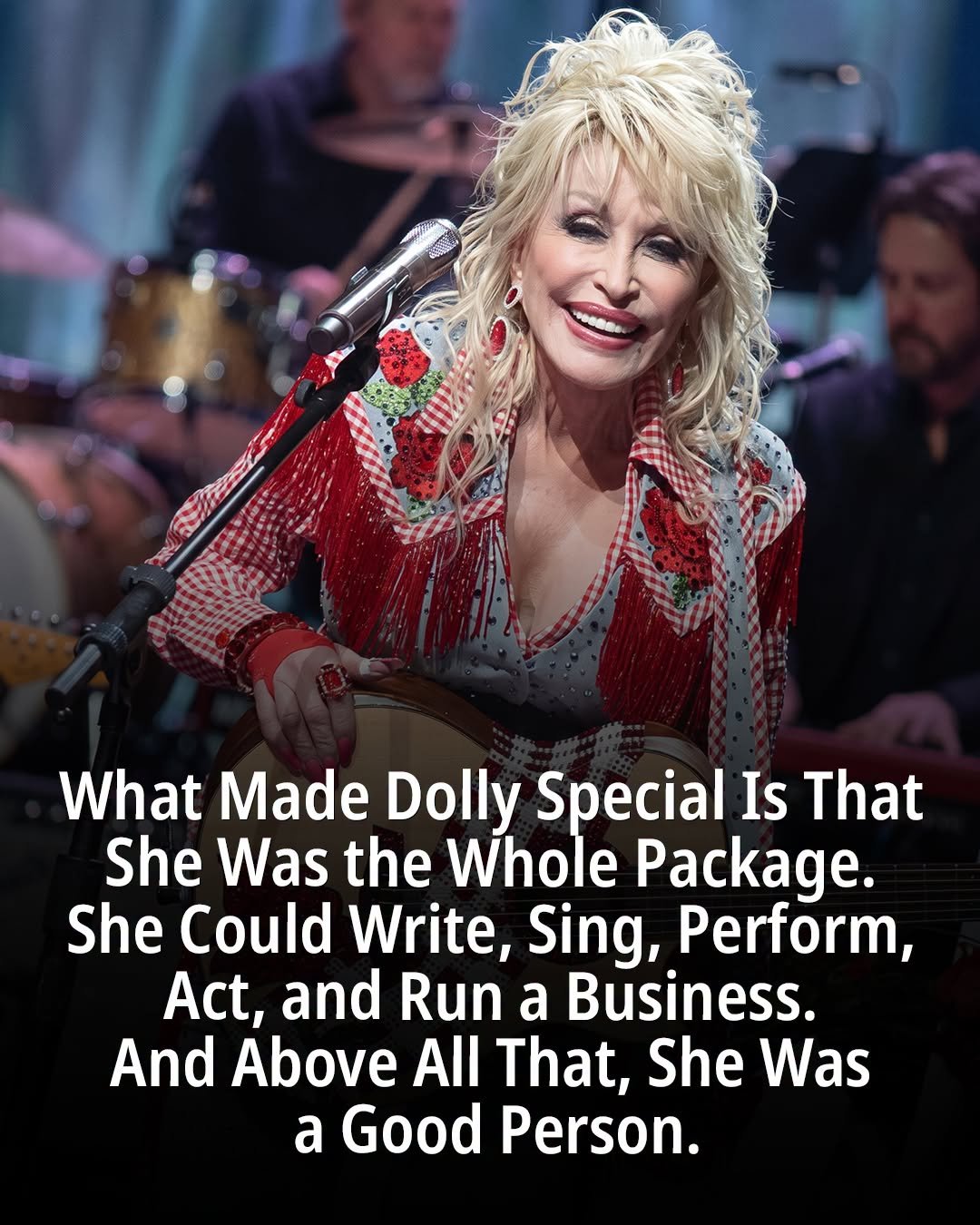
Dolly Parton Was More Than a Country Music Icon: The Songwriter, Actress and Businesswoman Behind the Legacy
Dolly Parton built one of the most remarkable careers in modern entertainment by doing far more than performing songs. She was a songwriter, recording artist, actress, producer, entrepreneur and philanthropist whose influence reached well beyond country music.
Parton was credited with writing more than 3,000 songs during her career, creating a catalog that includes some of the most recognizable compositions in American music. Among them are “Jolene” and “I Will Always Love You,” two songs that became defining moments of her career for very different reasons.
What made her story especially unusual was the way those talents worked together. She could create songs that connected emotionally with millions of listeners, move into Hollywood, build businesses around her name and ideas, and protect the value of her work as a songwriter.
Her career also demonstrated that financial success and generosity could exist side by side. Through the Dollywood Foundation and its Imagination Library, Parton helped make books available to young children around the world.
Dolly Parton’s Extraordinary Songwriting Career
For many listeners, Dolly Parton is best known for her voice and stage presence. But songwriting was at the center of her career.
Over decades, she wrote thousands of songs covering love, family, faith, work, heartbreak and the experiences of growing up in East Tennessee. Some became hits for Parton herself, while others reached enormous audiences through recordings by other artists.
“I Will Always Love You” is perhaps the clearest example.
Parton originally wrote the song as a farewell to Porter Wagoner as she prepared to leave their professional partnership and establish herself as a solo artist. The song became a country hit in Parton’s own recording, and its story did not end there.
Years later, Whitney Houston’s recording for The Bodyguard transformed the composition into a worldwide pop phenomenon. Houston’s version spent 14 weeks at No. 1 on the Billboard Hot 100, introducing Parton’s songwriting to an enormous audience that may not have previously known who had written it.
That success illustrated something important about Parton’s career: she understood the value of the song itself, not simply the value of being the person who performed it first.
“Jolene” and “I Will Always Love You” Came From the Same Creative Period
Two of Parton’s most famous compositions have an especially interesting connection.
Parton said she wrote “I Will Always Love You” and “Jolene” during the same creative period in 1973. Later accounts have described the two songs as coming from the same songwriting burst, although the precise chronology is based largely on Parton’s recollections rather than an independently documented hour-by-hour record.
The contrast between the songs is striking.
“I Will Always Love You” is gentle and reflective, built around the emotions involved in leaving an important professional relationship while still wishing the other person well.
“Jolene,” meanwhile, is filled with anxiety and vulnerability. Parton drew inspiration for the song from a red-haired bank employee whom she said had shown interest in her husband, Carl Dean. The real-life inspiration became the basis for one of country music’s most recognizable fictional characters.
Together, the songs demonstrate the range of Parton’s songwriting. One is about letting go with grace. The other captures jealousy and insecurity through a direct plea.
Both became enduring standards.
She Turned Songwriting Into Long-Term Ownership
One of the lesser-discussed aspects of Parton’s career was her understanding of music publishing.
The story involving Elvis Presley is frequently cited as an example.
According to accounts of the episode, Presley wanted to record “I Will Always Love You,” but his manager, Colonel Tom Parker, sought a deal that would have required Parton to surrender half of the song’s publishing rights. Parton ultimately refused.
It was not an easy decision.
Parton later recalled being deeply upset about turning down the opportunity, particularly because recording by Elvis Presley could have been a major career moment. But she chose to retain control of her composition.
That decision became enormously significant when other artists later recorded the song.
Whitney Houston’s 1992 version, in particular, turned “I Will Always Love You” into a global commercial success and demonstrated just how valuable ownership of a successful composition could become.
Parton’s choice was therefore about more than one recording session. It was about maintaining ownership of something she had created.
Dolly Parton Was Also a Hollywood Performer
Music was only one part of Parton’s career.
She successfully moved into film, beginning with the 1980 comedy “9 to 5.” The movie became an important part of her transition into mainstream entertainment, while the title song became one of her best-known recordings.
Parton later appeared in films including “The Best Little Whorehouse in Texas” and “Steel Magnolias,” showing that her appeal extended beyond the recording studio.
Her film career also strengthened the connection between her songwriting and acting.
“9 to 5” was not simply a movie role followed by a separate musical release. Parton’s song became closely associated with the film and developed into an anthem about working life.
That ability to move between entertainment formats helped establish her as a broader cultural figure rather than simply a country singer.
The Businesswoman Behind the Famous Image
Parton’s public image was often associated with humor, warmth and an unmistakable personal style.
Behind that image was an exceptionally careful business mind.
She understood that an entertainer could build value through several different areas: music rights, recordings, film, television, merchandise, tourism and intellectual property.
That approach eventually helped turn her name into a much larger brand.
One of the best-known examples is Dollywood, the Tennessee theme park she co-founded. The attraction became an important part of the regional economy and another lasting part of Parton’s legacy.
Her career demonstrated the advantages of diversification long before that became a common subject in conversations about celebrity businesses.
She did not have to depend on one source of income.
Instead, she built an ecosystem around her creativity.
The Imagination Library Changed the Meaning of Her Success
Perhaps the most meaningful part of Parton’s legacy has little to do with records or movie tickets.
In 1995, she established Dolly Parton’s Imagination Library, inspired in part by her father’s inability to read and write.
The program provides free, age-appropriate books to children from birth to age five, with funding shared between the Dollywood Foundation and community partners. It has expanded from its original Tennessee roots into multiple countries.
By 2025, the program had distributed more than 300 million books, and recent reporting places the total above 330 million.
The scale is difficult to comprehend.
Millions of children have received books through a program that began with a relatively simple idea: give young children access to books and encourage a love of reading.
Parton’s own connection to literacy was deeply personal. She often spoke about her father’s inability to read and the importance of education, making the Imagination Library one of the most personal expressions of her philanthropy.
Her Philanthropy Became Part of Her Legacy
Celebrity philanthropy can sometimes be associated with one-time donations or highly publicized events.
Parton’s approach was different.
The Imagination Library became an ongoing program with infrastructure, community partnerships and a clear mission. It continues to operate following Parton’s death, with local organizations and partners helping support the program.
That longevity may ultimately prove to be one of the most important parts of her legacy.
A hit song can remain popular for generations. A movie can become a classic. But a program that places books directly into children’s homes can influence families in a much more personal way.
The books become physical reminders of Parton’s belief that opportunity should not depend entirely on where a child is born or how much money a family has.
Why Dolly Parton’s Career Was So Unusual
Parton’s career is difficult to categorize because she succeeded in so many different areas.
She was a songwriter who became a superstar.
She was a country performer who crossed into pop culture.
She became an actress without abandoning music.
She built a major entertainment business while maintaining control over important creative assets.
And she used part of that success to create a literacy program that has reached millions of children.
That combination is rare.
Many entertainers become famous because of one extraordinary talent. Parton’s career was built on the interaction of several talents: creativity, communication, business judgment and an understanding of her audience.
A Legacy Bigger Than Any One Song
It is easy to remember Dolly Parton through individual songs.
“Jolene.”
“I Will Always Love You.”
“9 to 5.”
But looking at her career as a whole reveals a much larger story.
She wrote thousands of songs and proved that great songwriting could create value long after the original recording. She protected her publishing when doing so was difficult. She moved successfully into Hollywood. She developed businesses that became recognizable parts of her brand.
And then she invested a remarkable portion of that success into helping children discover books.
The story of “I Will Always Love You” is therefore about more than a famous song. It is also a story about ownership, patience and the long-term value of creative work.
The story of the Imagination Library is about the other side of that success: using resources to create opportunities for people who may never meet the person who helped make those opportunities possible.
That may be the clearest way to understand Dolly Parton’s remarkable career.
She did not simply create things that people could listen to or watch. She created things that could continue working long after she was finished with them.
And that is why her legacy reaches far beyond the stage.