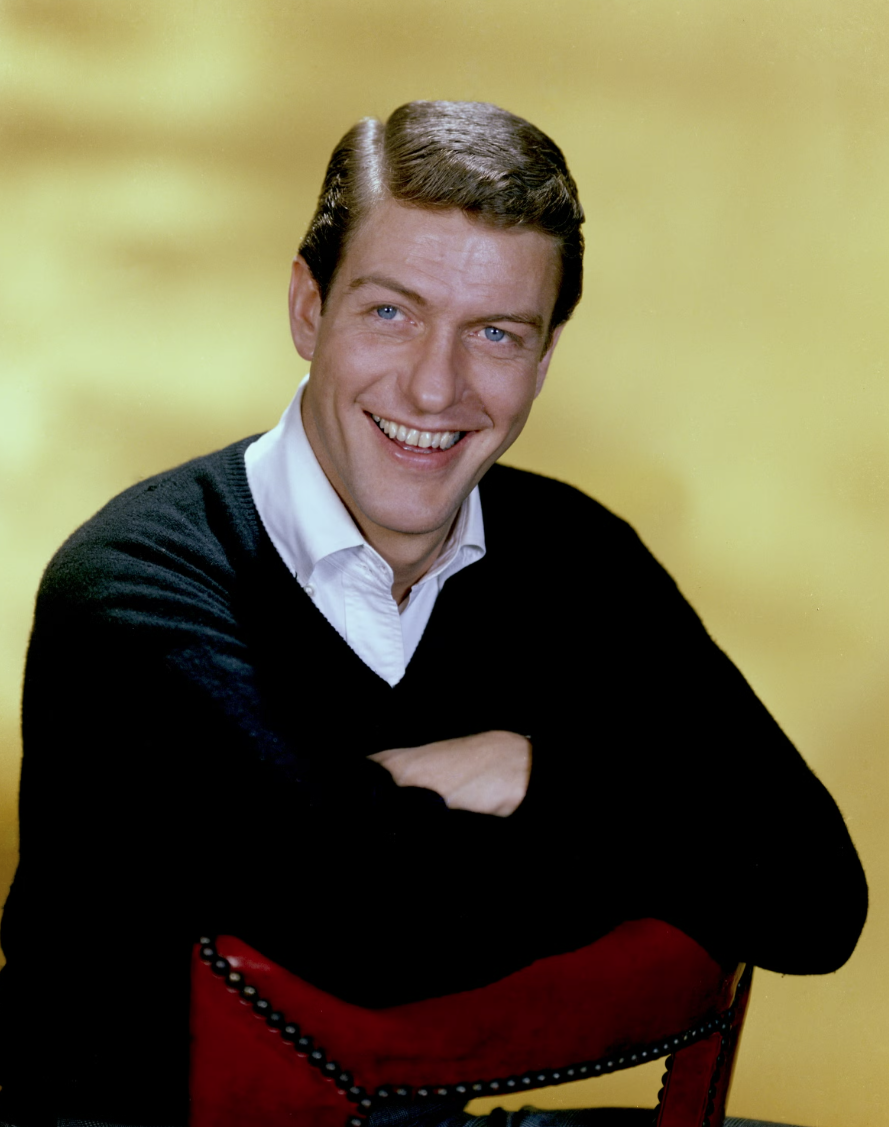
Dick Van Dyke’s Timeless Place in American Entertainment: A Career Built on Laughter, Music and Memories
There are certain entertainers whose work becomes more than a collection of television episodes and films. Their performances become part of family traditions, holiday routines, childhood memories, and conversations that continue decades after the original programs first appeared.
Dick Van Dyke is one of those rare performers.
For generations of viewers, his name is connected with an era of television and cinema defined by warmth, physical comedy, music, imagination, and an unmistakable sense of optimism. Whether audiences remember him as television writer Rob Petrie, as the energetic Bert in Mary Poppins, or as the inventive father Caractacus Potts in Chitty Chitty Bang Bang, his performances have continued to find new audiences.
What makes Van Dyke’s career particularly remarkable is not simply its length. It is the way his work has traveled across generations.
Parents watched him.
Their children watched him.
Later, those children introduced his performances to their own families.
That ability to remain relevant across changing generations is one of the strongest indicators of a lasting entertainment legacy.
The Face Behind So Many Childhood Memories
For many viewers, remembering Dick Van Dyke is inseparable from remembering a particular time in life.
It may be an old television set in a family living room. It may be an afternoon spent watching a classic movie. It may be a parent or grandparent laughing at a scene that seemed especially funny. It may even be a familiar song that instantly brings back memories of childhood.
That is one of the fascinating qualities of classic entertainment.
A movie or television program can become attached to experiences that have little to do with the story itself.
Years later, hearing a familiar voice or seeing a familiar character can bring those memories back unexpectedly.
Van Dyke’s work has become part of that experience for countless viewers.
His performances often carried an approachable quality. Even when the situations surrounding his characters became exaggerated or fantastical, there was usually something recognizable underneath the comedy.
His characters could make mistakes.
They could misunderstand situations.
They could become embarrassed.
They could get carried away.
And, importantly, they could laugh.
That human quality helped make his performances accessible to audiences of different ages.
The Dick Van Dyke Show and a Television Classic
One of the defining chapters of Van Dyke’s career was The Dick Van Dyke Show, which originally ran from 1961 to 1966.
The series placed Van Dyke in the role of Rob Petrie, a television comedy writer balancing his professional life with his family life.
The premise gave the show plenty of opportunities for humor, but its lasting appeal came from its characters and relationships.
Rob Petrie was not a superhero or larger-than-life action figure.
He was an ordinary working professional who encountered everyday complications.
That made the comedy relatable.
The series also featured Mary Tyler Moore as Laura Petrie, Rob’s wife, creating one of television’s most memorable fictional couples.
The Petrie household became a familiar setting for viewers, while the workplace environment provided another source of stories, misunderstandings, and comedy.
Why Rob Petrie Remains Memorable
Part of the appeal of Rob Petrie came from the character’s imperfections.
He could become nervous.
He could misunderstand what someone meant.
He could find himself in an embarrassing situation.
Sometimes, the smallest problem could grow into an elaborate comedic situation.
These are experiences that audiences understand because they are rooted in ordinary life.
Van Dyke’s performance added another important ingredient: physical comedy.
His movements, expressions, timing, and reactions often became part of the joke.
Instead of relying entirely on dialogue, he could communicate humor through a look, a gesture, or a carefully timed movement.
That style helped make the series visually memorable.
The Importance of Physical Comedy
Physical comedy has a long history in entertainment, but it requires considerable skill.
A performer has to understand timing, movement, rhythm, facial expression, and the expectations of the audience.
Van Dyke became particularly associated with this form of comedy.
His willingness to let his characters look foolish was an important part of his appeal.
He could stumble, react dramatically, become confused, or find himself caught in an absurd situation without making the character feel unpleasant.
The audience was invited to laugh with the character rather than simply at him.
That distinction helped create a sense of warmth.
The comedy could be exaggerated without becoming cruel.
Comedy Built Around Human Mistakes
There is something universal about watching a character make a mistake and then attempt to recover.
Everyone has experienced embarrassment.
Everyone has misunderstood something.
Everyone has had moments when a simple situation somehow became complicated.
Van Dyke’s comedic style often transformed those everyday frustrations into entertainment.
That is one reason his work can still feel approachable even when viewed many years after its original release.
The technology changes.
The clothing changes.
The sets change.
But human embarrassment and the desire to laugh about it remain familiar.
Dick Van Dyke and the World of Musical Cinema
While television established Van Dyke as a major performer, his film career introduced audiences to another side of his talents.
Two particularly important films are Mary Poppins and Chitty Chitty Bang Bang.
Both films combine music, fantasy, comedy, and family entertainment.
Both also allowed Van Dyke to use his physical energy and musical abilities in ways that were different from his television work.
The Magic of Mary Poppins
Released in 1964, Mary Poppins became one of the best-known family films of its era.
Van Dyke played Bert, a cheerful and highly energetic character who moves between different occupations and becomes part of the Banks family’s extraordinary adventures.
The role allowed him to combine comedy, singing, dancing, and physical performance.
His presence contributes to the movie’s sense of movement and imagination.
The film itself is remembered for its music, visual style, performances, and mixture of live-action and animation.
For generations of viewers, it became a movie associated with childhood discovery.
Bert and the Power of Imagination
One reason Bert remains such a recognizable character is that he seems comfortable moving between reality and imagination.
He can be playful.
He can be theatrical.
He can encourage others to look at the world differently.
The character reflects something important about childhood entertainment: the possibility that an ordinary day can become extraordinary when imagination takes over.
That idea has helped Mary Poppins remain culturally recognizable long after its original theatrical release.
Chitty Chitty Bang Bang and Family Adventure
Another memorable chapter in Van Dyke’s film career came with Chitty Chitty Bang Bang, released in 1968.
Van Dyke played Caractacus Potts, an inventive father whose unusual automobile becomes central to an extraordinary adventure.
The movie combined fantasy, music, comedy, and family storytelling.
Again, Van Dyke’s performance relied on his ability to move comfortably between comedy and musical performance.
The story presented invention as something exciting and imaginative.
For younger viewers, the fantastic vehicle and adventures could be the primary attraction.
For adults, the film could offer nostalgia, humor, and the pleasure of revisiting a classic family movie.
A Different Kind of Family Entertainment
The appeal of Chitty Chitty Bang Bang illustrates how Van Dyke’s performances often connected different age groups.
Children could enjoy the fantasy.
Adults could appreciate the musical numbers and performances.
Parents could introduce the film to their children.
Years later, those children could introduce it to another generation.
That cycle is one of the reasons certain family films become cultural touchstones.
A Career That Connected Television and Film
Van Dyke’s career is interesting because he succeeded in both television and film without being defined exclusively by one medium.
Television gave audiences the opportunity to see him regularly.
Movies allowed him to participate in larger musical and fantasy productions.
His ability to move between these formats helped expand his audience.
Television viewers could become movie audiences.
Movie audiences could discover his television work.
Over time, the two parts of his career reinforced one another.
The Emotional Side of Nostalgia
Nostalgia is a powerful part of the way people experience entertainment.
A viewer may remember a film not because it was technically perfect, but because of when and where they first saw it.
That distinction matters.
The emotional memory surrounding a movie can become just as important as the movie itself.
A familiar performance may remind someone of a parent.
Another person may remember watching television with siblings.
Someone else may associate a particular movie with school holidays or family gatherings.
Van Dyke’s work has become part of many such memories.
When Entertainment Becomes a Family Tradition
A classic movie can become a tradition without anyone deliberately planning it.
A parent shows a child a favorite film.
The child grows up and later shows the same movie to their own children.
Eventually, the movie becomes associated with multiple generations of one family.
The performers become familiar faces even to people born decades after the original release.
This is one of the most meaningful ways an entertainment legacy can develop.
It is not simply about awards, ratings, or box-office success.
It is about whether people continue to care.
Why Younger Audiences Can Still Connect With His Work
It might seem that classic television and older Hollywood musicals would have limited appeal to modern audiences.
Yet humor based on human behavior can remain surprisingly durable.
A confused character is still funny.
A physical comedy sequence can still produce laughter.
A catchy musical performance can still be memorable.
A story about family, friendship, imagination, and adventure can still connect with younger viewers.
The surrounding culture may change, but those fundamental experiences remain.
That is why classic performers can sometimes be rediscovered by audiences who were not alive when their most famous work originally appeared.
The Art of Making People Feel Welcome
One characteristic frequently associated with Van Dyke’s public image and performances is warmth.
He often approached comedy with enthusiasm rather than cynicism.
His characters could be energetic without being intimidating.
That quality is particularly valuable in family entertainment.
A performer who makes audiences feel comfortable can become someone viewers are happy to revisit.
The laughter feels familiar.
The tone feels welcoming.
And the experience can become associated with positive memories.
More Than a Comedian
Although comedy is central to Van Dyke’s legacy, describing him simply as a comedian does not fully capture the range of his career.
He has worked across television, film, music, dance, and performance.
His career demonstrates how entertainers can cross boundaries between different forms of popular culture.
He could carry a television sitcom.
He could participate in a major musical.
He could perform physical comedy.
He could sing and dance.
He could play characters in stories designed for families.
That versatility helped him remain recognizable across decades.
The Value of Revisiting Classic Performances
Rewatching an old film or television program can create an unusual experience.
The viewer may remember the basic story but notice different things as an adult.
A child might focus on the jokes.
An adult might notice the acting.
A younger viewer might remember the music.
A parent might notice the relationships between the characters.
Someone watching decades later may appreciate the production itself.
The same performance can therefore change meaning over time.
That is one of the strengths of classic entertainment.
How Perspective Changes With Age
When people are young, entertainment is often experienced directly.
Something is funny because it makes them laugh.
Something is exciting because the story creates suspense.
Something is beautiful because of the music or visuals.
As people grow older, they begin to notice other elements.
They may appreciate timing.
They may recognize the difficulty of choreography.
They may understand the social context in which a program was produced.
They may notice how carefully a performer creates a character.
Van Dyke’s work offers opportunities for both kinds of viewing.
It can remain enjoyable at a simple level while also rewarding closer attention.
A Legacy Shared Across Generations
Perhaps the most remarkable aspect of Dick Van Dyke’s entertainment legacy is its generational reach.
Many performers become associated with one particular period.
Van Dyke’s work has continued to circulate beyond the era in which it was created.
Television reruns introduced new viewers to The Dick Van Dyke Show.
Classic movie broadcasts and home entertainment brought Mary Poppins and Chitty Chitty Bang Bang into new households.
Later generations could encounter these performances through family recommendations, streaming platforms, television programming, and cultural references.
The method of discovery changes.
The performances remain.
Remembering the Person Through the Performance
There is also an emotional dimension to remembering a beloved entertainer.
For viewers who have spent decades with someone’s work, the performer can become associated with different stages of life.
A person may first encounter Van Dyke as a child.
Later, they may revisit him as a parent.
Eventually, they may watch the same performances with grandchildren.
The entertainer has remained the same on screen, but the viewer has changed.
That contrast can make classic performances surprisingly emotional.
The Enduring Appeal of Laughter
At the heart of Van Dyke’s career is something remarkably simple: laughter.
Comedy can provide relief from routine.
It can bring families together.
It can turn an ordinary evening into a shared experience.
It can create memories that last much longer than the original joke.
Van Dyke’s style of comedy frequently depended on enthusiasm, movement, misunderstanding, and human imperfection.
Those ingredients remain accessible.
You do not need to understand every historical detail surrounding a production to laugh when a character finds himself in an absurd situation.
That universality is a major part of his lasting appeal.
Why Dick Van Dyke Remains a Familiar Name
The entertainment industry has changed dramatically since Van Dyke’s breakthrough years.
Television has expanded from a handful of channels to countless platforms.
Movies can be watched almost anywhere.
Audiences have more entertainment choices than ever.
Yet certain performers remain recognizable.
Dick Van Dyke belongs to that group.
His most famous characters continue to appear in conversations about classic television, family movies, musical cinema, and American entertainment history.
His work is remembered not only because it was successful when first released, but because later generations continued to discover it.
Final Thoughts: A Legacy Built on Joy
Dick Van Dyke’s legacy is ultimately about more than individual television episodes or classic movies.
It is about the relationship between entertainment and memory.
For one generation, he may be Rob Petrie.
For another, he may be Bert dancing through Mary Poppins.
For another, he may be Caractacus Potts preparing for another adventure in Chitty Chitty Bang Bang.
And for many families, he may simply be a familiar face from a movie or television program that was watched together years ago.
That is the special quality of entertainment that survives across generations.
A performance begins as something created for an audience at a particular moment in history. But if people continue watching, laughing, singing along, and sharing it with others, it becomes something larger.
It becomes part of family memory.
Dick Van Dyke’s career demonstrates that lasting entertainment does not necessarily depend on being constantly new. Sometimes, the most enduring work is the work people are happy to revisit.
A familiar scene can bring back an old room.
A song can recall a childhood afternoon.
A joke can remind someone of a parent or grandparent.
And a performer who once appeared on a television screen can become part of a family’s personal history without ever knowing the people whose memories he helped create.
That may be one of the greatest achievements an entertainer can have.
Dick Van Dyke’s legacy continues through laughter, music, classic television, family films, and the generations of viewers who still find something joyful in his work.