Uncategorized
Richard Harrison Dies at 90: Remembering the Actor Who Found Fame in Spaghetti Westerns

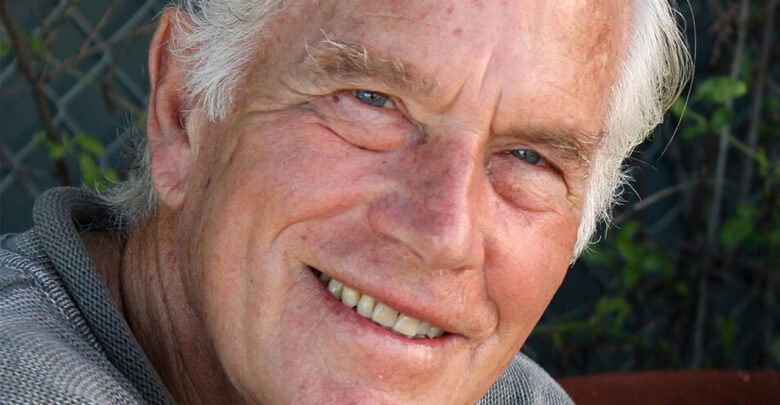
For generations of movie fans, Richard Harrison represented a particular kind of international cinema that has become increasingly rare.
He was an American actor who traveled far beyond Hollywood and built much of his career in Europe and Asia, becoming especially recognizable during the golden era of Italian sword-and-sandal films and spaghetti Westerns.
Harrison died Friday in Los Angeles at the age of 90, according to producer and longtime friend Joan Borsten, who said the actor died of natural causes.
His death marks the end of a long and unconventional career that stretched across several decades and included more than 100 film appearances. While he never became one of Hollywood’s biggest household names, Harrison developed a dedicated following among movie enthusiasts who remember the international B-movie era of the 1960s, 1970s and beyond.
His story was also connected to one of the most important moments in Western cinema.
Years before Clint Eastwood became an international superstar, Harrison was offered the opportunity to appear in Sergio Leone’s A Fistful of Dollars. He declined the role and recommended Eastwood instead.
That decision became one of the most interesting footnotes in Harrison’s remarkable career.
A Young Actor Arrives in Hollywood
Richard Harrison was born in Salt Lake City, Utah, on May 26, 1936.
Like many young performers of his generation, he arrived in Hollywood with the ambition of building a career in movies.
He was only 17 years old.
Before becoming an established actor, however, Harrison worked a variety of jobs while trying to find his place in the entertainment industry.
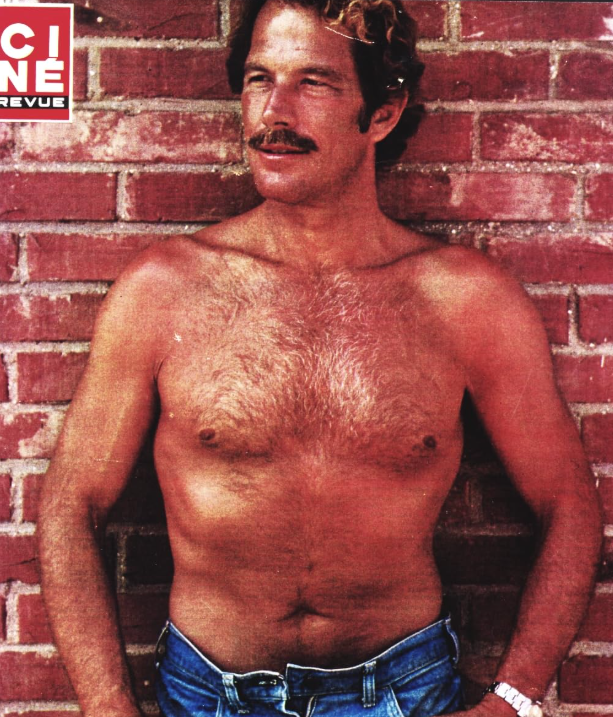
He spent time working at gyms connected with prominent bodybuilding figures Vic Tanny and Bert Goodrich. His athletic build eventually helped him find modeling opportunities, including appearances in magazines that showcased muscular male models.
At the time, Harrison’s physical appearance was one of the qualities that helped him stand out.
But he wanted more than modeling.
He wanted to act.
To develop his skills, Harrison studied under respected acting teacher Sandy Meisner at Fox. The training gave him an opportunity to work on the craft of acting while continuing to pursue opportunities in film.
His early credits included appearances in productions such as Kronos, Jeanne Eagels, Too Much, Too Soon, South Pacific and Tall Story.
These early roles did not immediately turn him into a major Hollywood star.
Instead, they became the beginning of a career that would eventually take him in a very different direction.
Leaving Hollywood for Italy
Harrison’s most important career decision came when he left the United States and began working in Italy.
The move proved transformative.
During the 1960s, European filmmakers were producing large numbers of sword-and-sandal adventures, historical epics and action films aimed at audiences around the world.
Actors with strong physical presence were in demand.
Harrison fit the image perfectly.
His athletic build, rugged appearance and experience in action-oriented productions made him a natural choice for heroic characters.
Rather than waiting for Hollywood to give him the opportunity he wanted, he found a different audience overseas.
His international career began to grow.
One of his early notable roles came in The Invincible Gladiator in 1962, a film that placed him squarely within the popular peplum genre.
The success of similar productions had already helped performers such as Steve Reeves become internationally recognized, and Harrison was able to establish himself within that same cinematic world.
The Sword-and-Sandal Era
The sword-and-sandal genre was a major part of European popular cinema during the period.
These movies frequently featured ancient settings, heroic warriors, dramatic battles and larger-than-life characters.
They were not necessarily designed to compete with Hollywood’s biggest productions.
Instead, they offered audiences spectacle and adventure.
Harrison became one of the American actors who found a substantial career within that system.
He appeared in films including Avenger of the Seven Seas and Gladiator 7, adding to a growing list of international credits.
For an actor who had entered Hollywood as a teenager, the experience represented an unusual career path.
He had left the American studio system and found professional opportunities thousands of miles away.
His face became increasingly familiar to European audiences.
Then came the spaghetti Western.
His Connection to A Fistful of Dollars
One of the most fascinating chapters in Harrison’s career involved a movie he did not make.
In 1964, director Sergio Leone was preparing A Fistful of Dollars, the Western that would help establish a new style of filmmaking and transform Clint Eastwood’s career.
Harrison was considered for the lead role.
He ultimately declined.
According to Harrison’s later account, the filmmakers then asked him to recommend an American actor who might be suitable for the part.
Three names were reportedly presented to him.
Harrison knew all three.
His recommendation was Clint Eastwood.
His explanation was surprisingly practical.
He said Eastwood knew how to ride a horse, an important skill for a Western actor.
Eastwood was cast as the mysterious gunslinger at the center of the film.
The movie became a landmark of the spaghetti Western genre and helped turn Eastwood into an international star.
Harrison’s decision therefore became one of those fascinating “what if” moments in movie history.
What might have happened if he had accepted?
Would Eastwood’s career have developed in exactly the same way?
Would Harrison have become the face of the Dollars trilogy?
There is no way to know.
What is known is that Harrison’s recommendation helped open a door for another actor, while Harrison continued building his own career elsewhere.
A Career Across International Cinema
Harrison continued appearing in Westerns and action movies throughout the 1960s.
One notable example was Gunfight in the Red Sands, an Italian-Spanish production released in 1963.
The film also featured music associated with composer Ennio Morricone, whose work would become inseparable from the identity of spaghetti Western cinema.
Morricone’s distinctive musical style became one of the defining elements of the genre.
For fans looking back at the period, the combination of rugged landscapes, dramatic gunfights and memorable musical themes remains closely associated with European Westerns.
Harrison was part of that cinematic movement.
He worked in an era when films could be made quickly, distributed internationally and consumed by audiences who were eager for action and adventure.
The production environment was very different from the modern film industry.
Actors often moved between countries and genres, taking roles wherever work was available.
For Harrison, that flexibility became one of the defining characteristics of his career.
The Unexpected Move to Hong Kong
By the end of the 1970s, the European market that had provided Harrison with so many opportunities was changing.
The demand for certain types of Western and historical adventure films had declined.
Rather than simply stepping away from acting, Harrison found another international market.
He traveled to Hong Kong.
There, he became involved in the booming low-budget ninja and martial-arts movie industry.
For roughly a decade, he appeared in a large number of productions.
The films were often produced quickly and on limited budgets.
Many of them were not intended to become major theatrical releases.
Yet they became another important chapter in Harrison’s unusual career.
He later spoke critically about some of these projects, acknowledging that the experience could be frustrating.
In interviews, Harrison described the large number of films he was offered and the limited involvement he sometimes had in the finished productions.
Some projects gave him only a handful of scenes.
Others were completed with little concern for the traditional standards associated with major studio filmmaking.
Nevertheless, Harrison continued working.
The World of B-Movies
The term “B-movie” can sometimes sound dismissive, but these productions played an important role in international popular cinema.
They provided opportunities for filmmakers, actors and crews who were outside the major studio system.
They also gave audiences a steady supply of action, horror, science fiction, fantasy, Western and martial-arts entertainment.
Harrison became a prolific participant in this world.
By the end of his career, he had appeared in more than 100 films and had also directed several productions himself.
The sheer volume of his work is remarkable.
Although many of his movies were never considered major cinematic achievements, some later developed cult followings.
Home-video releases, television broadcasts and eventually the internet allowed fans to rediscover films that might otherwise have disappeared from public attention.
In that sense, Harrison’s career benefited from a cultural shift.
Movies that once existed mainly on the margins of the industry found new audiences decades later.
A Different Kind of Legacy
Harrison’s legacy is not based on a single blockbuster or one defining performance.
Instead, it is built around persistence and adaptability.
He worked in Hollywood.
He moved to Italy.
He appeared in sword-and-sandal adventures.
He became associated with spaghetti Westerns.
He worked in Hong Kong.
He appeared in numerous low-budget productions.
He directed films.
And he continued finding work in an industry that changed dramatically throughout his lifetime.
That kind of career is unusual.
Many actors who fail to become major Hollywood stars eventually leave the business.
Harrison did the opposite.
He looked for opportunities in different countries and different genres.
His willingness to work outside the traditional Hollywood system allowed him to remain active for decades.
His Later Film Appearances
Harrison’s filmography continued into the 1990s and beyond.
His later appearances included the 1993 erotic thriller Angel Eyes and the 2000 movie Jerks.
By that point, the movie industry had changed considerably from the one Harrison had entered as a teenager.
The old international B-movie production system was evolving, and the theatrical market for many of the genres that had defined his career was becoming smaller.
Still, his earlier work remained available to longtime fans.
The growth of home video and later digital media gave collectors and genre enthusiasts new opportunities to revisit his films.
For some viewers, discovering Harrison’s work decades after its original release became part of the fun of exploring international cinema.
Remembering the Era He Represented
Richard Harrison’s career also offers a glimpse into a very different period of filmmaking.
The 1960s and 1970s were a time when audiences around the world could become familiar with actors who were not necessarily major Hollywood stars.
European studios produced Westerns, historical adventures and action movies that traveled internationally.
Actors could build careers without remaining in one country’s film industry.
Harrison was one of those performers.
His career crossed borders and genres at a time when international cinema was developing its own distinct identity.
The spaghetti Western, in particular, became one of the most influential movements in popular filmmaking.
Directors such as Sergio Leone helped redefine the Western through different visual styles, pacing, characters and music.
Actors such as Clint Eastwood became closely associated with the genre.
And performers such as Harrison contributed to the wider film community that made those productions possible.
The Clint Eastwood Connection Remains a Remarkable Footnote
Of all the stories surrounding Harrison’s career, his connection to Clint Eastwood is perhaps the one that will continue attracting the most attention.
Harrison had an opportunity to take a role that became one of the most famous Western characters in modern cinema.
He declined.
Instead, he recommended Eastwood.
There is no suggestion that Harrison could have predicted what would happen next.
At the time, he was simply recommending an actor he believed could handle the physical demands of the role.
But history gave that decision a significance neither man could have fully anticipated.
Eastwood went on to become an internationally recognized actor, director and filmmaker.
Harrison continued along a different path.
Their careers ultimately became very different stories, but they remain connected by that moment in 1964.
A Career That Refused to Follow the Usual Path
Richard Harrison’s life in film was never conventional.
He did not remain in one studio.
He did not depend on a single genre.
He did not build his reputation entirely in Hollywood.
Instead, he followed opportunities across continents.
That approach allowed him to become part of several different eras of popular cinema.
For audiences who remember the sword-and-sandal films of the early 1960s, he was a heroic leading man.
For spaghetti Western enthusiasts, he was a familiar face from the European Western boom.
For fans of Hong Kong’s low-budget action cinema, he became part of another distinctive chapter.
And for modern cult-film audiences, his extensive filmography offers a window into an era when movies were produced quickly, distributed widely and often discovered again years later.
A Lasting Memory for Movie Fans
Richard Harrison may never have become a conventional Hollywood household name, but his career demonstrates that cinematic legacy can take many forms.
Some actors are remembered for one iconic performance.
Others are remembered because they appeared in dozens of films across multiple genres.
Harrison belongs to the latter group.
His career reflected the international nature of popular cinema during the second half of the 20th century.
He worked far from the Hollywood studio system where he began.
He embraced opportunities in Europe and Asia.
He participated in genres that later became important parts of film history.
And he remained connected to an audience that appreciated the distinctive style of those productions.
His death at 90 brings an end to a career that began when he was only 17 and continued across more than four decades of screen work.
For fans of classic spaghetti Westerns, sword-and-sandal adventures and international B-movies, his name will remain connected to a particular chapter of movie history.
Richard Harrison’s story is ultimately about more than the roles he played.
It is about an actor who left Hollywood, built a career overseas, worked across genres and continued making movies on his own terms.
And perhaps the most memorable detail of all is that, decades before Clint Eastwood became synonymous with the spaghetti Western, Harrison had been given the chance to take the role himself.
He said no.
Then he recommended Eastwood.
Cinema history took care of the rest.