News
My sister lived rent-free in house, then left me injured outside—so I changed everything.
My sister lived rent-free in house, then left me injured outside—so I changed everything.

Part 2 — Five Minutes to Leave
“Melissa,” I said, “I need you to listen to me very carefully.”
She looked up, annoyed. “What now?”
For several seconds, I studied my sister, then Dario and Nico. All three sat comfortably in the house I had spent years saving to buy. Meanwhile, Marcus, the neighbor who owed me nothing, was kneeling beside me to make sure I was okay.
“You said you aren’t my servants,” I began.
Melissa rolled her eyes. “Stephen, don’t start being dramatic.”
“I agree.”
That made her pause.
“You aren’t my servants,” I continued. “And I’m not your landlord, your bank, your grocery delivery driver, your insurance company, or your emergency fund.”
At last, Dario put down the remote. Melissa crossed her arms.
“What exactly are you saying?”
“Your six weeks ended six and a half months ago.”
Her face hardened. “You’re seriously bringing this up while you’re injured?”
“Yes, because getting injured finally made me understand what this arrangement has become.”
Marcus glanced at me without speaking. Outside, the sirens were still distant.
“So what?” Melissa asked. “You want us to start paying rent?”
That was the problem: she still thought we were negotiating.
“No. You’re moving out.”
Behind them, the television kept playing. A sitcom audience laughed at a joke nobody in the room heard.
When Help Became an Expectation
Melissa gave a sharp, disbelieving laugh. “You’re joking.”
“I’m not.”
“But Stephen, we have a child.”
Nico looked up from his phone. He was seventeen, yet Melissa called him a child whenever she needed sympathy. Apparently, watching his injured uncle lying outside in the rain required no response from him.
“I know you have a son,” I replied. “I’ve been feeding him for eight months.”
“Where are we supposed to go?”
“I don’t know.”
Suddenly, Dario had enough energy to stand. “You can’t just throw people into the street.”
“Eight months ago, you told me you only needed six weeks.”
“The situation changed.”
“Yes, it did. Five minutes ago.”
As I pointed toward the front door, Melissa stared at me as if I had become a stranger. Maybe I had. Or perhaps I was finally becoming myself again.
“You’re kicking your own sister out because she didn’t pick you up off the porch?”
“You watched me fall,” I said calmly. “Then you heard me calling for help and saw me lying injured in the rain. Even so, finishing your evening on my sofa mattered more.”
Before she could answer, I continued.
“Besides, this wasn’t the beginning. It was the ending.”
The Cost of Staying Silent
I reminded them of the groceries, utility bills, car insurance, and months of free housing. Then came the dirty dishes, the demands, the locked guest-room door, and Dario giving up on finding work. Through it all, there had been almost no gratitude.
“So you’ve been keeping score?” Dario interrupted.
Marcus looked at him in disbelief.
“No,” I answered. “That’s the problem. I should have started paying attention months ago.”
As the sirens grew louder, Melissa’s eyes filled with tears. For a moment, the old urge returned: comfort her, apologize, promise that everything would be okay.
Then I remembered her standing in the doorway with a coffee mug while rain ran down my face.
We aren’t your servants.
Instead of apologizing, I let the silence remain.
“You have thirty days,” I said. “I’ll follow whatever legal process is required. But starting tonight, this arrangement is finished.”
Her tears stopped almost at once. “You can’t do this.”
“I already am.”
“You’ll regret it.”
“Maybe.”
Around the living room lay their blankets, snack wrappers, shoes, and gaming controllers. For months, I had felt like a guest in my own house.
“But I regret this more.”
A Hospital Bed and a Clearer Mind
The paramedics arrived minutes later. While Marcus explained what had happened, they examined my swollen ankle. One suspected a fracture and said I needed X-rays.
As they prepared to take me outside, Melissa stood near the hallway. Instead of asking which hospital I was going to or offering to come, she asked about the house.
“Are you really serious about the thirty days?”
“Yes.”
That was my last word before the ambulance doors closed.
At the hospital, X-rays showed two breaks. Surgery followed the next morning.
Meanwhile, Marcus stayed until nearly midnight. He brought my briefcase and charger from the house and even called my manager. My own sister sent one text:
We need to discuss the house when you calm down.
After staring at it for a long time, I replied:
There is nothing left to discuss.
Then I turned off my phone.
The next two days passed in a blur of medication, doctors, paperwork, and thoughts I could no longer avoid. For years, I had believed kindness meant accepting discomfort so other people would not have to.
However, lying in that bed helped me see the cost. Without limits, my kindness had become permission to take, demand, and show disrespect. Now the people who had benefited from my silence were calling me cruel for speaking.
What Was in the Moving Truck
Three days later, Marcus drove me home. A moving truck stood outside, and for one hopeful second, I thought Melissa had accepted my decision.
Then Dario came out of the garage carrying my lawn mower.
“Stop the car.”
Marcus stopped while I lowered the window.
“Dario!”
He froze. Behind him, Melissa appeared and went pale.
“What are you doing?” I asked.
As Dario set the mower down, he said, “We’re organizing things.”
“My things?”
Melissa hurried toward the car. “Stephen, calm down.”
There it was again, as though my reaction were the problem.
Because of my cast, I stayed seated while Marcus got out.
“What’s in the truck?”
After a pause, Melissa answered, “Some things we bought while living here.”
“Open it.”
“Stephen—”
“Open the truck.”
When Dario rolled up the door, I saw my microwave, two lamps, kitchen appliances, tools, and the guest-room television. Even my patio furniture was stacked near the back.
“We thought some of those things were basically shared,” Melissa said.
“Shared?”
“Well, you weren’t using everything.”
For the first time since the accident, I smiled. At last, I understood exactly who I was dealing with.
“Marcus, would you call the police?”
Melissa’s head snapped toward me. “You wouldn’t.”
He already had his phone out. “Oh, I would.”
Start With the Porch
Suddenly, Dario became very helpful. Under Marcus’s watch, he began unloading the truck. Meanwhile, Melissa cried and Nico complained that I was humiliating them.
Two hours later, every item belonging to me was back. The truck left carrying only their possessions.
“We’re going to Mom’s,” Melissa said afterward.
“That sounds like a plan.”
“She’s going to hear exactly what you did.”
“Then tell her everything. Start with the porch.”
My sister stopped speaking.
“Tell her about the rain,” I continued. “Explain that I was injured and called for you. Then tell her Marcus had to come because you wouldn’t help.”
Her eyes dropped.
“After that, tell her why you’re leaving.”
For once, she had nothing to say.
They drove away that afternoon, well before the thirty days had passed. As Marcus stood beside me at the living-room window, the house became truly quiet for the first time in eight months.
There was no television blasting or arguing from the guest room. More than that, I no longer felt I needed permission to sit on my own sofa.
Instead of the guilt I expected, relief washed over me.
An Apology Without a Spare Key
Three weeks later, Mom called. Melissa had given her an edited version of events, but Marcus had explained what actually happened.
After a long silence, Mom said, “I think your sister forgot the difference between being helped and being owed.”
“So did I.”
Gradually, life settled down as my ankle healed. Dario found work within two weeks of moving in with Mom. Apparently, the job market improved when free housing disappeared.
Eventually, Melissa found a small apartment, and Nico got a weekend job.
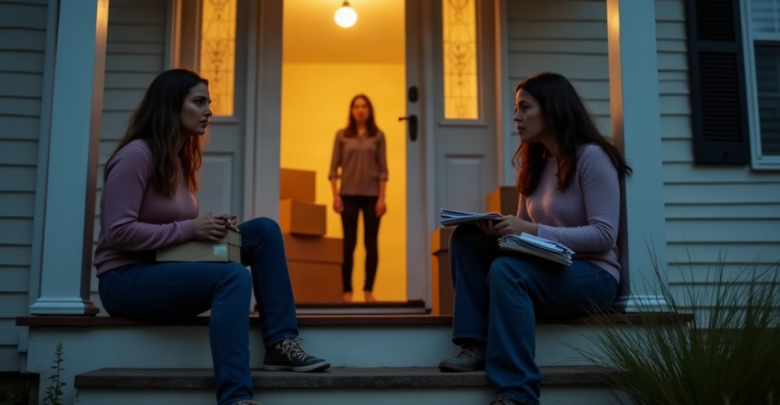
Six months passed before my sister contacted me again. This time, she came alone, and we sat on the same porch where I had fallen.
“I think about that night a lot,” she said. After a pause, she added, “I heard you call the first time.”
Although I already knew, hearing her admit it still hurt.
“Why didn’t you come?”
She stared at her hands. “Somewhere along the way, I stopped seeing what you did as kindness. Instead, I started seeing it as your responsibility.”
Her voice cracked.
“So when you needed something from me, even help standing up, I was irritated. I’m ashamed of that.”
I believed her. Still, forgiving her did not mean forgetting what had happened.
“I forgive you,” I said. “But you can’t move back in.”
To my surprise, she laughed through her tears. “I wasn’t going to ask.”
“Good.”
Closing the Door Without Guilt
We talked for another hour. Although our relationship never returned to what it had been, perhaps that was a good thing. It needed to become healthier rather than go backward.
After Melissa left, I stood in the doorway and looked across the porch. The rain was long gone, though my ankle still ached sometimes.
Until then, I had remembered that evening mainly as the night I broke a bone. Now I also saw it as the night I finally changed something that had been hurting me for years.
Protecting my family had once meant keeping my door open at any cost. However, a home also needs respect from the people welcomed inside.
When someone treats your kindness as weakness and your help as something you owe them, closing the door may be necessary.
This time, I felt no guilt when I turned the lock.
Part 3 — The Envelope on My Porch
For almost four months after Melissa apologized, things stayed quiet. She called occasionally, Mom stopped pushing us into family dinners, and Dario kept his job. Meanwhile, Nico finished his final school year and began talking about community college.
Slowly, I convinced myself that the worst was behind us.
Then, on a Tuesday morning, I opened my front door at 6:40 and found a large brown envelope against the welcome mat. There was no stamp or return address, only my name across the front.
Something heavy shifted inside when I picked it up. Rather than opening it on the porch, I carried it to the kitchen and set down my coffee.
Inside were bank statements, receipts, a handwritten page, and a key.
The key belonged to my house. It was one of the spares I had given Melissa when she first moved in, although I thought she had returned them all.
With my stomach tightening, I unfolded the note.
Stephen,
I didn’t know who else to give this to. Please don’t call Mom until you’ve read everything.
—Nico
The Income They Had Hidden
I sat down, leaving my coffee untouched. On Melissa’s bank statement, several deposits were highlighted: $1,800, $2,200, $1,500, followed by more every few weeks.
At first, I thought she had found extra work. Then I noticed the transfer names. Most were unfamiliar, but one stood out: Dario Vega.
Another statement belonged to Nico’s account, opened when he was sixteen. It showed withdrawals of $400, $600, $900, and sometimes more. Each came from the same ATM near my house.
Nico’s letter explained why he had brought the papers.
Uncle Stephen,
I found these because Mom asked me to look for her tax folder. I should have told you sooner, but Dad has been taking money from my account for almost two years.
Mom knows. She kept saying it was temporary and that they needed it for bills. However, when I checked, some of the money went elsewhere.
There’s more. Dad was getting paid while we lived with you. Although he said he wasn’t working, he was doing cash jobs through a friend.
Mom knew about that too. They were saving money because, according to them, it would be stupid to pay rent while you let us stay for free.
For several seconds, the refrigerator’s hum was the only sound in the room.
More Than Missing Money
Dario had earned enough to contribute, even if the work was uneven. Yet I had paid for food, electricity, internet, and car insurance while Melissa texted me requests for detergent from my own living room.
Then I read the final part of Nico’s letter.
Please don’t hate Mom. I think she got caught up in Dad’s plans. After that, defending him became easier than admitting what they had done to you.
I’m leaving soon, and I don’t trust Dad with my money anymore. Yesterday, he found out I had changed the password, and they had a huge fight.
Dad said I’d regret it if I told anyone. That’s why I returned the spare key too. I don’t want them coming back into your house.
As I lowered the letter, my hands shook. The night on the porch had shown me only part of what was happening. Beneath it lay hidden income, missing money, lies, and now threats.
Nico answered as soon as I called.
“You left this?” I asked.
“Yes.”
“Where are you?”
After a pause, he said, “At school.”
“Are you safe?”
His answer came too slowly. “Yes.”
“Nico, what did your father mean when he said you’d regret it?”
“I don’t know.”
“Tell me what happened.”
He let out a breath. “He punched the wall.”
A Knock During the Call
My jaw tightened. “Did he touch you or your mother?”
“No.”
“But he threatened you?”
“He was angry.”
“That isn’t what I asked.”
Finally, Nico answered, “Yes.”
I stood up. “Then don’t go home after school until we figure this out.”
“Mom will freak out.”
“Let her.”
Instead of arguing, he whispered, “She already knows I gave you the envelope.”
“How?”
“I think she saw me leave your street.”
Before I could answer, someone knocked hard on my front door. Nico heard it through the phone.
“Is that them?”
“I don’t know.”
“Don’t open it.”
Then Melissa called my name from the porch.
“Please don’t tell her I called,” Nico whispered.
“Stay at school. I’ll call you back.”
After ending the call, I looked through the peephole. Melissa stood alone, her hair pulled back and her eyes red. She looked as though she had not slept.
When I opened the door, I left the chain fastened. Her gaze went straight toward the kitchen.
“You got it.”
“Yes.”
“Stephen, please.”
“How long did you know Dario was earning money while living here?”
She closed her eyes. “It wasn’t that simple.”
“How long?”
“Most of the time.”
The Savings I Had Paid For
The answer hurt more than I expected.
“But he wasn’t earning consistently,” she added.
“You told me he couldn’t find work.”
“Stable work. We were trying to save.”
I gave a short laugh. “So you saved money in secret while I paid your expenses?”
“Stephen, we were terrified of being homeless again. We needed a deposit and some security.”
“So did I. Between the mortgage, utilities, groceries, and insurance, I was supporting three extra people. Did you ever wonder whether I needed security?”
She looked away.
“And what about Nico’s money?”
That question seemed to frighten her.
“That’s between him and his father.”
“He was a minor.”
“Some went toward family expenses.”
“But Dario was still withdrawing money recently. How much does he owe Nico?”
After a long pause, she said, “Maybe several thousand. Dario promised to replace it.”
“And did he?”
“No.”
I unfastened the chain and stepped onto the porch, closing the door behind me. Melissa noticed.
“You don’t trust me in your house?”
“This morning, I found out you still had a key.”
Her face went pale. “I forgot about that.”
“Nico returned it.”
Surprise gave way to anger. “He had no right going through our things.”
“Your son discovered someone was taking his money,” I said. “Yet your first concern is that he looked through your things.”
The Debt Behind the Lies
Melissa folded her arms. “You don’t understand everything happening in my marriage.”
“Then explain it.”
For the first time, her anger faded.
“Dario has debts.”
“What kind?”
“He borrowed money from people. I don’t know all of them.”
“Melissa, tell me what’s going on.”
She flinched before whispering, “He gambles.”
Suddenly, the incident in the rain seemed far away.
“How long?”
“Since before we moved in with you.”
“But you told me you lost your apartment because of bad luck.”
She began crying. “I was ashamed.”
“So you lied. And after you moved into my house, he kept gambling?”
“I found out later.”
“What about the money he earned?”
“Some went into savings.”
“And the rest?”
Her silence answered for her. At last, the hidden income, missing money, and anger over Nico’s password made sense.
“How much does he owe?”
“I don’t know exactly.”
“Then give me your best guess.”
“About forty thousand. Maybe more.”
My heart pounded. “Why did you come here?”
“Because he knows Nico gave you those documents, and he’s furious.”
“Where is he now?”
“He left this morning without saying where he was going.”
Before I could ask another question, my phone rang. It was Nico.
Dario at the School
“Uncle Stephen.” His breathing was fast. “Dad came to school.”
Melissa heard him, and her hand flew to her mouth.
“Where are you?”
“Inside the administration office. He’s outside and keeps calling me.”
“Then stay there. Hand your phone to someone in the office.”
A woman came on the line. After I explained the situation and my concern about Nico leaving with his father, she said security already knew. Police had also been called because Dario was causing a disturbance.
When I ended the call, Melissa leaned against the railing.
“You’re coming with me to the school,” I told her.
“I can’t face him.”
“Then think about Nico. Your son needs you.”
She cried harder. “I should have left years ago.”
This time, she sounded exhausted rather than defensive.
“Maybe today is the day you do.”
Because my ankle still troubled me, I called Marcus. Within ten minutes, he was driving us to the school.
Two police cars stood outside. Near the parking lot entrance, Dario was arguing with an officer. Then he spotted us and pointed straight at me.
“You turned my family against me!”
The officer stepped between us while Marcus quietly said, “Don’t engage.”
Instead of answering Dario, I stayed beside Melissa.
Melissa Finally Said No
“Tell them, Melissa!” Dario shouted.
She froze. “Tell them what?”
“That your brother has been interfering in our marriage!”
For a moment, she stared at him. Then her shoulders straightened, and she stopped crying.
“No. You did this.”
His face darkened. “Melissa, get in the car.”
“You took our money.”
“You’re my wife.”
“And I said no.”
As the officer moved closer, Dario lowered his voice.
“You need to think carefully.”
Although Melissa looked terrified, she turned toward the school doors where Nico was waiting.
“I am thinking carefully.”
Then she faced the officer. “I don’t want him coming home with us. Also, I need to report money he took from our son.”
Dario stepped forward, but the officer blocked him. When he began arguing again, another officer helped move him away.
Soon afterward, Nico came outside with an administrator. He paused when he saw his mother, then ran into her arms.
Until that moment, I had thought this story was mainly about my sister taking advantage of me. Now I saw how much more was happening.
Dario had been taking from everyone around him: his wife, his son, and me. As the money ran out, his control was slipping too.
Documents Connected to My House
An officer approached and asked about the financial records Nico had brought me.
“Of course,” I said.
Then he hesitated. “There may be another issue. We found a folder in Mr. Vega’s vehicle containing copies of property documents.”
“What property documents?”
He looked directly at me. “Documents connected to your house.”
As Melissa turned toward me, I felt the blood drain from my face.
“My house?”
The officer nodded. “Someone may have been trying to use those documents to secure money.”
For several seconds, nobody spoke. Instead, I thought about the spare key, the mail on my counters, and the filing cabinet in my office.
During those months under my roof, Dario had access to papers I never imagined anyone would touch.
Suddenly, Nico’s envelope felt like the beginning of something much worse. If Dario had tried to use my house to cover his debts, I needed to know what he had done and how close he had come to taking my home.
Part 4 — What He Tried to Take
For the next ten seconds, the parking lot seemed to fade away. Even Marcus asking whether I was okay sounded distant. All I could think about was my house.
The officer held the folder against his chest.
“We’re still reviewing what we found,” he said. “So I don’t want to give you incorrect information before investigators look at everything.”
“What documents?”
“Copies of your deed, mortgage statements, property tax records, and some identification information.”
Melissa covered her mouth. Meanwhile, I pictured the unlocked filing cabinet in my office. Before my sister moved in, I lived alone. Afterward, it never occurred to me that I needed to protect my papers from family.
“There are also application forms from several private lenders,” the officer continued.
“What kind of applications?”
“Loans secured by property.”
My chest tightened. “But he doesn’t own my house.”
“We know. We’re checking whether he falsely claimed ownership or permission to act for you.”
When I asked Melissa whether she knew, her face crumpled.
“No. I swear.”
For once, I believed her immediately. She looked too shocked to be pretending.
Permission to Stay Was Not Permission to Steal
Across the parking lot, Dario sat on the curb while an officer spoke to him. His anger had faded into worry, which somehow frightened me more.
The officer asked me to give a statement at the station that afternoon. He also urged me to contact my mortgage company, bank, and a lawyer.
Marcus touched my shoulder. “We’ll handle one thing at a time.”
“I let that man live in my house.”
“You helped your sister.”
“But I gave him access to everything.”
“You didn’t give him permission to steal.”
That word stopped me. Until then, part of me had tried to soften what Dario might have done. Perhaps he had borrowed, copied, or misunderstood something.
However, if he had taken my documents to turn my home into money, I could no longer hide behind gentler words.
Eventually, the police allowed Melissa and Nico to leave with us while Dario stayed behind. Nobody told us exactly what would happen to him.
On the drive home, Melissa held her son’s hand and kept whispering apologies. Nico said very little.
The Papers Missing From My Office
At my walkway, Melissa stopped. “I don’t think I should come inside.”
“Why?”
“Because every bad decision I made brought him into your home.”
Although I understood her guilt, Dario had spent years making other people carry the blame for his choices.
“You made mistakes,” I said. “A lot of them. But whatever he did with those documents belongs to him.”
“You don’t have to protect me.”
“I’m telling you the truth.”
Inside, the house felt exposed rather than peaceful. I went straight to the office and opened the filing cabinet.
At first, everything seemed normal. Then I noticed that a folder near the back was thinner than I remembered.
My original deed was still there, but several copies were missing. So were old mortgage statements and a copy of my driver’s license.
Although my Social Security card remained in a locked fireproof box, an older tax document containing the number was gone.
As Marcus swore under his breath, Melissa sank into the office chair.
Then Nico spoke from the doorway. “I saw Dad in here once.”
What Nico Had Seen
We all turned toward him.
“When?” I asked.
“Near the end, while we still lived here. He said he was looking for a charger.”
“Did he have papers?”
After thinking for a moment, Nico said, “Maybe.”
“Why didn’t you say anything?”
His expression changed. “I didn’t think it mattered.”
At once, I heard how my question had sounded.
“It’s okay,” I told him.
“But I should’ve—”
“No. You were a kid living with your parents. Watching your father was never your responsibility.”
That afternoon became a blur of calls to my mortgage company, bank, the credit bureaus, and a lawyer recommended by a coworker.
Everyone asked questions I hated answering. Yes, Dario had access to my mail. He could probably have seen bank statements and personal details too. However, he had never received permission to act for me.
By evening, my lawyer, Rachel Kim, called back.
“I’ve reviewed the photographs the officer sent,” she said. “It looks like Dario contacted at least three private lenders.”
“And?”
“Two appear to have rejected him because the ownership documents didn’t match his identity.”
“What about the third?”
After a pause, she said, “That one is more concerning.”
The Loan I Had Never Approved
Rachel explained that Dario appeared to have submitted papers claiming I had allowed him to act for me.
“I didn’t.”
“I understand.”
“So did they give him money?”
“We don’t know yet. I’m contacting them directly. Until we confirm it, try not to assume the worst.”
That was easier to say than to do. All night, passing cars sent me toward the window, and every sound woke me.
At 2:13, I walked through the house checking locks. Then I stood in the living room where Dario used to watch television.
While I remembered his irritation over my injury, another thought kept returning: he might already have been searching my files by then.
The next morning, Rachel called at 8:07.
“I have an answer. The third lender approved a loan.”
My knees nearly gave out. “How much?”
“Twenty-five thousand dollars.”
Nearby, Melissa went white.
“Did he receive it?”
“Yes. About two months before you asked them to leave.”
For a moment, I could not speak.
Twenty-Five Thousand Dollars Gone
Rachel continued carefully. “The paperwork contains errors that should have been caught during the lender’s checks.”
“Is my house at risk?”
“Right now, we have no sign of a valid lien properly recorded against it.”
At last, I took a breath.
“But someone tried to create one?”
“Yes.”
So Dario had received twenty-five thousand dollars using papers connected to my home. Meanwhile, he slept under my roof, ate my food, and said he could not find work.
When I lowered the phone, Melissa sat down.
“Where is the money?” she whispered.
Soon, investigators began finding answers. Most had gone into an account she did not know existed. Within weeks, large amounts disappeared through cash withdrawals, online transfers, gambling payments, and payments linked to private debts.
By the time Dario moved out, less than three thousand dollars remained.
At the station, Melissa listened without changing expression.
“Was any of it used for our family?” she asked afterward.
The detective checked the records. “Very little. Less than fifteen hundred dollars appears connected to household expenses.”
She gave a hollow laugh. “I spent years defending him. I told everyone he was trying.”
Blame in an Email
Dario was released while the investigation continued. However, conditions limited his contact with Nico and allowed communication with Melissa only about certain practical matters through approved channels.
Three days later, she showed me an email from him. The subject read:
YOU’RE DESTROYING THIS FAMILY.
Inside, he blamed me for turning Melissa against him, Nico for taking private documents, and Melissa for choosing her brother over her husband.
Then he claimed he had only borrowed the money because nobody else would help.
After eight months of housing, food, utilities, insurance, and second chances, he still believed nobody had helped him.
At the end, he wrote:
Stephen has always thought he was better than us. He cares more about that house than his own family.
I handed the phone back. “He still doesn’t understand.”
“No,” Melissa said. “I don’t think he ever will.”
A week later, Rachel brought better news. The lender had agreed to pause collection efforts tied to the fraudulent loan while it was investigated. Work was also underway to correct and protect my property records.
Although I should have felt relieved, I mostly felt tired. Paperwork could help protect the house, but it could not erase what Dario had tried to do.
Nico Still Missed His Father
One Saturday, Nico came over looking nervous.
“Mom says Dad might go to jail.”
“I don’t know what will happen.”
“Do you want him to?”
Before answering, I sat beside him.
“I want him held responsible for what he did.”
Nico nodded. “But he’s still my dad. Even though I hate what he did, sometimes I miss him.”
“You’re allowed to.”
“Really?”
“Yes. Missing someone doesn’t make what they did okay.”
His eyes filled. “I thought you’d think I was stupid.”
“Never.”
After wiping his face, he reached into his backpack.
“There’s something else.”
My body tensed as he handed me a small flash drive.
“I found it in Dad’s old laptop bag before we moved out.”
“Did you look at it?”
“Yes. There are photos of documents.”
“Mine?”
“Not just yours. Grandma’s too, and Aunt Rachel’s old paperwork.”
He meant our cousin Rachel, who had once asked Dario to move boxes after her divorce.
At that moment, Melissa entered carrying drinks. When she heard him, she slowly put the glasses down.
The Signature on the Flash Drive
On an old laptop I kept offline, I opened the drive. Folder after folder held photographs of checks, tax forms, licenses, loan statements, addresses, and account details.
Some belonged to relatives I recognized. Others did not.
“He was collecting information,” Melissa whispered.
Then I found a folder with my name. Inside were dozens of images of my mortgage statements, tax forms, identification, and even bank envelopes.
One photograph stopped me cold: an enlarged image of my signature, copied from an old birthday card.
Melissa began shaking. “He practiced it.”
“What?”
“Sometimes Dario sat at the table writing the same thing over and over. I thought he was doodling.”
Nico stared at the screen. “He was copying Uncle Stephen’s signature.”
That afternoon, I took the drive to the police. As the detective reviewed the folders, his expression changed.
“This investigation is expanding.”
“How far?”
“We don’t know yet.”
Ask Your Sister What She Signed
That night, Melissa and Nico stayed at Mom’s while I returned home alone. Later, an unknown number appeared on my phone.
Although I nearly ignored it, I answered.
After a brief silence, Dario spoke. “You really couldn’t leave it alone.”
Every muscle in my body tightened. “You’re not supposed to contact me.”
“Now you’ve ruined my life.”
“You did that yourself.”
He gave a quiet, empty laugh. “You think this ends with me?”
“What does that mean?”
“Ask your sister what she signed.”
Before I could get another word out, he disconnected.
Melissa answered my call on the second ring.
“Did you sign anything for Dario?” I asked.
She went silent. Then she said, “I signed lots of things over the years.”
“Think about last year.”
Her breathing quickened. “There was something he said was for refinancing his car.”
“Did you read it?”
“No.”
“Where did you sign?”
“At your house, while we were living there.”
I gripped the phone tighter.
“Melissa, was my name anywhere on those papers?”
After a long silence, she whispered, “I think it was.”
Suddenly, the twenty-five-thousand-dollar loan no longer seemed like Dario’s biggest secret.
Final Part — The Signature That Ended Everything
“What exactly did you sign?” I asked.
“I’m trying to remember.” Her voice cracked. “Dario said we needed your address because we were staying with you. Your name was near the top of one page.”
“Did you sign as a witness?”
“I don’t know. I didn’t read it.”
This time, there were no excuses in her voice, only shame.
“I trusted my husband.”
Part of me wanted to be angry. However, anger would not help us find the document.
“Stay with Mom and Nico,” I told her. “Don’t contact Dario. I’m calling Rachel.”
Although it was after nine, my lawyer answered. Once I explained Dario’s call and Melissa’s memory, her tone changed.
“Do not contact him,” she said. “Also, tell Melissa to keep everything: emails, messages, papers, and old phones. She must not throw anything away.”
“What do you think he did?”
“I don’t know yet.”
Somehow, that answer frightened me more than a guess would have.
Another Loan, Another Lie
The next morning, Rachel contacted the detective. By noon, Melissa was giving another statement while investigators checked records linked to Dario’s accounts.
Then they found a document she had signed eleven months earlier.
“It wasn’t for the car,” she told me over the phone.
I sat down. “What was it?”
“A loan agreement.”
“In my name?”
“No. Mine.”
“Then why was my name on it?”
She took a shaky breath. “Because he listed your property. He claimed I owned part of your house.”
“But he knew you didn’t.”
“I know. I didn’t understand what I was signing.”
“How much?”
“Sixty thousand.”
At once, I stood up. “Sixty?”
“I never saw the money. They’re checking where it went.”
Now there were two loans: twenty-five thousand dollars tied to false papers about my home, and another sixty thousand in Melissa’s name, also falsely linked to my property.
Dario had gone from one person to the next, building each new lie on the last. Whenever things fell apart, someone else carried the weight.
What the Records Revealed
By the end of that week, investigators had worked out most of the pattern. Over nearly two years, Dario had approached several private lenders with copied documents, false addresses, forged signatures, and false claims about property ownership.
Some rejected him. Others gave him money.
The sixty-thousand-dollar loan had been approved in Melissa’s name, but Dario controlled the account that received it. Within three months, almost all of it had vanished into gambling, cash withdrawals, and private debts.
As Rachel explained, Melissa sat across from me at the kitchen table.
“So I owe sixty thousand dollars?”
“That’s part of what we’re disputing,” Rachel answered carefully. “There is evidence that you were misled about the agreement. Also, the lender’s checks appear to have serious problems.”
Melissa covered her face. “But I signed it.”
“You signed a document. That alone doesn’t settle who made each false claim or whether everything surrounding the agreement was lawful.”
My sister began crying. “I was so stupid.”
Nico reached across the table. “Mom.”
Instead of taking his hand, she looked at me.
“I brought him into your house and defended him. Then I watched you pay our bills while he hid money. When you finally told us to leave, I blamed you.”
When Loyalty Became Fear
Tears ran down Melissa’s face.
“Every time something didn’t make sense, I chose the explanation that hurt less.”
Nobody spoke. Then she said something I will never forget.
“I kept calling it loyalty because I was afraid to call it fear.”
As Nico squeezed her hand, I began to see more than the sister who had left me in the rain.
She had hurt me and taken advantage of me. Those facts remained. However, she had also spent years in a marriage where lies gradually became normal.
With each excuse and compromise, she had moved further from the person she used to be. Eventually, she no longer seemed to recognize the distance.
That did not erase her choices. Still, it helped explain why leaving Dario would be only the beginning. To rebuild her life, she would also need to trust herself again.
Facing the Evidence
Two weeks later, Rachel told me Dario had been arrested. Rather than going to the station, I sat in my living room and stared at the wall.
For months, I had imagined that seeing him held responsible would feel like victory. Instead, it felt quiet, heavy, and final.
The charges involved financial fraud, identity offenses, forged documents, and money obtained through false loan applications. After that, the legal process continued for months.
There were hearings, statements, lawyers, and more paperwork than I thought could exist. At different points, I testified about what happened in my home, Melissa explained what she signed, and Nico described the missing money and documents.
Dario denied some things and blamed others for the rest. Sometimes he claimed confusion; other times, desperation. He also insisted that everyone had benefited from the loans.
However, the bank records, copied signatures, and photographs remained. Eventually, he accepted responsibility for several offenses as part of a legal resolution.
There was no grand speech or dramatic confession. Instead, there were consequences.
Untangling the Damage
The financial damage took longer to sort out. Eventually, the false claim against my property was removed, and my records were protected.
After reviewing the documents, the lender connected to the twenty-five-thousand-dollar loan stopped pursuing my home. Meanwhile, Melissa’s loan remained part of a separate dispute.
Nico recovered some of his money, though not all of it. For months, every bank letter still made my stomach tighten. Gradually, however, that fear began to fade.
Melissa filed for divorce. This time, she did not ask whether I thought she should.
“I’m done,” she told me.
“Then make sure you stay done.”
She nodded.
When Dario’s relatives blamed her, some said marriage meant standing beside a husband through his mistakes.
Her answer surprised me.
“Marriage doesn’t mean letting someone drown you because they’re afraid to swim alone.”
At that moment, I could see how much she had changed.
A Home of Their Own
A year passed. Nico started community college, worked evenings at an electronics store, and opened a bank account only he could control.
The first time he showed me his savings, he smiled like someone twice his age.
“Not much yet.”
“It’s yours,” I told him. “That makes it enough.”
Meanwhile, Melissa rented a small two-bedroom apartment on the second floor. It had old cabinets and a rattling heater, but she loved it.
On her first night, she sent a photo of herself sitting on the floor, eating pizza from the box. Since she had no dining table yet, the floor would do.
Her message read:
It’s not much, but nobody can lie to me about whether I belong here.
After looking at the photo for a long time, I replied:
That sounds like home.
My house changed too. I replaced the filing cabinet with a locked safe, changed every lock, and installed cameras.
However, the biggest change was how I treated my peace. Instead of apologizing for boundaries, I began respecting them. Saying no no longer meant I loved people less, and generosity no longer felt like a debt I had to pay.
Rain on the Porch Again
Later, on another cold, rainy evening, I stood by the front window and watched water stream across the glass.
For a moment, the old scene returned: broken groceries, milk across the porch, my twisted ankle, and Melissa holding her mug. Then I remembered Dario asking whether I could get up myself.
We aren’t your servants.
Although I once thought that memory would always make me angry, it no longer had the same hold on me.
When the doorbell rang, I opened the door to find Melissa beneath an umbrella. Beside her, Nico held a grocery bag.
“What are you doing here?”
She smiled. “Mom made too much soup.”
“And she made us bring you bread,” Nico added.
“Come in.”
Before stepping inside, Melissa looked down at the place where I had fallen. Her smile faded.
“This spot still hurts to remember.”
“I know.”
“I wish I could change that night.”
“You can’t.”
She nodded, then looked at me. “But I can change what I do after it.”
What Peace Looked Like
That sentence stayed with me as we ate soup at the kitchen table. While Nico complained about a professor, Melissa talked about applying for a better job. Before long, I was laughing more than I expected.
Nothing about the evening felt like revenge. Perhaps that was why it felt right.
For a long time, I had imagined winning meant watching the people who hurt me lose everything. Now I found it in smaller things: a peaceful home, a nephew in charge of his future, and a sister learning to live without being rescued.
Above all, I understood that forgiveness did not require handing someone the key again.
When they were ready to leave, I walked them to the porch. The rain had softened, and Melissa hugged me.
“Thank you for not giving up on me.”
I shook my head. “I stopped rescuing you.”
She smiled. “That might be why I finally rescued myself.”
As they walked toward the car, I stayed beneath the porch light. Then I looked down at the wet step.
Once, it had reminded me only of betrayal and shame. Now it also marked the place where my life changed.
Family, I had learned, was defined by who got up when I fell. Marcus had done that from the start. Eventually, Nico did too, and Melissa learned how.
Finally, I had learned to stand up for myself.
With that thought, I stepped inside and closed the door. I was home, with my peace and my life finally my own.
This time, nobody would convince me that protecting them made me selfish.
The End