News
Spot the Difference Puzzle: Can You Find the One Change in This Cozy Story Time Scene?
Spot the Difference Puzzle: Can You Find the One Change in This Cozy Story Time Scene?

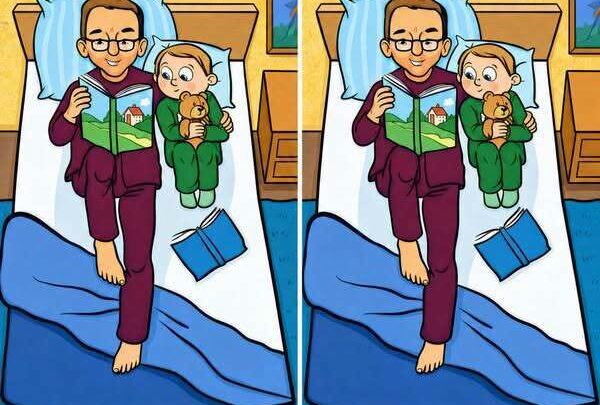
Spot the Difference Puzzle Can You Find the Change in This Cozy Storytime Scene
A dad reading to his child, a favorite teddy bear, and a sleeping cat make this picture feel instantly welcoming. It is the kind of quiet family scene you can understand with a glance. Everyone seems comfortable, the storybook is open, and nothing looks particularly unusual.
But compare the two pictures carefully. One detail has changed.
This spot the difference puzzle invites you to slow down and examine a familiar-looking illustration more closely. You do not need special knowledge or a complicated strategy. You simply need to find the feature that does not match.
Before scrolling to the answer, give yourself a chance to solve it independently. You can try a timed challenge or take a relaxed approach. Below, you will find a step-by-step comparison method, optional hints, and the final explanation.
Take Your First Look at the Storytime Puzzle
Begin with the original comparison image. Look at both pictures before choosing a particular area to investigate.
The scene contains several clear subjects. The dad wears glasses and holds a storybook. The child sits nearby with a teddy bear. A cat rests beside the family, adding another comfortable detail to the illustration.
At first, everything may appear to match. That is your starting impression, but the challenge is to check whether the smaller shapes support it.
Spend a little time comparing the pictures without reading further. If you notice a possible difference, identify its exact location and check the corresponding area in the other image.
A specific comparison will help you decide whether you have found the answer or simply noticed an unusual-looking detail.
Choose a Timed or Relaxed Challenge
There are two easy ways to approach this puzzle.
If you enjoy a little competition, set a timer for 30 or 60 seconds. Search until you find a difference, then stop the timer and verify your answer.
If a countdown makes the activity less enjoyable, leave the timer off. Move through the picture at your own pace and concentrate on comparing accurately.
Neither approach changes the solution. The timer adds a game element, while an untimed search gives you more freedom to explore.
You can also combine the two. Try a short first attempt, then continue without a time limit if you need longer. This lets you enjoy the initial challenge without feeling that the activity ends when the countdown reaches zero.
Why a Familiar Scene Deserves a Second Look
Recognizing a picture and comparing its details are different tasks.
It is easy to identify the broad story here: a parent is reading, a child is listening, and a pet is resting nearby. Finding the changed feature requires you to move beyond that general understanding.
You might recognize the dad’s glasses without comparing their outline. You might notice the teddy bear without checking its shape. A background detail can receive even less attention if you remain focused on the family.
For this puzzle, try replacing the question “Do these scenes look the same?” with a narrower one: “Does this particular feature match?”
That gives each glance a purpose. Instead of repeatedly taking in the complete illustration, you begin making direct comparisons between corresponding areas.
Divide the Picture Into Manageable Sections
A simple scanning route can make the search easier to organize.
Imagine dividing the illustration into a few sections. Start with the upper portion, move through the middle, and finish at the bottom. Within each section, compare the left picture with the right.
You do not need to draw a grid or count exact squares. The purpose is to give yourself a route that covers the complete picture.
When a section appears to match, move on. If something looks suspicious, pause and examine the same spot in both images.
This method can also help you avoid circling back to the most noticeable objects while leaving quieter parts of the illustration unchecked. By the end, you should know which areas you have already examined.
Compare the Dad and His Storybook
The dad is a useful starting point because his appearance includes several separate features.
Begin with his head. Compare the hair, glasses, ears, and facial outlines. Then move down to his clothing and arms.
Next, inspect the book. Look at its position, the visible edges, and the way it sits in his hands. Check one part at a time rather than trying to judge the whole figure at once.
A short checklist can keep this stage organized:
- Compare the outline of the glasses.
- Check the hair and facial features.
- Examine the clothing and sleeve edges.
- Follow the shapes of the hands.
- Compare the book’s outline and position.
If these details match, continue to the next subject. You do not need to keep checking the dad simply because he is a prominent part of the scene.
Examine the Child and the Teddy Bear
Now shift your attention to the child.
Compare the head, clothing, arms, and hands. Then inspect the teddy bear, paying attention to its ears, face, limbs, and overall outline.
Where the child’s hands meet the toy, follow each visible line carefully. Overlapping objects can be harder to compare because several shapes occupy the same small area.
Try to avoid relying on a general impression such as “the bear looks the same.” Choose one feature, compare it directly, and then move to the next.
You may discover that the foreground subjects match more closely than you first realized. That is useful progress. Eliminating matching areas helps narrow the remaining search.
Give the Surroundings Equal Attention
Once you have examined the people and the toy, continue through the surrounding scene.
Look at the furniture, cushions, floor, and any other visible details. Check both the centers of objects and their outer edges.
The goal is to treat the complete illustration as part of the challenge. A small feature away from the main activity deserves the same direct comparison as the storybook or teddy bear.
You can work around the picture’s perimeter before returning to the middle. Alternatively, continue following your imaginary grid.
Choose whichever route helps you keep track of your progress. What matters is that you compare corresponding areas rather than allowing your gaze to wander repeatedly over the same subjects.
Compare Outlines Instead of Naming Objects
If you remain stuck, change the way you describe what you see.
Instead of thinking “chair,” “book,” or “animal,” notice curves, corners, gaps, and lines. Ask whether an edge bends in the same direction or ends at the same point.
This can be especially useful when both versions of an object look perfectly believable. A detail does not have to look strange to be different.
One picture might contain a rounded outline while the other has a longer, straighter shape. Both could fit naturally into the scene, so searching only for something that looks “wrong” may not help.
Direct comparison is the key. The question is whether the shapes match each other, regardless of whether either version seems unusual on its own.
Make the Image Comfortable to View
Small illustrations can become difficult to inspect on a phone screen.
If you need a closer look, enlarge the original comparison image. Keep enough of both pictures visible to compare the same feature without losing your place.
Avoid zooming so far that you can see only a tiny fragment. A very close view may make it harder to understand the relationship between nearby shapes.
Check for glare or an awkward viewing angle, too. A comfortable display can make the activity more enjoyable.
If you have been searching for a while, take a brief pause. When you return, choose an area you have not examined carefully rather than repeating the same first glance.
Three Hints Before the Answer
Use these hints one at a time if you would like help while preserving part of the challenge.
Hint One Move Beyond the Main Story
The changed feature is not part of the reading activity. Shift your attention away from the book and the people.
Hint Two Check the Resting Animal
Look closely at the sleeping cat. Compare its outline in both pictures rather than simply recognizing it as the same pet.
Hint Three Follow the Tail
Pay particular attention to how the tail sits in relation to the cat’s body. Compare its direction and shape.
Pause here if you want one final attempt. The next section reveals the difference.
The Answer Is the Cat’s Tail
The changed detail is the cat’s tail.
In the left picture, the tail curls close to the cat’s body. In the right picture, it stretches out behind the cat.
Return to the original comparison and look only at that area. Follow the tail from where it meets the body to its tip.
The difference becomes easier to identify when you compare the complete outline. One version forms a compact curve, while the other extends farther outward.
If you noticed the tail before reading the hints, you found the intended answer. If the reveal helped, compare it once more so you can clearly see what changed.
Why This Detail Can Be Easy to Overlook
The cat belongs naturally in a cozy family illustration. Its resting position fits the mood of the scene, so you may accept it without studying its exact outline.
Both tail positions also appear plausible. Neither necessarily looks out of place on its own.
That is what makes direct comparison important. The puzzle asks you to find a mismatch between two images, and a mismatch can exist even when both versions look reasonable.
The reading activity may also have received most of your attention during the first attempt. Once you deliberately examine the pet, the altered shape has a much better chance of standing out.
You can carry that observation into another puzzle: include the quiet background subjects in your search.
Turn the Picture Into a Family Game
This challenge is easy to share with friends or family members.
Show everyone the original comparison before revealing any hints. Let each person search independently, then ask them to describe the difference they found.
For a timed version, agree on a countdown and have each participant write down an answer. Reveal the guesses together after the timer ends.
For a cooperative version, let people take turns choosing an area to inspect. One person can check the dad, another can compare the child and teddy bear, and another can study the surroundings.
Keep the competition friendly. The activity works best when everyone has an opportunity to participate without having the answer announced immediately.
What Your Solving Time Means
Your finishing time tells you how long this particular search took under the conditions in which you played.
It does not establish intelligence, eyesight quality, memory, or overall ability.
Someone who begins by checking the cat may find the answer quickly. Someone who carefully compares every foreground detail first may take longer while still using a sensible method.
Enjoy a quick result if you get one, but allow yourself to enjoy a slower solution as well.
The most useful outcome is being able to identify the difference precisely. “The cat looks different” is a promising observation. “Its tail is curled on the left and extended on the right” confirms the actual change.
Take a Useful Strategy Into Your Next Puzzle
For another spot the difference challenge, begin with a complete view of the images. Then choose a scanning route and compare one feature at a time.
Check people, objects, pets, and background details with equal care. When necessary, focus on outlines rather than relying on the names of the things you recognize.
In this cozy storytime scene, the solution was the sleeping cat’s tail. A small change away from the main activity provided the entire challenge.
Now that you know the answer, share the original picture with someone else. Let them enjoy their own search, offer a hint if they ask, and save the tail reveal until they are ready.