The Birthday Dinner That Changed Everything
At my husband Walter’s seventieth birthday dinner, I discovered something I had spent forty-two years trying not to see: he believed my money, my time, and even my choices belonged to him.
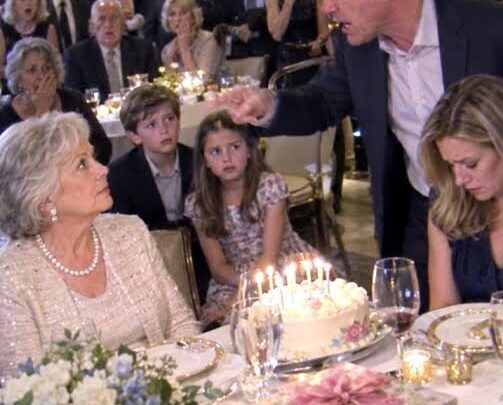
The evening began as an ordinary family celebration. More than twenty relatives and friends had gathered at an expensive restaurant to honor Walter’s milestone birthday. There were steaks, appetizers, cocktails, bottles of wine, and desserts. Everyone was laughing, sharing memories, and congratulating him on reaching seventy.
I was happy to see our family together. Our children had made time to attend, the grandchildren were enjoying their desserts, and Walter seemed pleased to have so many people celebrating him.
Then he placed a folder in front of me.
Inside was the restaurant bill.
The total was $3,926.18.
For several seconds, I stared at the number, convinced I had misunderstood what I was seeing. Nearly four thousand dollars for one dinner was an extraordinary expense, even for a special occasion.
Walter tapped the folder with one finger.
“The bill. Your retirement money. You have twenty-one thousand dollars sitting around doing nothing, and we have a birthday dinner to pay for.”
I looked at him, waiting for him to smile or admit he was joking.
He did neither.
He had invited everyone, selected the restaurant, ordered the food, and encouraged the guests to enjoy themselves without worrying about prices. Now he expected me to pay for the entire evening using money from my retirement account.
Money I had only recently received. Money I had imagined using to visit my sister, Marianne, in Oregon.
I slowly closed the folder.
“Walter, you invited everyone. You chose this restaurant. You ordered the food. We never discussed me paying.”
His expression changed.
“A wife doesn’t keep money from her husband,” he announced loudly enough for everyone at the table to hear.
Then he laughed, expecting the conversation to end.
For most of our forty-two-year marriage, I would have done exactly what he wanted. I would have taken out my credit card, paid the bill, and spent the following months quietly regretting the decision.
I would have convinced myself that avoiding an argument was more important than protecting my own money.
But something inside me had changed.
Perhaps it was the retirement letter sitting in my desk drawer. Perhaps it was the thought of finally seeing Marianne again. Or perhaps I had simply grown tired of being sixty-seven years old and still feeling that I needed permission to make ordinary decisions about my own life.
Whatever the reason, I felt unexpectedly calm.
I pushed the folder back toward Walter.
“No,” I said.
He blinked in disbelief.
“What did you say?”
“I said no. I’m not paying this bill.”
Forty-Two Years of Expectations
Walter looked around the table, apparently waiting for someone to laugh or tell me I was being unreasonable.
Nobody did.
Our oldest son, Michael, placed his phone facedown. Our daughter Rachel stared at her father. Susan, our youngest daughter, slowly lowered her glass.
Walter leaned closer.
“Elaine, don’t be ridiculous. Just give the server your card.”
“No.”
“Do you want to embarrass me on my birthday?”
I glanced at the guests sitting around us.
“You invited twenty people to an expensive restaurant without discussing the cost with me. If you’re embarrassed, perhaps you should ask yourself why.”
The words sounded stronger than I expected. I had rarely challenged Walter in public. Our disagreements usually happened behind closed doors, where he could interrupt me, dismiss my concerns, or keep arguing until I eventually apologized.
He was accustomed to controlling the conversation.
That night, however, I refused to retreat.
“You are my wife,” he said.
“Yes.”
“That means what’s yours is mine.”
I folded my hands in my lap.
“Does that mean what’s yours is mine, too?”
Walter stared at me.
“What kind of question is that?”
“A simple one. If my retirement money belongs to you, then surely your retirement accounts belong to me. Your savings. Your investment account. Your golf fund. All of it.”
He opened his mouth but offered no answer.
His silence revealed the unfairness of the arrangement more clearly than any argument could have.
For decades, Walter had treated his earnings as the product of his hard work and responsibility. My contributions to our household were expected, while his financial decisions were treated as his own business.
His money was his.
My money was apparently ours whenever he wanted access to it.
I turned toward the server, who had been standing nearby.
“I’m sorry for the awkward situation. I didn’t authorize these purchases, and I won’t be paying for the entire table.”
The server responded professionally.
“Of course, ma’am. Would you like me to bring separate checks?”
Before I could answer, Walter slammed his palm against the table.
“Absolutely not! This is a family celebration. One bill. I’ll handle it.”
The words had barely left his mouth before he seemed to realize what he had just admitted.
I said nothing.
For once, I allowed him to take responsibility for his own decision.
As the server walked away, Walter leaned toward me.
“You’ve just made yourself look cheap in front of everyone.”
I looked directly at him.
“No, Walter. I have simply stopped pretending that your choices are my responsibility.”
For the first time that evening, he had no immediate response.
But the most uncomfortable moment was still ahead.
When Both Credit Cards Were Declined
Five minutes later, the server returned with a payment terminal.
Walter took out his wallet with the confidence of someone who expected the matter to be settled quickly.
“Here,” he said sharply, handing over his credit card.
The server processed the payment and waited.
Then he looked at the screen.
“I’m sorry, sir. The transaction was declined.”
The table fell silent.
Walter frowned.
“That can’t be right.”
The server offered to try again.
The second attempt failed.
Walter snatched the card back and searched his wallet for another one. He handed over the card he usually kept for emergencies.
It was declined, too.
His face changed from red with anger to an uncomfortable shade of gray.
“Your machine is broken,” he muttered.
“I’m sorry, sir. We can try another payment method.”
Walter took out his phone and opened his banking application. His fingers moved quickly across the screen as he checked his accounts.
I watched him with growing curiosity.
Two months earlier, I had found him sitting at the kitchen table with a stack of financial paperwork. When I asked what he was doing, he told me he was reorganizing our accounts.
“Nothing you need to worry about,” he had said.
At the time, I accepted his answer.
Now, watching him struggle to pay for the dinner he had organized, I wondered what exactly he had been rearranging.
He tried calling someone, but the call went straight to voicemail. He tried again with the same result.
Finally, he turned to Michael.
“Do you have enough room on your card to cover this? I’ll transfer the money tomorrow.”
Michael looked uncomfortable.
“Dad, I don’t have four thousand dollars available on my credit card.”
Walter turned to Rachel.
“You?”
She shook her head.
“Not without putting it on our mortgage account, Dad. I don’t have that kind of money sitting around.”
Susan immediately reached for her purse.
“I can cover part of it.”
“No,” I said gently.
She looked at me with concern.
“Mom, it’s fine. We don’t want Dad to be embarrassed.”
I understood her instinct. She had grown up in the same family environment I had helped maintain, where keeping the peace often seemed more important than asking whether something was fair.
But I couldn’t allow her to take responsibility for a problem she hadn’t created.
“You don’t need to pay for a dinner you didn’t organize,” I told her.
Walter turned toward me angrily.
“Would you stop making this worse?”
I met his gaze.
“I’m not making anything worse. I’m sitting here.”
Then Robert, Walter’s brother, cleared his throat.
“Walt, perhaps we should look at the bill and split it among the adults.”
Walter looked offended.
“Split it? This is my seventieth birthday!”
“And it’s nearly four thousand dollars,” Robert replied. “That’s a lot for one dinner.”
His words changed the atmosphere at the table. Until then, Walter had behaved as though everyone would automatically support his position. Now even his own brother was refusing to pretend the expense was insignificant.
A retired contractor named Dennis quietly offered to pay for the wine he and his wife had ordered. Other guests began offering to cover their own meals.
The restaurant agreed to prepare separate checks.
Walter resisted the arrangement twice before finally giving in.
“Fine. Separate checks.”
The adults sorted out their portions. Robert paid for himself and his wife. Michael covered his family’s food. Dennis paid for the wine he had requested, while Rachel and Susan divided their own families’ meals between them.
Walter was left with a substantial bill of his own, but it was considerably smaller than the original $3,926.18.
When the server brought the new total, Walter read the receipt and looked at me.
“You could have prevented all of this.”
I took a slow breath.
“No, Walter. I could have paid for it. Those are two different things.”
For once, I did not rush to soften my words or apologize for making him uncomfortable.
The distinction mattered.
Paying would have protected his pride, but it would not have made his decision fair. It would only have taught him that he could continue making financial commitments on my behalf and expect me to absorb the consequences.
That evening, I finally refused to participate in that pattern.
The Conversation That Made Me Feel Seen
Dinner ended in fragments.
Some guests left early, offering awkward birthday wishes as they collected their coats. Others lingered near the entrance, speaking quietly while they waited for their rides.
The grandchildren seemed confused by the tension.
My oldest granddaughter, Lily, approached me while Rachel helped her younger brother into his jacket.
“Grandma, are you and Grandpa mad at each other?”
I knelt to straighten her scarf.
“Sometimes grown-ups disagree, sweetheart.”
She studied my face.
“Did you do something wrong?”
Her question hurt more than I expected.
Children sometimes assume that the person who refuses to give in must be the person who caused the conflict. They do not always understand the difference between creating a problem and declining to solve it for someone else.
I looked at Lily carefully.
“No, sweetheart. I didn’t do anything wrong by saying no to something I didn’t agree to.”
She considered my answer before wrapping her arms around me.
“I love you.”
I held her close.
“I love you, too.”
When I stood up, I noticed Walter watching us from across the room. His expression remained irritated, but there was uncertainty in his eyes.
He had expected the evening to end with me apologizing. Perhaps he believed that once we were alone, he could explain how I had embarrassed him and convince me to make things right.
But I no longer wanted to have that conversation that night.
I wanted to go home, sleep, and decide what happened next without first asking Walter’s permission.
Outside, the October air stung my cheeks.
Rachel caught up with me beside the car.
“Mom?”
I turned toward her.
She glanced at the restaurant entrance, where Walter was still speaking with Robert.
“Are you okay?”
My automatic response almost came out.
Of course. I’m fine.
For decades, I had used those words whenever I was tired, hurt, disappointed, or lonely. They ended conversations before anyone could ask questions I wasn’t ready to answer.
This time, I chose honesty.
“I don’t know.”
Rachel’s expression softened. She took my hand.
“I’ve wanted to say something to you for years, but I never knew how.”
“What is it?”
She swallowed.
“Dad has always treated you like you need his permission to do anything. Even when I was little, I noticed it. I thought maybe that was just how marriages worked.”
I stared at her.
“You noticed?”
She nodded.
“I remember when you wanted to take that pottery class at the community center. You saved the money yourself, and Dad said it was a waste of time. You never went.”
I had forgotten about the pottery class—or perhaps I had pushed the memory so far into the back of my mind that I no longer allowed myself to think about it.
Rachel continued.
“And when Grandma got sick, you were the one driving her to appointments, cooking her meals, and staying overnight. Dad told everyone he was supporting his mother, but you were the one doing most of the work.”
My throat tightened.
“He worked hard, Rachel.”
“I know he did. But so did you.”
She squeezed my hand.
“Mom, you don’t have to keep proving you’re a good wife by making yourself smaller.”
For several seconds, I couldn’t speak.
I had spent years trying to convince myself that my contributions mattered. Hearing my daughter acknowledge them made me feel seen in a way I hadn’t realized I needed.
I hugged her before getting into my car.
Walter arrived a few minutes later and slammed the passenger door. He pulled on his seat belt and remained silent until we were halfway home.
Then he spoke.
“You made me look like a fool.”
I kept my eyes on the road.
“You ordered nearly four thousand dollars of food and expected me to pay without asking.”
“I thought we were a family.”
“We are.”
“Then why couldn’t you help me?”
I turned onto our street.
“Because being a family doesn’t mean one person gets to make every decision and another person has to pay for them.”
Walter laughed bitterly.
“Forty-two years, Elaine. Forty-two years, and now you’re acting like a stranger.”
I parked in the driveway and turned off the engine.
For a moment, the only sounds were the ticking engine and the wind moving through the trees.
I turned toward him.
“Perhaps you’ve never really known me, Walter.”
He stared at me.
I opened my door and stepped outside.
Behind me, he muttered something I couldn’t hear.
For once, I didn’t ask him to repeat it.
The Memories I Could No Longer Ignore
I barely slept that night.
Walter went to bed without speaking to me. I heard him moving around in the bathroom, opening drawers more loudly than necessary, and turning on the television.
It was his way of making sure I knew he was angry.
I lay awake beside him, staring into the darkness.
At 2:13 a.m., I finally got up, went downstairs, made a cup of tea, and sat at the kitchen table.
The house was quiet.
For the first time in years, I allowed myself to examine my life without immediately defending Walter.
I thought about the holidays when I cooked for everyone while he sat in the living room with his brother.
I remembered caring for his mother when she became ill, driving her to appointments, preparing her meals, changing her sheets, and comforting her when she woke frightened in the middle of the night.
I remembered the evenings when I worked at the medical supply company and came home to prepare dinner because Walter believed a meal made by his wife was part of what made a house a home.
I remembered asking him whether we could take a weekend trip for our anniversary.
He told me we couldn’t afford it.
The following month, he spent nearly three thousand dollars on a new golf club membership.
I remembered the sofa I wanted to replace, the pottery class I never attended, and the books I stopped buying because he questioned why I needed more when the library was free.
I remembered clothes I wore until the fabric thinned and vacations I postponed because Walter always had a reason they weren’t practical.
Individually, those memories seemed small.
Together, they formed a pattern I could no longer ignore.
Walter hadn’t simply been careful with money.
He had been careful with my independence.
And I had mistaken his control for responsibility because acknowledging the truth would have meant admitting how lonely it had made me.
I had worked, raised children, managed a household, cared for relatives, and supported the people I loved. Yet I had gradually learned to treat my own wishes as optional.
Somewhere along the way, I had begun asking myself whether I was allowed to want things before deciding whether I could afford them.
The birthday dinner had exposed that pattern in a way I could no longer dismiss.
At 3:05 a.m., I went upstairs and opened the small desk drawer where I kept my personal paperwork.
My retirement letter was there, along with the statement showing the money deposited into my individual account.
I carried both documents downstairs and studied the balance.
A little over $21,000.
It wasn’t a fortune. It wouldn’t buy a house or allow me to retire in luxury.
But it represented something important: the possibility of making a decision for myself.
It was enough to purchase a plane ticket to Oregon, spend a few weeks with Marianne, and begin discovering what life might feel like when my choices didn’t have to revolve around Walter’s preferences.
For the first time in a long while, I allowed myself to consider that possibility without immediately listing the reasons it might be impractical.
A Phone Call to the Sister I Had Missed
I picked up my phone and opened Marianne’s contact.
For a moment, I hesitated.
Then I typed a message.
Are you awake? I think I’m finally ready to come visit you.
The message showed as delivered almost immediately.
A minute later, my phone rang.
“Hello?”
“Elaine?”
Marianne sounded sleepy, but she became alert the moment she heard my voice.
“What happened?”
“Nothing terrible. I just need to talk to someone.”
“Then talk.”
I told her about the dinner, the bill, Walter’s demand, and the declined credit cards. I explained how I had felt when I pushed the folder back across the table and refused to pay.
Marianne listened without interrupting.
When I finished, she remained silent for a moment.
Then she asked a question I hadn’t expected.
“Elaine, do you remember what you told me when we were seventeen?”
I smiled faintly.
“We were seventeen for about five minutes before you started telling me what to do.”
She laughed softly.
“You told me that when we got older, you wanted a little house with a garden. You said you wanted roses by the front steps, a kitchen window overlooking the yard, and a room where you could read without anyone telling you that you were wasting time.”
I closed my eyes.
I remembered that afternoon.
We had been sitting on the back porch of our childhood home, imagining the lives we hoped to build. Marianne wanted to travel. I wanted a garden and a quiet room.
Neither of us had understood how complicated adulthood could become or how easily the responsibilities of a life could push its simplest dreams aside.
“I remember,” I whispered.
“Do you still want that?”
I looked around my kitchen.
The clock on the wall was five minutes fast, just as Walter liked it. The refrigerator was covered with appointments and family events. A list of household repairs was held to the door by a magnet.
Every corner of the room carried evidence of a life spent making sure everyone else had what they needed.
“Yes,” I said.
The word came out so softly that I almost didn’t recognize it.
Marianne exhaled.
“Then come here. Stay as long as you want. We’ll go to the coast, buy ridiculous amounts of flowers, and sit in the garden until we get cold.”
I laughed, and tears began rolling down my face.
“I don’t know if I can.”
“You can visit your sister, Elaine. You don’t need permission to see me.”
I pressed my hand over my mouth.
For a long time, neither of us spoke.
Then Marianne asked another question.
“Are you afraid of what Walter will say if you go?”
I looked toward the staircase.
“Yes.”
“Are you afraid of what will happen if you don’t?”
I had no answer.
The truth was that I had been afraid for years.
Afraid of arguments. Afraid of disappointing him. Afraid of being called selfish. Afraid of discovering that, after forty-two years of marriage, I had become so accustomed to living around another person’s wishes that I no longer knew how to live around my own.
“I’ll call you tomorrow,” I finally said.
“Anytime,” Marianne replied. “I’m here.”
When we hung up, I remained at the table until the sky outside the kitchen window began to lighten.
Then I made a decision.
I would book the trip.
I wouldn’t present it as a request or ask Walter whether he thought it was sensible. I would tell him what I had decided, and he could decide how he wanted to respond.
For the first time in my adult life, I wanted to discover what it felt like to choose something without first preparing myself for an argument.
Choosing Myself Without Knowing What Comes Next
By morning, I understood that booking a trip to Oregon wouldn’t solve forty-two years of complicated marriage. A few weeks away wouldn’t automatically erase old habits or answer every question about our future.
I also knew that one uncomfortable birthday dinner didn’t tell the entire story of a relationship.
But it had revealed something I could no longer ignore.
I had been treating peace as the absence of disagreement, even when maintaining that peace required me to silence myself.
I had confused being dependable with being endlessly available. I had allowed the belief that a good wife should be accommodating to become a reason for abandoning my own needs.
I couldn’t change the past, but I could begin making different decisions.
My retirement money was not simply a balance in a bank account. It represented years of work and the possibility of making choices based on my own priorities. It was money I needed to manage thoughtfully, with my future security in mind, rather than spend impulsively to protect someone else’s pride.
I didn’t need to punish Walter, embarrass him, or prove that I could live without him.
I needed to understand what I wanted.
That meant making practical plans, considering my financial security, and recognizing that a major change in a long marriage deserved careful thought. It also meant allowing myself to visit my sister without treating the decision as a betrayal.
I had spent so much time worrying about whether Walter would approve that I had almost forgotten I was allowed to have preferences of my own.
As the morning light spread across the kitchen, I looked at the retirement statement one more time.
Then I picked up my phone and began looking at flight options.
I imagined seeing Marianne at the airport, walking along the Oregon coast, choosing flowers at a local market, and sitting in a garden with a book in my lap.
The images were ordinary.
That was what made them so precious.
I wasn’t dreaming about wealth, revenge, or a dramatic escape. I was imagining a few weeks in which I could breathe, think, and listen to myself.
I didn’t know how Walter would react when I told him.
I didn’t know whether he would be angry, dismissive, or unexpectedly willing to listen. I didn’t know what the trip would reveal about our marriage or what decisions might follow.
For now, I didn’t need all the answers.
I only needed to take the next step.
For forty-two years, I had worked hard to make sure everyone around me felt cared for. I had raised our children, supported Walter, cared for his mother, and kept our household running.
I could acknowledge the good in those years without pretending that every part of the arrangement had been fair.
I could love my family without automatically accepting every demand.
And I could be a wife without giving up the right to be an individual.
I had no idea yet how much my decision would change my life.
I only knew that I could no longer return to the way things had been.
The night Walter handed me that $3,926.18 bill, he expected me to pay for his birthday dinner.
Instead, I began to understand the price I had been paying for years.
And for the first time, I was ready to stop paying it without question.