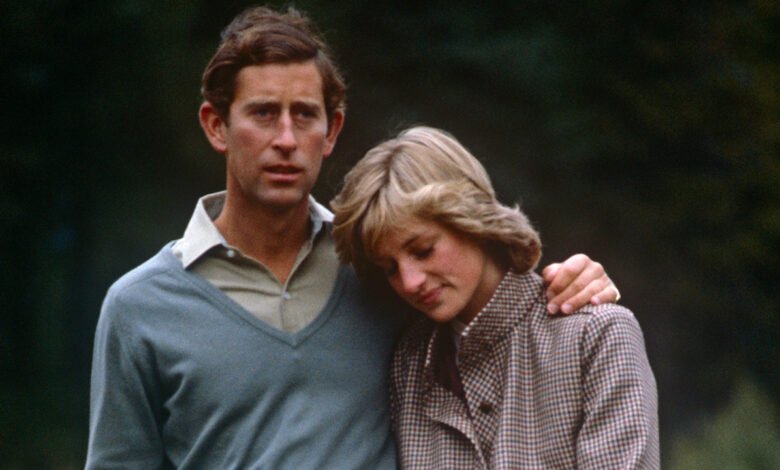
For decades, photographs of Princess Diana and King Charles have continued to attract public attention. Even long after Diana’s death, images from her years as a member of the British royal family remain widely discussed, revisited, and shared.
Some photographs are remembered because of the occasion surrounding them. Others are remembered because of the emotions visible on the faces of the people pictured. And occasionally, a photograph becomes interesting for a much simpler reason: something in the image does not appear to make sense at first glance.
One photograph of Diana and Charles from the early years of their marriage is a perfect example.
At first sight, Charles appears considerably taller than Diana. The difference is striking enough to make viewers wonder how the couple could look so different in height in some photographs while appearing much closer in height in others.
The explanation, however, may be considerably simpler than some of the theories surrounding the image.
A Photograph From the Early Years of Their Marriage
The photograph in question was taken at Balmoral in Scotland in 1981, the same year Diana and Charles married.
The setting is unmistakably associated with the royal family’s Scottish retreat. Diana can be seen wearing a tan-colored jacket, while Charles is dressed in a green sweater. He stands beside her with one arm around her, creating what appears to be a relaxed and informal portrait.
The surrounding landscape adds to the impression that this was not a formal palace photograph. Instead, it captures the couple in a more private-looking environment during a period when their relationship was attracting enormous public attention.
But viewers looking closely at the image may notice something unusual.
Charles appears much taller than Diana.
The difference is particularly noticeable because Diana’s head seems to reach only around the level of Charles’s eyes. For anyone familiar with photographs of the couple, that can seem surprising.
The apparent difference has led people online to compare the image with other photographs from the same period.
Why Does the Height Difference Look So Dramatic?
Height can be surprisingly difficult to judge from a photograph.
A camera does not record a scene in exactly the same way the human eye experiences it. Perspective, distance from the camera, posture, footwear, the position of each person’s body, and whether one person is standing on a raised surface can all affect how tall someone appears.
Even a relatively small change in positioning can create a noticeable visual difference.
If one person is standing while another is sitting, for example, the standing person can appear dramatically taller. If one person is closer to the camera, perspective can also change the apparent proportions.
That is particularly important when looking at old photographs of public figures.
Photographers often had to arrange people carefully to fit the composition they wanted. A photograph might include a landscape, furniture, architectural features, or other elements that influenced where each person stood or sat.
The Balmoral photograph illustrates just how easily such details can be overlooked.
The Missing Detail: Diana Was Sitting
The most straightforward explanation for the dramatic difference in the famous photograph is found by looking more carefully at the setting.
Diana was sitting on a bench.
That detail is easy to miss when looking at the image quickly, particularly if the photograph is viewed in isolation or cropped for social media.
Once that is understood, the apparent mystery becomes much easier to explain.
Charles was standing while Diana was seated. Naturally, the top of her head was significantly lower than his, creating the impression that he was much taller.
This does not require an elaborate explanation. It is a basic example of how body position can completely change the visual impression created by a photograph.
The same principle can be seen in family photographs everywhere. A parent standing behind a child can appear enormous in comparison. Two people of similar height can look very different if one is sitting and the other is standing.
The camera simply records the arrangement in front of it.
Why Other Photographs Created More Questions
The discussion became more interesting because photographs from other moments sometimes appear to show Diana and Charles at considerably more similar heights.
That apparent inconsistency encouraged people to compare photographs from different years, events, and locations.
In some images, Charles appears clearly taller. In others, the couple looks almost the same height.
However, photographs are not reliable tools for determining someone’s precise height unless the circumstances are controlled.
Shoes alone can make a difference. A person wearing formal footwear with a substantial heel or sole may appear taller than in another photograph. Posture matters as well. Someone standing straight with their shoulders back can look taller than the same person leaning slightly forward.
The position of the camera can also affect the result.
A photograph taken from below can make people appear taller, while an image taken from above can have the opposite effect. Lens choice and perspective can further influence how bodies and distances are perceived.
For that reason, two photographs of the same two people can produce very different impressions without either photograph being manipulated.
The Social Context Behind Height
There is another part of the discussion that has attracted attention: the role of traditional ideas about height and gender.
Sociologist Lisa Wade has previously examined photographs of Charles and Diana and discussed how cultural expectations about male and female height can influence the way couples are presented.
Her analysis explored the broader social idea that men are traditionally expected to be taller than their female partners.
That expectation is not simply about photography. It reflects a long-standing cultural association between physical size, masculinity, femininity, and social presentation.
Throughout history, visual representations of couples have sometimes emphasized conventional gender roles. Formal portraits, publicity photographs, advertising, films, and even ordinary family pictures can reflect assumptions about how men and women are expected to appear beside one another.
In the case of Diana and Charles, their extraordinary public visibility made these questions particularly noticeable.
They were not an ordinary couple photographed occasionally by friends. They were among the most photographed people in the world.
Every public appearance could produce dozens or hundreds of images.
Diana and Charles Were Constantly Photographed
The sheer number of photographs taken of the couple is an important part of the story.
Diana became one of the most recognizable women in the world. From the beginning of her relationship with Charles, photographers followed their public appearances closely.
Their engagement, wedding, overseas tours, official ceremonies, holidays, family events, and appearances with their children were extensively documented.
Because there are so many photographs available, people can easily compare different images taken in different circumstances.
One photograph might show Diana in formal heels beside Charles in flat shoes.
Another might show them walking together.
A third could show one person sitting while the other stands.
A fourth might be taken from a different angle.
When these images are placed next to each other, the apparent differences can seem mysterious even though each photograph may have a straightforward explanation.
The Importance of Perspective in Photography
Photography can create optical effects that are not immediately obvious.
Imagine two people standing several feet apart. If the person closer to the camera is slightly shorter but positioned nearer the lens, the photograph may make the size difference appear different from what someone would observe in person.
Likewise, if one person is standing on higher ground, a step, platform, or another raised surface, their height relative to another person can appear significantly greater.
Even posture can become important.
A person sitting naturally has a much lower head position than someone standing. A person leaning against something can appear shorter. Someone standing with one leg slightly bent may look different from the same person standing upright.
These details are especially important when examining historical photographs because viewers generally see only the finished image, not the physical arrangement that existed behind the camera.
The Balmoral Setting Provides the Answer
The Balmoral image is particularly interesting because the setting itself provides an important clue.
Rather than viewing the photograph simply as a portrait of two people standing side by side, it is necessary to consider the entire composition.
Diana’s seated position changes everything.
Once that is recognized, Charles’s apparent height advantage is no longer surprising.
The photograph was not necessarily intended to provide a scientific comparison of their heights. It was a portrait designed to capture the couple in a particular setting.
The Scottish landscape, the relaxed clothing, their positioning, and the surrounding environment were all part of the image.
The photograph tells viewers something about the moment, but it cannot provide an exact measurement of either person’s height.
How Modern Social Media Reignited the Discussion
The renewed interest in the image demonstrates how easily old photographs can acquire new life online.
A photograph taken decades ago can suddenly be rediscovered when someone posts it on Facebook, Instagram, TikTok, or another platform.
Viewers who were not alive when the photograph was taken can encounter it for the first time.
Others who remember Diana’s public life may see it again from a completely different perspective.
Social media also encourages side-by-side comparisons. Users can place several photographs together and ask questions about differences in appearance, clothing, posture, or setting.
That can create fascinating discussions, but it can also make ordinary photographic effects appear more mysterious than they really are.
A single image rarely tells the whole story.
Comparing Diana and Charles With the Younger Generation
The discussion becomes even more interesting when photographs of the younger generation of the royal family are considered.
Prince William and Catherine, Princess of Wales, have a more obvious difference in height. William is generally described as significantly taller than Catherine.
Yet even their photographs can produce different visual impressions depending on circumstances.
Footwear can affect how tall people appear. So can posture, camera position, whether one person is standing on a step, and the angle at which the photograph was taken.
A photograph is ultimately a two-dimensional representation of a three-dimensional scene.
That means it can never provide the complete context available to someone who was physically present.
Why Photographs Can Be Misleading
There is a useful lesson in the renewed discussion about Diana and Charles: photographs should be viewed with context.
An image can be completely genuine while still giving viewers a misleading impression.
That does not mean the photograph has been manipulated or staged in a deceptive way. It simply means that a camera captures one particular angle at one particular moment.
Consider an ordinary group photograph.
Someone at the front may appear larger than someone standing several feet behind them. A person standing on a stair can appear taller. Someone sitting in a chair may appear dramatically shorter.
None of these differences necessarily reflect a real difference in physical size.
The same principles apply to famous people.
The Debate Over Royal Image-Making
The broader question about royal photography remains interesting, however.
Members of the British royal family have long been photographed with an awareness of public presentation. Official portraits, ceremonial photographs, press images, and casual pictures all contribute to the public image of a royal figure.
That makes it reasonable to study how royal couples were photographed and presented.
However, there is an important distinction between discussing photographic composition and claiming that every detail was deliberately designed to communicate a particular message.
The available image alone cannot establish the photographer’s intention.
Some viewers may interpret positioning as part of traditional royal presentation, while others may simply see it as a natural arrangement for a photograph taken at a country estate.
Both the physical evidence in the photograph and the historical context should be considered before drawing conclusions.
Diana’s Enduring Fascination
The continued interest in this photograph also reflects the extraordinary public fascination with Princess Diana.
Diana died in Paris on August 31, 1997, at the age of 36, following a car crash. Her death came almost exactly one year after her divorce from Charles was finalized on August 28, 1996.
Her life was therefore divided into several distinct chapters: her early years away from the royal spotlight, her marriage and years as Princess of Wales, her role as a mother, her charitable work, and the period following her separation and divorce.
Because so much of her life was photographed, there is an enormous visual record of those years.
Old photographs continue to be revisited because they allow people to examine moments that were once part of everyday news coverage.
A simple image can therefore become a starting point for a much broader discussion about history, celebrity, fashion, family, photography, and public perception.
A Simple Detail Can Change the Entire Interpretation
The story of the Balmoral photograph ultimately shows how important small details can be.
At first glance, the picture appears to show a dramatic difference in height between Diana and Charles.
Look more closely, however, and the position of Diana becomes clear.
She was sitting.
That single detail changes the interpretation of the entire photograph.
It is a useful reminder that photographs should not always be taken at face value. Before assuming that an unusual visual difference represents a hidden story, it is worth examining the surroundings, the position of the people involved, the camera angle, and the circumstances in which the photograph was taken.
Sometimes the explanation is much simpler than the mystery suggests.
Why the Photograph Still Gets People Talking
Decades later, photographs of Diana and Charles continue to generate conversations because they document a relationship that was followed by millions of people around the world.
Every detail—from clothing and facial expressions to body language and positioning—can attract attention.
But the most interesting lesson from this particular photograph may not be about royal tradition at all.
It may simply be about perspective.
The human brain naturally tries to interpret what it sees. When an image appears unusual, viewers look for an explanation. Social media can then amplify that curiosity, especially when an old photograph is presented alongside a provocative question.
In this case, the answer appears to be sitting right in front of the viewer—quite literally.
Diana’s seated position dramatically changes the apparent height difference between the couple.
A Photograph, a Moment, and a Lasting Legacy
Princess Diana’s photographs remain part of the public record, but they are also snapshots of individual moments.
The Balmoral image captures Charles and Diana during the first year of their marriage, at a time when their relationship was receiving enormous international attention.
Seen today, the photograph can invite speculation about many things. Yet the simplest explanation for the apparent height difference is also one of the most practical: the couple was not positioned at the same level.
That observation does not make the photograph less interesting.
If anything, it demonstrates how much information can be hidden within a seemingly ordinary image.
A bench, a pair of shoes, a camera angle, or a change in posture can completely alter how people appear.
And sometimes, what looks like a royal mystery is simply a matter of perspective.
The Lasting Lesson
The renewed interest in the photograph is a reminder that historical images deserve context. Before accepting an unusual visual impression as evidence of something deliberate or unusual, it is worth looking carefully at the complete scene.
In Diana and Charles’s Balmoral photograph, the overlooked bench provides the missing piece.
What initially appears to be a dramatic difference in height becomes much easier to understand once the photograph is viewed in its full context.
More than thirty years after the image was taken, that small detail has once again brought an old royal photograph into the spotlight—and shown just how easily a single picture can create a question that seems far more complicated than the answer.