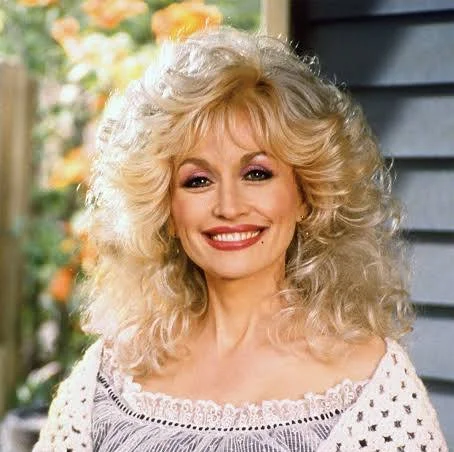
The world might look a little different if more people followed the example Dolly Parton quietly set for decades.
She never claimed to have all the answers. She never presented herself as a political leader. She did not spend her career telling people which side they needed to be on.
Instead, she built something much harder to create in an increasingly divided culture: a reputation for making people feel welcome.
Democrats could be her fans.
Republicans could be her fans.
Religious people could find something familiar in her story.
People from completely different backgrounds could find something they loved in her music.
And Dolly seemed determined not to turn that shared affection into another political battlefield.
Her approach was remarkably simple.
If you can help someone, help them.
If a child needs a book, send a book.
If a family loses a home, help them rebuild.
If researchers need funding, write the check.
If a community needs jobs and opportunity, invest at home.
And if people need something to smile about, tell a joke.
That philosophy became one of the most enduring parts of Dolly Parton’s legacy.
She Refused to Let Politics Define Her
Dolly Parton spent much of her career deliberately avoiding political division.
She once explained that she had fans across the political spectrum and did not want to alienate people by publicly taking political positions. She described herself first and foremost as an entertainer who could lift people up without becoming part of political fights.
That decision was not necessarily because she had nothing to say.
In fact, Parton often communicated strong ideas about compassion, dignity, opportunity and acceptance.
She simply did not believe every belief needed to become a partisan argument.
That distinction became increasingly unusual as political polarization intensified.
For Dolly, there was value in having a place where people could simply listen to a song, laugh at a joke or enjoy a performance without first asking what political team the artist belonged to.
Even the Presidential Medal of Freedom Became a Political Question
Perhaps the clearest example of her approach involved the Presidential Medal of Freedom, the highest civilian honor in the United States.
Parton was offered the award twice during Donald Trump’s administration. She declined on those occasions because her husband was ill and later because of the pandemic and her unwillingness to travel.
When the Biden administration subsequently contacted her about the honor, Parton explained that accepting it could make the gesture appear political. She ultimately declined that opportunity as well.
It is important to understand the distinction.
She did not reject the honor because she believed it was meaningless.
She questioned whether accepting it would fit with the position she had deliberately maintained throughout her public life.
As she explained at the time, she did not want accepting the award to become a political statement.
That decision said something about her priorities.
She was more concerned with remaining available to people on both sides of the political divide than with collecting another prestigious title.
Her Kindness Was Bigger Than a Public Image
The most remarkable part of Dolly’s legacy, however, may not be what she refused.
It may be what she gave.
Her philanthropy stretched across decades and touched an extraordinary range of causes.
The Dollywood Foundation was established in 1988, with a focus on helping children and education in the region where she grew up.
Then came the project that became perhaps her most recognizable charitable legacy: Dolly Parton’s Imagination Library.
Launched in 1995, the program initially served children in Sevier County, Tennessee, Dolly’s home county. It was inspired in part by her father’s inability to read and write. The program eventually expanded internationally.
Today, children from birth to age five can receive free, high-quality books through the program in participating communities across the United States, Canada, the United Kingdom, Australia and Ireland.
That is an extraordinary legacy.
But perhaps the most beautiful part is how ordinary each individual act can look.
A book arrives in a mailbox.
A child opens it.
A parent reads it aloud.
And then life goes on.
There may be no television camera.
No red carpet.
No political speech.
Just a child holding a book.
She Helped Her Home Community After Disaster
Dolly’s giving also reached people facing sudden tragedy.
After the devastating 2016 wildfires in the Great Smoky Mountains region, the Dollywood Foundation distributed millions of dollars in assistance to families affected by the fires.
Following Hurricane Helene in 2024, Parton and her foundation again directed substantial support toward East Tennessee recovery efforts.
These contributions reflected another recurring theme in Dolly’s philanthropy: she did not forget where she came from.
She grew up in Sevier County in a large family with limited financial resources.
Success took her far beyond the Tennessee mountains, but it never erased the connection she felt to the people and communities that shaped her.
Dollywood Became Part of Her Legacy
Then there was Dollywood.
What began as a business venture became much more than a theme park.
Dollywood became one of the major economic and entertainment institutions in the region where Dolly grew up.
It created jobs, attracted visitors and helped turn the Smoky Mountains into an even stronger destination for families.
For Dolly, investing in her home region was not simply about putting her name on something.
It was about creating opportunity in a place that had given her so much.
Her story had begun in a small Tennessee community.
She eventually had the resources to give something back to it.
And she did.
She Put Money Into Medical Research, Too
Dolly’s generosity was not limited to books and disaster relief.
In 2020, she donated $1 million to Vanderbilt University Medical Center to support COVID-19 research. That funding contributed to research connected to the development of the Moderna vaccine.
She later supported pediatric infectious-disease research at Vanderbilt as well.
Her medical philanthropy also included pediatric cancer research. In 2017, she donated $1 million to the Pediatric Cancer Program at Monroe Carell Jr. Children’s Hospital at Vanderbilt in honor of her niece, who had survived leukemia.
Again, the pattern was consistent.
She saw a need.
She had the ability to help.
So she helped.
Her Humor Was Part of the Magic
And then there was the humor.
Dolly understood something that many people in public life forget: generosity does not have to be solemn.
She could give millions of dollars and still make fun of herself.
She could walk into an important room dressed in rhinestones and immediately make everyone laugh.
Her famous self-deprecating humor allowed people to see the person behind the celebrity.
She once joked about how expensive it was to achieve her famously glamorous appearance while looking deliberately inexpensive.
That ability to laugh at herself became part of her connection with ordinary people.
She never seemed interested in pretending she was above anyone else.
If anything, she made her extraordinary success feel approachable.
She Never Made People Earn Her Kindness
Perhaps this is the simplest way to understand Dolly Parton’s philosophy.
She did not appear to believe that people had to agree with her before they deserved compassion.
They did not have to vote the way she voted.
They did not have to share her background.
They did not have to listen to her music.
They did not have to know her personally.
Her charitable work was often built around the idea that help should reach people because they need it—not because they had first passed some test.
That is particularly clear in the Imagination Library.
A child’s family income does not determine whether the child deserves a book. The program’s purpose is to put books into children’s hands and encourage a love of reading.
It is a simple idea.
But simple ideas can become powerful when someone commits to them for decades.
Her Legacy Was Never Just About Money
It would be easy to measure Dolly’s generosity in dollars.
There were millions given to research.
Millions directed toward disaster relief.
Millions of books distributed.
Jobs created through businesses in Tennessee.
But money is only part of the story.
Dolly also gave people encouragement.
She gave children something to look forward to in the mailbox.
She gave families hope after disasters.
She gave researchers resources to pursue difficult medical questions.
She gave her hometown an economic engine.
And she gave generations of fans songs that became part of their lives.
Her philanthropy was not a separate chapter from her entertainment career.
It was intertwined with the person she became.
A Different Kind of Influence
Dolly Parton demonstrated that influence does not always have to come from political power.
Sometimes it comes from consistency.
She spent decades repeating essentially the same message through different actions: work hard, stay humble, help people when you can, and don’t take yourself too seriously.
That message reached people who might never have agreed on much else.
Her ability to maintain broad appeal was not an accident.
She consciously protected it.
And she used that broad audience to direct attention toward causes that mattered to her.
The World May Miss the Example as Much as the Person
Dolly Parton left behind an enormous catalog of music and an even larger cultural footprint.
But one of the things people may miss most is the example she provided.
In an era when public figures are often expected to declare a side, she showed that it was possible to emphasize common ground.
In a culture where generosity can sometimes become a publicity strategy, she often gave quietly or allowed the work itself to speak.
And in a world where kindness can feel conditional, she offered something different.
Help first.
Ask questions later.
Give people dignity.
Make them laugh.
Put a book in a child’s hands.
Help a family rebuild.
Support the researcher trying to save lives.
Invest in the place that raised you.
Then keep going.
Dolly’s Greatest Gift May Have Been the Idea That Kindness Is for Everyone
There are many ways to describe Dolly Parton’s legacy.
Country music legend.
Songwriter.
Actress.
Businesswoman.
Entrepreneur.
Philanthropist.
But perhaps one of the simplest descriptions is also one of the most meaningful:
She was someone who kept finding ways to help people.
Her political neutrality was only one part of that philosophy.
The books, disaster relief, medical research, education programs and community investments were the larger expression of it.
She did not need everyone to agree with her.
She simply wanted to leave people with something better than what she found.
And maybe that is why her influence reached so far beyond country music.
Because kindness does not require a political party.
A child does not need to be Republican or Democrat to deserve a book.
A family does not need the right beliefs to deserve help after a disaster.
A patient does not need to share an ideology before research can save a life.
Dolly Parton understood that.
She spent decades acting on it.
And in the end, perhaps her most lasting lesson was also her simplest:
You do not have to choose a side to choose kindness.
SEO Information
SEO Title: Dolly Parton’s Legacy: Why Her Kindness Meant More Than Politics
Meta Description: Dolly Parton’s legacy extends far beyond music. Explore how her philanthropy, generosity and refusal to divide people made her a rare unifying figure.
Focus Keyword: Dolly Parton legacy
Secondary Keywords: Dolly Parton philanthropy, Dolly Parton kindness, Dolly Parton charity, Dolly Parton Imagination Library, Dolly Parton political views, Dolly Parton Medal of Freedom, Dolly Parton charitable work
Suggested URL Slug: dolly-parton-legacy-kindness-philanthropy-politics