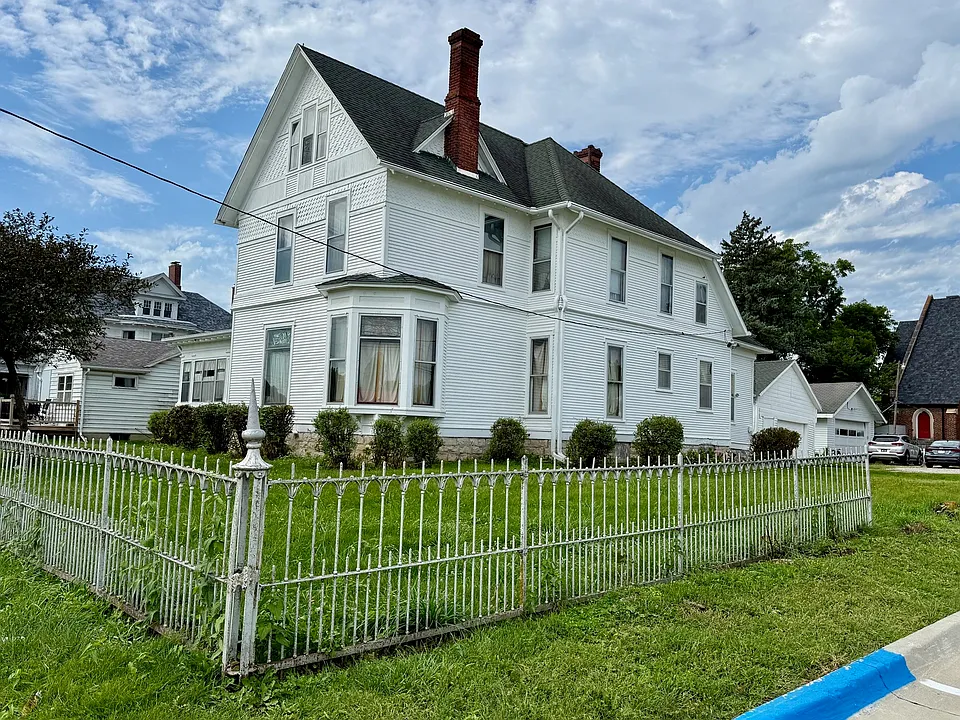
Historic Home With Original Character and Remarkable Renovation Potential $60,000
There are homes that simply provide a place to live, and then there are properties that tell a story.
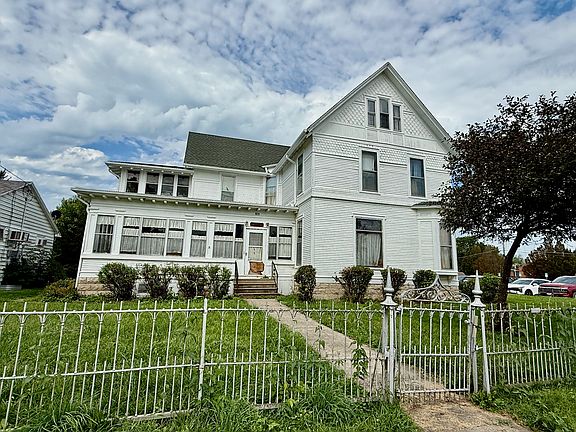
This historic residence falls into the second category. In its earlier years, the home was reportedly a beautiful and impressive property, and although it is no longer in its original condition, many of the architectural details that gave it character remain remarkably intact.
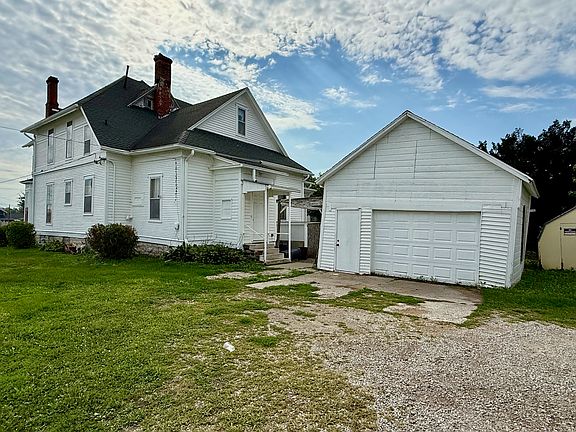
The property was originally owned by F. L. Maytag and his wife, Dena, adding an interesting chapter to its history. Today, the home requires substantial renovation and numerous repairs, but the surviving original craftsmanship offers a rare opportunity for a buyer with the knowledge, resources and appreciation for historic architecture to restore it.
This is not a turnkey property.
It is a renovation project.
But for the right buyer, it could also be the beginning of an extraordinary restoration.
Original Architectural Details Still Remain
One of the most compelling aspects of this property is that many of its original architectural elements are still present.
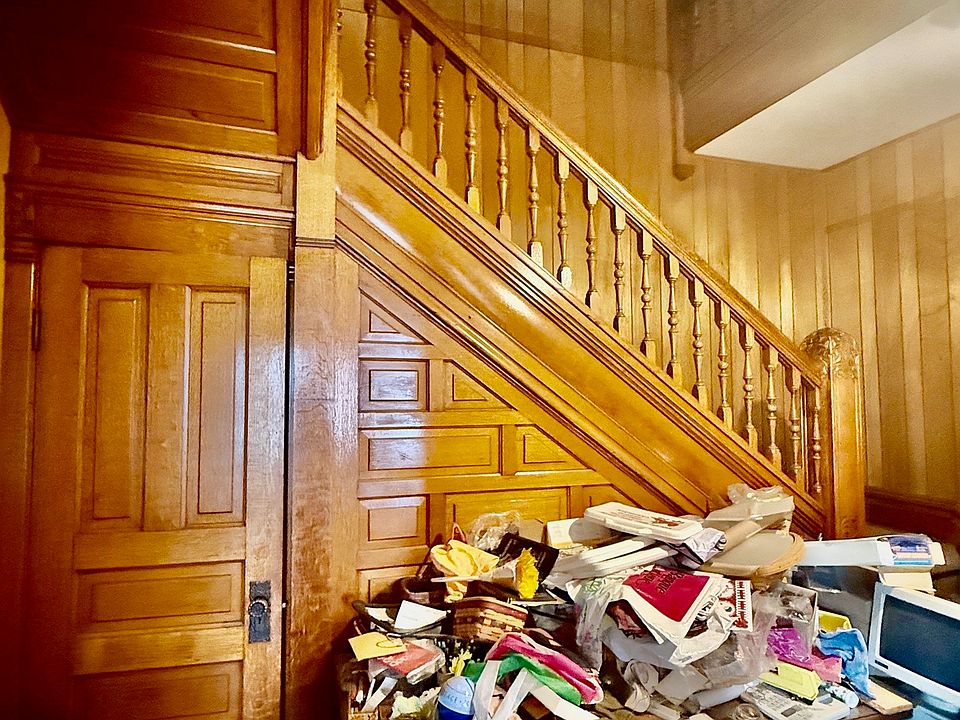
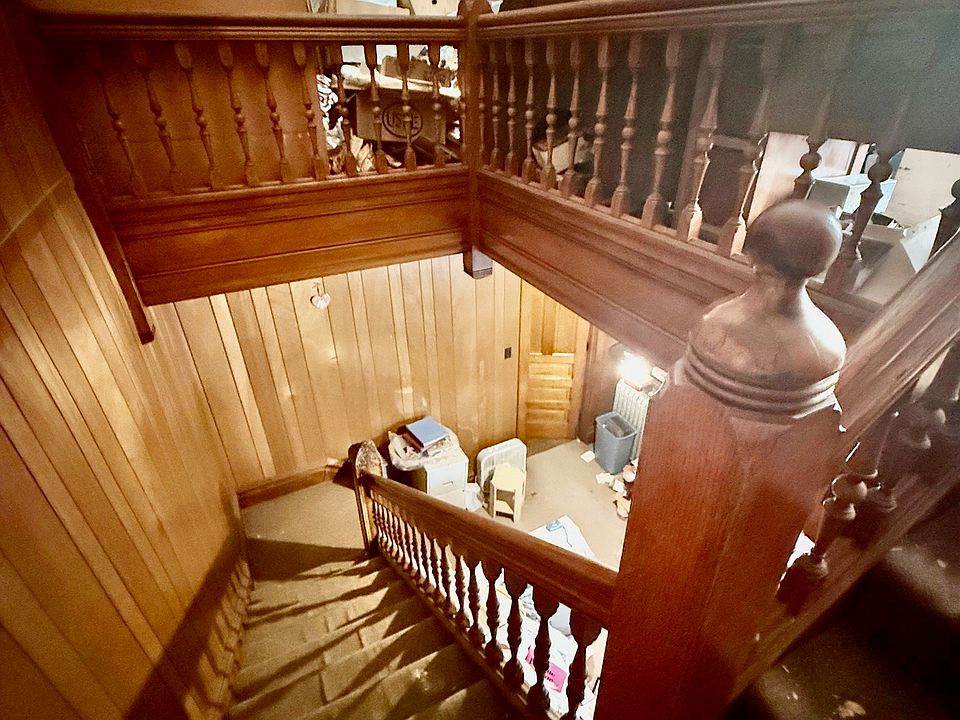
The home features original woodwork, 10-foot ceilings, 8-foot doors, pocket doors and leaded glass windows.
These details are difficult to reproduce authentically in a modern construction project.
Original woodwork, in particular, can give a historic residence a level of craftsmanship and visual character that newer homes often cannot replicate. The tall ceilings and doors further contribute to the home’s historic proportions and sense of scale.
The pocket doors are another notable architectural feature. Designed to slide into the wall rather than swing into a room, pocket doors were both practical and visually distinctive in many historic residences.
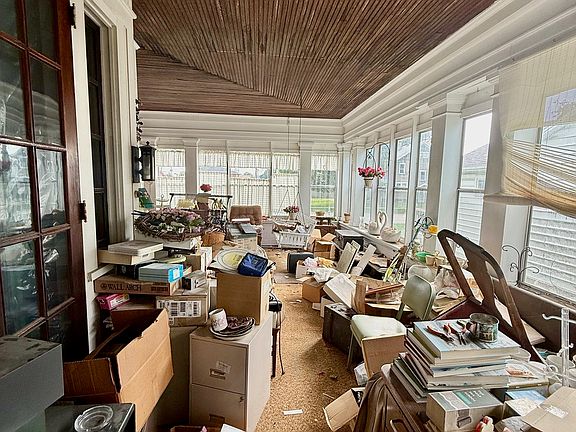
The leaded glass windows add yet another layer of character, offering decorative detail that can become an important part of a future restoration.
A Restoration Project for an Experienced Buyer
While the property’s historic details are appealing, prospective buyers should understand the scope of the project.
The home is in need of many repairs and substantial renovation.
This is a property that will require careful evaluation before any restoration plans are developed. Buyers considering the opportunity should have a strong understanding of historic renovation, construction requirements and the potential costs associated with bringing an older property back to a livable and attractive condition.
The home is therefore best suited to someone who is comfortable taking on a significant renovation project.
Experience can be particularly valuable when working with an older property because preserving original details may require specialized knowledge and careful planning.
Original Woodwork Could Become the Centerpiece
Among the home’s surviving features, the original woodwork stands out.
Historic woodwork can include elements such as trim, moldings, doors, frames and other decorative components that contribute substantially to a home’s identity.
Rather than replacing every older feature with modern materials, a knowledgeable restoration approach could focus on preserving as much of the original craftsmanship as practical.
The existing woodwork gives a future owner something valuable to work with.
With appropriate restoration and maintenance, these original elements could once again become defining features of the home’s interior.
Ten-Foot Ceilings Create a Sense of Scale
The home’s 10-foot ceilings provide another distinctive characteristic.
Tall ceilings can make rooms feel larger and more open while contributing to the proportions commonly associated with historic architecture.
Combined with eight-foot doors and original woodwork, the ceiling height gives the property an architectural presence that could be difficult to recreate in a contemporary renovation.
For a buyer interested in historic homes, these structural and decorative elements may be among the property’s most valuable assets.
Eight-Foot Doors Add Historic Character
The 8-foot doors continue the home’s impressive proportions.
Doors are often overlooked when evaluating an older property, but original doors can play an important role in preserving its architectural identity.
Their height, construction and relationship to the surrounding trim can help maintain the character of the original design.
If preserved appropriately, these doors could become an important part of the home’s eventual restoration.
Pocket Doors Offer a Glimpse Into the Past
The presence of pocket doors provides another reminder of the home’s original design.
Pocket doors were commonly used to divide rooms while allowing homeowners to save floor space. When open, they can create a more connected flow between rooms; when closed, they provide separation and privacy.
For restoration-minded buyers, original pocket doors can be especially interesting because they represent both craftsmanship and practical design from an earlier era.
Their condition should be carefully evaluated as part of the property’s overall inspection.
Leaded Glass Windows Add Decorative Detail
The home’s leaded glass windows are another feature that sets it apart.
Leaded glass can create distinctive patterns and visual effects as natural light enters the interior. Original decorative windows can also be among the most recognizable details in a historic home.
Preserving such features may require specialized care, particularly if repairs or restoration are necessary.
For a buyer with experience in historical renovation, these windows could become an important part of the home’s finished design.
The Property’s History Adds Another Dimension
The connection to F. L. Maytag and Dena Maytag gives the property an additional historical point of interest.
For buyers interested in historic architecture, understanding who previously owned a property can add context to its story.
The home represents more than a collection of rooms and architectural details. It is also a physical connection to an earlier period and to the people who once lived there.
Any prospective buyer interested in researching the property’s history may wish to conduct additional independent research into ownership records and local historical resources.
A Vision Could Bring the Home Back to Life
The property’s current condition may be challenging, but that is also what creates the opportunity.
The home is not being presented as a recently renovated residence.
Instead, it is a project where the future owner will need to determine what can be preserved, repaired, restored or replaced.
For someone with the right combination of experience and capital, the possibilities could be significant.
A thoughtful restoration could potentially combine modern functionality with historic character, allowing the property to serve contemporary needs without losing the architectural details that make it distinctive.
The goal would not simply be to make an old house look new.
It would be to respect what makes the house historically interesting while creating a comfortable and functional home for the future.
Not a Property for Every Buyer
This property will not be suitable for every buyer.
Someone looking for a move-in-ready home may find the renovation requirements too extensive.
Likewise, buyers without experience in major renovation projects should carefully consider the scope of work before proceeding.
Historic renovation can require patience, planning and significant financial resources.
Unexpected repairs can also arise once work begins, particularly in older properties.
For that reason, buyers should conduct thorough due diligence and obtain professional opinions where appropriate before making a purchase decision.
Potential for a Remarkable Transformation
Despite the challenges, the home’s existing architectural features provide a strong foundation for a potential transformation.
The 10-foot ceilings provide impressive proportions.
The 8-foot doors reinforce the home’s historic character.
The pocket doors add functionality and period detail.
The leaded glass windows contribute decorative interest.
And the original woodwork provides craftsmanship that could become one of the home’s defining features.
These are the kinds of details that can inspire a restoration project.
The finished result, if approached carefully and appropriately, could look very different from the property’s present condition while still retaining the elements that connect it to its past.
Sold As-Is
The property is being sold as-is.
This is an important consideration for anyone interested in purchasing the home.
An as-is sale means buyers should not assume that repairs or improvements will be completed by the seller before closing.
Prospective buyers should carefully inspect the property, evaluate its condition and determine the scope of work required.
Professional inspections, contractor estimates and appropriate historical-renovation advice may be valuable before making a final decision.
Buyers should also independently verify any historical information associated with the property.
A Rare Opportunity for the Right Buyer
Historic properties requiring significant restoration can be challenging, but they can also offer opportunities that conventional homes cannot.
Instead of starting with a blank canvas, the buyer begins with an existing structure that already contains architectural history.
In this case, the surviving original details provide a glimpse of what the home once was.
The challenge will be determining how to preserve those details while addressing the property’s many current needs.
That requires vision.
It requires patience.
And it requires the financial and technical ability to carry out a substantial renovation.
For the right person, however, those challenges may be part of the appeal.
Final Thoughts
This historic home is a property for someone who sees potential where others may see only repairs.
Its current condition requires significant attention, and the home should be approached as a serious renovation project rather than a move-in-ready residence.
At the same time, the property retains remarkable architectural details, including original woodwork, 10-foot ceilings, 8-foot doors, pocket doors and leaded glass windows.
Those elements provide a rare connection to the home’s earlier character.
Originally owned by F. L. Maytag and his wife, Dena, the residence carries a story that extends beyond its present condition.
For an experienced historical-renovation buyer with sufficient resources, careful planning and a genuine appreciation for historic architecture, this could represent an opportunity to restore a distinctive home and give it a new chapter. From: Zillow
The work will be substantial.
The investment of time and capital could be significant.
But with the right vision and execution, the home may once again become the beautiful residence it was in its earlier days.
Property Highlights
- Historic residence
- Originally owned by F. L. Maytag and wife Dena
- Original woodwork
- 10-foot ceilings
- 8-foot doors
- Original pocket doors
- Leaded glass windows
- Significant renovation required
- Multiple repairs needed
- Suitable for experienced historic-renovation buyers
- Sold as-is
- Potential for extensive restoration
SEO Information
SEO Title: Historic Home With Original Woodwork, Pocket Doors & Leaded Glass
Meta Description: Historic home requiring renovation features original woodwork, 10-foot ceilings, 8-foot doors, pocket doors and leaded glass windows.
Focus Keyword: historic home renovation
Secondary Keywords: historic home for sale, historic renovation project, home with original woodwork, pocket doors, leaded glass windows, historic property, restoration project, vintage home renovation
From: Zillow

From: Zillow