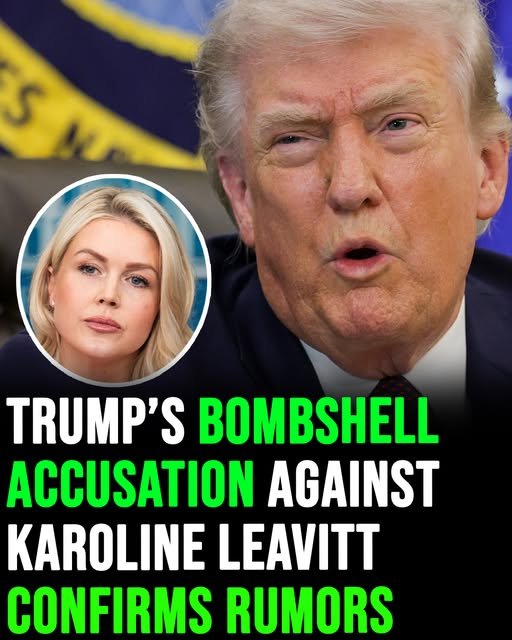
During a recent Oval Office press conference, Donald Trump once again leaned into his familiar, combative tone toward the media—but this time, he briefly turned that energy inward, directing a joking remark at his own press secretary, Karoline Leavitt.
While addressing reporters on Tuesday, Trump complained about what he described as overwhelmingly negative media coverage. He claimed that as much as “93 percent” of the press about him is unfavorable, adding that some estimates place it even higher—closer to 97 percent. The figures themselves weren’t substantiated in the moment, but they served as a rhetorical way to reinforce his long-standing argument that media organizations treat him unfairly.
In the middle of that point, he shifted his attention to Leavitt, who has been one of his primary public defenders in the White House briefing room. With a mix of sarcasm and humor, he remarked:
“Maybe Karoline’s doing a poor job, I don’t know,” before adding more bluntly, “You’re doing a terrible job.”
The comment drew attention largely because of its directness, but the tone suggested it was not meant as a serious reprimand. Trump quickly followed up by softening the moment, jokingly asking whether she should remain in her role and answering his own question with, “I think we’ll keep her.”
Moments like this are not entirely unusual in Trump’s public communication style. He often blends humor, exaggeration, and criticism in ways that can blur the line between seriousness and performance. For supporters, this kind of remark can come across as candid or even playful; for critics, it may reinforce concerns about professionalism and messaging discipline within his administration.
Beyond the exchange with Leavitt, Trump returned to a more familiar theme—his ongoing criticism of the media. He described news outlets as biased and “hostile,” repeating claims that they function as “an arm of the Democratic Party.” This framing has been a consistent element of his rhetoric dating back to his first presidential campaign and throughout his time in office.
He also raised a more controversial point by suggesting that broadcasters could face consequences for what he views as unfair coverage, stating that networks are “licensed” and implying that those licenses could be at risk. Such comments tend to draw scrutiny, as they touch on issues of press freedom and the role of government in regulating media institutions—topics that remain highly sensitive in democratic systems.
In a broader sense, the moment highlights two overlapping dynamics. On one hand, it reflects Trump’s continued strategy of positioning himself in opposition to mainstream media narratives. On the other, it shows how even internal figures like his press secretary can become part of that public performance—whether humorously or symbolically.
Ultimately, the exchange with Leavitt appears less about internal conflict and more about tone and style. It fits into a pattern where public remarks serve multiple purposes at once: entertaining supporters, challenging critics, and reinforcing a broader message about perceived media bias.
How such moments are interpreted often depends on perspective—some see them as lighthearted or strategic, while others view them as indicative of deeper tensions in political communication.