Some life stories begin quietly. Others begin in chaos.
For one Hollywood star, the path to success started in a world filled with instability, heartbreak, and experiences far too heavy for a child to carry. Growing up in one of Los Angeles’ most notorious neighborhoods with a famous mother struggling with addiction, she learned early that life could be unpredictable and painful.
Yet somehow, despite the darkness that surrounded her childhood, she grew into one of the most recognizable and beloved actresses in Hollywood.
Her story is not just about fame. It’s about survival, resilience, and the complicated ways our past shapes the people we become.
Today, she speaks openly about her difficult upbringing and how it influenced her choices in relationships, career, and life. She once admitted that she was always drawn to what she called “broken birds”—people she believed she could help or fix.
Looking back, she now understands that those patterns were rooted deeply in the childhood she experienced.
And that childhood was anything but ordinary.
A Childhood Surrounded by Chaos
The actress in question is Christina Applegate, an Emmy-winning performer known for her humor, sharp wit, and unforgettable television roles.
But long before the bright lights of Hollywood fame, her life was shaped by a childhood that she has described as deeply painful and confusing.
Born in 1971, Applegate entered a world connected to show business from the very beginning. Her father, Robert “Bobby” Applegate, worked in the entertainment industry as a staff producer, while her mother, Nancy Priddy, was both a singer and actress who appeared in several popular television shows during the 1970s and 1980s.
However, the relationship between her parents didn’t last long.
They separated shortly after Christina was born, and she grew up primarily with her mother. Her father was largely absent during her childhood, something she later reflected on with a mix of sadness and acceptance.
“I didn’t get to spend the kind of time with him that I think either he or I would have liked,” she once shared in an interview.
Without a stable father figure in her life, much of her early world revolved around her mother and the unpredictable environment that surrounded them.

Growing Up in Laurel Canyon
Christina grew up in Laurel Canyon, a famous neighborhood in Los Angeles known for its artistic community and strong ties to the music and entertainment industry.
During the 1960s and 1970s, the area had become a hub for musicians, actors, and artists. Many famous performers lived nearby, and creative energy filled the streets.
On the surface, it sounded like an exciting place to grow up.
But behind that artistic culture was another reality—one that involved instability, drugs, and adult problems that children should never have to witness.
Christina’s childhood home often reflected those darker aspects.
Her mother struggled with heroin addiction, and the actress has spoken openly about what it was like to grow up in that environment. Drugs were present, unfamiliar people frequently came and went, and the emotional atmosphere was often chaotic.
For a child, it created an overwhelming sense of insecurity.
She remembers moments when her mother would break down in tears, leaving young Christina confused and unsure of what to do.
“It’s always fun to see your mom crying on the floor and you not being taken care of,” she once said with a mix of dark humor and honesty while reflecting on her childhood.
Those experiences left a deep emotional imprint.
Trauma at a Very Young Age
Unfortunately, addiction and instability were not the only challenges she faced growing up.
In her memoir released in 2026, Christina revealed that she experienced abuse as a young child.
One particularly traumatic incident involved a female babysitter who abused her when she was just five years old. For years, she kept those memories private, but eventually she felt ready to share the truth.
She has explained that the years between ages three and seven were some of the most difficult in her life.
Looking back, she realized that many children around her were experiencing similar circumstances. Many families in her neighborhood were led by single mothers, and there was often a revolving door of new relationships, strangers entering homes, and exposure to drugs and emotional instability.
It created an environment where children were often left to figure things out on their own.
For Christina, it meant learning to grow up quickly.

A Life on Television Before She Could Walk
Despite the difficulties in her home life, one constant presence was the entertainment industry.
Because her mother worked as an actress, Christina was introduced to television sets and film studios almost immediately after she was born.
Her very first appearance on television happened when she was just a baby.
She appeared alongside her mother on the long-running soap opera Days of Our Lives.
Even earlier than that, she appeared in a commercial for Playtex baby bottles when she was only three months old.
For most children, childhood is a time of play and discovery.
For Christina, it was also a time of working in front of cameras.
By age ten, she had already landed a role in the horror film Jaws of Satan. Soon after that, she played a young version of actress Grace Kelly in a television biopic about the Hollywood star who later became Princess of Monaco.
Growing up around film sets and studios shaped her life in ways she didn’t fully understand at the time.
She later reflected that she spent so much time acting that she sometimes struggled to figure out who she really was as a person.
“I don’t think I’ve lived my own life,” she admitted years later.
“I’ve been this other person my whole life.”
Fame Comes Early
Everything changed dramatically in 1987.
At just sixteen years old, Christina landed the role that would make her famous across America: Kelly Bundy on the hit sitcom Married… with Children.
The show was a huge success, becoming one of the most popular television comedies of the era.
Christina’s character, Kelly Bundy, was portrayed as a stereotypical “dumb blonde”—a carefree and often clueless teenager whose humor and attitude made audiences laugh week after week.
The role turned Christina into a household name almost overnight.
Suddenly she was recognized everywhere she went.
But the character she played on television wasn’t actually much like her real personality.
In a 1989 interview with The Boston Globe, she explained the difference.
“I’m not saying I’m Mary Poppins or anything,” she joked. “But I’m definitely not the little bimbo she is.”
She explained that playing Kelly Bundy wasn’t difficult because she had seen similar personalities around Los Angeles nightlife while growing up.
Still, the role was a massive leap into fame—and it made Christina the primary breadwinner for her family at a very young age.
Struggles Behind the Scenes
While her career was taking off, her personal life remained complicated.
The patterns she had witnessed during childhood often resurfaced in her relationships.
Christina later admitted that she had a tendency to fall in love with troubled people—partners she believed she could help or fix.
“My mom always said, ‘I never met a junkie I didn’t like,’” she once recalled.
“And that kind of was how I rolled.”
She explained that she rarely dated people with traditional careers.
Instead, she often found herself drawn to people she described as “broken birds.”
At the time, she believed she could help them change.
But eventually she realized that some problems can’t be solved by love alone.
“You can’t fix someone else,” she later said.
Expanding Her Career
Even though she became famous for one role, Christina worked hard to prove she could do much more.
Over the years, she built a successful career in both television and film.
She earned a Golden Globe nomination for her performance in the sitcom Jesse.
Her guest appearance on Friends earned her a Primetime Emmy Award for Outstanding Guest Actress in a Comedy Series.
Movie audiences also saw her in films like The Sweetest Thing and Anchorman: The Legend of Ron Burgundy.
In the latter, she played Veronica Corningstone, an ambitious news anchor determined to succeed in a male-dominated newsroom.
The role showed audiences a different side of her acting abilities.
Later in her career, she took on one of her most powerful performances in the dark comedy series Dead to Me, which aired from 2019 to 2022.
The show received critical praise and introduced her to a new generation of viewers.
Sharing Her Story
For many years, much of Christina’s childhood trauma remained private.
That changed in 2026 when she released her memoir, You With the Sad Eyes.
In the book, she opened up about her past in a way she never had before.
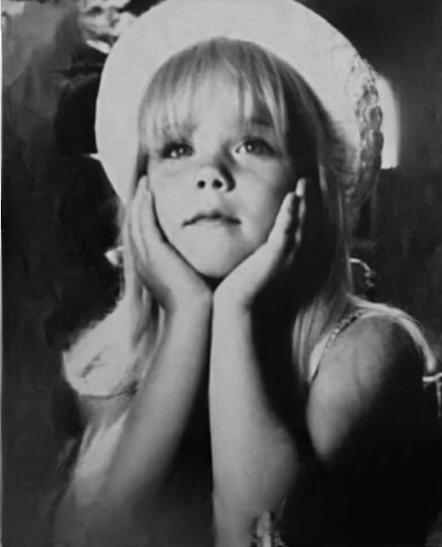
She described it as the story of a “little girl with sad eyes” who eventually grew into the person the world knows today.
But she made it clear that the sadness from those early years never completely disappears.
It simply becomes part of who you are.
“She still has those sad eyes,” Christina said when describing the younger version of herself.
“But she’s a stronger, different, resilient human being.”
Facing Health Challenges
In recent years, Christina has faced some of the most difficult challenges of her life.
In 2021, she was diagnosed with Multiple Sclerosis (MS), a chronic autoimmune disease that affects the central nervous system.
The condition can cause pain, fatigue, and difficulty with movement.
Because of the illness, she eventually stepped away from most on-screen acting roles.
By 2026, she revealed that the pain and exhaustion from MS often forced her to spend much of her day resting in bed.
Despite the physical challenges, she has continued to work when possible, focusing on voice projects and advocacy work.
Family and Motherhood
One of the most important parts of Christina’s life today is her family.
She shares a daughter, Sadie, with her husband, musician Martyn LeNoble.
Being a mother has brought her immense joy—but it also presents challenges due to her health.
She has said that one of the hardest parts of living with MS is not being able to be as active with her daughter as she would like.
Driving Sadie to school and activities has become a daily goal she pushes herself to accomplish.
“I tell myself, ‘Just get her there safely and get home so you can get back into bed,’” she once explained.
Those moments together, even simple car rides, mean the world to her.
Giving Back
Beyond acting, Christina has dedicated a large portion of her life to philanthropy.
She has supported several organizations, including the Entertainment Industry Foundation, Adopt-A-Classroom, Motion Picture & Television Fund Foundation, World Animal Protection, and The Trevor Project.
In 2003, she served as spokesperson for Lee National Denim Day, a major fundraising campaign for breast cancer awareness and research.
Her advocacy became even more personal after she was diagnosed with breast cancer in 2008.
Since then, she has used her voice to raise awareness and support for cancer research.
Looking Ahead
Despite everything she has been through—childhood trauma, personal struggles, and serious health challenges—Christina continues to look forward.
One of her upcoming projects involves launching an online platform called Next in MS, designed to give people living with multiple sclerosis a place to share their experiences and support one another.
Her goal is simple: to make people facing the disease feel less alone.
And perhaps that goal reflects the deeper theme of her entire life.
After growing up in an environment where loneliness and instability were constant companions, she now works to create connection and understanding for others.
A Story of Resilience
The story of Christina Applegate is not just about Hollywood success.
It’s about resilience.
It’s about a child who survived trauma, confusion, and chaos—and grew into someone who continues to inspire millions.
Her journey proves that our beginnings do not define our endings.
Even the darkest childhood can produce strength, compassion, and determination.
And while she still says that the “little girl with the sad eyes” is part of her story, that same girl also became a woman who refuses to stop fighting.
For herself, for her family, and for everyone who sees a piece of their own struggles reflected in her story.