News
She Was One of Hollywood’s Most Beautiful Stars in the 1960s. See How Mia Farrow Looks Today at 81!
She Was One of Hollywood’s Most Beautiful Stars in the 1960s. See How Mia Farrow Looks Today at 81!

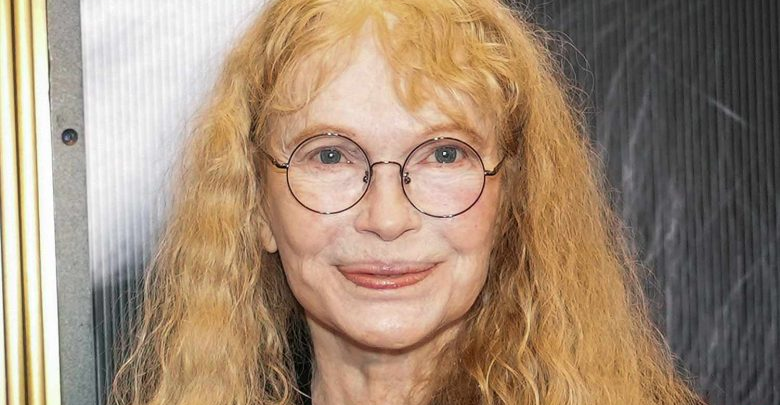
Mia Farrow Earned Her First Tony Nomination at 80. Here’s the Career That Led to It
In 1964, American television audiences met Mia Farrow as Allison MacKenzie on Peyton Place. Four years later, she played a young woman who could no longer trust the people telling her that everything was fine in Rosemary’s Baby. And six decades after Peyton Place, Farrow walked onto a Broadway stage opposite Patti LuPone in a play about two women who surprise themselves as much as they surprise each other. That performance earned Farrow her first Tony nomination in 2025, when she was
The nomination offers a good reason to revisit a career often reduced to a few familiar photographs. There is the pixie cut, of course, and the image of a young actress whose look seemed to belong entirely to the 1960s. There is also a body of work that includes a Gothic thriller, a Fitzgerald adaptation, an Agatha Christie mystery, and a comedy about a movie character stepping off the screen. Watching Farrow across those roles reveals how much she could do with a change in her voice or a moment of hesitation. Her return to Broadway gave audiences another chance to see those choices up close.
How Peyton Place Made Mia Farrow a Television Star
Mia Farrow was born in Los Angeles on February 9, 1945, to actress Maureen O’Sullivan and filmmaker John Farrow. She began working onstage as a young performer, then found a much wider audience as Allison MacKenzie on ABC’s Peyton Place. The drama followed the overlapping lives of residents in a small New England town. It premiered in 1964 with two serialized episodes a week, giving viewers a reason to return a few nights later to see what happened next. Farrow played Allison from 1964 to 1966.
The rhythm of that show mattered to the kind of star Farrow became. A film audience might meet a character, grow attached, and say goodbye over the course of one evening. With a serial, viewers could spend weeks noticing how a character responded to the same people under changing circumstances. Farrow’s restrained delivery suited that kind of attention. A tentative exchange or a look held a beat longer could keep a viewer thinking about Allison after the episode ended. That quality would serve her especially well when she took on a film that asked audiences to watch every small change in its central character’s judgment.
Why Rosemary’s Baby Still Holds Up
In the 1968 psychological thriller Rosemary’s Baby, Farrow plays Rosemary Woodhouse, who moves into a New York apartment with her husband, Guy. The new home and the attention of their neighbors initially seem to offer what the couple wants. Once Rosemary becomes pregnant, everyday interactions begin to feel more troubling. The people around her insist on their own explanations for what she is experiencing. Farrow has to let the audience in on Rosemary’s uncertainty while showing her effort to carry on with ordinary life.
One reason the performance is worth revisiting is how slowly it changes. Rosemary can look pleased to see someone and then seem to reconsider a remark a moment later. A conversation that begins with good manners can end with her weighing whether it is worth pressing for a real answer. Farrow lets those moments accumulate. By the time Rosemary has to act on what she suspects, the viewer has already spent much of the film seeing how difficult it is for her to get a straight answer from the people closest to her. That slow shift gives the film its staying power and explains why the performance can feel fresh even if you know how the story end
The Pixie Cut That Became Part of Film History
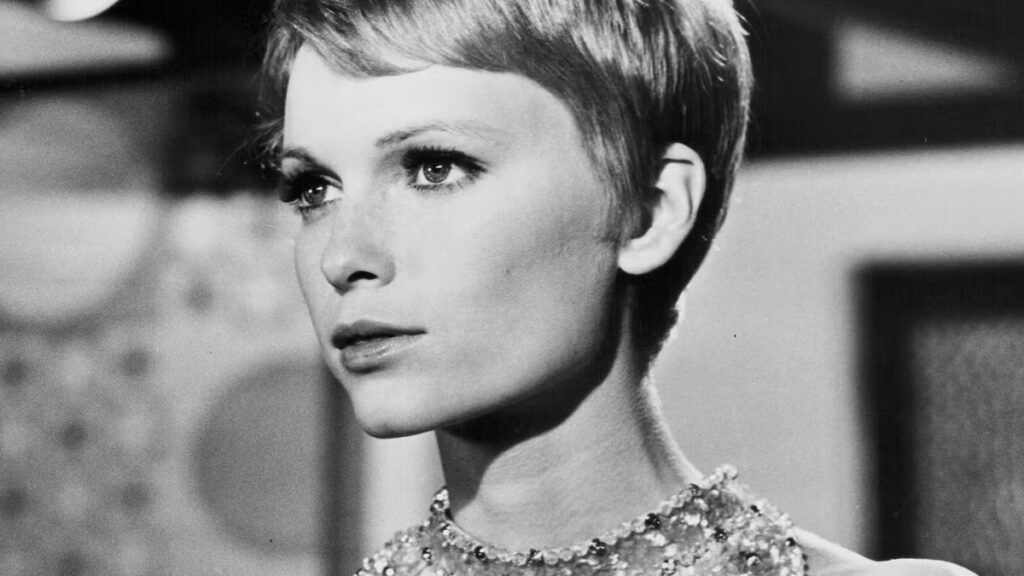
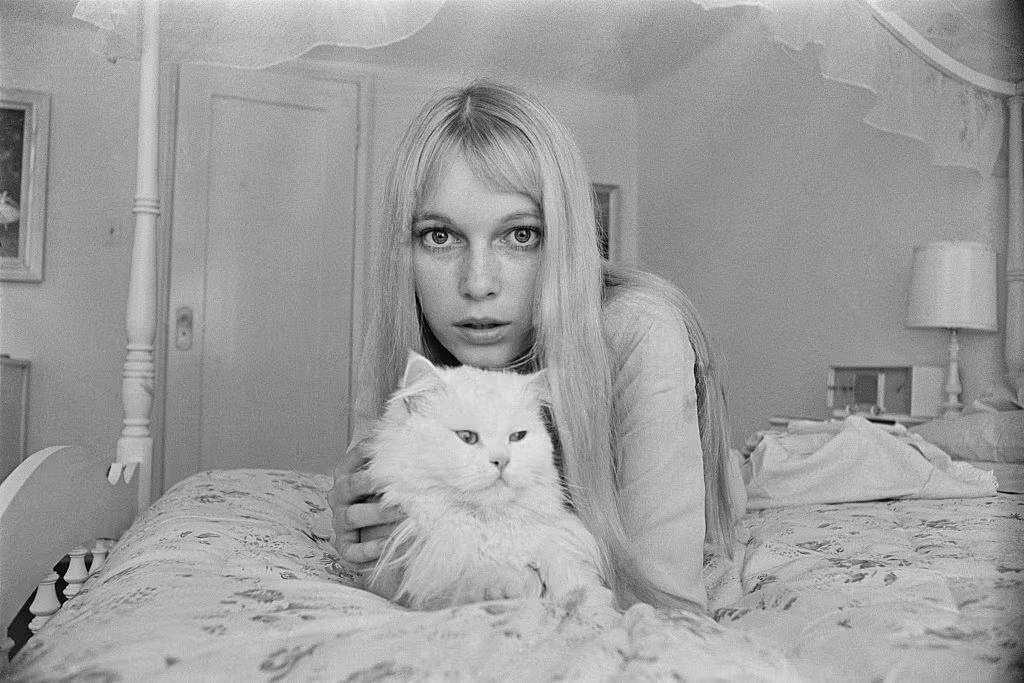
The short blonde haircut associated with Farrow is one of the most recognizable elements of Rosemary’s Baby. In the film, Rosemary credits hairstylist Vidal Sassoon for her new cut. Sassoon was also involved in the film’s hair styling and publicity, and the American Film Institute’s catalog records his work on a long hairpiece Farrow wore for earlier scenes. The publicity around the haircut helped link the actor, the hairstylist, and the film in the public imagination.
The style is worth looking at in the context of the film itself. Rosemary makes a visible change in her appearance and seems pleased with it. The reactions around her make the moment more revealing. There is a difference between how confidently she wears the cut and how much say others think they should have about it. Even without the surrounding publicity, it would be a memorable detail because the scene fits the larger story of a woman fighting to keep control of decisions about her own life. Outside the film, the crisp outline was distinctive enough to make an image of Farrow immediately recognizable. Inside it, the change has something to say about Rosemar
From Psychological Horror to Daisy Buchanan
In the 1974 adaptation of The Great Gatsby, Farrow played Daisy Buchanan opposite Robert Redford as Jay Gatsby. The film opens by showing Gatsby’s mansion and photographs of Daisy before the two characters share the screen. It establishes how much of Gatsby’s life is organized around an image of her. When Farrow appears as Daisy herself, the role asks her to play a specific person surrounded by people who have already decided what she means to them.
That makes Daisy an interesting character to watch closely. Her charm has consequences. She can make a conversation feel intimate, and the people around her can take that intimacy as a promise. The longer the story goes on, the more pressure there is on her to make choices that affect more than one life. Farrow’s light delivery can make an exchange seem casual just long enough for its implications to sink in. If you watch the film again, pay attention to what happens when Daisy’s attention shifts from one person to another. A scene can change direction with very little movement, which is one of the pleasures of watching Farrow in a story where so much is understood without being said.
A Different Kind of Suspense in Death on the Nile
Farrow joined Peter Ustinov, Bette Davis, Maggie Smith, Angela Lansbury, and other familiar faces in the 1978 adaptation of Agatha Christie’s Death on the Nile. A pleasure cruise becomes the setting for a murder investigation, and the ensemble gives viewers a great many people to watch. Farrow’s presence in that cast is part of the fun of revisiting the film. With so much happening around her, a look or a change of tone can invite the audience to pay closer attention without telling it what to think.
The film makes a satisfying companion to Rosemary’s Baby because it gives the viewer a different job. In Rosemary’s story, the audience spends much of the film working through its doubts with one person. In an ensemble mystery, you are free to move your suspicions from character to character. On a second viewing, when you know where the puzzle is going, you can spend more time looking at the performances. Watch who can draw attention in a crowded room and who seems to avoid it. Farrow knew when to let a moment sit, a useful skill in a mystery where a character can draw suspicion simply by letting a conversation hang in the air.
Two 1980s Performances That Show Her Range
In The Purple Rose of Cairo (1985), Farrow plays Cecilia, a woman who finds escape in movies. The story takes an improbable turn when a character steps off the screen and into her life. The premise depends on the audience believing in Cecilia’s pleasure at the movies before anything fantastic happens. Farrow gives that pleasure a recognizable quality. Anyone who has left a theater wishing to remain a little longer in the world they just visited can understand why Cecilia would want to believe in what she sees.
A year later, Farrow played the title character in Hannah and Her Sisters, which follows a family through overlapping relationships and personal crises. Hannah often seems like the person others can rely on, and the people around her are used to turning to her. Some of the tension comes from watching those expectations bear down on a woman who rarely announces what they cost her. Farrow lets Hannah’s competence and composure exist alongside her need to be understood. The two films make a good double feature. Cecilia is drawn toward a world that might give her a different life. Hannah has to work out what she wants within the life everyone already expects her to manage.

What the Headlines Leave Out About Her Career
Farrow’s personal life drew press attention from the time she was a young actress. She married Frank Sinatra in 1966, when she was 21, and they divorced in 1968. She later married composer and conductor André Previn. Her subsequent relationship with filmmaker Woody Allen was also widely covered, and she acted in 13 films he directed. The names and dates provide context for how often Farrow appeared in celebrity coverage over the years.
A career retrospective also gives readers room to look at decisions the headlines seldom explain. Farrow worked across genres and returned to the stage at several points in her life. Those choices make her filmography especially interesting to browse. After watching one of the performances for which she is best known, try something that sounds less familiar. In John and Mary, she plays opposite Dustin Hoffman in a story built around two people getting to know each other. In the animated The Last Unicorn, her performance is carried by her voice. Watching those smaller choices in different settings gives you a sense of an actor with more than one way to hold an audience’s attention.
From Peyton Place to Netflix’s The Watcher
Some viewers who missed Farrow’s earlier work encountered her in Netflix’s The Watcher in 2022. She played Pearl Winslow, a neighbor with a strong interest in the history of the house at the center of the series. The new residents encounter Pearl from the outside, which gives Farrow room to make an apparently ordinary conversation feel more complicated. A small change in how she addresses someone can leave you wondering how much Pearl knows and how much she has decided to share.
There is a satisfying connection between Farrow’s work in The Watcher and her earlier performance as Rosemary. The young woman in Rosemary’s Baby listens for clues about what people around her are hiding. Pearl is the person the new neighbors have to figure out. The shift lets Farrow use some of the same control over timing and expression from the other side of the encounter. It is also an easy entry point for a viewer who knows her mostly from the 1960s. Whether you come to the series before or after seeing her earlier films, the role shows how much she can do in a story that depends on people withholding pieces of information from each other.
Back on Broadway with Patti LuPone
In September 2024, Farrow and Patti LuPone opened Jen Silverman’s The Roommate at Broadway’s Booth Theatre. Farrow played Sharon, an Iowa woman who takes in a roommate. LuPone played Robyn, whose arrival interrupts Sharon’s familiar routines. The play gives the two performers time to develop the relationship through domestic conversation, awkward pauses, and the things each woman chooses to reveal about herself. It ran through December 15, 2024, and Farrow was nominated the following year for Best Performance by an Actress in a Leading Role in a Play. The American Theatre Wing’s Tony Awards®
A two-person play makes the response of one performer to the other especially important. When Sharon listens to Robyn, an audience can see her considering what to say and whether she dares say it. Farrow’s quiet timing, so familiar from her films, had a different kind of visibility here. Onstage, the viewer can choose whom to watch even when the other actor is speaking. That is one reason to look past the novelty of the first Tony nomination arriving at 80. The performance gave audiences a chance to watch Farrow listen, react, and rethink a moment in real time. timeout.com
What Mia Farrow Has Done Beyond Acting
UNICEF appointed Farrow a Goodwill Ambassador in 2000 and now lists her as an ambassador alumna. The organization describes her advocacy as focusing on children affected by armed conflict. It documents visits to Darfur and work to raise awareness and support for children affected by violence in places including Chad and the Central African Republic. That record gives readers a way to follow this part of her public life through specific work and places.
One image on UNICEF’s own profile shows Farrow greeting displaced mothers and their children near Boda, in the Central African Republic. The caption identifies the location and explains the context for the visit. It is a different sort of public image from a portrait taken at a premiere. You can look at it and learn where she was, whom she was meeting, and why the organization was drawing attention to their circumstances. For someone curious about what Farrow did away from film and television, UNICEF’s account offers a place to start. It identifies the communities that were the focus of her advocacy and gives that work a place alongside the acting credits that first made her widely known.
Mia Farrow at 81 and Where to Start With Her Work
Farrow turned 81 in February 2026. A look at her later career can begin with two documented performances in different forms. In The Watcher, she plays a neighbor whose motives are difficult to read. In The Roommate, she plays a woman whose own choices begin to surprise her. The first can be seen on screen. The Broadway run has ended, but the Tony nomination and interviews about the performance offer a record of what she was doing onstage. Both roles give a clearer picture of her recent public work than comparing an old promotional photograph with a newer portrait.
If you are choosing a film, start with the mood you are in. Rosemary’s Baby is the place to see how Farrow sustains tension through small changes in what a character believes. The Great Gatsby puts her inside a story about memory and the pressure of being idealized. Death on the Nile offers an ensemble mystery, while The Purple Rose of Cairo gives her one of her most inviting roles for anyone who loves movies about the movies. Hannah and Her Sisters is a good choice when you want to watch her within a family whose members see the same events very differently.
You can also watch two roles from opposite ends of the career. Try Peyton Place and The Watcher, or follow Rosemary’s Baby with Hannah and Her Sisters. A detail that seems small in one performance can stand out after you have watched another. Notice how Farrow lets a character delay an answer, or how the mood of a scene changes when she stops trying to keep the conversation comfortable. Those moments are easy to miss amid the famous hairstyles, marriages, and photographs. They are also the ones that make her work worth coming back to.