Uncategorized
My Parents Threw Me Out at 15 in a Freezing Storm Because My Sister Lied—3 Hours Later, Dad Arrived at the Hospital

**PART 3**
Whenever I asked questions, he became angry. Whenever I mentioned her, he changed the subject. Eventually, I stopped asking. But the birthday card had changed everything.
I remembered the first email I had sent her. I had written only three sentences.
Hello. My name is Myra. I think you might be my mother. I found a card with your name, and I want to know if you really remember me.
She had replied within minutes.
Myra, I have never stopped remembering you. Not for one single day.
After that, we began talking secretly. She told me about her work, her apartment, and the little garden she kept outside her kitchen window. She asked about school, my favorite books, and whether I was taking care of my diabetes. She never pressured me to call her Mom. She simply wanted to know me.
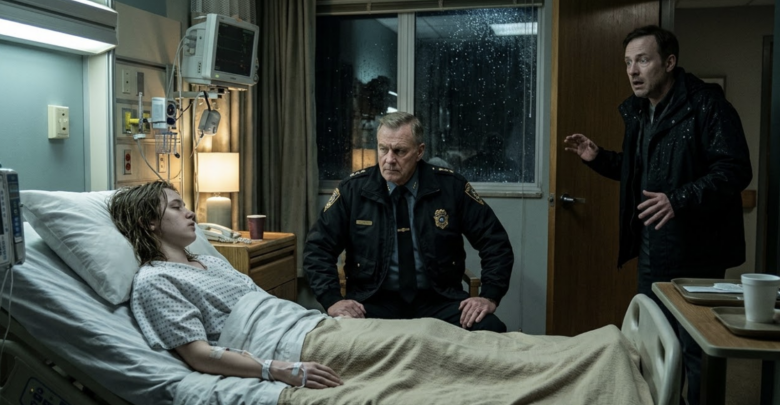
And now she was sitting beside my hospital bed.
“How did you find me?” I asked.
She wiped her cheeks.
“Your message came through while I was driving. I was already on my way when you sent me your location. When I couldn’t reach you again, I called the police. They told me an officer had found you and taken you to the hospital.”
I swallowed.
“I tried to walk to the gas station.”
“I know, sweetheart.”
“I didn’t have my insulin supplies.”
Her expression changed.
“Your father took your backpack?”
I nodded.
“And you hadn’t eaten?”
I started crying.
“I was hungry, Mom. The food was right there. I just wanted dinner.”
Elena lowered her head. For several seconds, she didn’t say anything. Then she stood up, leaned over, and kissed my forehead.
“Oh, Myra. You should never have had to beg for a meal.”
I cried harder. It wasn’t just because I had been cold or frightened. It was because someone finally understood how terrible that evening had been.
A nurse entered the room a few minutes later.
“Well, look who’s awake,” she said gently. “How are we feeling?”
“Confused,” I answered.
“That’s understandable. Your blood sugar dropped very dangerously low. The emergency team treated you, and we’ve been monitoring you closely. We’re going to keep checking your glucose and making sure you can eat safely.”
Elena immediately asked about my treatment plan. The nurse explained that I would need continued monitoring, particularly because I had taken my prescribed mealtime insulin without eating.
Elena listened carefully, asking questions and writing everything down. I watched her.
My father used to complain that managing my diabetes was exhausting. He said the appointments, prescriptions, food schedules, and medical supplies made our lives unnecessarily complicated.
But Elena didn’t look annoyed. She looked determined.
When the nurse finished, Elena asked whether she could bring me something to eat once the medical team approved it.
The nurse smiled.
“We’ll arrange something suitable for her treatment plan.”
Elena thanked her. Then she sat beside me again.
“There’s something I need to tell you.”
I looked at her.
“What?”
“The police have contacted your father.”
My stomach tightened.
“Is he coming?”
“I don’t know.”
I turned toward the window. For some reason, I still wanted him to come.
Even after everything. Even after he had locked the door behind me. A part of me was still that little girl who believed her father would eventually realize he had made a mistake.
“Did you tell him you’re here?” I asked.
Elena nodded.
“I told the officer I was with you.”
I hesitated.
“Is he angry?”
She looked at me for a long moment.
“I don’t know what he’s feeling, Myra. But I want you to understand something. Whatever happens tonight, you are not going back into a situation where you aren’t safe.”
I didn’t answer.
I was fifteen. I didn’t know what happened to children whose parents threw them out. I didn’t know whether I could choose where I lived. I didn’t even know whether my father could simply tell the hospital to send me home.
Before I could ask, someone knocked.
A police officer stepped into the room.
It was Officer Vern Brangan. I recognized him immediately. He was the man whose flashlight I had seen beside the highway.
“Well, look who’s feeling better,” he said.
I tried to smile.
“Thank you for finding me.”
He pulled a chair closer.
“You don’t need to thank me. I’m just glad we found you when we did.”
He spoke with Elena briefly, then turned toward me.
“Myra, I need to ask you a few questions about what happened tonight. Is that okay?”
I nodded.
He asked me to describe the dinner, the missing money, and what my father had said. I told him about Brin pointing at my backpack. I told him how Dad searched through my belongings. I told him about the granola bars. And finally, I told him about the door.
“He told me to get out,” I said quietly. “He said he couldn’t deal with me anymore.”
Officer Brangan’s expression became serious.
“Did you have a winter coat?”
“No.”
“Did you have your emergency glucose supplies?”
“No. My backpack was inside.”
“Did your father know you had already taken your mealtime insulin?”
I nodded.
“He saw me take it before dinner. He knows I have to eat.”
The officer exchanged a glance with Elena.
Then he asked another question.
“Has anything like this happened before?”
I hesitated. I wanted to say no. I wanted to protect my father. But I remembered the cold rain, my trembling hands, and how I had stood outside waiting for someone to open the door.
So I told the truth.
“Sometimes he takes my phone. Sometimes he says I’m too much trouble because of my diabetes. But he’s never made me leave before.”
Officer Brangan wrote something in his notebook.
“Thank you for telling me. That’s important.”
Then he explained that he was documenting the circumstances and that child welfare authorities would be contacted to help determine what needed to happen next.
Elena reached for my hand.
“You did the right thing by telling him.”
I looked down.
“I don’t want Dad to get in trouble.”
She took a breath.
“Sweetheart, you didn’t create this situation. You didn’t choose to be left outside. You didn’t choose to have diabetes. And you didn’t make anyone accuse you of stealing.”
I nodded, but I wasn’t convinced.
Then Officer Brangan said something that made me look up.
“There’s another matter we need to discuss.”
“What?”
“The money.”
My heart began beating faster.
“What about it?”
“Your father reported that $340 was missing from your home. He told officers he believed you had taken it.”
I shook my head immediately.
“I didn’t.”
“I understand. But there’s something unusual.”
He looked toward Elena.
“Before we arrived at the hospital, another officer went to your house to speak with your father and stepmother.”
“What happened?”
“Your sister was there.”
I felt my stomach tighten.
“Brin?”
“Yes.”
“What did she say?”
Officer Brangan closed his notebook.
“She told the officer something different from what she said at dinner.”
I stared at him.
“What do you mean?”
He paused.
“She said she wasn’t sure you had taken the money.”
I felt tears gather in my eyes.
“She knows I didn’t.”
Elena squeezed my hand.
The officer continued.
“She also said she had seen someone handling the cash box earlier that afternoon. But when the officer asked who, she became upset and refused to answer.”
I couldn’t believe what I was hearing.
For a moment, I felt something I hadn’t felt all evening.
Hope.
Maybe Brin was finally going to tell the truth. Maybe she would explain everything. Maybe Dad would understand that I hadn’t stolen anything.
But then Officer Brangan added something else.
“Your sister also told us that she had been instructed not to mention what she saw.”
I looked at him.
“By who?”
He didn’t answer immediately. Instead, he glanced at Elena. Then he looked back at me.
“She didn’t give us a name.”
I leaned back against the pillow. Something about that statement frightened me.
Brin had been crying at dinner. She had looked terrified when she pointed at me. And now she was refusing to explain what she knew.
I wanted to believe she had simply been scared. But I also remembered how she had looked at me when Dad opened the front door.
She hadn’t tried to stop him. She hadn’t told him the truth. And she had watched me walk into the storm.
Around nine o’clock, a hospital social worker arrived. Her name was Mrs. Patricia Hall.
She introduced herself and explained that she worked with families when children came to the hospital under concerning circumstances. She spoke gently and never made me feel like I was being interrogated.
She asked Elena about her relationship with me. Elena explained that she had been separated from my father for years and that she had tried repeatedly to maintain contact.
“Why didn’t you live with Myra?” Patricia asked.
Elena looked down.
“Because her father told me that Myra didn’t want to see me.”
I turned toward her.
“What?”
She looked at me.
“He told me you were angry with me. He said you didn’t remember me and that contacting you would only upset you.”
I stared at her.
“But I wrote to you.”
“I know. That’s why I kept hoping we could eventually rebuild our relationship.”
“Did you ever try to visit?”
Her eyes filled again.
“Several times.”
“Why didn’t I know?”
Elena looked at Patricia before answering.
“Your father refused to let me see you. There were arguments, legal disagreements, and a lot of things I wish I could have handled differently. I never wanted you to feel caught between us.”
I thought about the birthday card. The old photographs. The messages she had sent.
Suddenly, several things from my childhood began making sense.
I remembered asking Dad why my mother never called on my birthday. He had told me she was too busy.
I remembered asking whether I could visit her someday. He had said she wouldn’t want me around.
I remembered once finding a photograph of a woman holding a baby. Dad had snatched it from my hands and told me to stop digging through old things.
Now I knew why.
“Did you leave me?” I whispered.
Elena shook her head.
“No, sweetheart. I never stopped trying to be part of your life.”
She reached into her handbag and removed a small envelope. It was worn around the edges.
Inside was a collection of birthday cards. One for every year.
Eleven cards. Twelve cards. Thirteen cards. And one for my fifteenth birthday.
My name was written on every envelope in the same handwriting I had seen in the glove compartment.
I touched them carefully.
“You kept these?”
“I wrote them every year.”
“Why didn’t you send them?”
“Your father returned several of the letters I mailed. After that, I kept them because I hoped one day I could give them to you myself.”
I couldn’t speak.
I had spent years believing my mother had forgotten me. Meanwhile, she had been writing birthday cards that never reached my hands.
Patricia gave us a few moments alone. Elena sat beside me, holding my hand.
And for the first time in years, I didn’t feel like I had to choose between loving my father and wanting to know my mother.
I could love the father I remembered while still acknowledging what he had done. I could miss the family I wanted while accepting that I needed protection.
At approximately 10:15 p.m., the hospital room door opened again.
A familiar voice came from the hallway.
“Where is she?”
My entire body stiffened.
Dad.
I looked at Elena. She stood immediately.
A moment later, my father entered the room. His hair was wet, and his jacket was partially unzipped. His face looked exhausted.
Behind him stood Colleen.
Neither of them looked at me first. They looked at Elena.
Dad stopped walking. His eyes widened. For several seconds, he simply stared. Then his hands began shaking.
“You…” he whispered.
Elena stood beside my bed.
“Hello, Richard.”
Dad took one step backward.
“You can’t be here.”
Elena didn’t move.
“Your daughter nearly died tonight. I think I have every reason to be here.”
Dad’s face went pale.
Colleen looked between them.
“What is she talking about?”
My father ignored her. He stared at Elena as though he had just seen someone return from the dead.
“How did you find her?”
“She called me.”
“She called you?”
“Yes. The daughter you told me wanted nothing to do with me.”
Dad’s mouth opened, but no words came out.
I looked at him. For the first time that night, I wanted him to look at me.
Not at Elena. Not at Colleen. At me.
“Dad?”
He finally turned.
“Myra…”
His voice sounded different now. Smaller.
He walked toward my bed.
“Are you okay?”
I looked at the medical monitor beside me. Then at the blanket covering my legs. Then at the father who had sent me into freezing rain.
“I’m alive,” I answered.
His face crumpled.
“Sweetheart, I didn’t know it would get this bad.”
I felt something break inside me.
“You knew I took my insulin.”
He looked away.
“I was angry.”
“You knew I didn’t have my backpack.”
“I thought you would stay on the porch until you calmed down.”
“It was freezing.”
He rubbed his forehead.
“I didn’t think you would walk away.”
I stared at him.
“Where was I supposed to go, Dad?”
He didn’t answer.
I continued.
“I was hungry. I was shaking. I couldn’t think properly. I tried to walk to the gas station because I didn’t know what else to do.”
His eyes became wet.
“I know. I’m sorry.”
But before I could respond, Elena spoke.
“Richard, do you understand what the doctors told us?”
Dad nodded.
“They said her blood sugar was low.”
“Twenty-eight,” Elena replied. “She was found unconscious beside a highway.”
He looked down.
“Yes.”
“She is fifteen years old. She depends on adults to help keep her safe. You knew she had taken insulin, and you sent her outside without food, medication, or a winter coat.”
“I said I was sorry.”
“An apology doesn’t erase what happened.”
Colleen finally stepped forward.
“Can everyone please stop acting like Richard deliberately tried to hurt her? She was being disrespectful, and there was money missing.”
I turned toward her.
“I wasn’t disrespectful.”
She crossed her arms.
“You were arguing about the granola bars.”
“They’re my emergency snacks.”
“You always have something in that bag.”
I couldn’t believe she was still talking about my backpack.
Officer Brangan, who had returned to the room, stepped forward.
“Ma’am, this is not the time to argue with a hospitalized child.”
Colleen fell silent.
Dad looked at the officer.
“Can I speak to my daughter alone?”
Officer Brangan answered calmly.
“Not right now. We need to finish documenting what happened, and the social worker will be discussing the safety arrangements.”
Dad’s expression hardened.
“She’s my daughter.”
“And she’s a minor who was found in a medical emergency after being left outside in dangerous weather.”
The room became quiet.
Then Dad looked at Elena again.
“She doesn’t belong with you.”
Elena’s expression changed.
“I am her mother.”
“You walked away from this family.”
“No, Richard. You made sure I couldn’t be part of it.”
“That’s not true.”
Elena reached into her handbag. She pulled out a thick folder.
I recognized it immediately. It was the same folder she had shown me during one of our library meetings.
Inside were copies of letters, emails, and court documents.
She placed it on the small table beside my bed.
“Do you want to explain these?”
Dad stared at the folder.
Colleen looked confused.
“What is that?”
Elena opened it.
“Letters I sent asking to see Myra. Messages requesting updates about her health. Records of returned mail. And copies of the communication in which Richard told me that Myra wanted no contact with me.”
Dad’s jaw tightened.
“That was private.”
“You made decisions about our daughter without allowing her to know the truth.”
“She was a child.”
“Exactly. She was a child. She deserved both parents to protect her.”
Dad looked toward me.
“Myra, don’t listen to all this. There are things you don’t understand.”
I swallowed.
“Then explain them.”
He looked surprised.
I continued.
“Why did you tell me Mom abandoned me?”
He opened his mouth. Nothing came out.
“Why did you hide her birthday cards?”
His eyes shifted toward the floor.
“Why did you tell me she didn’t want to see me?”
He finally whispered, “I was trying to protect you.”
“From what?”
He had no answer.
Colleen suddenly interrupted.
“Richard, we need to go. This isn’t helping anything.”
But Dad didn’t move. He was staring at the folder.
And I noticed something strange.
He seemed less frightened by the fact that Elena was sitting beside me than by the documents she had brought.
It made me wonder what else was inside.
Then Elena removed one final sheet. It was a copy of an old legal agreement.
She placed it on top of the folder.
Dad looked at it. His hands began shaking again.
“Where did you get that?” he whispered.
Elena looked directly at him.
“From the attorney who handled our separation.”
Dad swallowed.
“That agreement was supposed to remain between us.”
“It remained between us for years. But Myra deserves to know the truth now.”
I looked from one adult to another.
“What truth?”
Elena took a breath.
“Richard, you need to tell her why you were so determined to keep me away.”
Dad shook his head.
“Not here.”
“Then where?”
“Elena, please.”
For the first time since entering the room, his voice sounded genuinely frightened.
And then Elena said something I never expected.
“Tell her about the money you received when she was eleven.”
Dad went completely still.
Colleen slowly turned toward him.
“What money?”
He looked at Elena. Then at me.
I felt my heart begin to race.
“What money are you talking about?”
Elena folded her hands.
“When Myra was diagnosed with type 1 diabetes, there was a financial arrangement made to help cover her medical expenses and ensure she had access to the treatment she needed.”
I stared at her.
“What arrangement?”
Dad shook his head.
“That’s enough.”
Elena ignored him.
“Your maternal grandparents established a medical trust for you, Myra. It was intended to support your healthcare, education, and future needs.”
I had never heard of it. Not once.
“What happened to it?”
Elena looked at my father.
“That’s what I’ve been trying to find out.”
Colleen’s face had lost its color.
Dad stepped toward the bed.
“You’re not telling her anything else tonight.”
Officer Brangan immediately moved between us.
“Sir, step back.”
Dad stopped.
I looked at the document on the table. Then I looked at my father.
“Dad…”
He wouldn’t meet my eyes.
“Did you take my money?”
The question hung in the air.
Nobody spoke.
And just as Dad finally opened his mouth to answer, Officer Brangan’s radio crackled.
A second officer had arrived at the farmhouse.
He had found something in the kitchen.
Something that might explain exactly where the missing $340 had gone.
And, according to the message coming through the radio, it wasn’t the only thing he had discovered.
I looked at my father.
For the first time in my life, he seemed to have absolutely nothing left to say.
**PART 4**
The radio crackled again.
Officer Brangan stepped toward the hallway to listen more carefully. I couldn’t hear everything, but I caught a few words.
“Cash box…”
“Kitchen drawer…”
“Additional documents…”
Then he turned toward the room.
“Richard, I need you to come with me for a moment.”
My father didn’t move.
“What did they find?”
“The officer at your residence would like to speak with you.”
“About what?”
“Sir, I’d prefer to discuss that outside.”
Colleen looked increasingly uncomfortable.
“Richard, what’s happening?”
He ignored her.
Instead, he looked at Elena.
“This is your fault.”
Elena didn’t raise her voice.
“No, Richard. This started when you decided that a fifteen-year-old girl was easier to blame than to protect.”
Dad turned toward me.
“Myra, please. You need to understand that things aren’t always what they look like.”
I stared at him.
“Then why didn’t you explain them before you threw me outside?”
He looked down.
For a moment, I thought he might finally tell me the truth.
But Officer Brangan interrupted.
“Sir, we need to go.”
Dad reluctantly followed him into the hallway.
Colleen remained in the room. She stood near the foot of my bed, looking at the medical equipment as though she suddenly didn’t know what to do with herself.
I didn’t want to speak to her.
But I had one question.
“Did you know about the money my grandparents left me?”
She looked at me.
“What?”
“The medical trust.”
Her expression changed.
“I don’t know anything about that.”
Elena watched her carefully.
“Are you sure?”
Colleen’s lips tightened.
“I said I don’t know.”
Then she picked up her handbag.
“I need to call someone.”
She walked into the hallway.
Elena sat beside me again.
I looked at her.
“Mom, what is a medical trust?”
She took my hand.
“Your grandparents loved you very much. When you were born, they started saving money for your future. After your diagnosis, they made sure additional funds were available for your medical needs.”
“How much?”
She hesitated.
“I don’t know the exact balance. I haven’t had access to the complete account records for years. But the original documents listed an initial contribution of $85,000, with additional deposits over time.”
My eyes widened.
“Eighty-five thousand dollars?”
“Yes.”
“Where is it now?”
“That’s what needs to be investigated.”
I stared at the ceiling.
My father had spent years complaining about how expensive my medical care was. Sometimes he reminded me how much my prescriptions cost. Sometimes he said my condition made everything harder for the family.
I remembered one afternoon when my blood glucose monitor stopped working. Dad had told me we couldn’t afford a replacement immediately. I had gone three weeks using an older device while trying not to bother him.
I remembered asking for new glucose tablets. He told me to stop wasting money on unnecessary things.
And all that time, apparently, there had been money specifically intended to help me.
I couldn’t understand it.
“Why didn’t you tell me?”
Elena’s eyes filled.
“I thought you knew. When I discovered that you hadn’t received any of my letters, I started investigating. But I couldn’t get complete information because I wasn’t the trustee.”
“Who was?”
She looked toward the door.
“Your father.”
I closed my eyes.
It was becoming harder to breathe normally. Not because of my blood sugar. Because every answer seemed to reveal another question.
About twenty minutes later, Officer Brangan returned. He wasn’t alone.
A woman in a dark blue jacket accompanied him. She introduced herself as Detective Marissa Cole.
She was calm, professional, and carried a small notebook.
“Hello, Myra. I’m sorry to interrupt your recovery.”
I nodded.
She explained that she had been called to assist with the investigation after the officers discovered additional evidence at the farmhouse.
“Your sister Brin has spoken with us again,” she said.
I immediately sat up slightly.
“Is she okay?”
“She’s physically fine. She’s with a trusted adult while we sort out the situation.”
“What did she say?”
Detective Cole exchanged a glance with Officer Brangan.
“She admitted that she lied about seeing you take the money.”
My chest tightened.
I had suspected it. But hearing it confirmed still hurt.
“Why?”
The detective continued.
“She told us she had taken the $340 herself.”
I stared at her.
“Brin took it?”
“Yes.”
I didn’t know what to say.
“Where was it?”
“She had hidden it inside an old winter boot in the laundry room.”
I looked toward Elena.
The missing money had never been in my backpack. It had never been in my room. It had been hidden inside our own house.
“Why did she blame me?”
Detective Cole opened her notebook.
“She said she was afraid of what would happen if your stepmother discovered the money was missing. According to her statement, she had taken it because she wanted to buy a tablet and some other things online.”
I shook my head.
“But why point at me?”
The detective paused.
“She said Colleen had previously accused you of stealing food and hiding things in your backpack. Brin believed that if she suggested you had taken the money, your father would believe her.”
I felt tears gathering.
“So she knew he would blame me?”
“According to what she told us, yes.”
I looked away.
Brin was my little sister. We had shared a bedroom when we were younger. I had helped her with homework. I had covered for her when she broke a kitchen vase.
When she was afraid of thunderstorms, she used to climb into my bed.
I had never imagined she would do something like this.
“Did she say she was sorry?” I whispered.
Detective Cole nodded.
“She has been crying.”
That didn’t make me feel better.
I didn’t want her to cry. I wanted her to have told the truth before I ended up beside a highway.
Then the detective continued.
“There is something else.”
I looked at her.
“Brin told us that Colleen had discovered the missing money earlier in the afternoon. She said Colleen threatened to tell your father that she had stolen it unless she explained where it had gone.”
My stomach tightened.
“Did Colleen know Brin had taken it?”
“Brin says she did.”
Elena slowly sat straighter.
“Then why did Colleen accuse Myra?”
Detective Cole answered carefully.
“That is one of the questions we’re investigating.”
I thought about the dinner table. The metal cash box. Colleen’s trembling voice. The way she had stared at the empty container while Dad accused me.
Suddenly, I remembered something.
“Wait.”
Everyone looked at me.
“Colleen said she counted the money herself.”
Detective Cole nodded.
“Yes.”
“But she didn’t look surprised when Brin pointed at me. She just sat there.”
The detective wrote something down.
“That’s useful information.”
I swallowed.
“Could I have some water?”
Elena immediately reached for the cup.
The detective gave us a few minutes.
But before leaving, she said something that changed the direction of the entire conversation.
“We also found a folder in the kitchen drawer. It contains financial records connected to your grandparents’ trust.”
Elena became very still.
“Which records?”
“Bank statements, correspondence, and several withdrawal confirmations.”
I looked at her.
“What does that mean?”
Detective Cole answered.
“It means we have reason to believe money intended for your care may have been used for other purposes. We are preserving the documents and referring the financial questions for further investigation.”
I looked toward the hallway.
My father was still outside.
And for the first time, I began to understand why he had looked so frightened when Elena entered my hospital room.
He wasn’t just afraid of losing an argument.
He was afraid of what might finally come to light.
The next morning, I woke to sunlight coming through the hospital curtains.
My blood sugar had stabilized overnight, and the medical team was discussing my discharge plan.
Elena had fallen asleep in the chair beside my bed. Her coat was folded over her knees, and one hand rested near mine.
I watched her for a while.
She looked tired.
But she hadn’t left. Not once.
When she woke, she immediately checked whether I needed anything.
“Good morning, sweetheart.”
“Good morning.”
“How are you feeling?”
“Better.”
She smiled.
“That’s good.”
I hesitated.
“Mom?”
“Yes?”
“Will you still be here when I leave?”
Her expression softened.
“Of course.”
I looked down.
“Even if Dad gets angry?”
Elena took my hand.
“Especially if he gets angry. You don’t have to earn my love by agreeing with everyone.”
I started crying quietly.
She moved closer and hugged me.
For years, I had thought being loved meant being easy to take care of. I thought I had to be quiet about my diabetes. I thought I had to avoid asking for expensive things. I thought I had to apologize whenever my medical needs interrupted someone’s plans.
Now someone was telling me I didn’t have to apologize for being a child who needed care.
It was a feeling I didn’t know how to describe.
At eleven that morning, Detective Cole returned with an update.
She explained that the investigation at the farmhouse had revealed several important details.
The first was that the $340 had been recovered.
Brin had admitted taking it, and the money was being returned.
The second involved the medical trust.
Investigators had identified several withdrawals from the account over the previous years. Some were recorded as medical expenses. Others were described as household costs. A few were transfers into an account that appeared to be connected to Colleen.
The records required further examination, and Detective Cole made it clear that no final conclusions had been reached.
But Elena looked deeply troubled.
“How much?” she asked.
Detective Cole checked her notes.
“The statements show approximately $31,600 in withdrawals that have not yet been supported by clear documentation showing they were spent on Myra.”
I stared at her.
Thirty-one thousand six hundred dollars.
I had never seen that much money in my life.
“Does that mean Dad stole it?”
“Not necessarily. We need to establish what each transaction was for, who authorized it, and whether it complied with the trust agreement.”
Elena nodded.
“I understand.”
I looked at the detective.
“Can I ask something?”
“Of course.”
“Did that money belong to me?”
She answered carefully.
“It was held for your benefit under the terms of the trust. The exact rights and responsibilities depend on the legal documents.”
I looked at Elena.
She squeezed my hand.
“We’ll get the documents reviewed by an attorney, sweetheart. You don’t need to solve everything today.”
Then Detective Cole mentioned something else.
“Your father has agreed to provide additional information about the account.”
I almost laughed.
Of course he had.
He hadn’t wanted to explain anything when I was standing in the kitchen. He hadn’t wanted to answer when I was walking into the rain. But now that investigators had found documents, suddenly he was willing to talk.
I didn’t know whether to feel angry or relieved.
Perhaps both.
That afternoon, my father asked to speak with me.
I initially said no. Then I changed my mind.
Not because I wanted to forgive him. Because I wanted to hear what he had to say.
The hospital social worker remained in the room, and Elena sat beside me.
Dad entered slowly. He looked older than he had the night before. His eyes were red, and he had barely shaved.
He stood near the foot of the bed.
“Myra.”
I didn’t answer.
He cleared his throat.
“I’ve been thinking about what happened.”
I looked at him.
“Okay.”
“I made a mistake.”
I waited.
“I shouldn’t have sent you outside.”
That was the first honest sentence I had heard from him.
But it wasn’t enough.
He continued.
“I was angry about the money. Colleen told me you had been hiding things. Brin said she had seen you with the cash.”
“She said she had seen my snacks.”
He looked down.
“Yes.”
“And you believed her.”
“I did.”
“Without finding the money?”
He rubbed his forehead.
“I thought you were lying.”
I stared at him.
“Why?”
He didn’t answer.
I continued.
“Why was it so easy for you to believe I stole something?”
He finally looked at me.
“Because things have been difficult at home.”
I felt my chest tighten.
“Because of my diabetes?”
“No. That’s not what I meant.”
“But you always say my diabetes makes everything difficult.”
He looked toward Elena.
She remained silent.
I continued.
“I have to check my blood sugar. I have to take medicine. I have to eat on time. I didn’t choose any of that, Dad.”
He nodded.
“I know.”
“Then why do you make me feel like I’m doing something wrong?”
His eyes filled.
“I don’t know.”
For a moment, I saw the father I remembered. The one who used to carry me on his shoulders at the county fair. The one who taught me to ride a bicycle. The one who stayed awake beside me when I was first diagnosed.
I wanted that man back.
But I couldn’t pretend the man standing in front of me hadn’t locked the door.
“I was scared last night,” I whispered.
Dad’s lips trembled.
“I know.”
“No, you don’t.”
I looked directly at him.
“I was scared because I couldn’t feel my hands. I was scared because I couldn’t remember how to type on my phone. I was scared because I thought I might fall asleep beside the road and nobody would find me.”
He covered his face.
“I am sorry, Myra.”
I swallowed.
“Why didn’t you come looking for me?”
He lowered his hands.
“I thought you had gone to the gas station.”
“How long did you wait?”
He hesitated.
“I don’t know.”
“Did you call me?”
He didn’t answer.
“Did you even check whether I was safe?”
His silence answered for him.
I turned toward the window.
Something inside me had finally stopped waiting for the answer I wanted.
Then I heard him say:
“I never wanted you to get hurt.”
I looked back.
“But you didn’t make sure I was safe.”
He began crying.
And for once, I didn’t rush to comfort him.
The following week, I stayed with Elena in her apartment while the child welfare agency reviewed the situation.
The arrangement was temporary at first, but everyone agreed that it was safer for me to remain there while the investigation continued.
Her apartment was small. It had two bedrooms, a narrow kitchen, and a balcony with several flowerpots.
But it was warm.
There was a little table near the window where I could do my homework. And there was always food in the refrigerator.
On my first evening there, Elena prepared chicken soup and baked potatoes. She checked with me about my meal schedule and made sure I had everything I needed for my diabetes.
I sat at the kitchen table, watching her move around the room.
“Mom?”
She turned.
“Yes?”
“Why do you keep asking whether I’m hungry?”
She smiled sadly.
“Because I want to make sure you’re okay.”
I looked at my bowl.
“Nobody used to ask.”
She stopped stirring the soup.
Then she walked over and kissed the top of my head.
“Well, someone should have.”
That night, I slept for almost ten hours.
For the first time in a long time, I didn’t wake up worrying about whether I had annoyed someone.
Three weeks later, the investigation into the trust became more complicated.
An attorney appointed to review the records discovered that the original trust agreement had included specific restrictions.
The money could be used for Myra’s medical care, education, and certain living expenses directly benefiting her. It could not simply be treated as ordinary household income.
The attorney requested additional bank statements and receipts.
Several expenses had proper documentation. Others did not.
There were payments for household renovations, vehicle expenses, and purchases that appeared unrelated to my care.
Investigators also discovered that a number of transfers had been made into an account controlled by Colleen.
When she was asked about those transfers, she claimed Richard had told her the money was available for family expenses.
Richard disputed that explanation.
The two began blaming each other.
But I didn’t want to be involved in their arguments. I was tired of adults turning my life into something they could use against each other.
The attorney eventually explained that the financial review would continue and that any money improperly withdrawn might have to be restored to the trust.
I didn’t understand every legal detail.
I only understood one thing.
The money my grandparents had set aside to help me had not been properly protected.
And that was another thing I would never have known if I had stayed silent.
Brin contacted me almost a month after the night of the storm.
She sent a message.
Myra, can we talk?
I stared at the screen for a long time.
I didn’t know what to say.
Part of me wanted to ignore her. Another part remembered the little girl who used to climb into my bed during thunderstorms.
Finally, I replied.
Maybe. But I’m not ready to pretend everything is okay.
She answered almost immediately.
I understand. I’m sorry.
I didn’t respond.
I wasn’t ready.
Over time, Brin and I began speaking again. It wasn’t easy, and it didn’t happen all at once. She eventually explained more about why she had taken the money and why she had blamed me.
I listened, but I didn’t excuse what she had done.
She was still my sister. But trust had to be rebuilt.
My father also continued trying to contact me. Sometimes he sent messages asking how I was doing. Sometimes he apologized. Sometimes he asked whether I would consider coming home.
I didn’t go back.
The child welfare agency continued reviewing the situation, and the adults involved worked through the necessary arrangements to keep me safe.
Months passed.
I returned to school. I continued counseling. I learned to manage my diabetes with more confidence, and I slowly began to feel like a normal teenager again.
One afternoon, Elena found me sitting at the kitchen table, looking through the birthday cards she had kept for me.
She sat beside me.
“Are you okay?”
I nodded.
“I just wish I had known about you sooner.”
She took my hand.
“I wish that too.”
I looked at the cards.
“You never forgot me.”
“Never.”
I leaned against her shoulder.
For the first time, I understood that someone could love you even when they weren’t allowed to be part of your everyday life.
And I also understood that love wasn’t enough if it didn’t come with protection, honesty, and care.
My father eventually asked to meet with me again.
This time, I agreed.
We met in a quiet room with the social worker present. He looked nervous.
He apologized again. He said he was ashamed of what had happened and that he understood why I needed time.
I listened.
But I didn’t promise to return home.
I didn’t promise to forgive him.
I simply told him what I needed.
“I need you to stop making me feel guilty for being sick. I need you to stop blaming me when something goes wrong. And I need you to understand that I’m not responsible for keeping everyone happy.”
He nodded.
“I understand.”
I hoped he did.
But I had learned that words were only the beginning.
I didn’t hate him. I still remembered the good parts of my childhood. I still wished things could have been different.
But I also knew I deserved to feel safe.
**THE END: THE NIGHT I STOPPED WAITING FOR SOMEONE TO OPEN THE DOOR**
Two years passed.
I turned seventeen.
My grades improved, and I became more confident managing my diabetes. I continued attending counseling.
Brin and I slowly rebuilt our relationship. My father and I maintained limited contact, with boundaries that were respected and supported by the people responsible for my safety.
I didn’t move back to the farmhouse.
I didn’t need to.
Elena and I had built a home together.
It wasn’t a large house. It wasn’t fancy.
But it was a place where nobody made me feel guilty for needing food, medicine, or help.
One winter evening, almost two years after the storm, I stood beside the kitchen window watching freezing rain fall over the street.
For a moment, I remembered everything.
The steaming pot roast. The metal cash box. Brin’s trembling finger. My father’s angry voice. The door locking behind me.
Then I remembered the headlights. The police officer’s flashlight. The warm hospital blanket. And my mother’s hand holding mine.
Elena walked into the kitchen carrying two cups of hot chocolate.
“Everything okay?”
I smiled.
“Yes.”
She followed my gaze toward the window.
“Thinking about that night?”
I nodded.
She placed one cup in front of me.
“I still wish I could have reached you sooner.”
I looked at her.
“You came when I called.”
She smiled sadly.
“I wish you had never needed to call.”
I reached for her hand.
“Me too.”
We stood quietly for a moment.
Then I said something I had been thinking about for a long time.
“Mom?”
“Yes, sweetheart?”
“Do you think people can have more than one chance to become better?”
She considered the question.
“I think people can change. But real change takes more than saying the right words. It takes consistent actions.”
I nodded.
“That’s what I think too.”
She kissed my forehead.
Then she returned to the living room.
I stayed beside the window a little longer.
I thought about the fifteen-year-old girl who had walked into the freezing rain believing she had nowhere to go.
I wished I could travel back in time and sit beside her.
I would tell her that she wasn’t difficult. She wasn’t expensive. She wasn’t a burden. She wasn’t responsible for keeping adults happy.
She was a child who deserved protection.
I would tell her that one person’s rejection did not determine her worth.
And most importantly, I would tell her that asking for help was not weakness.
That night, I opened my journal and wrote:
I used to believe family meant staying quiet, forgiving quickly, and accepting whatever happened because the people hurting you were related to you.
Now I understand that family is not simply about sharing a last name or living under the same roof.
Family is the person who makes sure you are safe.
Family is the person who listens when you tell the truth.
Family is the person who comes looking for you when you are lost.
And sometimes, the people who give you that kind of love are not the people you expected.
I closed my journal.
Then I walked into the living room.
Elena was sitting on the couch, reading a book.
She looked up and smiled.
“Ready for bed?”
“Almost.”
I sat beside her and rested my head on her shoulder.
For years, I had waited for someone to open the door.
I had waited for my father to believe me, for my stepmother to defend me, and for my sister to tell the truth.
But that night, I finally understood something.
I didn’t have to spend the rest of my life standing outside a door, hoping someone would decide I deserved to come in.
I could build a home where I was always welcome.
And I had.
Because the greatest lesson I learned from that freezing night was this:
You should never have to prove that you deserve love, especially to the people who are supposed to protect you.
Sometimes, the bravest thing you can do is walk away from the people who keep hurting you and build a life where you finally feel safe.
And sometimes, the person who saves you isn’t the one who raised you.
It’s the one who never stopped loving you.
**THE END.