News
Men Tease Her Height for 30 Years – When She Gets Pregnant, Her MIL Offers $100,000 to Leave the Baby at the Hospital
Men Tease Her Height for 30 Years – When She Gets Pregnant, Her MIL Offers $100,000 to Leave the Baby at the Hospital

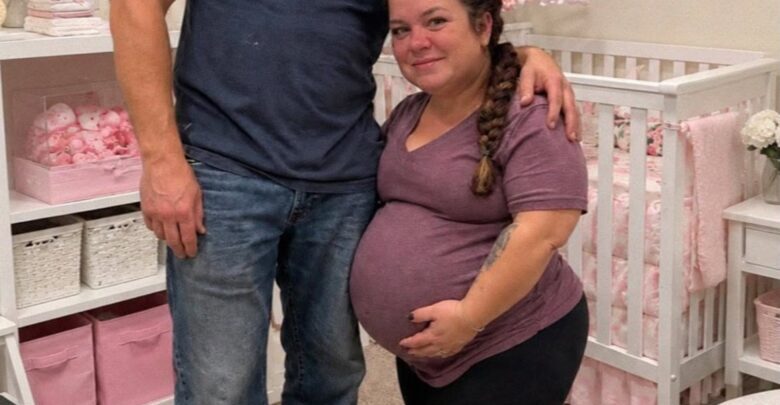
My Mother-in-Law Questioned My Ability to Be a Mother—Then a Family Secret Came to Light
This is a fictional story about disability, family boundaries, and the responsibility to face the past without controlling someone else’s future.
A Question at Sunday Dinner
“Have you really thought about what raising a child will involve?”
My mother-in-law, Patricia, asked while we were setting the table for Sunday dinner.
I was three months pregnant.
“Yes,” I said, placing a plate beside her. “Michael and I have thought about it.”
She glanced toward my stomach.
“I mean with your condition, Sarah.”
I was born with dwarfism. I had spent much of my life answering questions about my body that other people considered reasonable simply because they were curious.
But this was not curiosity.
“We’ve discussed my care with my doctors,” I said. “If you want to know how I’m feeling, you can ask me that.”
Before she answered, Michael walked into the kitchen.
“Everything okay?”
Patricia smiled.
“Of course. I was just asking about the baby.”
I looked at my husband, then back at her.
I did not want an argument over dinner. But I wished she had repeated the question exactly as she had asked it.
The Life I Had Already Built
By then, I was accustomed to people underestimating me.
Sometimes it happened in small ways. Someone spoke to my companion instead of addressing me. A stranger offered help and became offended when I declined.
Other experiences had been more painful.
At school, I had endured jokes about my height. As an adult, I sometimes found that people were more interested in asking about my body than learning anything about my work, friendships, or plans.
Still, I had built a life I valued.
I worked, maintained my home, and had friends who knew when I wanted help and when I wanted someone to stop rearranging things without asking.
When I met Michael, what impressed me was not that he behaved like a rescuer.
He asked questions and listened to the answers.
On our first date, we talked about a book we both disliked, his terrible attempt at growing tomatoes, and the project keeping me busy at work.
When he called the following morning, I was pleased.
When we married two years later, I felt understood.
Planning for Our Family
We approached the possibility of having a child carefully.
My particular medical circumstances required individual advice, so we met with specialists and discussed the care I would need.
Those conversations were private, detailed, and sometimes difficult. Michael and I asked questions, considered our options, and made decisions together.
When I discovered I was pregnant, I stood in our bathroom holding the test until Michael knocked.
“Sarah?”
I opened the door and handed it to him.
He looked at it, then at me.
“Really?”
“Really.”
He laughed before he started crying.
A few months later, we chose the name Charlotte.
Michael painted the nursery pale yellow. I organized the drawers, then reorganized them because I could never remember where I had put the smaller clothes.
We were excited.
We were also nervous.
Like any major change, becoming parents gave us practical things to learn. We expected to ask for help sometimes. That did not make the decision less ours.
Concern That Never Became Support
Patricia’s questions continued.
When Michael showed her an ultrasound picture, she asked whether we were certain about our plans.
When she visited the nursery, she stood beside the crib without smiling.
“You’ve bought so much already.”
“We’re getting ready,” I said.
“People become attached to an idea.”
I waited.
“What idea?”
She adjusted a folded blanket.
“Nothing. I’m only concerned.”
Concern could have looked like asking whether I needed a meal after an appointment. It could have meant listening when we explained our plans.
Instead, she kept returning to whether I should be a mother at all.
Eventually, Michael addressed it directly.
“Mom, you don’t have to understand every detail of our decisions. But you do have to speak to Sarah respectfully.”
Patricia said she would.
For a while, I hoped the conversation had helped.
The Envelope at Lunch
During my seventh month of pregnancy, Patricia invited me to lunch.
She specifically asked whether I could come alone.
I thought perhaps she wanted to apologize without worrying about Michael’s reaction.
For the first few minutes, we discussed ordinary things.
Then she left the table and returned with an envelope.
“I’ve been thinking about how to make this easier.”
Inside was a check for one hundred thousand dollars.
I looked up.
“What is this?”
“A chance to start again.”
“I don’t understand.”
She folded her hands.
“When the baby comes, you could let someone else take responsibility. You wouldn’t have to struggle.”
The room seemed to become very still.
“Are you offering me money to give up my daughter?”
“I’m offering you security.”
“Charlotte is not a problem you can solve with a check.”
Patricia’s expression tightened.
“You’re not being realistic.”
I pushed the envelope back across the table.
“This conversation is over.”
Telling Michael
At home, I sat in the living room until Michael returned from work.
He knew something was wrong before I spoke.
I told him what Patricia had said.
He listened without interrupting, then asked me to repeat the part about the money.
“She offered it if I agreed not to raise Charlotte.”
He closed his eyes.
“I’m sorry.”
“You didn’t say it.”
“No. But you shouldn’t have had to sit through it.”
He reached for his phone, then stopped.
“What do you want to happen?”
The question steadied me.
“I want space. I don’t want another private meeting where she tells me what I’m capable of.”
The following morning, Michael called his mother.
He told her that the offer was unacceptable and that we would not be seeing her while we prepared for the birth.
She insisted she had meant well.
“Then you need to understand why it hurt,” he said. “Repeating your intention isn’t an apology.”
The Beginning We Wanted
The remaining weeks were busy.
We attended appointments, checked the hospital bag, and practiced adjusting the car seat.
There were peaceful moments too.
One evening, Michael sat on the nursery floor holding two tiny outfits.
“How does a person this small need so many clothes?”
“Wait until you see the laundry.”
He looked around the room.
“Are you happy with everything?”
I knew he meant more than the furniture.
“I’m tired,” I said. “And a little frightened.”
“Me too.”
Then we sat together without trying to make the uncertainty disappear.
When Charlotte arrived, my medical team provided the care we had planned around my individual needs.
Michael stayed beside me.
Later, when a nurse helped settle our daughter against my chest, I studied her face.
For once, I had no interest in anyone else’s opinion.
“Hello, Charlotte,” I whispered.
An Unexpected Visitor
Patricia came to the hospital the following day.
We had already told staff that we were not receiving visitors without our agreement. A nurse came to ask whether we wanted to see her.
“No,” I said.
The nurse nodded and left to speak with her.
Michael looked toward the door.
“I’ll remind her of what we said.”
He returned several minutes later looking unsettled.
“What happened?”
“She says she prepared a nursery.”
I waited.
“At her house.”
“That doesn’t mean—”
“She told relatives she expected Charlotte to live with her.”
I looked at the sleeping baby beside me.
Patricia’s offer had been cruel enough when I thought she was proposing an unknown arrangement.
Now it appeared she had imagined herself at the center of it.
“What did you say?”
“That Charlotte is coming home with us. And that preparing a room doesn’t give her permission to make decisions.”
The Conversation at the Door
I did not want a confrontation in my recovery room.
But I did want Patricia to hear a clear answer from me.
After discussing it with Michael and the nurse, I agreed to a brief conversation. Charlotte remained beside Michael, and Patricia stayed near the doorway.
“I thought you might need me,” she said.
“Needing help is different from agreeing to give up our child.”
“I could provide a stable home.”
“We have a stable home.”
She looked toward Michael.
He did not move.
“Mom, you need to stop describing our family as something you’re entitled to replace.”
For the first time, Patricia seemed unable to find a reply.
Then she said, very quietly, “I know what people can make you believe.”
I looked at her.
“What does that mean?”
Her eyes filled.
“Before Michael, I had a daughter.”
The Daughter Michael Never Knew
Michael stared at his mother.
“You had another child?”
Patricia nodded.
“Her name was Anna.”
She told us Anna had been born with dwarfism.
According to Patricia, her husband and members of his family had insisted that they could not manage, that Anna would be unhappy, and that another family would be better equipped.
Patricia had been young and frightened. Eventually, she agreed to an adoption.
“I told myself I had done the loving thing,” she said.
Nobody spoke for a moment.
“Where is she now?” Michael asked.
“I don’t know.”
He sat down.
“You never told me I had a sister.”
“I didn’t know how.”
“That isn’t the same as not being able to.”
Patricia pressed a tissue between her hands.
“No,” she said. “It isn’t.”
A Painful History Did Not Excuse the Present
I felt sorrow for the frightened young woman Patricia described.
I also remembered sitting across from her while she offered me money.
Both feelings were there.
“Why did you think you could make this decision for us?” I asked.
She looked at Charlotte.
“When you became pregnant, I kept thinking about Anna. About what I was told. About whether any of it was true.”
“That is something you need help working through,” I said. “It isn’t something Charlotte can resolve for you.”
Patricia began crying.
“I thought if I could take care of her—”
“You cannot repair what happened with Anna by separating another child from her mother.”
She lowered her head.
I did not tell her whether Anna’s adoption had been right or wrong. I did not know Anna’s experience, her family, or the full circumstances.
But I knew what Patricia had done to me.
That was enough to require a boundary.
No Visit That Day
“Can I hold her?” Patricia asked.
“Not today.”
She looked at Michael.
He shook his head.
“We need time. And we need you to stop making plans involving our daughter without speaking to us.”
For once, Patricia did not argue.
After she left, Michael sat beside me.
“I don’t know what to do with any of this.”
“You don’t have to decide everything today.”
He looked at Charlotte.
“I have a sister.”
“Yes.”
“And I’ve just become a father.”
I took his hand.
We sat with those two facts for a while.
Eventually, Charlotte woke and announced that she needed us.
The immediate task was small and ordinary.
It helped.
Bringing Charlotte Home
At home, our days became a collection of unfinished jobs.
A cup of tea went cold. Laundry waited in a basket. One of us searched for a clean cloth while the other tried to remember when we had last eaten.
We adjusted.
Some tasks needed a different arrangement. Some required help. We learned what worked by doing them, asking questions, and changing things when necessary.
Patricia’s comments had made parenthood sound like a test I had to pass without assistance.
But Michael and I were building a household, not performing for an audience.
When Charlotte slept in her crib for the first time, we stood beside it.
“She has no idea how long we’ve been talking about her,” Michael whispered.
“She’ll hear enough of us soon.”
He smiled.
It was the first uncomplicated moment we had shared in days.
The Letter
Two weeks later, Patricia sent a letter.
She named what she had done.
She apologized for the check, for preparing a nursery without our agreement, and for treating my disability as evidence that I could not parent.
She did not ask us to tell her she was a good person.
That mattered.
She also wrote that she had arranged counseling to begin addressing her history with Anna.
Michael read the letter twice.
“What do you think?”
“It sounds different from saying she meant well.”
“Would you consider a visit?”
“Eventually, perhaps. I’m not ready yet.”
He nodded.
We sent a brief reply acknowledging the apology and explaining that we still needed space.
An apology could begin a conversation.
It did not have to set the timetable.
What I Wanted Our Daughter to Know
One evening, I sat in the nursery with Charlotte asleep against me.
From the kitchen, I could hear Michael putting away dishes.
I thought about the things I wanted our daughter to learn.
That help could be offered without taking away someone’s choices.
That a body was not an invitation for strangers to assign a person’s worth.
That she could care about another person’s pain and still refuse to be controlled by it.
I also hoped she would grow up knowing she could ask questions about our family, including difficult ones.
Michael had questions about Anna now. If he ever found a respectful way to seek contact, Anna would have choices of her own. She would not owe anyone a reunion or an explanation.
That understanding felt important.
People were not opportunities to rewrite the past.
A Future That Belonged to Us
Patricia had believed that money and preparation gave her a say in a decision that was not hers.
Our answer remained no.
What happened afterward would depend on whether she could respect that answer consistently.
Meanwhile, our life continued.
Charlotte outgrew an outfit. Michael discovered that he could prepare dinner with one hand while holding a sleeping baby. I found a better arrangement for the supplies beside my chair.
There were tired mornings and quiet evenings.
There was learning.
There was room to ask for help.
As I placed Charlotte in her crib that night, she opened her eyes briefly, then settled.
“You belong here,” I whispered.
I turned off the lamp and left the door slightly open.
Michael was waiting in the hallway.
“Everything okay?”
“Yes,” I said.
And this time, nobody needed to change the meaning of the question.
This story is fiction. The characters, dialogue, medical circumstances, and events are imagined. It does not describe a verified family or provide medical, legal, or adoption advice.