Uncategorized
My Teacher Said I Was Too Poor to Represent Our School—Then a $690 Scandal Changed Everything

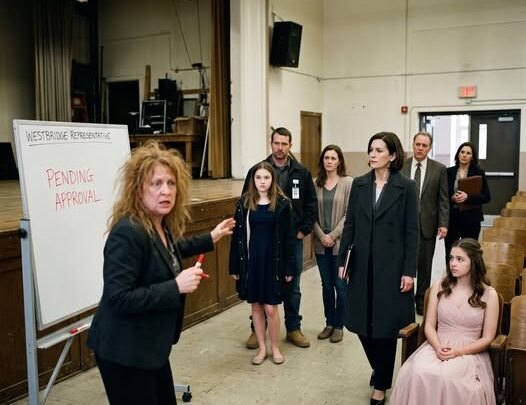
My teacher held up my grandmother’s navy-blue dress in front of twelve students and told me I was too poor to represent our school.
Then she erased my name from the contestant board and gave me forty-eight hours to find $690.
What she didn’t know was that, just six miles away, a woman I had never met was about to discover an invoice claiming that I had already received a fully sponsored dress.
And that discovery would change everything.
The Dress That Meant More Than Money
My name is Willa Hartwell. I was sixteen years old, a student at Westbridge High School on the west side of Cleveland, and I had never imagined that a dress could become the center of such a humiliating experience.
It was Monday, October 19, 2026.
Our school had nominated me for the Miss Community Scholarship, a regional competition organized by a nonprofit foundation. Despite what the name might suggest, it wasn’t simply a beauty pageant. The competition included interviews, a prepared speech, a community-service portfolio, and a formalwear presentation.
The winner would receive a $10,000 scholarship reserved for postsecondary education after graduation.
For some students, that amount might have meant extra spending money or a little help with tuition. For me, it represented something much bigger.
It represented an opportunity.
My father, Graham, worked repairing heating and cooling systems. My mother, Nora, helped older adults remain in their homes by assisting with everyday needs. They both worked hard, and neither complained about the sacrifices they made.
Still, I knew when our van needed repairs. I noticed when Mom shortened the grocery list or when Dad brought home another work shirt instead of replacing his worn-out boots.
We weren’t ashamed of our circumstances, but we understood the value of every dollar.
I had earned the school’s nomination through a community-service proposal focused on expanding the Saturday reading program at our local branch library. For two years, I had helped younger children practice reading while their parents worked.
I knew which children struggled with difficult words. I also knew which ones sometimes pretended to forget their books because their families couldn’t afford to buy them.
I wanted the scholarship because I believed education could open doors that money had kept closed.
And I wanted to represent those children.
For the formalwear portion, I planned to wear my grandmother’s navy-blue dress.
It wasn’t designer clothing. It didn’t have an expensive label or sparkling decorations. It was a simple, elegant gown that had belonged to my grandmother and had been worn to my aunt’s wedding years earlier.
My mother had spent several evenings repairing it.
She replaced the zipper, adjusted the hem, and carefully checked every seam. When she finished, she hung it over our bedroom door and stepped back to admire her work.
“Your grandma wore this to your aunt’s wedding,” she told me. “She’d be pleased you’re giving it another good night.”
I believed her.
I thought the dress was perfect.
I had no idea someone at school would soon make me feel embarrassed for wearing it.
The Day My Teacher Humiliated Me
That Monday, I carried the dress in its garment bag to the school auditorium for a fitting inspection.
Ms. Cynthia Vale, our scholarship coordinator, had asked all participating students to attend. I assumed she wanted to make sure our outfits followed the competition’s published requirements.
When my turn came, I carefully removed the dress from its bag.
Ms. Vale, who was forty-three, looked at it without smiling.
“Is this what you’re planning to wear?” she asked.
“Yes, ma’am. My mother altered it for me.”
She pinched the fabric between two fingers and examined it as though it were something she had found in a discarded clothing box.
Then she turned toward the student volunteers near the stage.
“Please look at this,” she said. “Tell me whether it communicates leadership.”
Nobody answered.
Paige Lowell, the student listed as our alternate, lowered her eyes. A junior working with the sound crew stopped winding a cable.
I tried to remain calm.
“It meets the written dress requirements,” I said.
Ms. Vale looked directly at me.
“The written requirements are only the minimum, Willa. A school representative needs a certain presence.”
She raised the hanger so everyone could see the dress.
“This school cannot afford to be represented by someone who looks like she can’t afford to be here.”
For a moment, I couldn’t move.
I felt every pair of eyes in the auditorium. My face grew hot, and I thought about my mother sitting at our kitchen table, carefully stitching the hem while I worked on homework beside her.
She had put so much love into that dress.
Now someone was treating it like evidence that I didn’t belong.
Ms. Vale walked to the portable whiteboard. My name was written beside the words WESTBRIDGE REPRESENTATIVE.
She picked up a red marker and erased it.
In its place, she wrote:
PENDING APPROVAL.
Then she handed me a sheet of paper.
“Gilded Hem Formalwear has agreed to accommodate you,” she explained. “Their representative package costs $690. If you cannot provide confirmation by Wednesday afternoon, I will recommend that the alternate take your place.”
I looked at the paper.
There was a shop address, a payment link, and a deadline: Wednesday, October 21, at 3:30 p.m.
“I don’t have $690,” I said quietly.
“Then perhaps this isn’t the right opportunity for you.”
I folded the paper into quarters because my hands were shaking.
Behind me, I heard a phone shutter click. Ms. Vale immediately turned toward the students and demanded that everyone put their phones away.
Nobody said anything.
I left the auditorium carrying my grandmother’s dress.
My Parents Refused to Let Me Give Up
My mother came to school after finishing her last client visit. My father drove over in his work boots, still wearing his company badge.
We sat together in a small conference room while Ms. Vale explained her decision.
According to her, the foundation expected every school representative to maintain a polished public image.
“The foundation requires an approved vendor,” she said. “I’m trying to protect Willa from embarrassment onstage.”
My father frowned.
“Why wasn’t that included in the information we received?”
“Some expectations are communicated directly to coordinators.”
My mother placed one hand on the garment bag resting across her knees.
“Is there something wrong with the dress itself?” she asked. “The length? The seams? Is it unsafe?”
Ms. Vale shook her head.
“It isn’t a technical issue. It’s the impression it creates.”
My mother looked down.
That hurt more than the original insult.
She had spent three evenings working on that dress. She had repaired something valuable to our family because she wanted me to feel confident. Now she was being made to feel as though her effort wasn’t good enough.
On the drive home, Dad asked whether I could borrow a formal dress from someone.
Mom quietly mentioned that she could possibly take an extra weekend shift.
I stared at the payment paper.
Six hundred ninety dollars.
It was almost as much as the alternator our van needed.
“No,” I finally said. “We shouldn’t have to do that.”
Dad glanced at me through the rearview mirror.
“Sometimes fighting a rule costs more than following it,” he said.
I understood what he meant. My parents didn’t want me to lose an opportunity over an argument with a school employee.
But something about the situation didn’t feel right.
“Then somebody should show us the rule,” I replied.
That evening, I opened my battered laptop and searched for the official Miss Community Scholarship Foundation website.
I wasn’t looking for an argument.
I was looking for the truth.
The Rule That Changed Everything
I found the foundation’s participant bylaws after scrolling through photographs of previous winners and information about the scholarship.
I opened the attire regulations.
Section 4, Subsection C.
I read it once.
Then again.
Then a third time.
The rules outlined basic modesty requirements, prohibited corporate branding, and explained that candidates could choose appropriate formalwear without spending beyond their means.
One sentence stood out:
“Candidates are encouraged to wear modest, accessible, and personal attire. Cost, brand, or vintage of formalwear shall bear zero weight in evaluation. Compulsory vendor partnerships are strictly prohibited.”
I sat back in my chair.
There was no required $690 package.
There was no approved vendor list.
There was no rule saying that a student had to purchase an expensive dress.
In fact, the written rules specifically prohibited the kind of requirement Ms. Vale had imposed.
I continued reading until I found a section listing the foundation’s regional contacts.
One name caught my attention:
Evelyn Cross, Regional Liaison and Benefactor Relations.
Her office was in Shaker Heights, approximately six miles east of our home.
I wrote down her email address and office number.
For the first time since Monday afternoon, I felt that I might have a way to defend myself.
A Classmate Had Recorded Everything
The following morning, Tuesday, I arrived at school twenty minutes before the first bell.
As I approached my locker, someone tapped my shoulder.
It was Marcus Vance, a junior who had been working with the stage crew during the fitting.
He glanced down the hallway before reaching into his jacket.
“I think you should have this,” he whispered.
He handed me a small piece of notebook paper with an audio file link written on it.
I looked at him.
“What is it?”
“Remember the sound you heard yesterday? The camera shutter?”
I nodded.
“It wasn’t a picture. I was testing the wireless body pack on the podium. It recorded the whole conversation.”
I stared at the paper.
“You recorded everything?”
He nodded.
“The way she talked to you wasn’t right. I thought someone should know what happened.”
I didn’t know what to say.
“Thank you, Marcus.”
I placed the paper carefully inside my notebook.
Later, during my free study period, I went to the quiet phone area near the nurse’s office and called Evelyn Cross.
A woman answered on the third ring.
“Miss Community Foundation, this is Evelyn Cross.”
I introduced myself and explained that I was the nominee from Westbridge High.
Her voice immediately became warmer.
“Willa! What a pleasure. Your library literacy proposal received one of the highest scores in the western district. I was actually reviewing your file yesterday.”
I hesitated.
“Can I ask you something about coordinator expenses?”
“Of course.”
She explained that the foundation had recently reviewed expense reports submitted by participating schools.
Then she mentioned something that made my stomach tighten.
“Your school coordinator submitted an invoice for your wardrobe stipend last week,” she said. “We partnered with a boutique called Gilded Hem to provide fully sponsored dresses for students in underfunded districts.”
I gripped the receiver.
“The foundation issued a direct grant of $690 for your formalwear. It was marked fulfilled on Friday.”
I stopped breathing for a moment.
“Fulfilled?”
“Yes. The payment was processed, and the invoice was recorded as completed.”
I looked down at the paper Ms. Vale had given me the previous afternoon.
It was the same amount.
The same boutique.
The same $690.
“Mrs. Cross,” I said, trying to keep my voice steady, “I was told that I had to pay $690 myself by tomorrow afternoon or I would be disqualified.”
There was silence.
Then Evelyn asked a question.
“Are you telling me someone requested cash payment from you after the foundation had already funded your wardrobe?”
“Yes, ma’am.”
I explained what had happened in the auditorium. I told her about the dress, the whiteboard, and the threat that Paige would replace me.
I also told her about the recording.
“Do you have the invoice or payment request?”
“Yes.”
“And you have the audio?”
“Yes, ma’am.”
Her voice changed.
It was no longer simply friendly.
It became firm and professional.
“Willa, do not give anyone money. Keep every document you’ve received. Do not delete that recording. I will review the matter immediately.”
Then she gave me one final instruction.
“Stay in class. I will see you tomorrow afternoon at three o’clock.”
Wednesday Afternoon: The Truth Walked Into the Auditorium
Wednesday arrived with a tension I could feel in my stomach.
At 3:15 p.m., I entered the auditorium wearing my coat over Grandma’s navy-blue dress.
My mother and father walked directly behind me.
Ms. Vale was standing beside the whiteboard, tapping her gold watch. Paige sat in the front row wearing a blush-pink gown.
She looked uncomfortable.
I wondered whether she had been told to prepare to take my place.
Ms. Vale gave me a tight smile.
“Willa. Do you have the payment receipt from Gilded Hem?”
“No, Ms. Vale,” I replied. “I don’t.”
She sighed and uncapped her red marker.
“A pity. Then, according to protocol, Paige will be taking over the nomination.”
She raised the marker toward the board.
Before she could write anything, the heavy oak doors at the back of the auditorium opened.
A woman wearing a charcoal overcoat entered. Beside her walked our school principal, Dr. Miller. Another woman followed, carrying a leather portfolio.
It was Evelyn Cross.
Ms. Vale froze.
“Evelyn? What are you doing here?”
Evelyn walked down the center aisle without answering immediately.
Then she stopped beside the podium.
“There is no such protocol, Cynthia.”
The room became completely silent.
Evelyn opened the leather portfolio and removed a manila folder.
Inside was the invoice submitted to the foundation for my wardrobe stipend.
It carried an electronic signature, a voucher showing the $690 payment, and a note connected to Gilded Hem’s merchant account.
“The foundation covered Willa’s wardrobe grant five days ago,” Evelyn explained. “The payment was recorded as fulfilled.”
She looked directly at Ms. Vale.
“Yet yesterday, this student was told to pay the exact same amount herself or lose her nomination.”
Ms. Vale opened her mouth.
“I think there’s been an administrative misunderstanding.”
Evelyn didn’t raise her voice.
“Then perhaps you can explain why a sixteen-year-old student was threatened with disqualification after the foundation had already paid for her formalwear.”
My father stood beside my mother, his arms folded.
Dr. Miller looked at the invoice.
Evelyn continued.
“Our review identified a payment connected to this wardrobe arrangement and a kickback code cross-referenced with the boutique’s merchant account. We also reviewed the audio recording from Monday.”
Ms. Vale’s expression changed.
The confidence she had displayed in the auditorium was disappearing.
“I was only trying to make sure the school was represented properly,” she said.
“That does not explain the financial records,” Evelyn replied.
She turned toward Dr. Miller.
“The foundation’s legal counsel has been notified, and the school board has received the documentation. Based on the findings reviewed today, Cynthia Vale’s position as scholarship coordinator is terminated, effective immediately.”
Dr. Miller stepped forward.
“Cynthia, I need you to come to my office.”
Ms. Vale looked around the auditorium.
Nobody spoke.
She gathered her purse and walked toward the doors without looking at me.
The red marker remained uncapped in her hand until she disappeared into the hallway.
My Name Went Back on the Board
For several seconds, nobody moved.
Paige finally let out a long breath.
She looked at me with an apologetic expression.
“I didn’t know what was happening,” she said quietly.
I nodded.
“I know.”
I didn’t blame her. She had been placed in the same uncomfortable situation, and she hadn’t created the rules.
Evelyn turned toward me.
“May I see the dress?”
I removed my coat.
The navy fabric caught the warm auditorium lights. It looked almost black until the light touched it, revealing its deep blue color.
Evelyn stepped closer and gently touched the sleeve.
“This is beautiful,” she said.
I smiled, although I could feel tears building behind my eyes.
She looked at my mother.
“Your work is lovely. You should be proud.”
Mom’s eyes filled with tears.
Evelyn then turned toward me.
“Your proposal was about teaching children that their value isn’t determined by their circumstances, Willa. This dress carries family history, dignity, and care. Those things are worth far more than a designer label.”
She walked to the whiteboard.
Picking up the eraser, she removed the red writing.
Then she took a black marker and carefully wrote my name again.
WESTBRIDGE REPRESENTATIVE: WILLA HARTWELL.
I looked at the board.
My name was back where it belonged.
But something had changed inside me.
A few days earlier, I had believed that being selected meant I needed to prove I was good enough for the opportunity.
Now I understood that I had every right to expect the rules to be applied fairly.
Saturday Night: I Wore My Grandmother’s Dress
On Saturday night, I stood backstage at the regional auditorium.
The lights were bright, the room was full, and students from different schools waited for their names to be called.
I wore my grandmother’s navy-blue dress.
My mother had checked the hem one last time before we left home. She had also made sure the zipper worked perfectly.
Dad stood beside her, looking more nervous than I was.
When my name was announced, I walked onto the stage.
For the first few seconds, I could feel the audience watching me.
Then I remembered the children at the library.
I remembered the little boy who had finally read an entire page without stopping. I remembered the girl who used to whisper because she was afraid of making mistakes. I remembered why I had entered the competition in the first place.
I stepped forward and delivered my speech.
I spoke about the importance of reading programs, the challenges faced by families who couldn’t always afford books, and the difference that a few hours of community support could make.
I didn’t look down once.
I didn’t think about the price of my dress.
I didn’t wonder whether anyone recognized its age or noticed that it wasn’t from an expensive boutique.
I was there because I had earned my school’s nomination.
And I was proud to be there.
The competition was about more than a formalwear presentation. It was about service, leadership, communication, and the ability to make a meaningful contribution to a community.
My grandmother’s dress had never been the problem.
The problem had been someone who believed that money could determine who deserved an opportunity.
What I Learned From Those Forty-Eight Hours
I never forgot what happened that week.
I also never forgot the people who helped me stand up for myself.
My mother reminded me that something doesn’t lose its value because it isn’t expensive. My father reminded me that rules should be questioned when they don’t make sense. Marcus showed me that doing the right thing sometimes means speaking up when everyone else stays quiet.
And Evelyn Cross showed me that institutions must be accountable for the opportunities they promise young people.
I had been given forty-eight hours to find $690.
Instead, those forty-eight hours taught me something that no scholarship application could have explained.
A person’s worth cannot be measured by the price of their clothes, the size of their bank account, or the brand printed on a label.
My grandmother’s navy-blue dress was not new. It wasn’t expensive. It didn’t come from a boutique.
But it carried memories, family, and the love of a mother who had carefully repaired it so her daughter could walk onto a stage with confidence.
That was enough.
And when I finally stood beneath those Saturday night lights, I understood that I had never needed to buy my place there.
I had already earned it.