Uncategorized
Gay Couple Was Shamed for Adopting a Blind Girl – 12 Years Later, Her Biological Father Offered Them Anything to Take Her Away

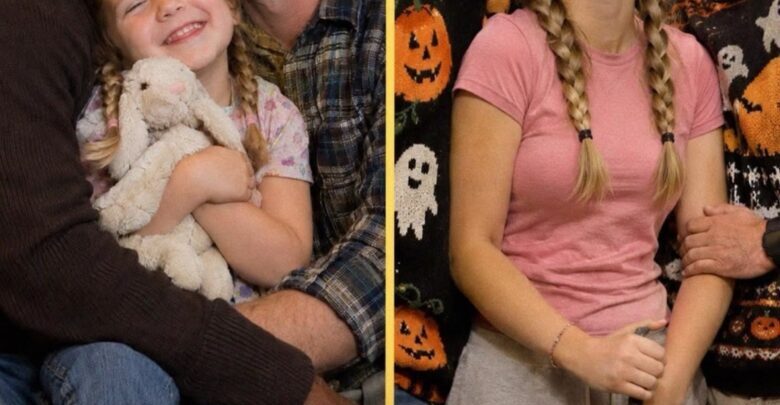
**My husband and I spent 12 years building a life with our daughter, despite everyone who doubted us. Then an unexpected visitor showed up on her 16th birthday, and what began as an outrageous offer turned into something far more disturbing.**
The first time Willa called me Dad, she was standing in our kitchen with a cup of water.
She’d lived with us for three weeks.
“Dad, can I put this here?”
She was asking permission to set down a cup.
On our counter.
In her own home.
Twelve years later, someone showed up at our door, threatening the sense of security we’d spent years helping her find.
By the time Reid and I decided to adopt, we’d already lost people simply because we loved each other.
My father stopped inviting me to Thanksgiving after our wedding.
The first year, I thought he’d come around.
By the third, I’d stopped checking my phone.
Reid’s mother still introduced me as his “friend,” our wedding rings apparently decorative.
Once, when Reid corrected her, she said, “You know what I mean. Don’t make a scene.”
As though acknowledging our marriage was somehow more embarrassing than pretending it didn’t exist.
But we wanted a family.
Then we met Willa.
She was four, blind since birth, and had moved through several foster homes.
At our first visit, she sat beside me with a stuffed rabbit, rubbing its worn ear.
I got up for water.
Her hand shot out and caught my sleeve.
“Are you leaving?”
“Just going to the sink, sweetheart.”
She held on until I sat again.
I looked at Reid.
He was already crying.
We hadn’t said a word to each other, but we both knew.
She was ours.
We knew earning her trust would take time.
We just didn’t expect everyone else to make it harder.
“That child already can’t see,” my sister said. “Now you want her explaining why she has two dads? Hasn’t she been through enough?”
A friend of Reid’s suggested we let her have a “normal family.”
Her caseworker said ten prospective families had passed after learning she was blind.
That night, Reid sat at our kitchen table, staring at the yellow cup we’d bought her.
“Do they think we haven’t thought about what she needs?”
“I think they haven’t thought about Willa at all.”
We completed the adoption.
When Willa came home, she didn’t ask about toys or the bedroom we’d spent weeks preparing.
She asked where we slept.
Whether she could wake us.
Whether we’d be angry if she needed help.
“You can always wake us,” Reid told her.
She apologized anyway.
The first night, I woke to someone crying.
I checked the clock.
Two in the morning.
Reid was already getting out of bed.
We found Willa sitting on her bedroom floor, feeling around for her stuffed rabbit.
“I can’t find him,” she whispered.
Reid knelt beside her.
When he reached for the rabbit beneath her bed, she caught his hand.
“Am I in trouble?”
He turned back toward her.
“No, sweetheart. You just woke up your dads. That’s allowed.”
She considered that for a long time.
Then she let Reid hand her the rabbit and help her back into bed.
But it would take months before she stopped apologizing.
For spilling juice.
For asking which drawer held her socks.
For needing help.
For taking up space.
Slowly, though, she learned she didn’t have to apologize for being our daughter.
Reid learned to braid her hair, watching tutorials while Willa rated his attempts.
“Two out of ten. My head has a handle.”
When she discovered baking, I labeled our kitchen jars in Braille.
The harder part was learning to step back and let her do things for herself.
By 16, she stole Reid’s hoodies.
Negotiated curfew like an attorney.
And ordered me out of her kitchen.
“Dad, I can measure flour without supervision.”
She sounded like someone who knew she belonged.
Meanwhile, Reid and I had built a successful neighborhood bakery and café.
We were comfortable.
We’d also spent five years trying to expand.
Every investor loved our food.
Every investor had a reason to wait.
One wanted us to drop the accessible classes because they wouldn’t scale fast enough.
Reid had slid our pitch right back into his briefcase.
“Then it’s not our bakery they’re investing in,” he’d told me afterward.
I loved him a ridiculous amount that day.
Our expansion plans remained in a folder labeled “SOMEDAY.”
Willa called it our “expensive recipe for disappointment.”
She wasn’t wrong.
On Willa’s 16th birthday, Reid and I were preparing her favorite dinner.
She’d insisted on making her own birthday cake.
The frosting was still cooling when someone knocked.
Willa was upstairs talking to a friend.
I opened the door.
The man outside looked painfully familiar.
We had watched his latest movie that weekend.
Grant.
Then I noticed his eyes.
His mouth.
Willa’s face, practically photocopied.
I’d never seen him in any photographs from her file.
“I’m Willa’s biological father,” he said. “May I come in?”
Reid made coffee.
Grant barely touched his.
“I know I’ve missed a lot,” he began. “I’d like to do something for her now. College tuition. A bigger house. Whatever helps.”
“Why now?” I asked.
He leaned forward.
“I want her to come stay with me. Tell me what it would take. I’ll give anything.”
Reid set down his cup.
“You mean you’d like us to ask whether she wants to meet you?”
Grant glanced toward the stairs.
“No. I literally need her to live with me. Next month.”
“She doesn’t even know you,” I said.
He opened his bag and withdrew a folder.
“My team put together a proposal. Nothing happens without your cooperation.”
Inside were television interview dates.
Questions.
Answers written beneath Willa’s name.
In one, she described how Grant had taught her to navigate the kitchen.
I looked at the Braille labels on our jars.
“She’s never even met you.”
“That’s why we’d need time together first.”
Reid turned a page.
According to the script, we’d been family friends who occasionally helped out.
“You told people you raised her?” Reid asked.
“In an interview. I mentioned having a daughter. Things went further than I intended.”
“So correct it.”
“People want to meet her.”
Upstairs, Willa laughed.
Grant looked toward the ceiling.
Then back at us.
“I can pay for her education. Set her up for life. Surely there’s an arrangement that benefits everyone.”
Reid stood and pushed the folder across the table.
“Leave.”
But I’d reached the last page.
One question had no scripted answer.
“What would you say to people who believe your biological father abandoned you?”
I read it twice.
Then closed the folder.
“An interview might be possible,” I said.
Reid stared at me.
“Nathan?”
“On one condition.”
Grant grabbed his pen.
“Name it.”
“We get the complete proposal, the producer’s contact information, and every claim you’ve made about Willa. Then she decides whether she wants anything to do with it.”
“Of course,” Grant said too quickly.
“And you don’t contact her behind our backs.”
He nodded.
Reid knew me well enough to stay silent.
Grant clearly didn’t.
“For context,” Grant said, opening a second folder, “this is a major project.”
His interview had gone viral.
A production company was discussing a documentary about his life as a father raising a blind daughter while building a successful acting career.
The proposed deal could earn him millions.
Provided Willa participated.
And footage showing them living together.
“You sold them a childhood you weren’t there for,” Reid said.
“It’s still in development,” Grant replied. “We can shape the story.”
I asked why he thought we’d help.
He slid another document toward me.
Our bakery’s expansion pitch.
Not an approximation.
Our actual pitch, including the projected costs of two locations.
“How did you get this?”
“My adviser knows someone at the investment firm you approached. He obtained a copy.”
My stomach turned.
Grant tapped the numbers.
“Three million dollars. From my own funds, once we have a signed agreement. Enough to open both sites and launch the classes.”
He’d researched our dream.
Our setbacks.
Everything except our daughter’s favorite cake.
“In exchange?” Reid asked.
“A temporary residence arrangement. Public cooperation. A consistent story. You’d be compensated for your discretion.”
Reid didn’t glance at the amount.
“No.”
Grant blinked.
“You haven’t considered it.”
“I heard you.”
“This changes your business.”
“She’s not inventory,” Reid said.
Grant looked at me.
I pushed the second folder back.
“Neither of us is selling our daughter.”
“You’re being emotional.”
“Yes,” I said. “That’s generally what happens when somebody offers to buy a child.”
He said it was only for filming.
That we’d still see her.
That she’d have every advantage.
I stood.
“Whatever answer she gives about meeting you, she’s not moving in as part of your deal.”
For the first time, Grant seemed to understand we weren’t negotiating.
He left his card.
I kept the interview folder.
Not the money proposal.
We waited until Willa’s friend had gone home.
Then we told her everything.
I described Grant’s face and explained who he was.
She went quiet.
“The actor? The one whose movie you both hated?”
“Reid hated it,” I said. “I merely slept through it.”
“Great. My origin story has bad reviews.”
Then she asked what he’d wanted.
We told her.
The documentary.
The invented answers.
The three million dollars.
She stopped smiling.
“He offered you money to send me away?”
“We refused,” Reid said immediately.
“I know you did.”
She took a breath.
“Did you even think about it?”
“Not for a second,” I said.
“Good. Because I wasn’t going.”
Then came the harder question.
“Did he know I existed? Before you adopted me?”
I told her what our adoption paperwork established.
The agency had contacted her biological father, but he’d declined to get involved.
His parental rights had eventually been terminated.
The records we’d received hadn’t identified him by name.
Until Grant appeared at our door, we hadn’t known who he was.
And the paperwork couldn’t tell us why he’d stayed away.
Willa sat very still.
“So he knew.”
“Yes.”
“Did he ever send me a birthday card?”
I shook my head, then remembered she couldn’t see it.
“No.”
“A letter? Anything?”
“Nothing we received.”
She nodded once, like she was taking inventory.
I hated that I couldn’t give her a better answer.
“And he didn’t come.”
“No.”
She pressed her palms against the table.
“Was it because I’m blind?”
“I don’t know,” I said.
It was the hardest answer I could give her.
I wouldn’t invent a kinder one.
Reid moved closer, then stopped.
“Can I sit beside you?”
She nodded.
For a while, nobody spoke.
Then Willa said, “I want to ask him myself.”
“You can,” Reid said.
“And I want to hear what these documentary people think happened to me.”
I told her I’d insisted on their contact details.
“You were planning something,” she said.
“I was buying time. Not agreeing for you.”
“Good. Send me that script. Accessible copy, please. No dramatic reading by Dad Number One.”
“I’m Dad Number One?”
“You’re Dad Spreadsheet. Reid’s Dad Frosting.”
Reid looked offended.
Then pleased.
The next afternoon, Grant’s assistant sent the materials.
We verified the producer through the company website and contacted her office.
Willa wanted a private meeting, not a filmed interview.
Claire, the producer, agreed.
I sent a statement identifying us as Willa’s legal parents and correcting the claim that Grant had raised her.
She replied that the production was still verifying the background and wanted to hear directly from Willa.
No cameras.
No release forms.
Willa insisted on her own questions.
She listened to the script on her screen reader, snorting at the imaginary kitchen memories.
But when she reached the unanswered question, she removed her headphones.
“They couldn’t even make up what I’d say about being abandoned.”
I sat beside her.
“You don’t have to do this.”
“I know.”
“You can still want to know him.”
“I know that too.”
“If I ask him why he left, I’m not promising to forgive him,” she added.
“Nobody is asking you to.”
“And if I want to know him later, that doesn’t mean I love you less.”
My throat tightened.
“We know.”
She reached for the stuffed rabbit she’d had since she was four.
Rubbed its worn ear between her fingers, just as she’d done the day we met.
Then returned it to the shelf.
“I just don’t want strangers deciding what happened to me.”
At the production office, Claire introduced herself to Willa before speaking to anyone else.
Grant was waiting.
He stood when she entered.
“Willa. I’m so glad—”
“Please don’t hug me,” she said.
He stopped.
“Of course.”
We sat with Willa between us.
Claire said the project wasn’t yet contracted.
They’d heard Grant’s story but hadn’t yet confirmed the family history.
“Then I can help,” Willa said.
She opened her notes on her phone.
“First question. When did you start raising me?”
Grant shifted.
“It’s complicated.”
“What year?”
“Willa, honey—”
“Don’t call me that.”
Silence.
Claire looked at Grant.
“You told us you’d been closely involved throughout her childhood.”
“In spirit,” he said.
Willa tilted her head.
“That’s a pretty long commute.”
Reid made a strangled noise.
Grant’s jaw tightened.
Willa kept going.
“Your script says you taught me my way around the kitchen. Which house was that in?”
“The details can be revised.”
“The details are my life.”
She told Claire about moving between foster homes.
About meeting us at four.
About the rabbit and the sleeve.
About learning to bake in our kitchen.
She didn’t sound rehearsed.
She sounded 16.
Angry.
Curious.
Tired of being discussed.
Claire turned to us.
“You’re her adoptive parents?”
“Legally and otherwise,” Reid said.
I handed over copies of documents confirming our adoption, with Willa’s permission.
Claire examined the dates.
Then looked at Grant.
“Why are they described as family friends?”
“My representatives misunderstood—”
“You approved the script,” I said.
He didn’t answer.
Willa closed her notes.
“I have one question just for you.”
Grant leaned forward.
“Anything.”
“You knew about me before I was adopted. Why didn’t you come?”
His expression changed.
He seemed to forget Claire was there.
“I was young. My career was starting. They told me you were blind, and I didn’t think I could handle everything you’d need.”
Willa nodded slowly.
“So when I needed a parent, my blindness was too much.”
“That’s not what I—”
“But now you can get paid to talk about raising me because I’m blind.”
Nobody interrupted her.
I remembered the ten families who’d passed on Willa.
All those people who’d decided her blindness made her too difficult to love.
And now the man who’d stayed away wanted to make millions telling the world how he’d raised her.
Grant looked at the table.
I thought of that unanswered question in Grant’s folder.
His team hadn’t known what Willa would say about her father’s absence.
Now they were finding out.
“I made mistakes. I want to know you now.”
“Maybe one day we can talk,” Willa said. “But not while you’re selling stories about me. And not because somebody paid for a camera.”
Claire closed her folder.
“We can’t proceed on the account we’ve been given. We’ll need to review this with our legal team.”
Grant started protesting.
Willa stood.
Grant looked up.
“Could I at least give you my number?”
She considered it.
“You can leave it with my dads. If I want it, I’ll ask.”
Reid didn’t move to take out his phone.
Neither did I.
For once, there was nothing we needed to arrange on her behalf.
“I’m done.”
We left together.
Two weeks later, Claire confirmed the company had withdrawn from Grant’s proposed documentary.
Grant sent one message asking whether Willa would consider a private conversation.
She said she wasn’t ready.
We respected that.
Our expansion folder still sat on my desk.
“SOMEDAY.”
No miracle investor had appeared.
One Saturday, Willa found me at my desk.
“What are you working on, Dad?”
“Just looking over our expansion plans again.”
She went quiet.
“You could’ve had your new bakeries,” she said.
“Not that way.”
She leaned against the counter.
“I’m glad you didn’t decide for me. Even when he showed up.”
I thought of a four-year-old gripping my sleeve because she couldn’t trust me to walk to the sink and come back.
“You make your own decisions,” I told her.
“Except about doing dishes?”
“Especially about doing dishes.”
“Terrible policy.”
She headed toward the kitchen, and I followed.
She took a mixing bowl from the cupboard.
Measured flour without asking for help.
Then pointed toward the doorway.
“Dad. Out of my kitchen.”
I turned to leave.
“And come back in 20 minutes,” she added. “I need someone to taste the frosting.”
I smiled.
“I’ll be here.”
**THE END.**