Uncategorized
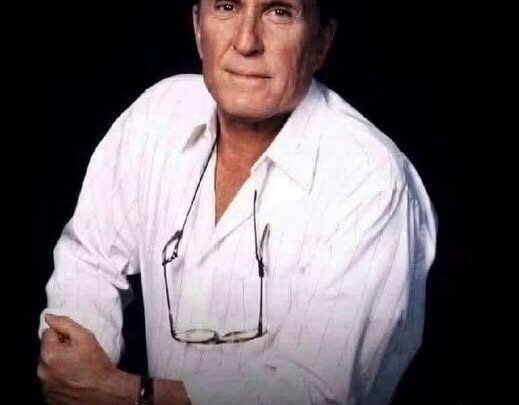
Hollywood Mourns Robert Duvall: Remembering the Legendary Actor Behind The Godfather and Apocalypse Now

A Legendary Career Comes to an End
Hollywood lost one of its most respected performers when Robert Duvall died peacefully at his home in Middleburg, Virginia, on February 15, 2026. He was 95 years old. His wife, Luciana Duvall, announced his passing in a heartfelt statement, remembering a man whose dedication to acting and love of storytelling defined his life. brought extraordinary depth to the screen. He portrayed powerful men, troubled souls, complicated fathers, determined lawmen, and unforgettable characters whose personalities often lingered in the minds of viewers long after the credits rolled.
His performances in The Godfather, Apocalypse Now, and Tender Mercies became defining moments in American cinema. Yet his career extended far beyond those celebrated films. He appeared in numerous other productions, worked behind the camera as a writer and director, and continued acting well into his later years.
Duvall was not simply a familiar face in Hollywood. He was an actor whose work demonstrated how much a supporting character could contribute to a film and how a carefully developed performance could transform an entire scene.
His death marked the end of a remarkable chapter in film history. For audiences who grew up watching his movies, it was also an opportunity to revisit the performances that made him such an enduring presence.
The Early Years of Robert Duvall
Robert Selden Duvall was born on January 5, 1931, in San Diego, California. His father was a United States Navy officer, and his family moved during his childhood as his father’s military career progressed.
Acting did not immediately appear to be an obvious career choice for the young Duvall. He attended Principia College in Illinois, where he initially studied social sciences before becoming more seriously involved in theater.
After graduating in 1955, he continued his acting education in New York, studying at the Neighborhood Playhouse under the influential acting teacher Sanford Meisner.
There, he developed the disciplined approach that would become a hallmark of his performances. Rather than relying exclusively on dramatic gestures or theatrical delivery, Duvall focused on observation, behavior, and the subtle details that make fictional people seem real.
His early career included stage productions and television appearances. He gradually built a reputation among fellow actors and directors as a performer capable of bringing unusual authenticity to difficult roles.
One of his earliest major film appearances came in To Kill a Mockingbird (1962), in which he portrayed Boo Radley, the mysterious neighbor whose presence becomes important to the story.
The role contained relatively little dialogue, but Duvall made a lasting impression. His performance demonstrated that an actor could communicate vulnerability and complexity through physical presence and expression rather than extended speeches.
It was an early example of the restraint that would later distinguish many of his most celebrated performances.
Becoming a Recognizable Face in The Godfather
<text> </text>
Few roles are as closely associated with Robert Duvall as Tom Hagen in Francis Ford Coppola’s The Godfather (1972).
In the film, Duvall portrayed the Corleone family’s trusted lawyer and adviser. Hagen was not the loudest or most physically intimidating character in the story, but his calm manner and practical intelligence made him an essential part of the family’s operations.
Duvall approached the role with remarkable control. He played Hagen as a man who understood the power structures surrounding him and knew when to speak, when to remain silent, and how to manage dangerous situations without unnecessary displays of emotion.
The performance helped establish him as one of the most compelling supporting actors of his generation.
The Godfather became a landmark in American filmmaking, praised for its performances, storytelling, atmosphere, and exploration of family, loyalty, and power. Duvall’s contribution was central to the film’s carefully balanced ensemble.
He returned as Hagen in The Godfather Part II (1974), continuing a character whose intelligence and professional loyalty existed alongside the moral compromises of the world he inhabited.
The role earned Duvall Academy Award nominations for supporting actor for both films. His work showed that an actor did not need to play the central hero to become indispensable to a classic movie.
For many fans, revisiting The Godfather remains one of the most immediate ways to appreciate Duvall’s talent.
Apocalypse Now and an Unforgettable Performance
Another of Duvall’s defining roles arrived in Apocalypse Now (1979), Coppola’s ambitious film about the psychological devastation of the Vietnam War.
Duvall played Lieutenant Colonel Bill Kilgore, a military officer whose confidence, eccentricity, and unsettling relationship with warfare made him one of the film’s most memorable figures.
Kilgore is a complicated character. He can appear charismatic and almost absurd one moment, then reveal the disturbing consequences of treating war as an environment in which personal desires and military power can become dangerously intertwined.
Duvall brought an extraordinary combination of authority and unpredictability to the role.
His performance became especially famous for the character’s remarks about the smell of napalm in the morning. The scene entered popular culture and became one of the most frequently referenced moments in American film.
Yet the performance was more than a collection of memorable lines. Duvall created a character whose confidence and eccentricity helped communicate the surreal atmosphere of a war in which ordinary moral boundaries seemed to be breaking down.
He received an Academy Award nomination for supporting actor for the film.
The role demonstrated his ability to dominate a scene without needing to appear throughout the entire story. Kilgore’s presence remains memorable because Duvall gave the character a distinctive personality that viewers could recognize almost immediately.
Tender Mercies: The Performance That Earned Him an Oscar
While The Godfather and Apocalypse Now established Duvall’s reputation with enormous audiences, Tender Mercies (1983) demonstrated another dimension of his talent.
In the film, he portrayed Mac Sledge, an alcoholic country music singer whose life has been damaged by personal failures and broken relationships.
The story follows Sledge as he attempts to rebuild his life through sobriety, a new relationship, and a quieter existence. It is a film built around small moments rather than grand gestures, making it especially suited to Duvall’s understated style.
His performance is powerful because it avoids turning recovery into an easy or sentimental transformation. Sledge is a flawed man attempting to become more responsible, and Duvall allows the character’s uncertainty and emotional limitations to remain visible.
For this performance, Duvall won the Academy Award for Best Actor at the 1984 ceremony.
The recognition represented the high point of a career already filled with memorable work. It also demonstrated that his abilities extended well beyond playing intimidating figures or commanding personalities.
Duvall prepared extensively for the role and performed the songs himself, bringing credibility to the character’s musical background.
His work in Tender Mercies remains a particularly meaningful example of how restraint can create emotional power. The character’s quiet moments communicate as much as the dialogue, allowing audiences to recognize the difficult process of rebuilding a life.
An Actor Who Refused to Be Defined by One Role
One of Duvall’s greatest strengths was his ability to move between dramatically different characters.
He could portray a controlled professional, an unpredictable military officer, a struggling musician, or a deeply troubled family patriarch without making those performances feel interchangeable.
In The Great Santini (1979), he portrayed a domineering Marine pilot whose rigid understanding of discipline creates serious tensions within his family. The role earned him another Academy Award nomination and demonstrated his ability to explore the damaging effects of authority when it becomes inseparable from personal identity.
In the television miniseries Lonesome Dove (1989), Duvall played Texas Ranger Augustus “Gus” McCrae, a charismatic and humorous character whose personality helped make the Western an enduring favorite.
His portrayal balanced wit, warmth, and emotional depth. For viewers who knew him mainly from crime dramas and war films, the performance revealed a more expansive side of his abilities.
He also received recognition for The Apostle (1997), a film he wrote, directed, and starred in. His portrayal of a flawed preacher seeking redemption demonstrated his interest in morally complicated characters and stories about faith, guilt, and the possibility of personal change.
Duvall’s willingness to explore such different roles helped sustain his career across generations.
Rather than relying on a single screen identity, he continued searching for characters whose contradictions offered opportunities for serious performance.
His Work Behind the Camera
Although Duvall became best known as an actor, his interests extended into writing, producing, and directing.
The Apostle was particularly important because it represented a project he pursued with extraordinary commitment. He developed the story, played the central character, and directed the film, demonstrating that his creative ambitions reached beyond performing someone else’s script.
He also directed Angelo My Love (1983), an independent film exploring the lives of Romani people in New York, and Assassination Tango (2002), a crime drama reflecting his interest in Argentine tango.
These projects reveal a performer who wanted to exercise creative control over the stories he told.
Working outside the largest studio productions also allowed him to explore subjects that did not necessarily fit conventional Hollywood formulas.
Duvall’s approach to filmmaking reflected the same seriousness he brought to acting. He invested time in understanding the people and environments he portrayed, believing that credible characters emerged from careful observation.
His work behind the camera may be less familiar to casual viewers, but it forms an important part of his artistic legacy.
The Private Life of a Public Figure
Duvall maintained a career that attracted extensive public attention, but he did not build his identity exclusively around celebrity.
He married four times during his life. His final marriage was to Argentine actress and director Luciana Pedraza, whom he married in 2005.
The couple shared an interest in film, travel, and Argentine culture. Pedraza remained his wife until his death and announced his passing with a tribute that emphasized his devotion to acting and his love of storytelling.
Duvall also had a deep interest in tango dancing, horses, and rural life. His home in Virginia offered a quieter setting away from the constant activity of Hollywood.
The description of his peaceful passing at home resonated with admirers who had followed his career for decades. His final years were spent away from the intensity of many film sets, in a place connected to his personal interests and private life.
His family asked for privacy following his death, and the circumstances of his passing were reported without a publicly announced cause.
Respecting that privacy is part of remembering him appropriately. His public work provides an extraordinary record of his achievements without requiring speculation about details that his family has chosen not to share.
Awards, Recognition, and a Lasting Influence
During his career, Duvall received seven Academy Award nominations and won once, for Tender Mercies. He also received multiple Golden Globe Awards and other honors recognizing his contributions to film and television.
In 2005, he received the National Medal of Arts, one of the United States’ highest honors for contributions to the arts.
Such recognition reflects the respect he earned from audiences and the entertainment industry. Yet awards alone cannot fully explain his influence.
Duvall helped demonstrate how supporting performances can shape the emotional structure of a film. A character who appears for a limited amount of screen time can still become central to the audience’s understanding of a story.
His approach also influenced how viewers understand character acting. Instead of presenting characters as collections of obvious traits, he often gave them private habits, contradictions, and emotional histories that made them feel as though they existed beyond the scenes in which they appeared.
That quality is part of what makes his work worth revisiting.
Young actors studying his performances can observe how posture, timing, voice, and restraint contribute to a convincing character. Film enthusiasts can see how a carefully developed supporting role can become as memorable as the lead performance.
His legacy therefore extends beyond the awards he won and the films that became classics.
Why Film Fans Will Continue to Remember Robert Duvall
The passing of a beloved actor naturally brings sadness, especially when that performer has been part of the public’s cultural life for so many years.
For Duvall’s admirers, the loss is connected to a career that provided different kinds of memories to different generations.
Some viewers remember the quiet intensity of Tom Hagen in The Godfather. Others think of Lieutenant Colonel Kilgore in Apocalypse Now, whose eccentricity became a lasting part of film history.
Still others may remember Mac Sledge in Tender Mercies, a character whose attempt to rebuild his life offered a more intimate portrait of human vulnerability.
These performances illustrate why Duvall cannot be reduced to a single defining role.
His characters could be frightening, funny, stubborn, vulnerable, or unexpectedly kind. They often revealed something about power, responsibility, family, and the difficulty of understanding other people.
That variety gave his career an unusual richness.
For fans who want to honor his memory, revisiting one of his films can be a meaningful way to celebrate the work he left behind. Watching different performances side by side also offers a reminder of how dramatically he could change his approach while maintaining a recognizable commitment to authenticity.
A Legacy That Will Endure Beyond His Final Curtain
Robert Duvall’s death at 95 marked the end of a remarkable life in cinema, but it did not erase the work through which audiences came to know him.
His performances remain available to new generations of viewers, allowing people who never saw him on a movie set or at a premiere to discover the depth of his talent.
His career also serves as a reminder that a long professional life is built through more than one moment of success. Duvall worked steadily, developed his craft, accepted challenging roles, and explored creative interests beyond acting.
He did not need every character to be heroic or likable. Some of his most memorable performances involved people whose choices were troubling, whose personalities were difficult, or whose lives had been damaged by their own actions.
By approaching such characters with seriousness and detail, he encouraged audiences to look more closely at the people inside the stories.
For film lovers, that remains one of his most important gifts.
Robert Duvall leaves behind a body of work that spans genres, generations, and styles of filmmaking. His performances in The Godfather, Apocalypse Now, and Tender Mercies will continue to introduce his talent to audiences, while his other films reveal the full breadth of his interests and abilities.
He may no longer be here to bring new characters to life, but the characters he created remain part of the history of American cinema.
Robert Duvall will be remembered not only as an Oscar-winning actor, but as a dedicated storyteller whose performances gave audiences compelling reasons to keep watching, thinking, and returning to the movies.
Editorial note: This article is a retrospective tribute based on publicly reported biographical information. It does not speculate about the cause of Duvall’s death or claim to represent a new statement from his family.