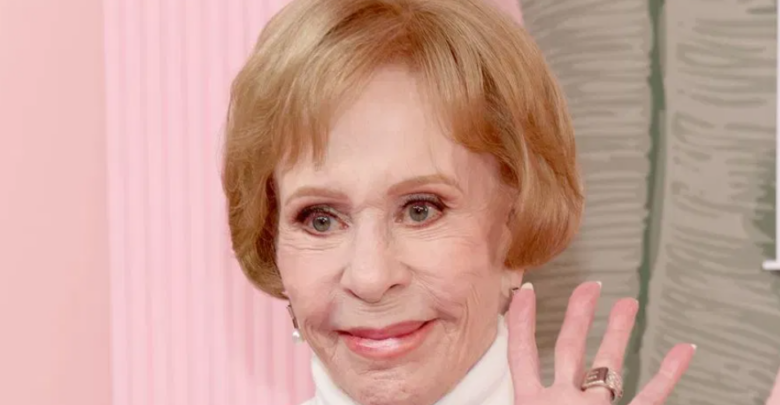
The Woman Who Made America Laugh Together
For generations of American television viewers, Carol Burnett represented something more than comedy.
She represented togetherness.
Her work brought families into the same room, often at the end of a long day, when television became a place to relax, laugh, and forget about everyday worries for a little while. Her ability to transform an ordinary character into an unforgettable comic creation helped make her one of the most recognizable figures in American entertainment.
From her work on stage and television to the enduring popularity of The Carol Burnett Show, Burnett demonstrated that comedy could be energetic, warm, intelligent, and deeply human at the same time.
Her legacy is not limited to famous sketches or individual performances. It can also be found in the memories people associate with watching her.
For some viewers, seeing Burnett on television recalls childhood evenings with parents. For others, it brings back memories of grandparents, family dinners, or weekends when everyone gathered around the television.
That emotional connection is one reason her work continues to matter.
The Beginning of a Remarkable Career
Carol Burnett was born in San Antonio, Texas, in 1933 and developed an interest in performing at a young age.
Her path into entertainment was not necessarily an obvious one. Like many performers who eventually achieve major success, she faced uncertainty and financial challenges before establishing herself.
After moving to New York, Burnett began building a career as a performer and gradually attracted attention for her distinctive combination of singing, acting, and comedy.
Her appearances on television variety programs helped introduce her to a wider audience.
One of the qualities that distinguished Burnett was her willingness to commit completely to a performance.
She was not afraid of physical comedy.
She was not afraid of an exaggerated expression.
And she was certainly not afraid of looking silly if doing so would make the audience laugh.
That willingness became one of the foundations of her appeal.
Burnett understood that comedy often works best when performers are willing to abandon their dignity for the sake of a scene.
The Carol Burnett Show Changed the Television Landscape
In 1967, The Carol Burnett Show premiered on CBS.
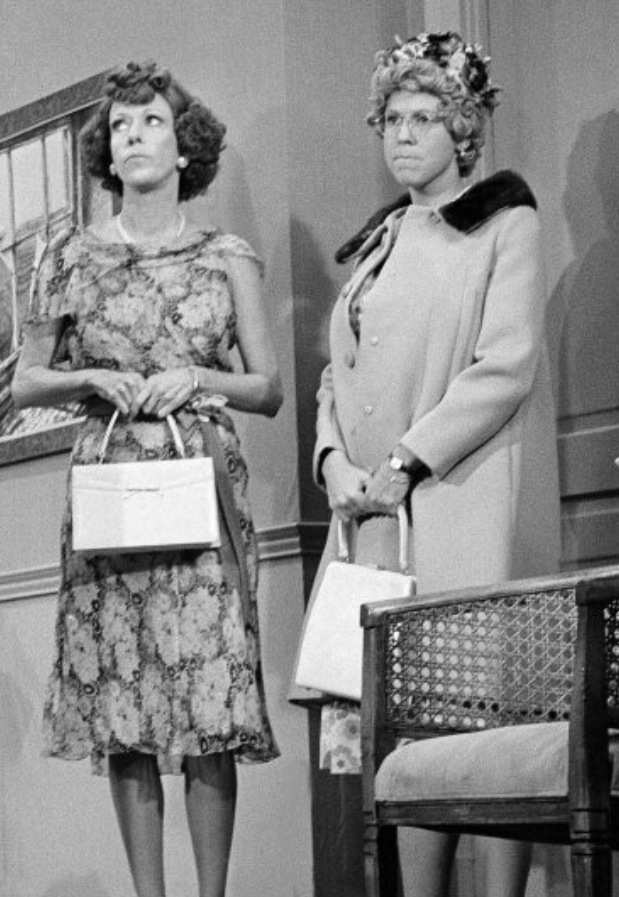
The program remained on television until 1978 and became one of the defining variety shows of its era.
Its format combined comedy sketches, musical performances, guest appearances, and parodies of popular films and cultural moments.
But the show was never simply about one performer.
Burnett was surrounded by an ensemble of talented actors and comedians, including Harvey Korman, Vicki Lawrence, Lyle Waggoner, and Tim Conway.
Their chemistry became one of the program’s greatest strengths.
The performers were skilled enough to follow carefully prepared scripts while remaining flexible enough to respond naturally when something unexpected happened.
That balance produced some of the show’s most memorable moments.
When the Performers Could Not Stop Laughing
One of the most beloved elements of The Carol Burnett Show was watching the performers attempt to maintain their composure.
Tim Conway and Harvey Korman, in particular, became associated with moments when a scene became so funny that one or more performers struggled to remain serious.
Burnett herself could also break into laughter.
Rather than damaging the program, these moments often made viewers feel closer to the people on screen.
The audience wasn’t simply watching professionals perform.
They were watching talented people enjoy one another’s company.
There was something reassuring about seeing performers who were supposed to make millions of people laugh suddenly lose control because their colleague had done something unexpected.
It reminded viewers that comedy was not merely a product.
It was also a shared experience.
The Importance of Ensemble Comedy
Burnett’s leadership style was another important part of the show’s success.
Although the program carried her name, she understood the value of giving other performers space.
Harvey Korman developed a distinctive comic presence.
Vicki Lawrence became an important member of the ensemble and eventually created characters that remained associated with her career.
Tim Conway brought a unique physical and improvisational style to the program.
Together, they created a dynamic that could not have been reproduced by one performer alone.
Burnett’s strength as a host and leading performer included recognizing when another comedian’s contribution could make a scene better.
That generosity became part of the show’s identity.
It was never simply Carol Burnett standing in the center while everyone else supported her.
It was an ensemble built around trust.
Comedy That Found the Humor in Everyday Life
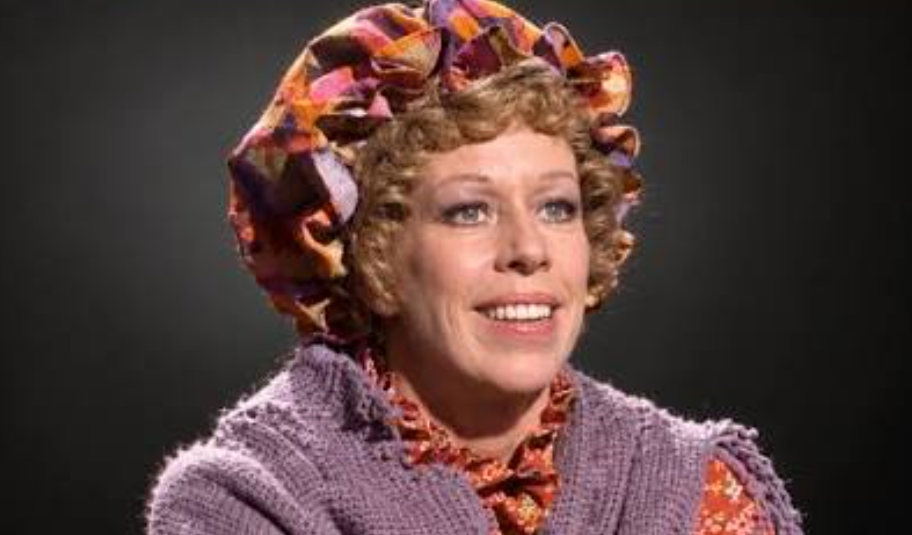
Another reason Burnett’s work remains recognizable is that many of her characters were exaggerated versions of people audiences already knew.
They could be nervous.
They could be overly confident.
They could be frustrated.
They could desperately want to impress someone.
They could misunderstand a situation and make it even worse.
These qualities made the characters accessible.
Even when a sketch became completely absurd, there was often a recognizable human emotion underneath it.
That is one of the secrets of enduring comedy.
Audiences may not remember every line.
But they remember how a character made them feel.
They remember the awkward moment.
The exaggerated reaction.
The expression that lasted just a fraction longer than expected.
The pause before the punchline.
Burnett understood how powerful those small details could be.
Physical Comedy and the Art of the Expression
Physical comedy requires extraordinary timing.
A performer must understand exactly when to move, when to pause, and when to let an audience anticipate what is coming.
Burnett was exceptionally comfortable with that style.
A simple change in posture could communicate an entire personality.
A raised eyebrow could turn an ordinary sentence into a joke.
A dramatic pause could make the audience laugh before the performer even delivered the punchline.
She also understood that physical comedy becomes more effective when the performer treats the situation seriously.
The character doesn’t know that the situation is funny.
The audience does.
That contrast creates the humor.
Burnett repeatedly demonstrated an ability to remain committed to the reality of a character while allowing the audience to see the absurdity surrounding that character.
Why Her Work Was Important for Women in Entertainment
Burnett’s career also carried broader significance.
At a time when television comedy was often dominated by male performers, she became the central figure of a major network comedy and variety program.
The fact that The Carol Burnett Show carried her name was meaningful.
She wasn’t simply a supporting actress.
She wasn’t simply a singer appearing between comedy segments.
She was the leader of the production.
She demonstrated that a woman could anchor a major television program while moving comfortably between different forms of entertainment.
She could sing.
She could act.
She could perform broad physical comedy.
She could host.
She could work with an ensemble.
And she could build a television identity that lasted for decades.
Her career became an example for later generations of women working in comedy and entertainment.
The Power of Being Willing to Look Ridiculous
One of Burnett’s most enduring qualities may have been her lack of fear about looking foolish.
In an industry where appearance and image can become extremely important, she repeatedly showed that the performer who is willing to surrender dignity for a laugh can create something memorable.
She could wear exaggerated costumes.
She could play characters with ridiculous personalities.
She could make an enormous facial expression.
She could allow herself to become the center of an absurd situation.
The result was not embarrassment.
It was connection.
Audiences trusted performers who were willing to laugh at themselves.
Burnett’s comedy frequently communicated that nobody had to be perfect to be entertaining.
In fact, imperfection could be the funniest part.
The Emotional Side of Comedy
Although Burnett was primarily known for comedy, her performances also demonstrated considerable emotional range.
Comedy often works because audiences recognize the feelings underneath the jokes.
A character who desperately wants approval can be funny because viewers understand that desire.
A character who tries too hard to appear confident can be entertaining because many people recognize the insecurity behind the behavior.
A character who makes an embarrassing mistake can become memorable because everyone has experienced embarrassment.
Burnett’s ability to move between humor and genuine emotion gave her performances additional depth.
The laughter was important.
But so was the feeling of recognition.
Why Families Remember Her
Television has changed dramatically since the era of The Carol Burnett Show.
Viewers now have access to countless channels, streaming services, social media platforms, and short-form videos.
Entertainment is no longer something that families necessarily watch together at the same time.
That makes the memory of traditional variety television especially meaningful.
For many people, watching Burnett was a family activity.
A parent laughed.
A child laughed because the parent was laughing.
A grandparent remembered a favorite character.
Someone repeated a joke the next day.
A sketch became part of family conversation.
Years later, an old clip could bring all those memories back.
This is one of the strongest forms of television nostalgia.
The audience isn’t only remembering the program.
They are remembering who they were with when they watched it.
A Legacy Built on Shared Laughter
Burnett’s legacy demonstrates that entertainment can become part of personal history.
People often remember important television moments through the people who shared them.
A comedy sketch can remind someone of a childhood living room.
A song can bring back memories of a parent.
A familiar performer can make someone think about grandparents who are no longer there.
The program becomes connected to a period of life.
That is why measuring Burnett’s influence only through ratings, awards, or television milestones does not tell the whole story.
There is another kind of success.
It is the ability to create memories that remain meaningful long after an episode has ended.
The Importance of Carol Burnett’s Generosity as a Performer
Another important part of Burnett’s legacy is her willingness to share the spotlight.
Great ensemble comedy depends on performers trusting one another.
A lead performer can make an entire production stronger by allowing colleagues to have their own moments.
Burnett’s collaborations with performers such as Conway, Korman, and Lawrence demonstrated how powerful that approach could be.
The audience became invested in the group.
They wanted to see what would happen when the performers appeared together.
They enjoyed the characters individually, but they also enjoyed the chemistry between them.
That chemistry created a feeling that the audience was being invited into something special.
Why Younger Audiences Can Still Discover Her Work
Although The Carol Burnett Show belongs to an earlier era of television, its basic comedic principles remain understandable.
Good timing still works.
A funny expression still works.
A character who takes an absurd situation completely seriously can still make people laugh.
An unexpected reaction can still surprise an audience.
And performers who genuinely enjoy working together can still create memorable entertainment.
For younger viewers discovering Burnett through clips, interviews, retrospectives, or classic television programming, the style may look different from contemporary comedy.
But the emotional mechanics remain familiar.
The goal is still the same:
Create a moment that makes people laugh.
More Than a Television Star
Carol Burnett’s legacy ultimately reaches beyond television.
She became an example of how a performer can build a career around authenticity, versatility, collaboration, and a willingness to take creative risks.
She showed that comedy does not always require complicated technology or elaborate production techniques.
Sometimes it requires only a talented performer, a strong character, good timing, and an audience willing to laugh.
Her work also demonstrated the importance of generosity.
A successful performer does not have to make every moment about themselves.
Sometimes the funniest moment belongs to the person standing beside them.
Burnett understood that principle, and it helped create the ensemble chemistry that audiences continue to remember.
The Memories That Outlast the Show
When people talk about Carol Burnett today, they often remember specific moments.
A costume.
A character.
A reaction.
A sketch.
A laugh that became impossible to contain.
But behind those individual memories is something larger.
Burnett helped create an era when television could become a shared family experience.
She made audiences feel as though they were welcome participants in the fun.
Her performances were polished, but they rarely felt cold.
Her comedy could be carefully rehearsed while still appearing spontaneous.
Her characters could be ridiculous while remaining recognizable.
And her laughter could become as memorable as the jokes themselves.
That combination is difficult to reproduce.
A Legacy of Laughter
Carol Burnett’s place in entertainment history is built on far more than one television program.
It is built on decades of work and on the affection of audiences who saw something familiar in her performances.
She understood that laughter could bring people together.
She understood that performers could be talented without taking themselves too seriously.
And she understood that sometimes the most memorable moment is not the perfectly delivered punchline, but the moment when everyone on stage starts laughing together.
For generations of viewers, that laughter became part of family life.
It filled living rooms.
It interrupted conversations.
It created memories.
And years later, it could still return with the sound of an old recording or the sight of a familiar face.
That may be one of the greatest accomplishments an entertainer can achieve.
Not simply to be famous.
Not simply to be remembered.
But to become connected to people’s happiest memories.
Carol Burnett did that through comedy, music, character work, collaboration, and an unmistakable willingness to make herself part of the joke.
Her legacy continues because the fundamental idea behind her work remains timeless:
People like to laugh together.
They like to see performers having fun.
They like characters who remind them of people they know.
And they appreciate entertainers who can make an ordinary evening feel special.
Long after the television set has gone dark, those memories can remain.
A family sitting together.
A familiar voice.
A perfectly timed expression.
A room filled with laughter.
And Carol Burnett at the center of it all, reminding generations that sometimes the simplest gift an entertainer can give is the chance to laugh together.