Uncategorized
My Wife Was in a Coma for Two Months—Then Our Son Revealed What Happened Every Saturday.

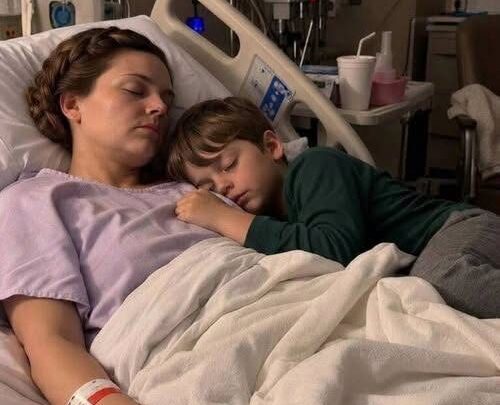
Every day after school, my seven-year-old son, Noah, went straight to the hospital to see his mother, Emma, who had been in a coma for two months. He refused to miss a single day.
One Saturday, I insisted he come home and sleep in his own bed.
But Noah looked at me and whispered:
“Dad, I can’t leave Mom on Saturdays.”
“Why not?”
“Because that’s when she talks to me.”
I assumed grief was making him imagine things.
Until I stayed beside him and witnessed something I couldn’t explain.
My name is Jeremy. Two months earlier, I’d been away on a business trip when my mother phoned.
“Jeremy, come home. It’s Emma.”
My stomach clenched.
“What happened?”
“She’s in the hospital. She’s in a coma. Noah won’t leave her.”
I walked out of my meeting and raced home.
When I got there, Emma lay unconscious in a hospital bed. Noah sat beside her, holding her hand.
“Daddy, when will Mommy wake up?”
I knelt next to him.
“I don’t know, buddy. But the doctors are taking good care of her.”
For the next two months, our lives revolved around that hospital room.
Noah went to school, but Grandma drove him to the hospital every afternoon.
He did his homework beside Emma.
He read her superhero comics.
He told her about his classmates.
Sometimes he fell asleep with his head near her hand.
He even begged to stay overnight.
Mom and I worried. He was only seven. He needed rest, friends, and time away from the hospital.
That Saturday, I sat down beside him.
“Buddy, even superheroes need to recharge. Let’s go home tonight.”
Noah shut his comic.
“What day is it?”
“Saturday.”
“Then I can’t go.”
“Why?”
“Mom talks to me on Saturdays.”
I stared at him.
“Noah, Mom can’t speak right now.”
He looked me straight in the eye.
“Then stay and see.”
I agreed.
For nearly an hour, nothing happened.
Noah told Emma about school, his spelling test, and Grandma burning pancakes.
From the corner, Mom objected.
“They weren’t burned.”
Noah grinned.
“They were black, Grandma.”
Eventually, Mom went home.
I stayed beside Noah.
Around seven, I stood up to fetch coffee.
He looked up at once.
“You promised you’d stay.”
“I’m only getting coffee.”
“There’s coffee down the hall. Why do you need to leave?”
I stopped.
Then I sat back down.
“You’re right. I’ll stay.”
Twenty minutes later, Noah scooted closer to Emma.
“Okay, Mom. Dad’s here.”
He slid his hand beneath hers.
“Mom, is Dad here with us?”
We waited.
Then Emma’s index finger moved.
Once.
Part 2: Yes and No
I leaned forward.
“Emma?”
Nothing.
Noah looked at me.
“See? She said yes.”
I frowned.
“What do you mean?”
“One movement means yes. Two means no.”
I knew unconscious patients could make involuntary movements. I didn’t want to mistake a reflex for communication.
“Show me, buddy.”
Noah nodded.
“Mom, is my name Noah?”
Her finger moved once.
He asked another question.
“Am I nine years old?”
Her finger moved twice.
My heart raced.
“Take your hand away for a second, Noah.”
He did.
I leaned toward Emma.
“Emma, is Noah seven?”
After a pause, her finger moved once.
I sank back into my seat, stunned.
“How long has this been going on?”
Noah lowered his head.
“About four Saturdays.”
“Why didn’t you tell me?”
“I tried. They said people in comas sometimes move.”
I swallowed.
“Buddy, you should’ve told me.”
He looked hurt.
“You wouldn’t have believed me either.”
“Why would you think that?”
“Because I heard you and Grandma talking about keeping me away from Mom.”
I remembered that conversation.
We’d been worried Noah wasn’t sleeping enough.
But he had misunderstood.
“I thought you’d stop bringing me here,” he whispered.
I took his hand.
“We were worried about you, sweetheart.”
He nodded.
Then he said something that struck me harder than anything else.
“Dad, why are you always scared to stay with Mom?”
I froze.
“Scared? Noah, I’m here every day.”
“I know. But you’re always leaving.”
He started counting on his fingers.
“You get coffee. You take work calls. You talk to Grandma. You ask the nurses questions. You go downstairs.”
I tried to answer.
Every reason sounded sensible.
But Noah wasn’t done.
“You come here a lot, Dad. But when everything gets quiet, you leave.”
I looked toward Emma.
For illustrative purposes only
He was right.
For two months, I’d kept myself busy because sitting beside my unconscious wife with nothing to do terrified me.
Then Noah spoke again.
“I think you’re scared Mom will remember.”
My chest tightened.
“Remember what?”
“You two fighting before your trip.”
I closed my eyes.
Emma and I had argued the evening before I left.
She’d stood in our kitchen, asking me to stay home.
“Jeremy, please don’t go this time.”
“Emma, it’s only three days.”
“It’s never just three days. You’re always working.”
“The meeting is important.”
“And what about us?”
I’d picked up my suitcase.
“We’ll talk when I get back.”
Then I’d walked out.
We never had that conversation.
Emma’s medical emergency wasn’t caused by my trip. I knew that.
But guilt had trailed me ever since.
Noah watched me quietly.
“Was Mom angry when you left?”
“Yes.”
“Is that why you won’t stay?”
I took a breath.
“Partly.”
He looked puzzled.
“But you love Mom.”
“More than anything.”
“Then why?”
I struggled to explain.
“Sometimes I get so busy fixing problems that I forget people need more than solutions.”
Noah looked toward Emma.
“Mom just wanted you here.”
I nodded.
“I know that now.”
He thought for a moment.
“Let’s ask her something.”
“What?”
“If she’s still mad.”
My heart began to pound.
“Noah, maybe we shouldn’t.”
But he turned to Emma.
“Mom, are you mad at Dad?”
Nothing happened.
He waited.
Then asked again.
Still nothing.
I looked away.
“Maybe she’s tired.”
Noah frowned.
“Maybe that’s too hard.”
He thought carefully.
Then leaned closer.
“Mom, do you want Dad to stay?”
Silence.
I watched her hand.
Several seconds passed.
Then one finger moved.
Once.
Yes.
Part 3: Right Here
I couldn’t speak.
Noah smiled.
“See, Dad? She wants you here.”
I gently took Emma’s hand.
For two months, I’d pictured her waking up and remembering our argument.
I’d feared she would be angry.
But now, watching that tiny movement, I understood something simple.
I didn’t need to solve everything.
I needed to stay.
I turned to Noah.
“Buddy, you don’t have to do this alone anymore.”
He frowned.
“But Mom needs someone.”
“I know. And I’m here.”
“What if she wakes up?”
“I’ll be here.”
“What if she tries to talk?”
“I’ll listen.”
“What if work calls?”
“Someone else can handle it when possible.”
He studied my face.
“What about coffee?”
I smiled through my tears.
“Coffee can wait.”
Then I gently squeezed his shoulder.
“I’ve got Mom, Noah. You can rest.”
His chin trembled.
For weeks, he’d believed that staying beside Emma was his responsibility.
He was only seven.
And somehow, I’d let him carry that fear alone.
Later, I told the nurse about Emma’s finger movements.
I didn’t claim she had woken up.
I described what we’d seen and asked the medical team to evaluate her responses.
Over the next few days, the doctors monitored her closely.
Sometimes she moved.
Sometimes she didn’t.
They explained that responses in patients with impaired consciousness can be hard to interpret.
But they took Noah’s observations seriously.
That meant everything to him.
That night, Grandma came back.
For illustrative purposes only
Noah stiffened the moment I gathered his school things.
“I’m not leaving Mom.”
I knelt beside him.
“I’m staying tonight.”
“But it’s Saturday.”
“I know.”
“She needs someone.”
“And she has me.”
He looked unsure.
“You promise?”
“Yes.”
“Right here?”
“Right here.”
At last, he hugged Emma gently.
“Good night, Mom.”
He walked toward the door, then turned back.
“Dad’s staying with you.”
That night, Noah slept in his own bed for the first time in weeks.
And I stayed beside my wife.
No unnecessary calls.
No wandering the hallways.
No hunting for excuses to leave.
I held Emma’s hand.
“I’m sorry,” I whispered.
Her fingers stayed still.
“I thought taking care of everything meant I was being a good husband.”
I looked at her.
“But I forgot how important it was to simply be here.”
I stayed until morning.
Epilogue: Present
Over the following weeks, Emma began showing small signs of improvement.
An occasional movement.
Brief responses to familiar voices.
Moments when her eyes opened.
Her progress was slow, and the doctors kept evaluating her condition.
We learned to appreciate each small change without jumping to conclusions.
Noah still visited after school.
But now he went home for dinner.
He played with friends.
He laughed more.
Sometimes he even grumbled about leaving a playdate to go to the hospital.
I was grateful.
My little boy was becoming a child again, instead of his mother’s full-time protector.
Saturdays remained special.
Only now, I stayed too.
Several weeks later, Noah sat beside Emma, telling her about school.
Suddenly, he turned to me.
“Dad, you ask her today.”
I smiled.
“Are you sure?”
He nodded.
I moved next to Emma and took her hand.
“Hey, sweetheart. It’s me.”
Her fingers were warm.
I thought about what to ask.
Then I smiled.
“Emma, do you think Noah will ever learn how to spell ‘separate’?”
Noah groaned.
“Dad! That’s not funny.”
I laughed softly.
Then watched Emma’s hand.
Several seconds passed.
Her index finger moved.
Once.
Noah burst out laughing.
I laughed with him.
For the first time in months, our hospital room was filled with joy instead of constant fear.
I looked at my son.
For weeks, I’d believed he refused to leave because he couldn’t accept his mother’s condition.
But I’d misunderstood.
Noah stayed because he believed somebody had to.
And without realizing it, I’d made my seven-year-old son feel that somebody was him.
I’d been visiting every day.
Talking to doctors.
Paying bills.
Managing schedules.
Doing everything I thought a responsible husband should do.
But Noah had noticed what I’d missed.
There’s a difference between visiting someone you love and truly being present for them.
It took my seven-year-old son and one tiny movement of Emma’s finger to teach me that lesson.
And this time, I wasn’t going anywhere.