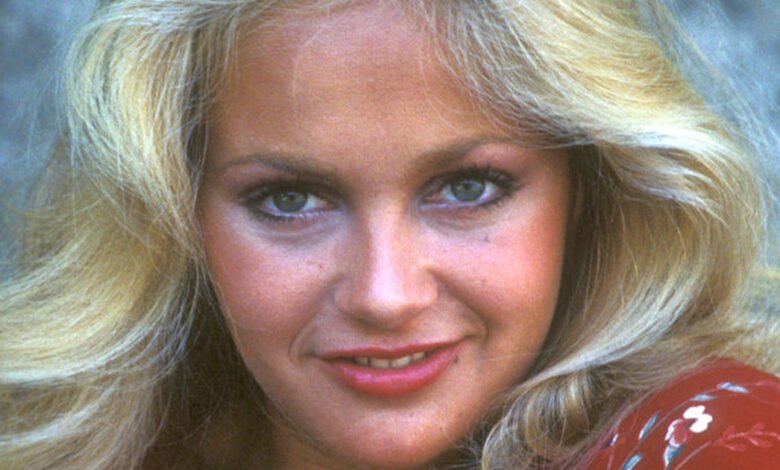
For millions of television viewers, Charlene Tilton will forever be associated with one unforgettable character: Lucy Ewing from the legendary television series Dallas.
During the height of the show’s popularity, Tilton experienced a level of fame that few television actors ever achieve. She appeared on magazine covers, became a familiar face on television programs around the world, and found herself at the center of one of the biggest entertainment phenomena of her generation.
Her character’s 1981 wedding on Dallas attracted an extraordinary television audience, becoming one of the most memorable moments in the show’s history.
From the outside, it looked like the perfect Hollywood success story.
But behind the cameras was a very different reality.
Tilton’s journey to television stardom began with a difficult childhood marked by family instability, foster care, and painful experiences at home. Later, after achieving fame, she faced the pressures that came with being recognized everywhere she went, relationship difficulties, financial problems, and devastating personal loss.
Yet her story did not end with those difficult chapters.
Over the years, Tilton found new ways to use her experience, particularly through her work with children and adults on the autism spectrum.
Her life has become a story not simply about celebrity, but about persistence, adaptation, and finding purpose after difficult seasons.
Becoming Lucy Ewing on Dallas
When Dallas premiered in 1978, few could have predicted just how influential the series would become.
The drama centered around the wealthy Ewing family and their complicated relationships, business interests, rivalries, romances, and personal conflicts.
The series quickly became an international television sensation.
At the center of that world was Lucy Ewing, the spirited young member of the Ewing family.
Tilton brought a distinctive energy to the character.
Lucy was young, emotional, sometimes impulsive, and frequently caught between the expectations of her powerful family and her own desire for independence.
Tilton’s performance made the character memorable.
Her role also gave her something she had dreamed about since childhood: the opportunity to become a professional actress.
But reaching that point had required enormous determination.
A Difficult Childhood
Charlene Tilton was born on December 1, 1958, in San Diego, California.
Her childhood was far removed from the glamorous world she would later enter.
She was raised primarily by her mother, Katherine, who experienced serious mental health challenges.
Her biological father, who was connected to the U.S. Air Force, was largely absent from her childhood.
Tilton has spoken publicly about the emotional impact of growing up without a relationship with her biological father.
The lack of stability at home made childhood complicated.
By the time she was around five years old, she experienced periods in foster care and lived with relatives.
Instead of growing up in one consistently stable environment, she moved between different homes.
For a young child, that kind of uncertainty can be deeply difficult.
Tilton later recalled hearing conversations about whether another family would take her in.
Those experiences influenced the way she viewed independence.
She learned early that she could not always depend on adults to create the stability she needed.
Her Mother’s Mental Health Struggles
One of the most painful experiences of Tilton’s childhood involved her mother’s mental health.
When Charlene was still very young, her mother was hospitalized for treatment.
Tilton later described witnessing her mother being restrained during one of those difficult periods.
For a child, seeing a parent in such circumstances can be frightening and confusing.
When her mother eventually returned home, life did not immediately become easy.
Medication was part of her mother’s treatment, but the family continued to experience significant challenges.
Tilton has described living conditions that were difficult and embarrassing for a child who wanted to have friends over.
She later explained that she often avoided bringing classmates to her home because she was worried about what they might see.
These experiences could have left her feeling hopeless.
Instead, they contributed to her determination to build a different future.
Finding Escape Through Movies and Acting
During her childhood, movies provided Tilton with a temporary escape from the difficulties surrounding her.
Films such as Mary Poppins and The Sound of Music captured her imagination.
For a young girl dealing with instability, watching stories unfold on screen offered a glimpse of another world.
Eventually, the idea of acting became more than a fantasy.
It became a goal.
By her teenage years, Tilton was determined to pursue acting.
She attended Hollywood High School and became involved in drama.
Acting gave her a way to express herself and, perhaps more importantly, gave her a direction.
She wasn’t simply dreaming about becoming famous.
She wanted to create a life that was different from the one she had experienced as a child.
Starting Her Acting Career
Tilton began securing small television roles while still young.
She appeared on programs including Happy Days and Eight Is Enough.
In 1976, she appeared in Disney’s Freaky Friday, alongside Jodie Foster.
These opportunities helped her gain experience and exposure.
Then came the role that would change everything.
In 1978, she was cast as Lucy Ewing on Dallas.
The opportunity did not come easily.
According to accounts of her early career, she was initially viewed as too young or inexperienced for the part.
But Tilton did not simply accept the rejection.
She continued pursuing the opportunity and remained determined to demonstrate that she belonged on the show.
Her persistence eventually paid off.
The producers gave her the opportunity to become Lucy Ewing.
It would become the defining role of her career.
The Incredible Success of Dallas
As Dallas grew into a global phenomenon, Tilton’s fame grew alongside it.
The show attracted tens of millions of viewers and became one of the most recognizable television dramas of its era.
Lucy Ewing became an important part of the show’s story.
Tilton’s performance helped establish Lucy as more than simply a younger member of the Ewing family.
She had her own relationships, conflicts, ambitions, and emotional struggles.
One of the biggest moments came with Lucy’s 1981 wedding.
The episode attracted an enormous audience, with reports putting the U.S. viewership at approximately 65 million people.
That kind of television audience is difficult to imagine today.
At the time, however, Dallas was one of the few programs capable of bringing such a huge portion of the country together to watch the same story unfold.
Tilton had become a household name.
Life at the Center of the Spotlight
The success of Dallas opened many doors for Tilton.
She appeared on magazine covers, participated in television interviews, and became a recognizable celebrity beyond the series itself.
She also appeared on other television programs and entertainment productions.
Her career included appearances connected with shows such as The Love Boat, Fantasy Island, and Circus of the Stars.
She also took part in major television events and public appearances.
The attention was exciting, but it came with a cost.
Being recognized everywhere meant that privacy became difficult to maintain.
People sometimes approached her unexpectedly.
Strangers would stare, point, or attempt to touch her hair.
When she went out with her young daughter, she could not always enjoy a normal meal without being noticed.
Celebrity can create extraordinary opportunities, but it can also make ordinary life much more complicated.
Personal Challenges Behind the Fame
While Tilton’s professional career was thriving, her personal life was becoming increasingly complicated.
In 1982, she married country singer Johnny Lee.
Their marriage lasted approximately two years before ending in divorce.
Because Tilton was a well-known public figure, personal difficulties could quickly become entertainment news.
Instead of being able to deal with relationship problems privately, she often found herself facing public attention.
She also experienced unwanted phone calls and other intrusions into her personal life.
At the same time, financial difficulties began affecting her.
The image of a successful television star did not necessarily reflect the reality of her financial circumstances.
Eventually, she faced the loss of her home through foreclosure.
It was a painful reminder that fame and financial security are not always the same thing.
When the Career Suddenly Changed
By the middle of the 1980s, Tilton’s career had entered a difficult period.
Her appearance as host of Saturday Night Live did not receive the response she had hoped for.
Then, in 1985, her time on Dallas came to an end.
For an actor who had spent years closely associated with one of television’s most successful series, leaving such a role represented a major change.
Fans were disappointed.
Tilton reportedly received thousands of letters from viewers who wanted to see Lucy return.
There were also continued rumors about whether her character might eventually come back.
Her departure demonstrated how quickly the entertainment industry could change.
One year, an actor could be at the center of television culture.
The next, they could be searching for the next opportunity.
Her Friendship With Larry Hagman
One of Tilton’s strongest connections from her Dallas years was with Larry Hagman, who played J.R. Ewing.
Hagman was not only an important figure on the series but also someone Tilton remained close to after her departure.
She later recalled that Hagman had expressed his support for her acting abilities and believed she deserved another opportunity on the show.
Their relationship remained meaningful long after the original series.
When Hagman’s health declined years later, Tilton remained concerned about him.
Hagman was diagnosed with liver cancer in the 1990s and eventually underwent a liver transplant.
He survived that difficult period and continued working for many years.
Tilton later appeared in Dallas Reunion: The Return to Southfork in 2004.
Her connection to the Dallas family remained an important part of her life.
A Devastating Loss in 2009
Another painful chapter arrived in 2009.
Tilton’s fiancé, cinematographer Cheddy Hart, died suddenly from heart failure at the age of 54.
His death was devastating.
Tilton later spoke about how difficult it was to process the loss.
Grief can affect people in unexpected ways, and she has described a period when she struggled to cope and turned to unhealthy habits.
The loss represented another major turning point.
But eventually, Tilton began looking for a way to transform her pain into something constructive.
Discovering a New Purpose
Rather than allowing grief to define the next chapter of her life, Tilton became increasingly involved in autism awareness.
She began working with children and adults on the autism spectrum and became an advocate for greater understanding and acceptance.
Her acting background also became useful in this work.
She taught acting to people on the autism spectrum, helping students explore creativity, communication, confidence, and self-expression.
The work gave Tilton a sense of purpose that was different from the attention she had experienced as a television star.
Instead of being on a stage because millions of people were watching, she was using her experience to help other people find their own voices.
That became one of the most meaningful chapters of her life.
Becoming a Grandmother
As the years passed, Tilton also embraced another important role: grandmother.
Her daughter, Cherish, became an important part of her life, and Tilton eventually became a grandmother to two grandsons.
She has affectionately referred to herself as “Glamma.”
For someone whose childhood had been marked by instability, building a close family of her own represented something deeply meaningful.
The contrast between her early years and her life as a grandmother is striking.
She grew up uncertain about where she belonged.
Later, she created a family environment in which she could experience connection, love, and continuity across generations.
Learning More About Her Family History
In recent years, Tilton has also spoken about learning more about her biological family.
A DNA test helped her discover three half-siblings whom she had never previously known.
The discovery offered answers to questions that had remained with her for decades.
The family eventually located her biological father, but they learned that he had died only months earlier at the age of 93.
Although the discovery came too late for a direct reunion, it gave Tilton new information about her family history.
She has approached that discovery without allowing resentment to dominate her life.
Her attitude reflects an important theme that has appeared throughout her story: choosing to focus on what can still be built rather than remaining trapped by what cannot be changed.
A Different Kind of Success
Looking at Charlene Tilton’s life today, it is easy to focus on her years of celebrity.
She was part of one of television’s biggest shows.
She played an iconic character.
She appeared before enormous audiences.
Her image appeared in magazines around the world.
But her life cannot be understood only through those achievements.
Her childhood was difficult.
Her relationship with her parents was complicated.
She experienced periods of instability.
She faced the intense pressures of celebrity.
She went through divorce, financial problems, career setbacks, and the devastating death of someone she loved.
Yet she continued moving forward.
That may be a more meaningful measure of success than fame itself.
What Charlene Tilton’s Story Can Teach Us
Tilton’s journey offers several lessons about resilience.
The first is that difficult beginnings do not necessarily determine the rest of a person’s life.
Her childhood circumstances were outside her control.
But she eventually made decisions that helped shape her future.
The second lesson is that success does not eliminate personal challenges.
Even people who appear to have everything can experience loneliness, grief, financial problems, and uncertainty.
Celebrity does not make someone immune to ordinary human difficulties.
The third lesson is that a person’s purpose can change.
Tilton’s early dream was to become an actress.
She achieved it.
Later, her priorities expanded.
Her work with people on the autism spectrum became another important part of her identity.
A Life Beyond Lucy Ewing
For many fans, Charlene Tilton will always be Lucy Ewing.
That connection is understandable.
Lucy was one of the memorable characters of a television era that continues to attract audiences decades later.
But Tilton’s real-life story extends far beyond the character she played.
She was a child who experienced instability and hardship.
She was a teenager who dreamed of becoming an actress.
She was a young performer who fought for an opportunity.
She became an international television star.
She experienced the difficult side of fame.
She endured personal loss.
And eventually, she found another way to use her experience to help others.
Her story is not simply one of Hollywood success.
It is a story about rebuilding.
Looking Back With Perspective
Today, Tilton has the perspective that comes with decades of experience.
She has spoken about her childhood without allowing it to become the only definition of who she is.
She has discussed painful memories while emphasizing the importance of looking toward the future.
Her approach can be summed up by a philosophy she has shared about refusing to live in self-pity and trying to find the positive side of difficult experiences.
That outlook has helped her navigate some extraordinary highs and lows.
From the enormous success of Dallas to the quieter chapters of her later life, she has continued to adapt.
An Enduring Legacy
Charlene Tilton’s career remains closely connected to one of the most influential television series in American history.
But her personal legacy may ultimately be broader.
It includes her determination to pursue acting despite a difficult childhood.
It includes the years she spent entertaining millions as Lucy Ewing.
It includes her ability to continue working after leaving Dallas.
It includes the lessons she learned from relationships, financial difficulties, and grief.
And it includes her efforts to support people on the autism spectrum.
Her life demonstrates that a person’s story can have many chapters.
One chapter may be about ambition.
Another may be about fame.
Another may involve hardship.
Another may involve loss.
And another may be about discovering a new purpose.
For Charlene Tilton, the journey did not end when the cameras stopped rolling on Dallas.
In many ways, it simply entered a different phase.
The actress who once became famous around the world for playing Lucy Ewing eventually found something beyond television fame: a deeper connection with family, a commitment to helping others, and a perspective shaped by everything she had survived.
Her story is a reminder that success is not always measured by how high someone rises.
Sometimes it is measured by how many times they are able to stand again, find meaning in their experiences, and continue building a life that feels authentic and worthwhile.