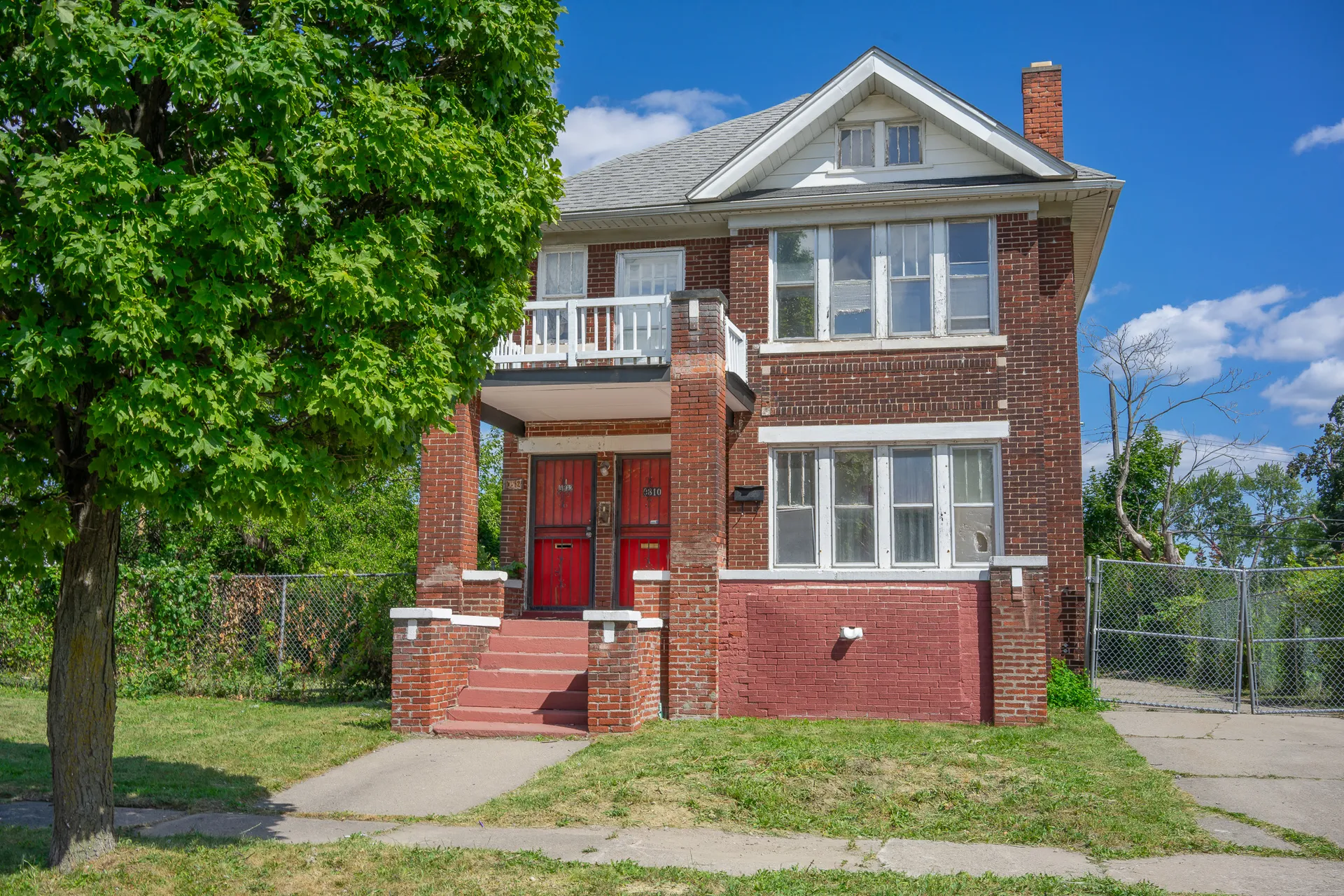
9810 Chenlot: Detroit Duplex Offers Six Bedrooms, Two Units and Significant Investment Potential
A Multifamily Opportunity With Room to Add Value
Finding an affordable multifamily property with multiple bedrooms, separate living units, and renovation potential can be an attractive proposition for buyers looking to enter or expand within the real estate investment market.
Located in Detroit, Michigan, 9810 Chenlot is a two-story duplex offering an unusual combination of space, flexibility, and potential. The property consists of two three-bedroom, one-bathroom units, providing a total of six bedrooms and two full bathrooms across approximately 2,686 square feet of above-ground living space.
Built in approximately 1920, the brick property has the traditional appearance and construction character associated with many of Detroit’s older residential neighborhoods. The property is being sold as-is and presents an opportunity for an investor, house hacker, landlord, or renovation-minded buyer who can see the possibilities beyond its current condition.
The upper porch has recently been redone, which is an important improvement and can help enhance the exterior appearance of the building while reducing the need for immediate porch-related maintenance.
With multifamily zoning, public utilities, a basement, a 40-by-120-foot lot, and two residential units, the property offers several potential strategies for its next owner.
Why Duplex Properties Can Be Attractive to Investors
Duplexes occupy an interesting position in the real estate market because they can combine residential living with income potential.
Instead of purchasing a traditional single-family home with only one residential unit, a duplex provides two separate living spaces under one property ownership structure.
That can create flexibility.
An investor could potentially rent both units and generate income from two households.
An owner-occupant could live in one unit while renting the other, helping offset some of the costs associated with ownership.
A renovation-focused buyer could improve both units and potentially increase the property’s appeal to future tenants.
Of course, the actual financial performance of any investment depends on market rents, expenses, financing, vacancy, maintenance, taxes, insurance, and the condition of the property.
Two Three-Bedroom Units Create Flexibility
One of the biggest advantages of this property is its layout.
The listing describes two three-bedroom, one-bathroom units.
That means the building provides a total of six bedrooms and two full bathrooms.
Three-bedroom rental units can appeal to a wide range of tenants, including families, roommates, working professionals, and households that need additional space.
The bedroom count also gives the owner flexibility when determining how each unit should be marketed.
Depending on the local rental market, the units could potentially appeal to tenants seeking more space than a typical apartment provides.
Approximately 2,686 Square Feet of Living Space
The property contains approximately 2,686 square feet of interior livable space, all listed above grade.
That represents a substantial amount of usable residential space.
For investors, square footage is important because it provides room for multiple bedrooms, living areas, kitchens, bathrooms, storage, and other functional spaces.
For a renovation project, the size also creates opportunities to improve the property’s overall presentation and functionality.
The goal should be to determine which improvements provide the greatest benefit relative to their cost.
Not every renovation needs to be high-end.
In an investment property, durable, attractive, and cost-effective improvements can often be more appropriate than luxury finishes.
A Historic Detroit Property Built Around 1920
The duplex was built around 1920, giving it more than a century of residential history.
Older Detroit properties often have architectural details and construction characteristics that differ from modern apartment buildings.
The brick exterior provides a classic appearance and can offer visual appeal when properly maintained.
At the same time, a property of this age requires careful due diligence.
Potential buyers should evaluate the foundation, roof, masonry, electrical system, plumbing, heating equipment, windows, porches, basement, and other major components.
The fact that a building is older does not automatically make it a poor investment, but it does make a professional inspection particularly important.
Craftsman-Inspired Duplex Architecture
The property is identified with a Craftsman and duplex architectural style.
Craftsman homes are often associated with practical floor plans, substantial exterior materials, and traditional residential character.
The brick construction can contribute to the property’s appearance and durability.
For an investor planning renovations, preserving attractive original elements while updating outdated systems can sometimes create a strong balance between historic character and modern functionality.
The Recently Improved Upper Porch
One of the property’s notable recent improvements is the upper porch.
The porch has reportedly been redone, providing a refreshed exterior feature and potentially reducing immediate maintenance requirements in that area.
Porches can be an important part of older homes, particularly when they provide tenants with additional outdoor space.
A well-maintained porch can also contribute to curb appeal.
Future owners should still inspect the porch structure, railings, supports, stairs, and drainage to ensure that the recent work meets applicable standards and is in good condition.
An Unfinished Basement Adds Utility
The property includes an unfinished basement.
Although the basement is not included in the listed finished living area, it can still provide useful space for storage, utilities, maintenance equipment, or other permitted uses.
For a rental property, basement storage can be helpful because tenants often need places to keep seasonal belongings, tools, bicycles, and household items.
An investor may also consider whether any portion of the basement could be improved in the future.
However, converting basement space into legal living area is not automatic.
Ceiling height, emergency exits, moisture, ventilation, electrical requirements, zoning, and local building codes all need to be evaluated.
Natural Gas Forced-Air Heating
The property uses forced-air natural gas heating.
A central heating system can be an important feature for a multifamily property, particularly in Michigan.
Potential buyers should determine whether the property has separate heating systems for each unit or another configuration.
The age and condition of the furnaces should also be evaluated.
For investors, heating expenses can influence the property’s operating costs significantly, depending on how utilities are metered and allocated between units.
Public Water and Sewer Connections
The property is connected to public water and public sewer.
This is a practical advantage for a multifamily property because the owner does not have to manage a private well or septic system.
Nevertheless, buyers should verify the condition of the property’s plumbing and service connections.
A property built around 1920 may contain older pipes or plumbing components that have been repaired or replaced at different times.
A professional plumbing inspection can help identify potential problems before renovation begins.
MultiFamily Zoning Is an Important Feature
The property is listed with a MultiFamily zoning designation.
That is particularly relevant because the building is configured as a duplex.
Zoning should always be independently verified with the appropriate local authorities, especially if a buyer is considering renovations, unit modifications, additions, or changes in use.
Investors should also confirm that the existing configuration and any intended improvements comply with current regulations.
The 40-by-120-Foot Lot
The property sits on approximately 4,791 square feet of land, with listed dimensions of about 40 by 120 feet.
While this is a relatively compact urban lot, it provides a traditional footprint for a Detroit residential property.
The lot can potentially accommodate outdoor areas, landscaping, parking arrangements, or other permitted improvements depending on local requirements.
For tenants, even a modest yard can improve the appeal of a rental property.
House Hacking Potential
One of the most interesting strategies associated with a duplex is house hacking.
House hacking generally involves living in one unit while renting the other.
For an owner-occupant, this approach can potentially reduce the effective monthly housing expense because rental income from the second unit contributes toward property costs.
For example, an owner could occupy one three-bedroom unit while leasing the second unit to a tenant.
The exact financial benefit depends entirely on the purchase price, financing, rental income, taxes, insurance, utilities, maintenance, and other expenses.
Still, duplexes are naturally suited to this type of strategy because they provide two independent residential spaces.
Potential Long-Term Rental Investment
Another possible strategy is to rent both units.
A landlord could potentially establish two separate income streams from the same property.
This diversification can be useful because the owner is not entirely dependent on a single tenant.
If one unit becomes vacant, the second unit may continue generating income.
However, vacancies should always be included in financial projections.
Rental properties also require budgeting for repairs, maintenance, property management, insurance, taxes, turnover costs, and long-term capital improvements.
Renovation Could Increase Appeal
The property is presented as an opportunity to add value through renovation.
The most effective improvements will depend on the condition of the building and the expectations of the local rental market.
Potential upgrades could include:
- Fresh interior paint
- Updated flooring
- Modern lighting
- Kitchen improvements
- Bathroom renovations
- Improved doors and hardware
- Updated electrical fixtures
- Plumbing repairs
- HVAC maintenance
- Exterior masonry maintenance
- Porch improvements
- Landscaping
- Improved common areas
- Additional storage solutions
A successful investor should prioritize improvements based on return on investment rather than simply selecting the most expensive finishes.
Renovating the Kitchens
Kitchens can have a major influence on rental appeal.
A dated kitchen may benefit from new cabinets, countertops, lighting, flooring, fixtures, or appliances.
However, a complete kitchen replacement may not always be necessary.
If cabinets are structurally sound, refinishing or repainting them can sometimes create a fresh appearance at a lower cost.
Investors should also consider the durability of materials.
Rental properties experience more wear and tear than owner-occupied homes, so surfaces should ideally be attractive while remaining practical and easy to maintain.
Bathroom Improvements
Each unit includes one full bathroom.
Bathrooms are another important area for renovation.
A refreshed bathroom can make a rental unit feel cleaner and more modern.
Potential improvements could include a new vanity, updated fixtures, modern lighting, flooring, tile work, ventilation, and fresh paint.
Before cosmetic work begins, plumbing and water damage should be checked.
If older pipes or drainage systems require repairs, those costs should be incorporated into the overall renovation budget.
Creating Attractive Rental Units
The objective of a rental renovation is not necessarily to create a luxury apartment.
Instead, investors may want to create clean, comfortable, functional units that appeal to the target tenant market.
Neutral finishes can provide flexibility.
Durable flooring can simplify maintenance.
Modern lighting can improve the perception of space.
Well-designed kitchens and bathrooms can make an older property feel substantially newer.
Small improvements can collectively create a significant difference.
Detroit Real Estate Investment Considerations
Detroit has a diverse residential real estate market with neighborhoods ranging from historic districts to areas experiencing redevelopment and reinvestment.
For investors, location-specific research is extremely important.
A citywide average does not tell an investor what a particular street or neighborhood is worth.
Before purchasing, buyers should investigate comparable properties, rental rates, recent sales, neighborhood conditions, transportation access, employment centers, schools, parks, shopping, and planned development.
The property’s proximity to major expressways, schools, parks, shopping, and everyday conveniences is highlighted in the listing, potentially making location an important component of its appeal.
Understanding the Numbers Before Buying
The listing information indicates a price of approximately $115,000 under the seller-financing terms provided.
Those terms include a proposed $40,000 down payment, an 8% interest rate, and an 84-month term, with a listed payment of approximately $1,169 per month.
The listing also states that seller-financing or land-contract terms are negotiable.
These terms should be viewed as listing information rather than a guarantee of financing.
Buyers should carefully review all financing terms with qualified legal and financial professionals before entering into an agreement.
The additional $395 processing fee should also be included in the buyer’s overall acquisition-cost analysis.
Seller Financing Can Change the Investment Equation
Seller financing can sometimes provide an alternative to traditional mortgage financing.
Instead of obtaining a conventional loan from a bank, the buyer may make payments directly to the seller under an agreed contract.
For an investor, this can potentially make a property accessible when traditional financing is difficult to obtain.
However, seller financing requires careful examination.
The contract should clearly address the interest rate, payment schedule, maturity date, default provisions, ownership structure, insurance responsibilities, taxes, maintenance obligations, and other important terms.
Professional legal advice is especially important when dealing with land contracts or alternative financing arrangements.
Potential Value-Add Strategy
The property’s biggest investment appeal may be the possibility of increasing its value through strategic improvements.
An investor could potentially acquire the duplex, renovate the units, improve the exterior, stabilize occupancy, and then hold the property as a rental.
Alternatively, depending on market conditions, the investor could explore refinancing after improvements.
The important concept is that value should be created through a combination of improved physical condition, stronger tenant appeal, better functionality, and reliable operations.
BRRRR Strategy Considerations
Investors familiar with the BRRRR strategy may also find the property worth evaluating.
BRRRR stands for Buy, Rehab, Rent, Refinance, and Repeat.
The idea is to acquire a property with improvement potential, renovate it, rent it, refinance based on the stabilized value, and potentially use available capital toward another investment.
A duplex can be especially interesting for this model because there are two potential rental units.
However, investors must carefully calculate the after-repair value, renovation costs, rental income, financing costs, vacancy assumptions, and refinancing terms.
A project should never depend on optimistic projections alone.
Why Due Diligence Matters
Because this is an older multifamily building being sold as-is, thorough due diligence is essential.
Potential buyers should consider inspections of:
- Foundation
- Brick and mortar
- Roof
- Porch structure
- Electrical systems
- Plumbing
- Heating equipment
- Windows
- Basement
- Drainage
- Interior finishes
- Structural components
The buyer should also verify the legal status of both residential units.
Confirming zoning, occupancy requirements, permits, and applicable rental regulations can help prevent expensive surprises later.
Estimating the True Renovation Cost
Renovation costs can vary dramatically depending on the condition of the property.
A cosmetic update might be relatively straightforward.
A project involving major electrical, plumbing, structural, roofing, or masonry repairs could be much more expensive.
Investors should obtain multiple contractor estimates whenever possible.
A contingency fund is also recommended because unexpected issues are common in older buildings.
The final renovation budget should include labor, materials, permits, professional services, debris removal, financing costs, insurance, utilities, taxes, and holding expenses.
Long-Term Ownership Potential
A well-renovated duplex can potentially provide both immediate and long-term benefits.
If both units are maintained properly and rented to qualified tenants, the property may generate recurring rental income.
Over time, the owner may also benefit from property appreciation, principal reduction, and improvements made to the building.
However, real estate should always be viewed as a long-term business rather than a guaranteed source of profit.
Market conditions can change, vacancies can occur, and unexpected repairs can affect cash flow.
Who Might Be Interested in 9810 Chenlot?
This property could appeal to several types of buyers.
First-Time Investors
A buyer entering the multifamily market may appreciate the opportunity to own a property with two units rather than starting with a larger apartment building.
House Hackers
An owner-occupant could potentially live in one unit and rent the other, depending on financing and occupancy requirements.
Experienced Landlords
Investors already familiar with Detroit rental properties could evaluate the building as an addition to an existing portfolio.
Renovation Specialists
Contractors and experienced rehabbers may see an opportunity to improve the property and create additional value.
Long-Term Investors
A buyer focused on rental income and long-term ownership may consider stabilizing both units and holding the property as part of a broader portfolio.
Final Thoughts
9810 Chenlot in Detroit is a multifamily property with a combination of characteristics that can be difficult to find at an affordable entry point.
The two-story brick duplex contains approximately 2,686 square feet, with two three-bedroom, one-bathroom units providing six bedrooms and two full bathrooms in total.
The property also includes a full unfinished basement, natural gas forced-air heating, public water and sewer, a 40-by-120-foot lot, and multifamily zoning.
The recently redone upper porch adds another positive feature to the property.
At the same time, buyers should recognize that this is an as-is opportunity and that owning an older multifamily property requires careful evaluation.
The building dates back to approximately 1920, so the condition of its major systems, structure, plumbing, electrical components, roof, masonry, and basement should be investigated before purchase.
The potential is ultimately tied to the numbers.
For a house hacker, the second unit could potentially help offset housing expenses.
For a landlord, two units could provide two potential sources of rental income.
For a renovation investor, improving both apartments could create an opportunity to increase the property’s appeal and potentially its value.
Seller financing terms may provide another avenue for qualified buyers, although all financing arrangements should be carefully reviewed before signing a contract.
The property is not necessarily an opportunity for every buyer.
It is better suited to someone who understands renovation, rental management, multifamily ownership, or real estate investing and who is prepared to perform detailed due diligence.
For buyers looking for a Detroit duplex investment property with six bedrooms, multifamily zoning, substantial square footage, and renovation potential, 9810 Chenlot offers an interesting starting point.
With the right renovation plan, responsible property management, realistic financial projections, and careful attention to the local market, the property could potentially be transformed into a more modern and productive multifamily asset.
The combination of two residential units, a substantial amount of living space, an established brick exterior, public utilities, and a convenient urban location makes this a property worth evaluating for buyers who are comfortable taking on a value-add real estate project.
Ultimately, the opportunity is about more than the building’s current condition.
It is about what a knowledgeable buyer may be able to accomplish with thoughtful renovations, sound financial planning, and a long-term strategy.


From Zillow