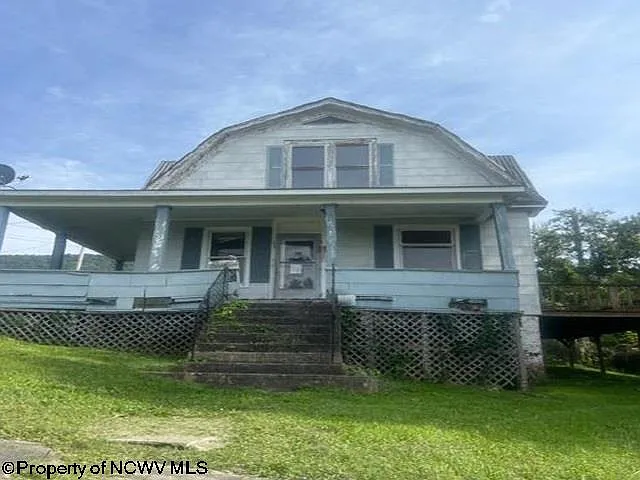
Affordable Bluefield, WV Fixer-Upper Offers Renovation Potential on a Quarter-Acre Lot
A Two-Story Renovation Opportunity in Bluefield, West Virginia
For buyers searching for an affordable real estate opportunity in West Virginia, properties that offer a combination of usable square footage, multiple bedrooms, a manageable lot, and renovation potential can be especially interesting.
This two-story single-family home in Bluefield, West Virginia, presents exactly that type of opportunity.
Built in approximately 1935, the Colonial-style residence contains about 1,456 square feet of interior living space and is situated on approximately 0.26 acres. The property includes three bedrooms, one full bathroom, and one half bathroom, along with a full unfinished basement.
The home is being offered as a fixer-upper and requires renovation.
For an owner-occupant with construction experience, a contractor, or a real estate investor looking for a value-add project, the property’s current condition could provide an opportunity to create substantial improvements over time.
At approximately $6 per square foot based on the provided listing information, the property represents a particularly low-cost entry point on paper. However, buyers should remember that the listed price does not reflect the total cost of ownership or renovation. A complete evaluation of the structure, systems, materials, and local market is essential before purchasing a property in need of significant work.
Why Fixer-Upper Properties Attract Investors
Fixer-upper homes have long attracted buyers who are willing to look beyond the current appearance of a property.
A house requiring renovation can sometimes be purchased at a lower initial price than a comparable move-in-ready property. The difference creates the possibility of adding value through repairs, modernization, improved functionality, and better presentation.
However, renovation investing requires careful planning.
The most important question is not simply whether a home is inexpensive.
Instead, investors should ask what the property could reasonably be worth after improvements, how much the renovation will cost, how long the project could take, and whether the final property will have sufficient market appeal.
This Bluefield property offers a relatively compact 1,456-square-foot footprint, which could make it more manageable than renovating a substantially larger house.
A 1935 Colonial-Style Home
The property was constructed around 1935 and is identified as having a Colonial architectural style.
Homes from this era can possess characteristics that distinguish them from modern construction.
The two-story layout gives the property a traditional residential appearance and separates the living areas vertically.
Although the current condition requires renovation, the underlying layout may provide a useful starting point for a future redesign.
Older homes should always be inspected carefully because age can affect many parts of the building, including plumbing, electrical systems, roofing, insulation, windows, structural components, and moisture management.
A professional inspection can help identify issues that are not immediately visible.
Three Bedrooms and One and a Half Bathrooms
The home includes three bedrooms, one full bathroom, and one half bathroom.
This configuration can work well for a variety of buyers.
A three-bedroom home is often appealing to families, couples who need additional space, or buyers who want a dedicated office or guest room.
For investors, three-bedroom rental properties can also appeal to a broad tenant audience depending on neighborhood rental demand.
The additional half bathroom is another practical feature.
Even a small secondary bathroom can make daily living more convenient, particularly when several people share a home.
During renovation, a buyer may want to evaluate the condition and placement of both bathrooms to determine whether cosmetic upgrades or more extensive remodeling would provide the best return.
1,456 Square Feet of Living Space
According to the property information, the house provides approximately 1,456 square feet of total interior livable space.
That is enough room to create a comfortable three-bedroom residence without the maintenance demands associated with a much larger home.
For a renovation project, square footage matters because it directly affects the potential cost of many improvements.
Flooring, paint, drywall, electrical work, heating, and other renovation expenses can increase with the size of the property.
A 1,456-square-foot home can therefore offer a reasonable balance between usable living space and renovation scope.
A Full Unfinished Basement
One of the property’s notable features is its full unfinished basement.
While the basement is not included in the finished living area, it provides additional space that could potentially be useful for storage, mechanical systems, laundry, a workshop, or future improvements.
The fact that the basement is unfinished gives a future owner flexibility.
Depending on local building regulations, moisture conditions, ceiling height, egress requirements, and other factors, portions of the basement could potentially be improved in the future.
However, buyers should not automatically assume that an unfinished basement can be converted into legal living space.
A professional evaluation and confirmation of local code requirements would be necessary before planning a basement finishing project.
Basement Renovation Considerations
Before spending money on a basement renovation, moisture should be one of the first concerns to investigate.
Older properties can experience water intrusion, condensation, drainage issues, or foundation-related moisture.
Potential buyers should examine the basement for signs of water damage, mold, staining, cracks, musty odors, or previous repairs.
The foundation and drainage around the property should also be reviewed.
If moisture problems exist, addressing those issues should generally come before cosmetic basement improvements.
Once the basement is dry and structurally suitable, it can become a useful part of the overall property strategy.
Natural Gas Heating
The property is listed with natural gas heating.
Natural gas is commonly used for residential heating and can provide an efficient source of heat when the equipment is properly maintained.
Because the home dates back to the 1930s, buyers should verify the age and condition of the heating system.
An HVAC professional can determine whether the existing system is operational, whether it requires repairs, and whether replacement would be more practical.
Heating is especially important in West Virginia, where winter temperatures can make reliable home heating a major consideration.
Public Water and Public Sewer
The property is connected to public water and public sewer.
These connections can be advantageous for a renovation project because the property does not rely on a private well or septic system.
Nevertheless, investors should verify the condition of the service lines and any applicable municipal requirements.
Older homes can have plumbing systems that differ substantially from those found in newer construction.
A plumbing inspection can help determine whether existing lines are suitable for continued use or whether replacement should be incorporated into the renovation budget.
Electric Service Is Available
The listing indicates that electric utility service is present on the property.
However, the exact specifications of the electrical system are not provided.
This is particularly important in a house built in 1935.
Older electrical systems may not have been designed for the demands of modern households.
A renovation may require additional outlets, updated panels, new wiring, improved lighting, and other electrical upgrades.
A licensed electrician should evaluate the system before renovation plans are finalized.
The Importance of Inspecting Older Building Materials
The listing’s construction information references materials including stucco and asbestos.
The presence of asbestos-related material is something buyers should take seriously.
Asbestos was historically used in a variety of residential building products, particularly in older homes.
Its presence does not necessarily mean that a property is unsafe when materials remain intact and undisturbed. However, renovation activities can disturb certain materials and potentially create exposure risks.
Buyers should avoid disturbing suspected asbestos-containing materials themselves.
If asbestos-containing material is suspected, appropriate professional testing and, when necessary, licensed abatement should be considered according to applicable regulations.
This is one reason why a detailed inspection and renovation assessment are particularly important for an older property.
A Quarter-Acre Lot
The property sits on approximately 0.26 acres.
Although the lot is not enormous, it provides usable residential land around the home.
A quarter-acre-sized parcel can provide room for landscaping, outdoor seating, gardening, recreation, or other residential uses depending on the property’s exact layout.
Because the property is located in an established community, buyers should also review local zoning and setback requirements before considering additions or other major exterior changes.
Potential Curb Appeal Improvements
One of the easiest ways to transform an older fixer-upper is often to improve its exterior presentation.
Curb appeal can have a major effect on how buyers and tenants perceive a property.
Potential improvements could include:
- Fresh exterior repairs
- Professional landscaping
- New or improved exterior lighting
- Updated entry doors
- Repaired steps and walkways
- Improved drainage
- New house numbers
- Carefully selected exterior paint or finishes
- Improved lawn maintenance
- Updated porch details
The exact renovation strategy would depend on the property’s existing condition and the applicable rules for the neighborhood.
Interior Renovation Potential
Inside the home, a future owner has an opportunity to create a more modern living environment.
Common renovation projects for older properties include updating flooring, repairing walls and ceilings, improving lighting, modernizing kitchens, renovating bathrooms, and repainting rooms.
Because the home already offers three bedrooms and two bathroom levels, the goal may not necessarily be to dramatically change the floor plan.
Instead, a thoughtful renovation could focus on improving functionality while preserving the home’s traditional character.
Creating a Modern Kitchen
The kitchen is often one of the most important rooms in a residential renovation.
A future buyer could evaluate the possibility of installing modern cabinets, durable countertops, updated appliances, contemporary lighting, and improved storage.
However, the most expensive renovation is not always the best renovation.
Investors should determine what level of kitchen improvement is appropriate for the surrounding market.
If nearby homes sell at modest price points, an extremely expensive luxury kitchen may not produce the desired return.
A balanced approach can sometimes deliver a more attractive investment outcome.
Bathroom Updates Can Make a Big Difference
Bathrooms are another area where relatively focused improvements can change the overall appearance of an older home.
A renovation might involve new fixtures, updated flooring, modern lighting, improved ventilation, a refreshed vanity, or a new tub and shower configuration.
Before beginning cosmetic work, plumbing and water damage should be investigated.
A bathroom that looks outdated may be inexpensive to refresh, while hidden plumbing problems can significantly increase project costs.
Potential for a Home Office
Modern buyers increasingly value flexible spaces.
Although the property is advertised as a three-bedroom home, one bedroom could potentially serve as a home office, study, hobby room, or guest room depending on the needs of the future owner.
This flexibility could be particularly attractive to buyers who work remotely.
An investor preparing the property for resale could also highlight the multiple ways the rooms can be used.
Potential Rental Property in Bluefield
The property may also be worth evaluating as a rental investment.
A three-bedroom home can potentially appeal to families, professionals, and other tenants looking for more space than an apartment provides.
The key is to research local rental comparables.
Potential investors should compare similar three-bedroom homes in the same or nearby neighborhoods and examine actual rental rates rather than relying on broad citywide averages.
Expenses such as property taxes, insurance, maintenance, vacancy, management, utilities, and future capital repairs should all be included in the financial model.
Fix-and-Flip Possibility
Another potential strategy is a fix-and-flip renovation.
For this approach, an investor would purchase the home, renovate it, and sell it after improvements.
The strategy depends heavily on the difference between acquisition cost and the property’s potential after-repair value.
Renovation estimates should include both visible repairs and a contingency for unexpected issues.
Older homes can reveal surprises once renovation work begins.
A conservative budget is therefore essential.
BRRRR Strategy Considerations
Some investors may also consider a BRRRR strategy: Buy, Rehab, Rent, Refinance, Repeat.
The strategy can potentially allow investors to recycle capital from one property into future acquisitions.
However, the success of a BRRRR project depends on the property’s value after renovation, rental income, financing conditions, and refinancing requirements.
Before purchasing, investors should estimate:
- Acquisition cost
- Renovation budget
- Financing expenses
- Holding costs
- Expected rental income
- Property taxes and insurance
- Stabilized property value
- Potential refinancing proceeds
A project should only move forward after the numbers have been carefully reviewed.
Why Bluefield Could Be Interesting to Buyers
Bluefield offers a distinct real estate environment compared with larger metropolitan markets.
Buyers searching for lower-cost housing may find opportunities in older properties where renovation can play an important role.
For investors, affordable acquisition prices can create possibilities that may be more difficult to find in expensive markets.
However, affordability alone does not guarantee profitability.
Neighborhood-specific conditions remain critical.
Buyers should research nearby property values, recent sales, rental demand, employment centers, transportation, local amenities, and ongoing neighborhood investment.
A Property for the Hands-On Buyer
This is not a property for someone looking for a turnkey home that requires little or no work.
Instead, it is best suited to a buyer who understands renovation and is prepared to manage a project.
That could include an experienced investor, contractor, skilled homeowner, or buyer working with qualified professionals.
The advantage of this type of property is that the buyer may have more control over the finished product.
Instead of accepting someone else’s design decisions, the new owner can determine how the home should look and function.
Important Due Diligence Before Purchase
Due diligence is especially important with an older fixer-upper.
Potential buyers should consider professional inspections covering the structure, foundation, roof, electrical system, plumbing, heating, exterior materials, windows, basement, and drainage.
Because the listing identifies asbestos among the construction materials, buyers should also investigate whether any asbestos-containing materials are present and whether renovation plans could disturb them.
It is also important to verify property boundaries, zoning, utility connections, permits, and any outstanding municipal requirements.
The goal should be to understand the property’s condition before committing to a renovation budget.
Building a Realistic Renovation Budget
A renovation budget should include more than paint and flooring.
Potential expenses may include structural repairs, roofing, electrical upgrades, plumbing, HVAC work, insulation, windows, exterior repairs, kitchen improvements, bathroom renovations, landscaping, debris removal, permits, professional services, and financing costs.
A contingency reserve is also important.
Unexpected expenses are common in older homes, especially when previous renovations may have been incomplete or undocumented.
The final renovation budget should be based on contractor estimates and inspection findings whenever possible.
The Potential of a Finished Home
After appropriate renovations, the property could look dramatically different from its current condition.
The two-story Colonial layout, three-bedroom configuration, two-bathroom arrangement, full basement, and approximately quarter-acre lot provide a useful foundation for improvement.
A successful renovation could create a comfortable family residence with modern conveniences while retaining some of the character associated with an older home.
For an investor, the finished property could potentially be positioned as a renovated rental or resale property, depending on the economics of the project.
Final Thoughts on This Bluefield Fixer-Upper
This Bluefield, West Virginia fixer-upper offers an interesting combination of affordability, space, and renovation potential.
The approximately 1,456-square-foot single-family home includes three bedrooms, one full bathroom, one half bathroom, two stories, and a full unfinished basement.
Built around 1935, the Colonial-style property has the character of an older residence while offering an opportunity for a future owner to completely rethink its interior.
The approximately 0.26-acre lot provides usable outdoor space, while public water, public sewer, electric service, and natural gas heating provide important utility connections.
At the same time, buyers need to recognize the challenges.
The property needs renovation, there is no listed cooling system, interior finishes are not fully detailed, and the construction information references asbestos among the materials. These factors make a professional inspection and realistic renovation analysis particularly important.
For the right buyer, however, the current condition can be viewed as an opportunity rather than simply a drawback.
A homeowner with renovation experience could potentially turn the property into a personalized residence.
A landlord could evaluate it as a potential rental after determining realistic renovation and rental numbers.
An investor could analyze it for a fix-and-flip or BRRRR strategy.
The key is understanding the numbers before beginning the project.
Affordable real estate can offer attractive opportunities, but successful investing depends on buying correctly, controlling renovation costs, understanding the local market, and maintaining a realistic exit strategy.
For buyers willing to take on the work, this two-story Bluefield property provides a substantial amount of space and a clear opportunity to create something new from an older home.
With thoughtful planning, professional inspections, and a carefully managed renovation, this fixer-upper could potentially be transformed from a property in need of work into a comfortable and attractive West Virginia residence.
For anyone researching Bluefield WV real estate, affordable homes, fixer-upper properties, renovation projects, rental investments, or entry-level real estate opportunities, this property is the type of listing that deserves a closer look—not because it is already perfect, but because it offers the raw potential for a buyer with the vision and resources to improve it.


From Zillow