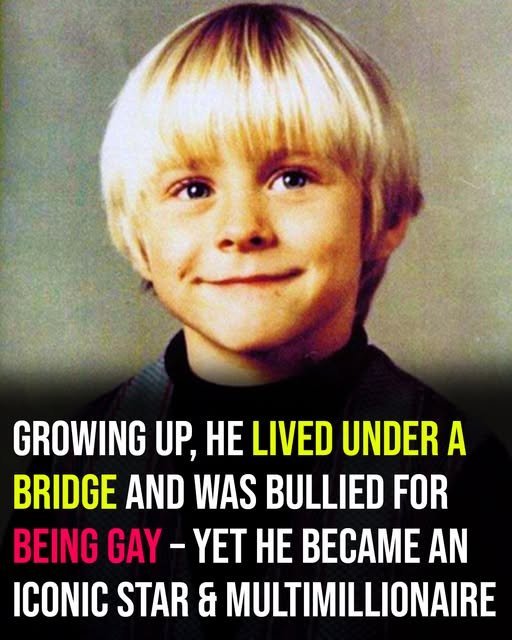
He left a legacy of incredible music and was one of the biggest music stars the world has ever seen.
Growing up, he was described as a happy and energetic child — but his parents’ divorce would later lead him down a much darker path.
This is the story of how an ordinary blonde boy went on to conquer the world and is now considered one of the greatest voices in music.
On February 20, 1967, a baby boy was born at Grays Harbor Hospital in Aberdeen, Washington. He came from a true working-class family; his mother worked as a waitress, while his father was a car mechanic. Beyond their hard work, music also ran through the family. Several relatives had played in bands, giving his upbringing a quiet but constant connection to music, sound, and rhythm.
From an early age, his creative talent was already showing. The future rock star would spend time drawing characters from films and cartoons, and according to his aunt Mari, “he began singing at the age of two.”
By the time he was four, he was already playing piano, singing, and even writing his own small songs, including one inspired by a family trip.
Felt “ashamed” of his parents
His early musical influences were wide-ranging. He listened to artists such as Electric Light Orchestra (ELO), and from a young age he would sing along to songs like Arlo Guthrie’s “Motorcycle Song”, the Beatles’ “Hey Jude”, and Terry Jacks’ “Seasons in the Sun”.
Those who knew him described him in childhood as a happy, energetic, and highly excitable boy, but also someone with a noticeable sensitivity and kindness.
Yet this seemingly peaceful beginning would not last. The innocence of his early years would soon be disrupted, setting the stage for a very different path ahead.
When he was around nine years old, his parents divorced. He later said the split had a deep and lasting impact on him, and his mother noticed a clear change in his behavior. The young boy became more withdrawn, more defiant, and increasingly difficult to reach.
In his own words, he admitted that he felt “ashamed” of his parents and longed for stability: “I wanted a typical family… I wanted that security, so I resented my parents for quite a few years because of that.”
Both parents eventually entered new relationships, but the changes at home only added to his instability. His father, despite previously promising not to remarry, eventually did, a decision that deeply upset him. He struggled to accept his new stepmother and the blended household that came with her, feeling like he no longer had a real place in the family.

At the same time, his mother’s new relationship brought its own challenges. Her partner was abusive, and he witnessed domestic violence firsthand. On one occasion, his mother was hospitalized with a broken arm. Even though the relationship was damaging, she refused to press charges, which left a lasting emotional impact on him.
As his home life grew more unstable, his behavior at school also changed. He became defiant toward adults and began acting out. Teachers and counselors eventually suggested a more structured family environment, but attempts to reunite his parents failed. Eventually, custody was fully transferred to his father.
“Full of bigoted rednecks”
Life with his father and stepfamily proved difficult. Feeling misunderstood and unwanted, he was often moved between relatives and friends. At one point, he lived with one of his friend, in a deeply religious family, where he briefly embraced Christianity and attended church regularly. But that phase didn’t last — he later rejected religion entirely, swinging toward anger and skepticism instead.
His teenage years grew more and more turbulent. He struggled with authority and the structure of school, often refusing to engage or participate.
Even in sports — where he reportedly had natural ability — he resisted involvement, sometimes deliberately underperforming as a way of pushing back against expectations, even when it disappointed the adults around him.
According to People, he had little interest in sports, hunting, or school, and felt increasingly alienated from his everyday surroundings. He also became deeply disillusioned with his hometown of Aberdeen, Washington, which he described as being “full of bigoted rednecks.”
People thought he was gay
In high school, he was bullied and misunderstood by his peers. After befriending a gay student, he became the target of rumors and ridicule. His classmates just concluded that he was gay.
”They started giving me a lot of shit, trying to beat me up and stuff. Then my mother wouldn’t allow me to be friends with him anymore because she’s homophobic,” he once said.
Interestingly, the star later said he didn’t mind the assumption and even leaned into it at times.
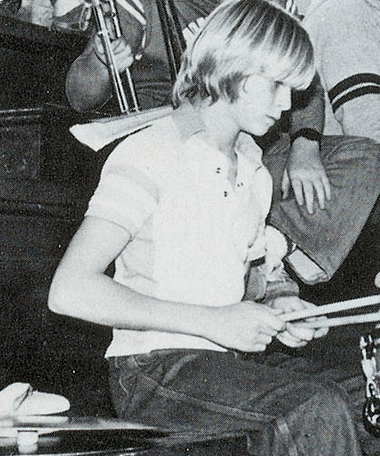
“Even I thought that I was gay. Although I never experimented with it, I thought that might be the solution to my problem. I started being really proud of the fact that I was gay even though I wasn’t,” he admitted.
His identity during this time became less about labels and more about resisting how others tried to define him. He dyed his hair in “wild colors” and occasionally spat at “jock types,” who sometimes responded by beating him up.
Hanging out under a bridge
Despite the chaos, creativity remained a constant outlet.
He spent much of his time drawing in class and expressing himself through art. A teacher once rejected his drawing of a famous pop star for being “inappropriate,” while another unflattering political portrait also caused controversy. Still, his artistic expression continued to grow.
By the end of high school, things at home had completely broken down. He dropped out shortly before graduation after realizing he didn’t have enough credits.
His mother gave him an ultimatum: find work or leave. Soon after, his belongings were packed, and he was effectively pushed out.
He drifted between friends’ homes and periods of instability, sometimes sleeping wherever he could find shelter. At one point, it was claimed that he lived under a bridge over the Wishkah River — an experience often linked to the song “Something in the Way.” However, this detail has been disputed by those who knew him best. His future bandmate later said, “He hung out there, but you couldn’t live on those muddy banks, with the tides coming up and down. That was his own revisionism.”
Whether taken literally or not, the story has since been debated, but it still reflects just how restless, disconnected, and unstable his life felt during that period.
A major turning point
A major turning point came when he met a musician connected to the local punk scene. Through this friendship, he was introduced to punk and hardcore music, a discovery that would shape his entire direction in life.
Around this time, he also began attending live shows in the Seattle area, where the energy of the underground music scene left a strong impression on him. One early concert experience in particular stayed with him and marked the beginning of his deeper connection to live music and performance.
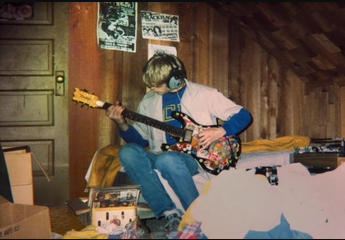
After school, he held a series of short-term and unstable jobs, often losing work quickly. At one point, he even worked part-time as a janitor at his own high school.
In the end, it was music that would make Kurt Cobain both wealthy and globally famous.
Through emotionally raw songwriting and an anti-establishment attitude, he helped reshape the sound and themes of mainstream rock. His work gave voice to a generation often referred to as Generation X, and he is widely regarded as one of the most influential rock musicians of all time.
Ultimately paid a heavy price
Before their breakthrough, the band went through key lineup changes. They originally recorded their 1989 album Bleach with drummer Chad Channing, released on Sub Pop Records. However, dissatisfaction with his style led to his replacement by Dave Grohl.
That change proved pivotal. With Grohl on drums, Nirvana recorded their major-label debut Nevermind in 1991. The album’s lead single, “Smells Like Teen Spirit,” unexpectedly exploded into the mainstream, helping push alternative rock and the grunge movement into global popularity almost overnight.
From there, success came rapidly and on a massive scale. The band sold tens of millions of albums worldwide, becoming one of the defining forces in modern rock music.
Beyond commercial success, Cobain’s legacy lies in his influence — bringing vulnerability, anger, and emotional honesty into mainstream rock and changing what a generation expected from music.
Unfortunately, Kurt Cobain ultimately paid a heavy price for both his fame and his music. During his final years, Cobain struggled with heroin addiction, severe stomach pain, and chronic depression.
He also found it increasingly difficult to cope with the pressures of global fame, constantly living under public scrutiny. Much of the attention also focused on his turbulent marriage to fellow musician Courtney Love, with whom he had a daughter, Frances.
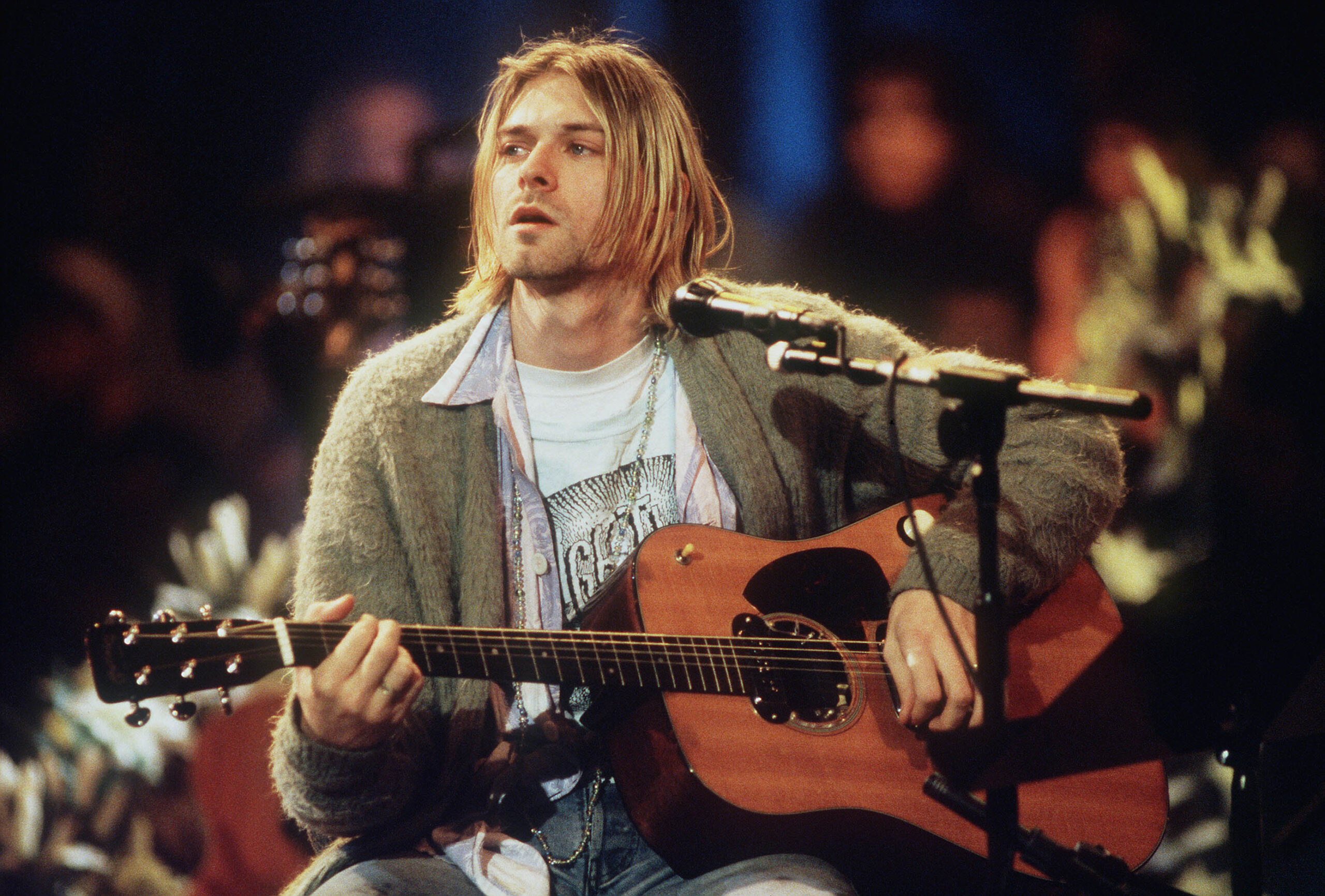
As the pressure mounted, his personal struggles deepened. On April 8, 1994, he was found dead in the greenhouse of his Seattle home at the age of 27.
Police later concluded that he had died approximately three days earlier from a self-inflicted shotgun wound to the head.
Given the modest circumstances he came from, it’s also notable that his success generated enormous wealth — especially after his death and the release of MTV Unplugged in New York in 1994. However, he never lived to see much of it.
When Kurt Cobain died in 1994, his estate was estimated to be worth over $50 million. But without clear estate planning, control over his music, image, and royalties became the subject of years of legal disputes and conflict. His widow, Courtney Love, and daughter, Frances Bean Cobain, inherited the estate, yet ongoing legal battles, financial mismanagement, and public controversy gradually reduced its value and complicated the legacy he left behind.
Cobain’s death marked a devastating end to a life that had already reshaped modern rock music.
In just a few years, he went from underground artist to global icon — but the same intensity that fueled his creativity also contributed to his inner turmoil.