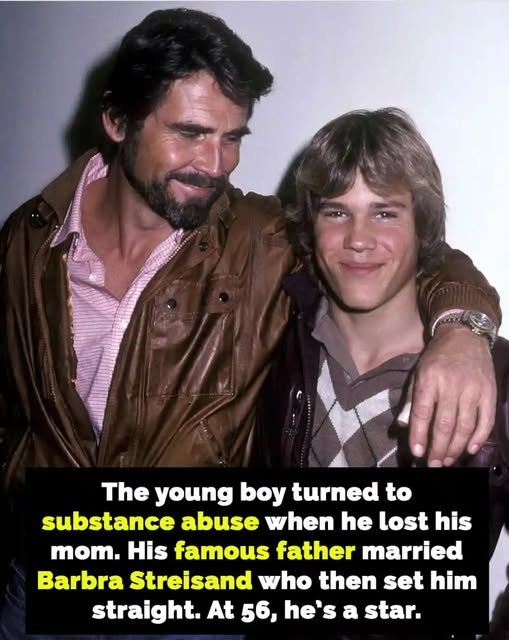
When we gaze at the silver screen, we often see a finished product: a polished, charismatic figure who seems to possess the world. For Josh Brolin, an actor synonymous with grit and gravitas, that image of perfection was always a mirage. To the public, he is Thanos, the indomitable titan, or the rugged hero of No Country for Old Men. But in his new memoir, “From Under the Truck,” Brolin invites us into the chaotic, beautiful, and often terrifying machinery of his actual life.
His story is not a standard Hollywood rags-to-riches tale. Instead, it is a visceral exploration of resilience, a journey through the wreckage of addiction, and a profound meditation on how the scars of our youth eventually become our greatest teachers. Brolin pulls back the velvet curtain to reveal that even those who seem to “have it all” are often just survivors of their own history.
A Childhood Forged in the Wild
Josh Brolin’s upbringing was anything but ordinary. Born into the world of wildlife conservation through his mother, Jane Brolin, his early years were marked by an intensity that most would find paralyzing. Jane was a woman of fierce courage and unconventional methods. While other children were learning to ride bikes, Josh and his brother, Jess, were learning to outrun apex predators.
In one of the book’s most chilling passages, Brolin describes his mother releasing cougars, bobcats, and coyotes into the house, shouting “sic ’em” as the boys scrambled for safety. This wasn’t a game; it was a lesson in hyper-awareness. “You knew if you didn’t get on the other side of that shut door within a couple of seconds, you’d be cleaning up fresh bloody marks,” Brolin writes. While this upbringing sounds like a nightmare to many, Brolin views it through a complex lens of love and survival. He didn’t resent her; he craved her presence, even as he navigated the literal and figurative claws she set upon him.
The Ghost of Fifty-Five
A central theme of Brolin’s life—and his eventual recovery—is the tragic loss of his mother in a 1995 car accident. Jane was only 55 years old when she passed away. For a long time, during the height of his alcohol and drug abuse, Brolin internalized that number. He saw 55 as the finish line, a “respectable” age to check out after a life of hard living.
Now 56, Brolin describes the surreal experience of outliving the woman who shaped him. Sobriety has granted him a new perspective on time. He no longer views life as a race to a tragic end, but as a vast landscape he is finally clear-eyed enough to explore. Coming to terms with her death meant dismantling the self-destructive logic that told him he wasn’t meant for the long haul.
Stepmothers and Stark Truths
Success in Hollywood often creates an echo chamber where no one says “no.” Brolin was fortunate enough to have a stepmother who didn’t play by those rules: the legendary Barbra Streisand. In one revealing anecdote, Brolin recalls asking for a glass of wine at a family gathering. Streisand’s response was a verbal bucket of cold water: “Aren’t you an alcoholic?”
While such a blunt confrontation might have caused others to retreat, Brolin found it refreshing. He describes Streisand as someone who washed her tongue with a “bullsh** cleanser” before speaking. This accountability was a form of “tough love” that cut through the fog of his denial. It forced him to confront the version of himself that everyone else could see, but he was still trying to hide.
The Deathbed Turning Point
Brolin’s descent into addiction started incredibly early—experimenting with marijuana at nine and LSD by thirteen. For decades, he moved through life with a functional but destructive dependency. The breaking point finally arrived in 2013, in the most somber of settings: his grandmother’s deathbed.
He arrived to say goodbye to his 99-year-old grandmother reeking of booze, having spent the night hungover on the streets. Looking at her long, nearly century-long life and comparing it to his own wreckage, something shifted. “I knew that was going to be the last time I drank,” he reflects. It was a moment of profound shame that transformed into a decade of unwavering sobriety. He realized that to honor his lineage, he had to stop trying to escape his own life.
The Joy of Maturity
Today, Brolin isn’t just sober; he is thriving in his maturity. He describes getting older not as a loss of youth, but as a gain of peace. He has found that the “constant spin” of Hollywood and addiction was an exhausting mask. By leaning into his 50s, he has discovered that life is actually more fun without the distortion of a bottle.
His professional legacy continues to grow, but the memoir makes one thing clear: his greatest achievement isn’t an Oscar or a blockbuster record. It is the fact that he can look in the mirror and see a man who is present for his wife, his children, and himself. “From Under the Truck” serves as a powerful reminder that no matter how intense your start or how dark your middle chapters, a new ending is always within reach if you’re willing to tell the truth.
Ultimately, Brolin’s story is a blueprint for resilience. It proves that the same intensity that nearly destroyed him was also the engine that could save him—once he finally learned how to steer.